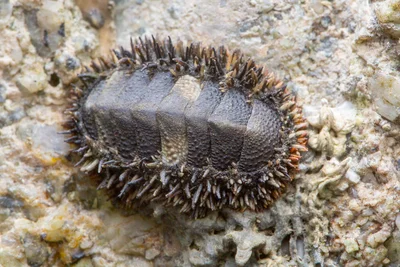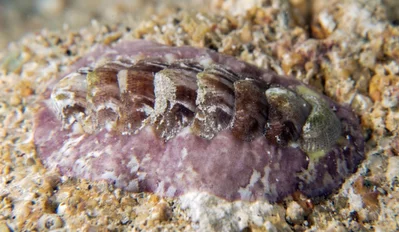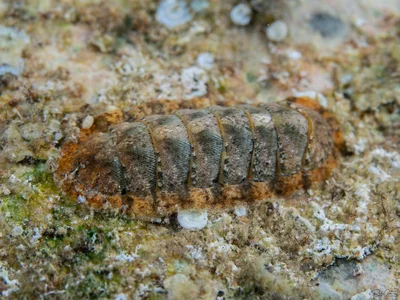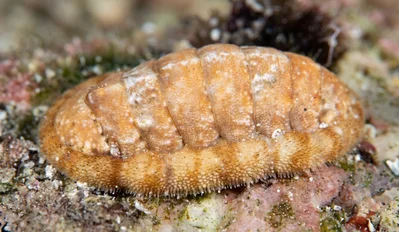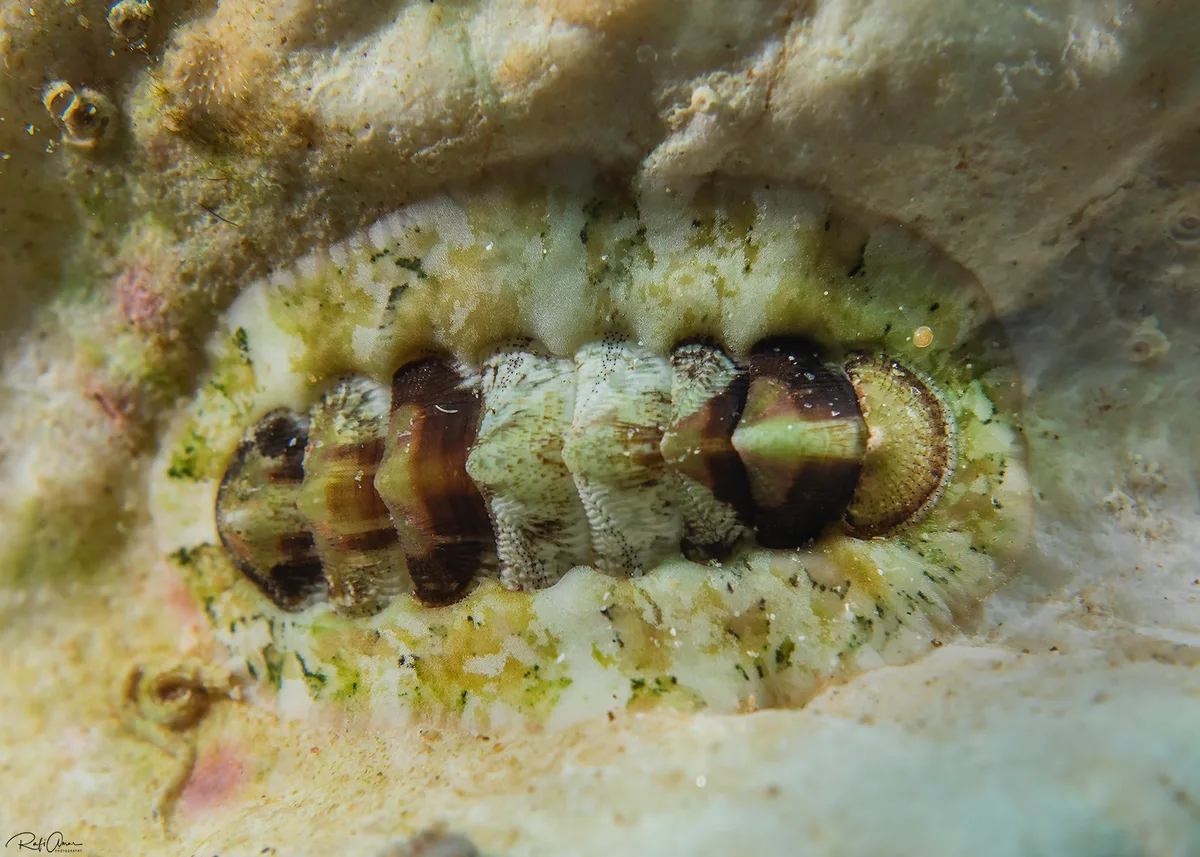
A small chiton named for the girdle: it carries rows of rounded, glossy granules that catch the light like tiny pearls, and that texture separates it at a glance from the scaled and bristled girdles of its relatives. The eight plates are sculptured with fine granular ridges, and coloring runs from olive-brown to reddish with darker mottling. Length reaches about 24 mm (1 in). Live animals are usually crusted with coralline algae, which hides the sculpture and leaves the granular girdle as the most reliable feature.
It occupies shaded rock: crevices, undercuts and the walls of small caves on shallow reef, from the low tide line to about 10 m (33 ft), avoiding surfaces exposed to full light. Like all chitons it grazes algal film, scraping it off the rock at night with a radula whose teeth are capped in iron minerals - hard enough to leave visible tracks across a limestone surface. The foot holds a suction grip strong enough to resist surge, and a disturbed animal clamps down rather than fleeing. Growth is slow and the plates accumulate borers and encrusting growth with age, so the largest animals are usually the most thoroughly disguised ones.
- girdle carrying rows of small pearly granules
- plates sculptured with fine granular ridges
- usually in shaded crevices rather than open rock