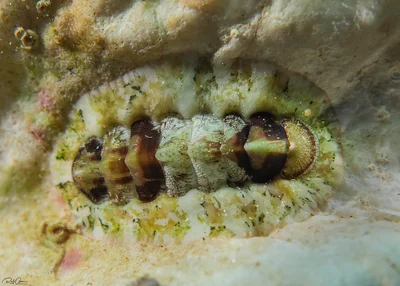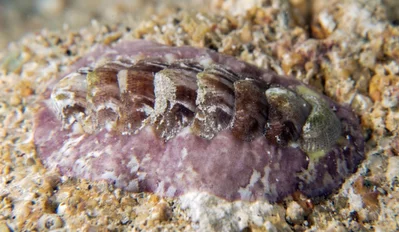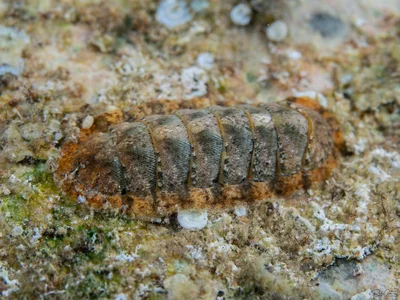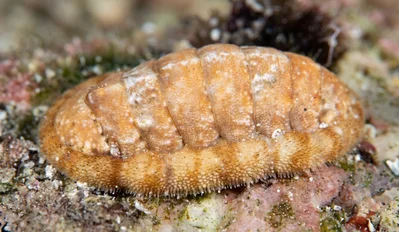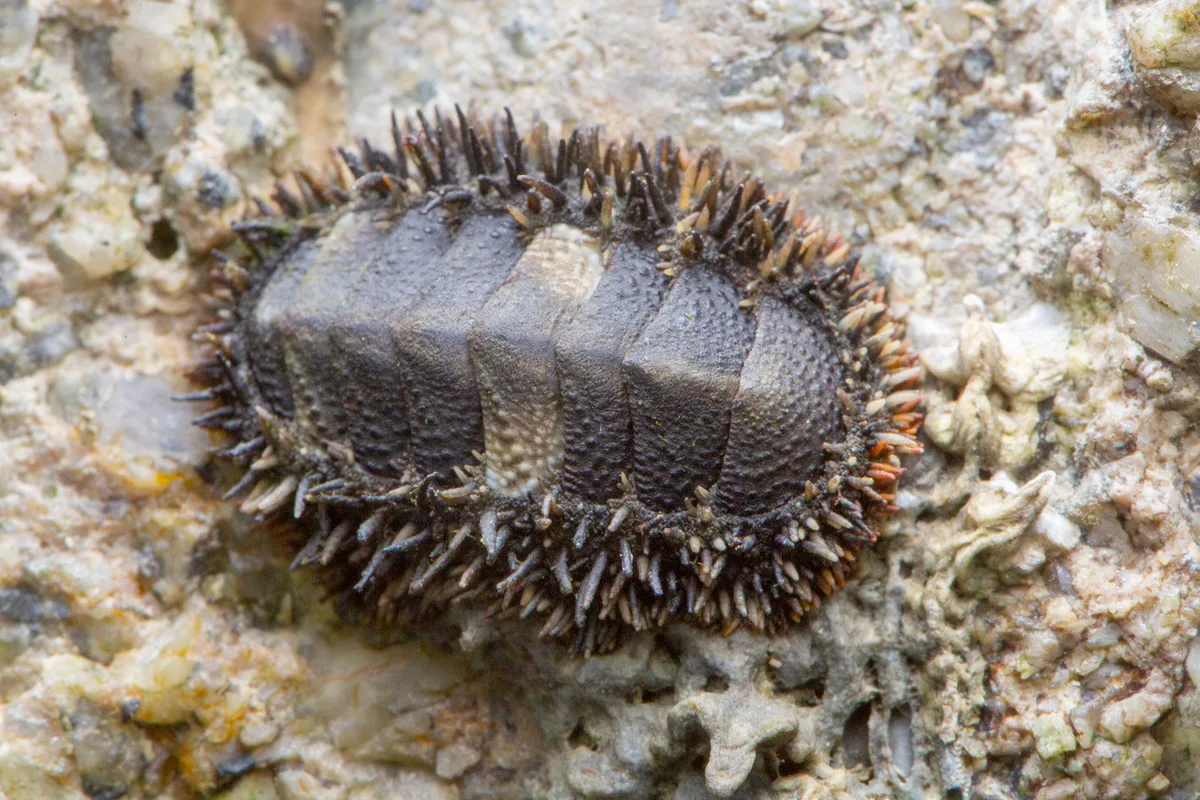
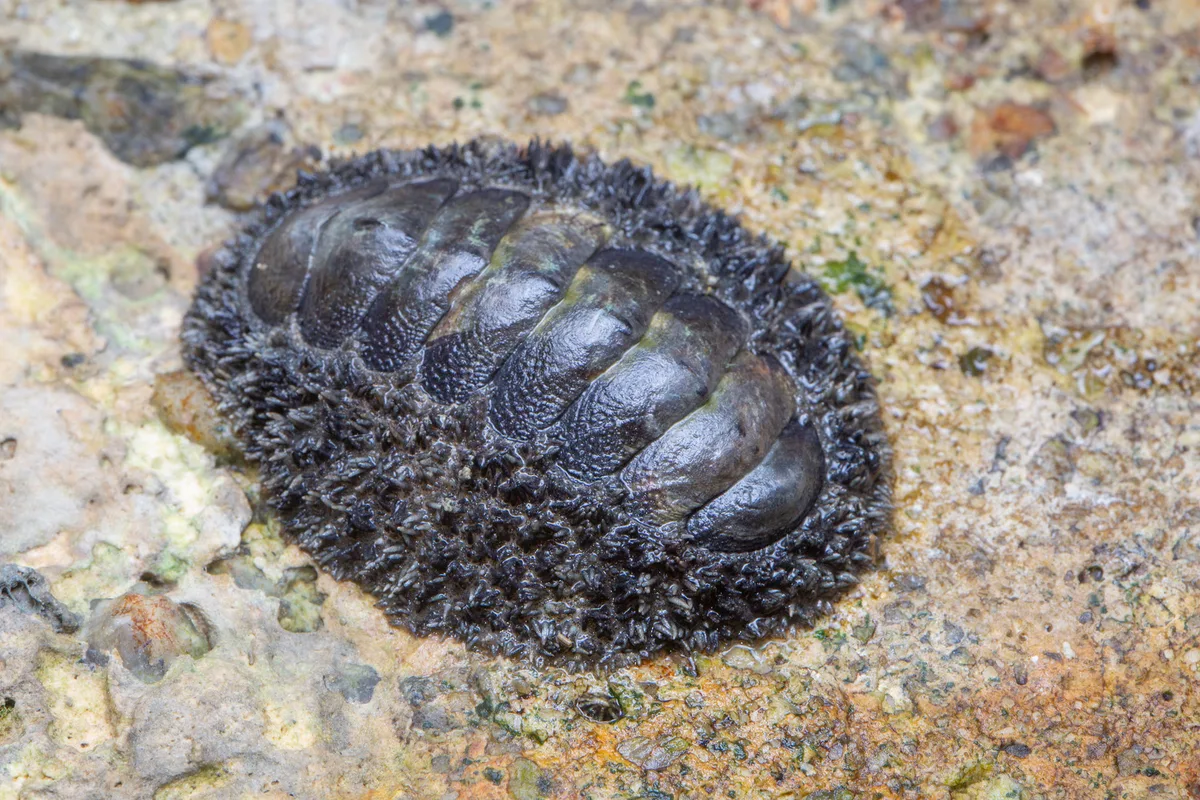
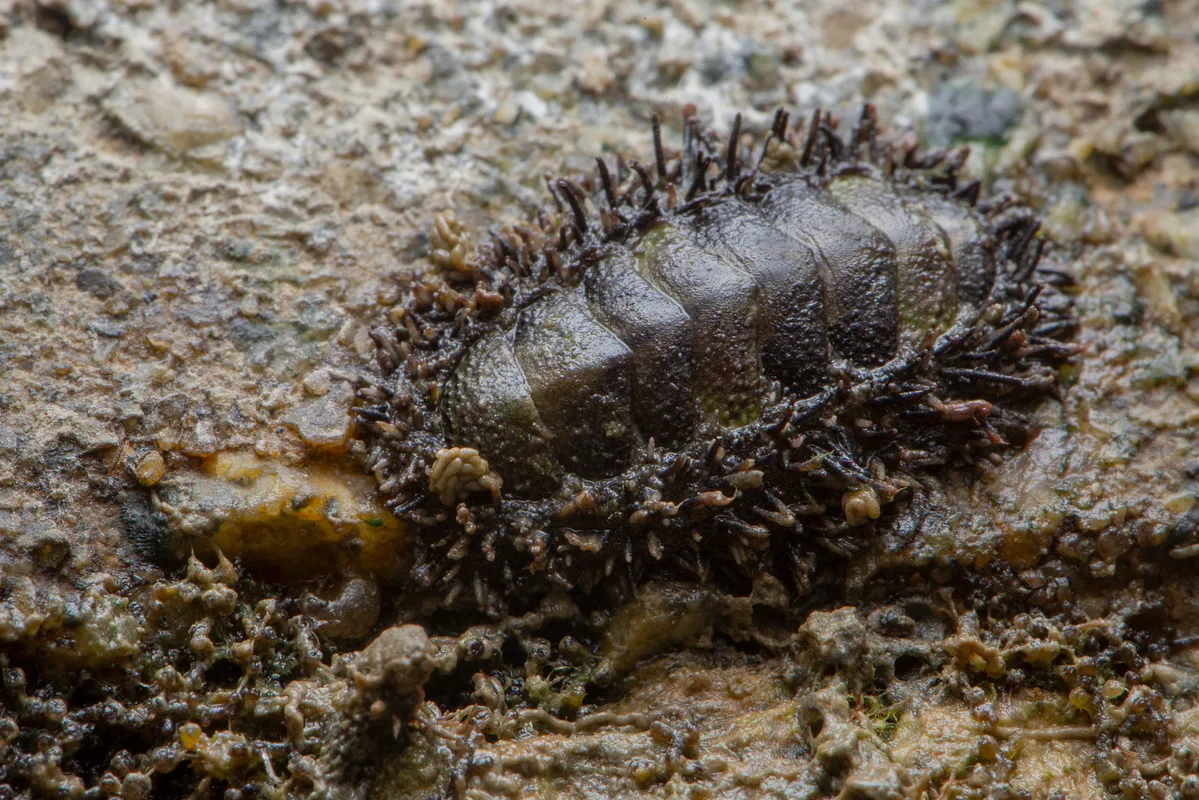
An oval slab of armor on the rocks at the waterline: eight overlapping plates surrounded by a tough bristly girdle, up to 10 cm (4 in) long, clamped down so hard that a finger cannot shift it. Chitons are molluscs built like nothing else, and the segmented shell lets the animal bend over an uneven surface where a limpet's single cone would leak.
It grazes algae at night and returns to the same spot before dawn, over generations wearing a shallow home scar into the rock that fits its outline exactly. The scraping is done with a radula tipped in magnetite - the animal grows iron oxide into its teeth, giving it one of the hardest biological materials known, and it needs it: this is a herbivore whose food grows as a film on stone.
The plates carry something stranger still. Chitons of this group have hundreds of tiny eyes embedded in the shell itself, each with a lens of aragonite, so the animal sees through its own armor. They resolve shapes well enough to trigger a clamp-down before a shadow becomes a predator.
- oval body armored with eight overlapping plates
- thick girdle around the plates, bristly and dark
- clamped hard onto intertidal rock, usually in a shallow home scar
- length up to 10 cm