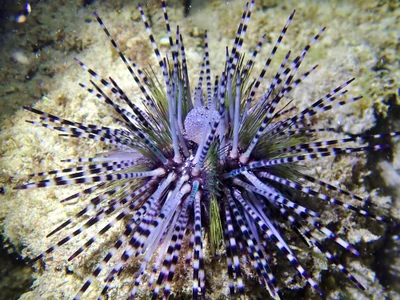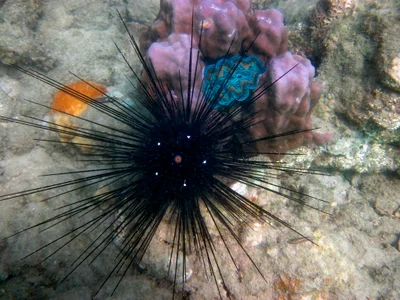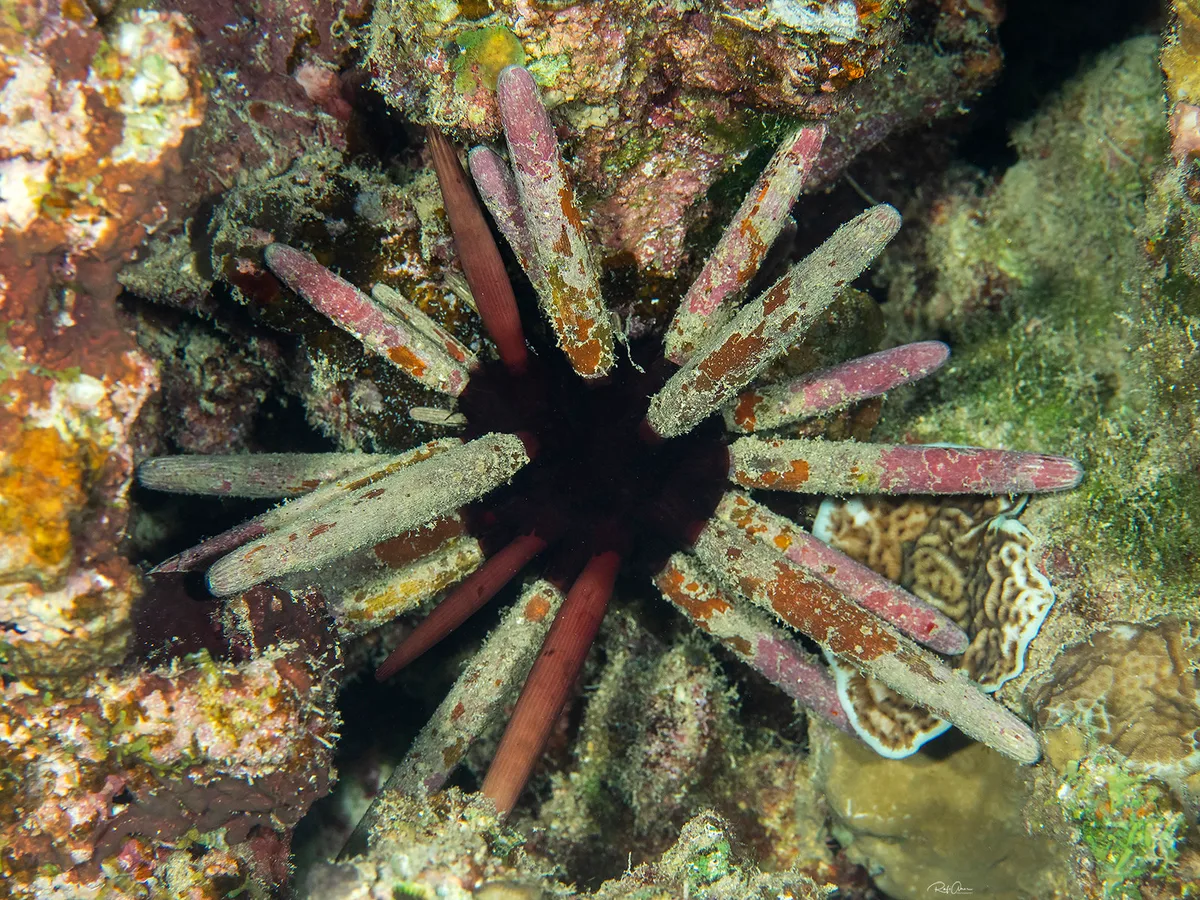
The largest pencil urchin here, reaching about 17 cm (7 in) including the spines, which are thick cylindrical rods, pale with dark banding, radiating from a comparatively small test. They look and feel like blunt pencils - solid, smooth and quite unlike the brittle needles of the urchins that share the same rubble.
It spends daylight jammed into caves and under overhangs, and grazes at night on algae, sponges and encrusting animals. The spines serve as anchors as much as armour: an urchin wedged into a crack braces against the rock with them and is very hard to pull free. Dead spines wash up on beaches and are recognisable by their heft and their ribbed surface - they were used as ornaments and tools in several cultures. The animal itself is harmless, with no venom and no sharp points.
- thick cylindrical spines like blunt pencils
- spines pale with dark bands, often encrusted
- small test carried on comparatively huge spines
- diameter up to 17 cm including spines