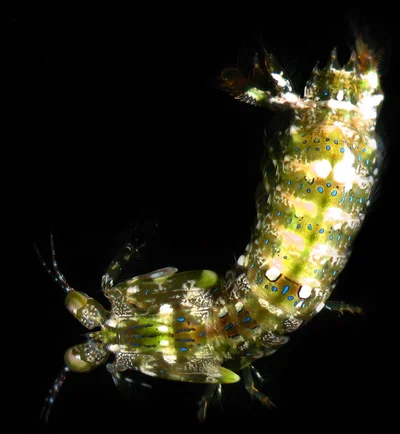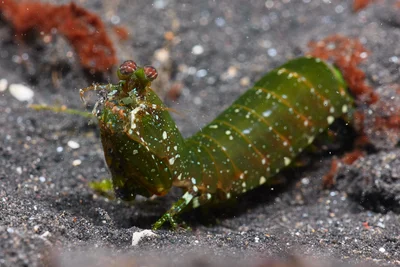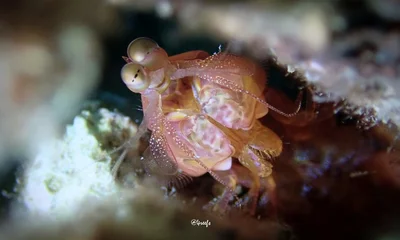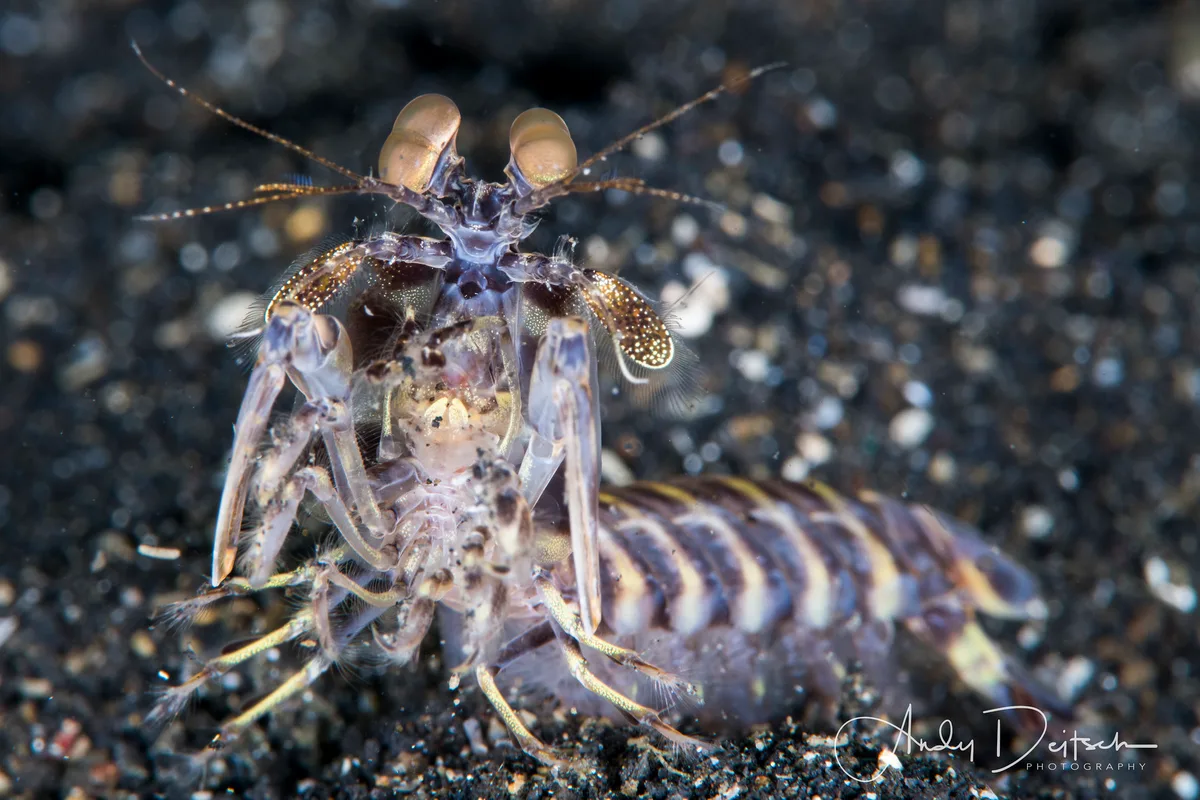
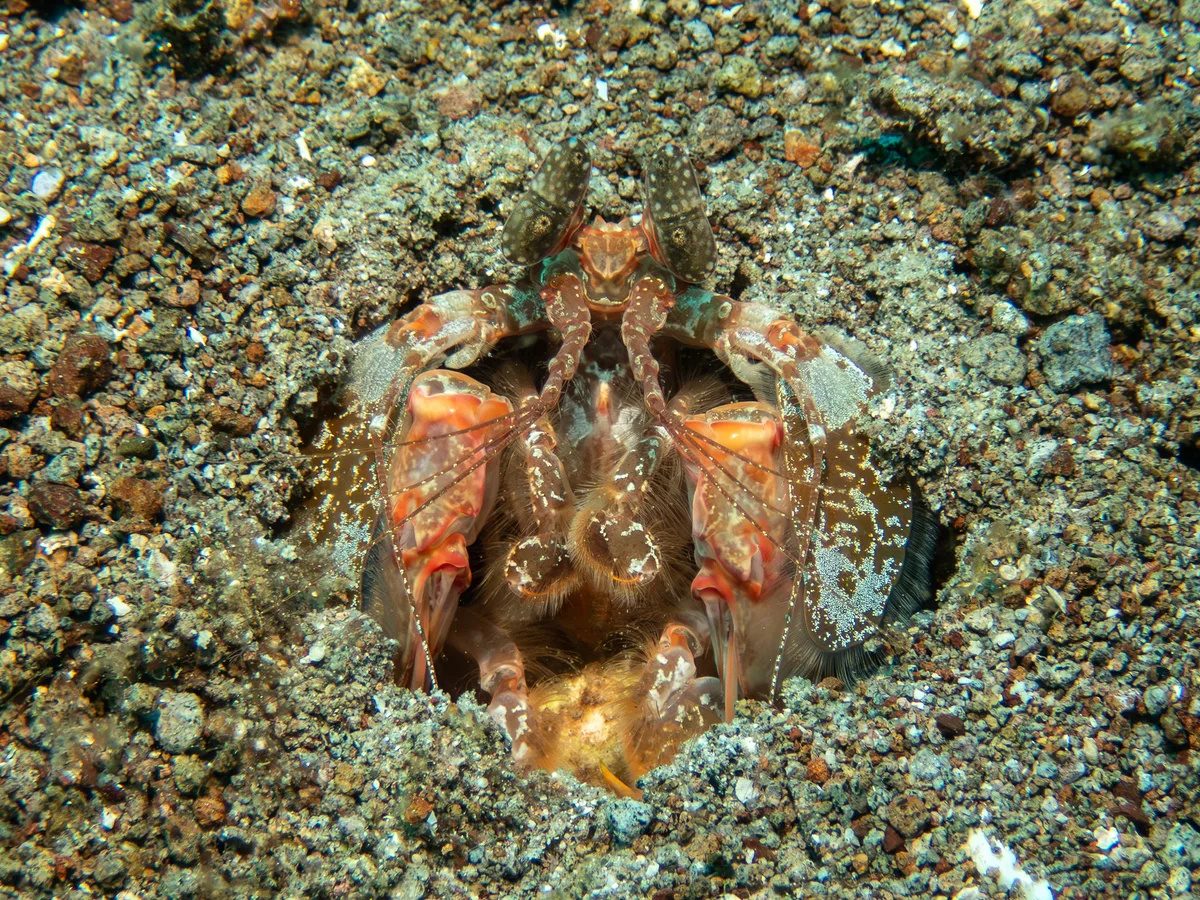
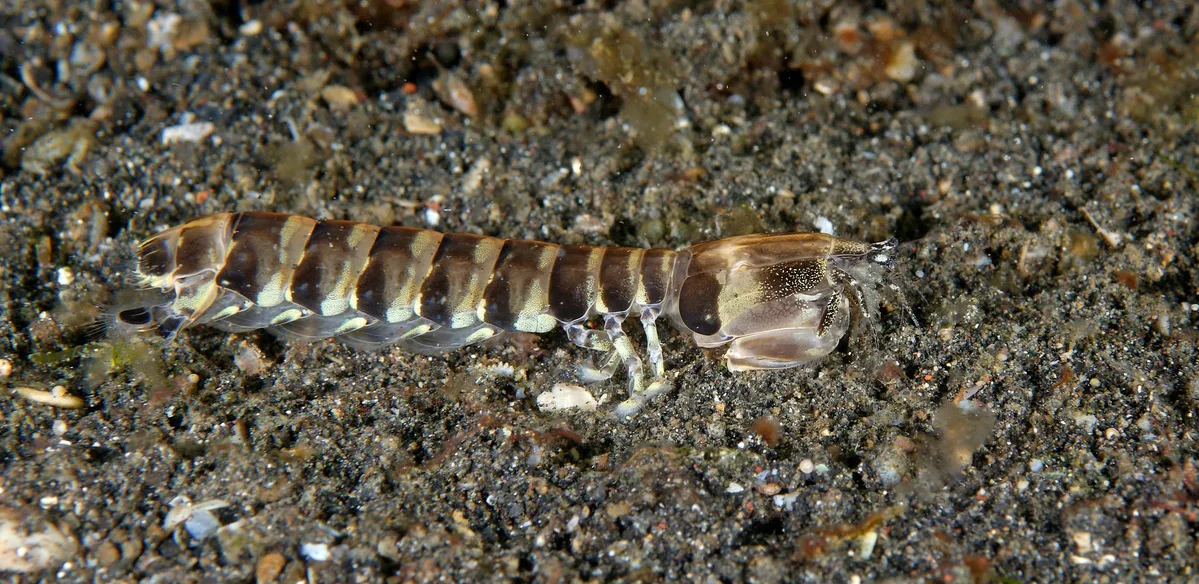
The largest mantis shrimp on these reefs, reaching about 40 cm (16 in), banded along its whole length in dark brown and cream - the pattern that gives it the zebra name and makes an exposed animal unmistakable. The raptorial claws are spearers rather than clubs: folded blades lined with long barbed spines, built to impale soft prey instead of shattering shells.
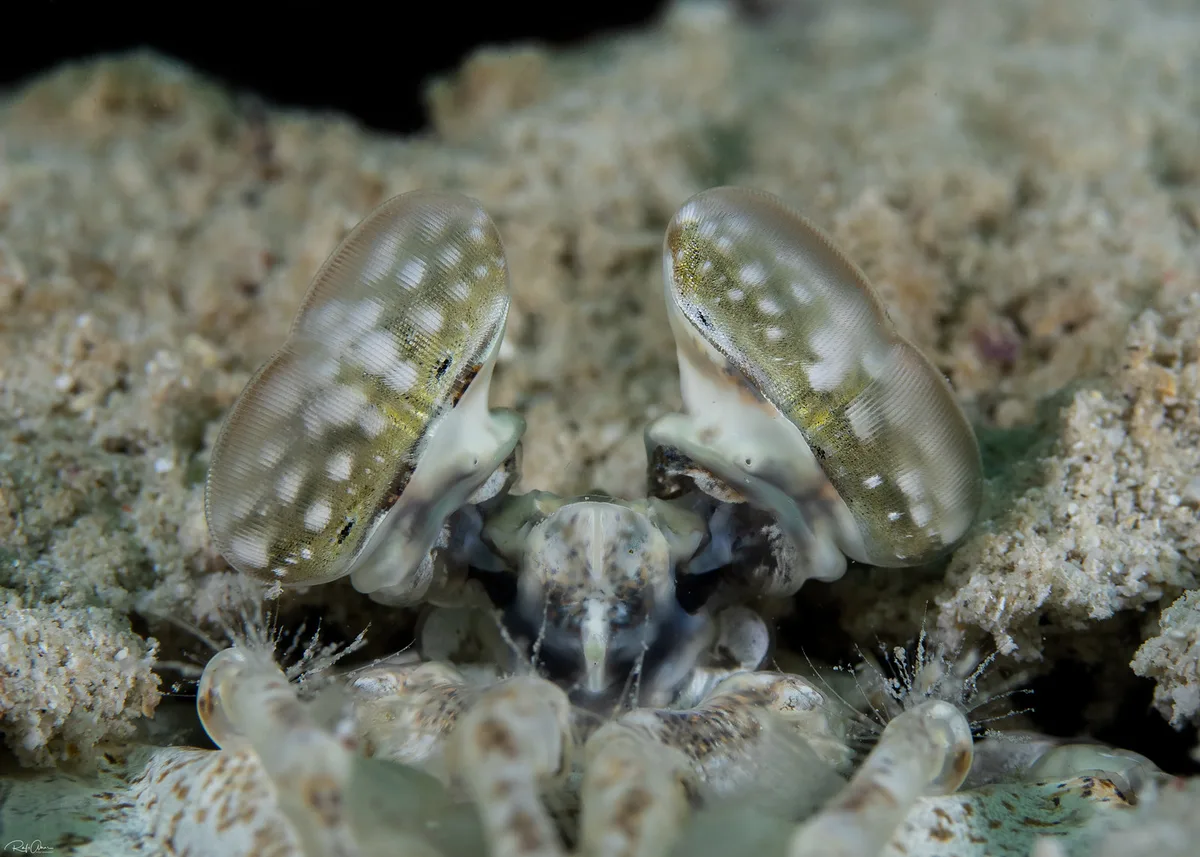
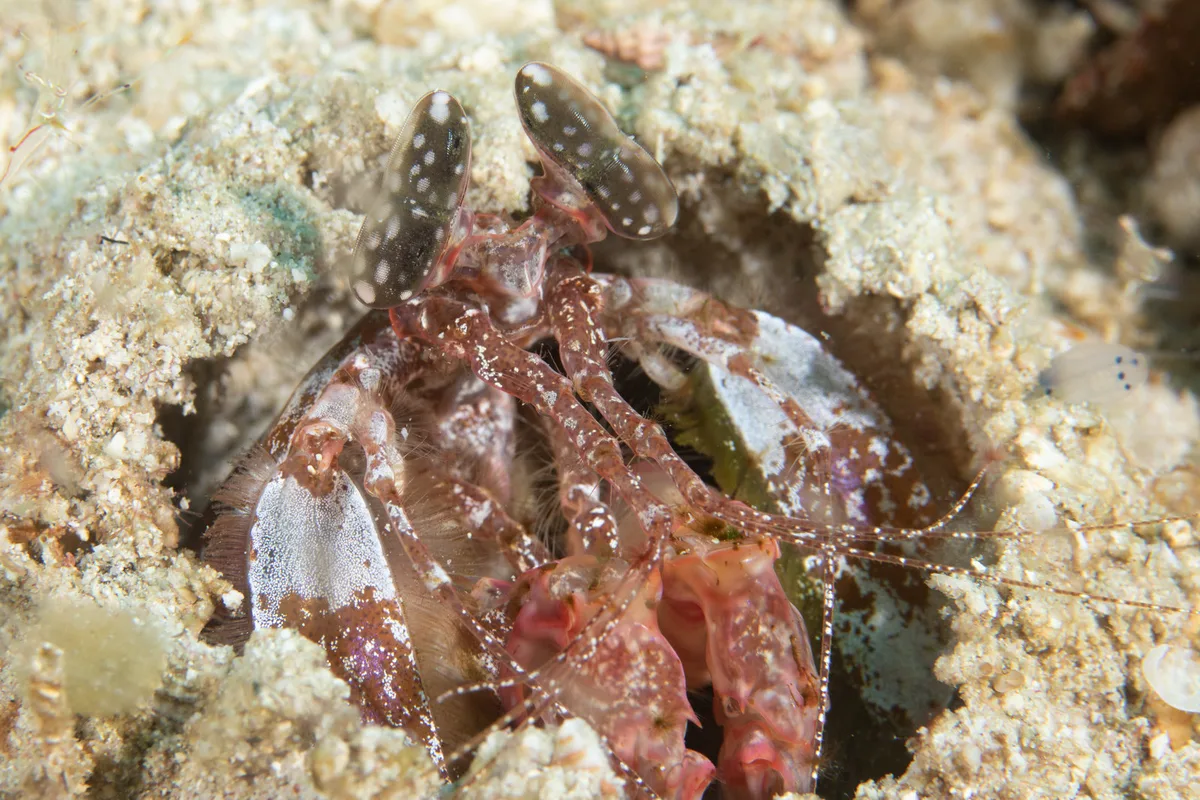
It lives in a vertical burrow driven a meter or more into sand and rubble flats, and a pair usually shares one - male and female together, which is unusual in a group known for solitary aggression. Almost all a diver ever sees is a head and two stalked eyes at the burrow mouth after dark, waiting for a fish or shrimp to pass within reach; the strike takes a few thousandths of a second and the animal is back underground before the eye registers it. Handled, a large one can open a serious cut, and there is no reason to reach into the hole. Night dives over sand are the way to meet it, and a slow approach with a dimmed torch will keep it up rather than sending it down the shaft.
- bold dark and cream banding along the whole body
- spearing claws lined with long barbed spines
- only the head and eyes usually visible at a burrow mouth
- length up to 40 cm