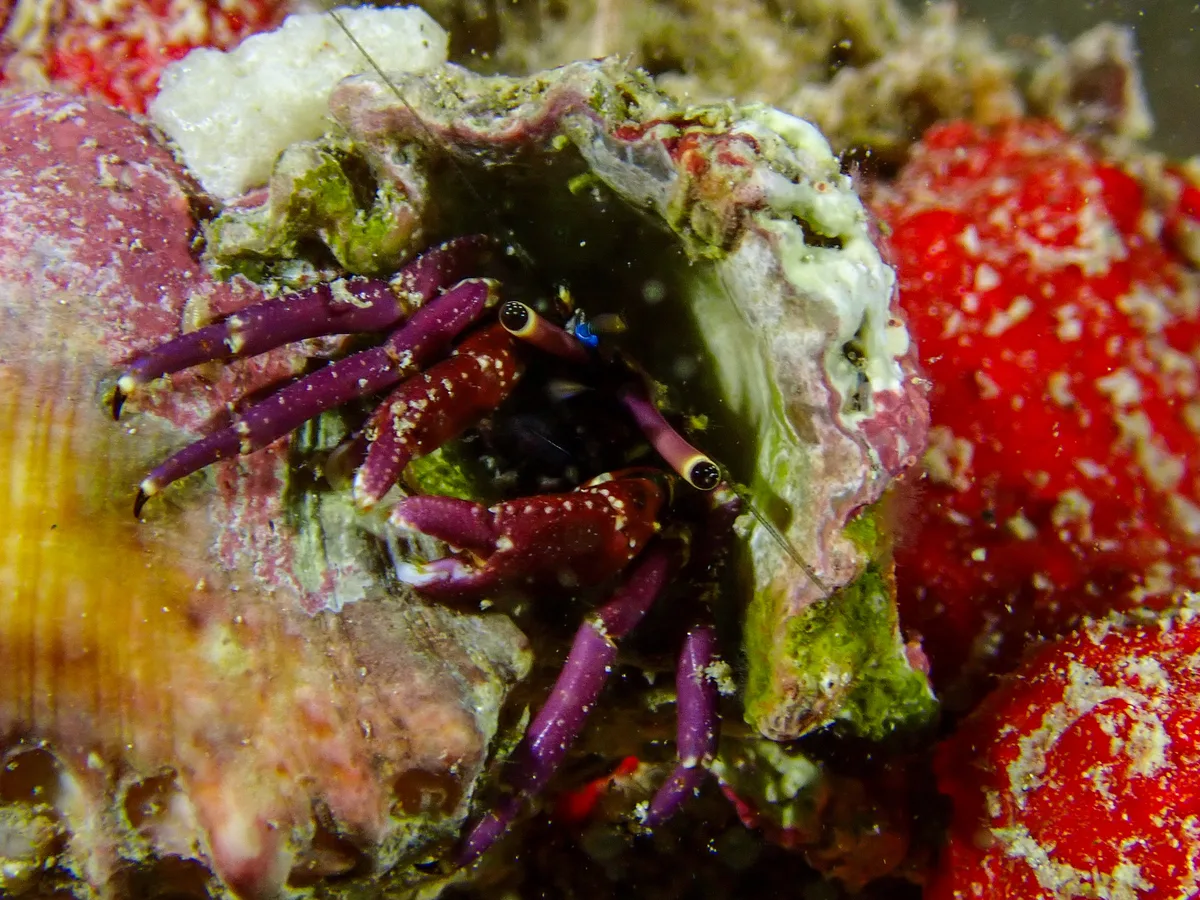
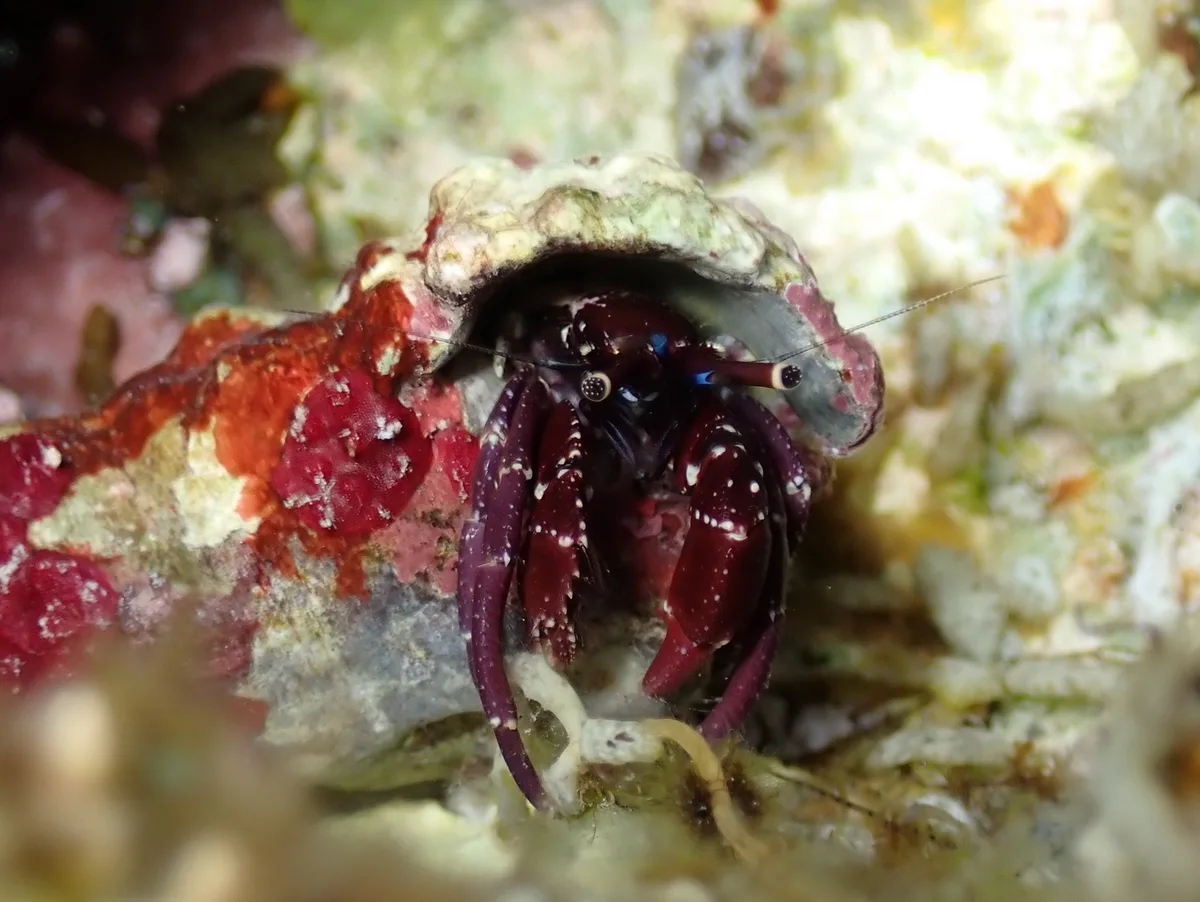
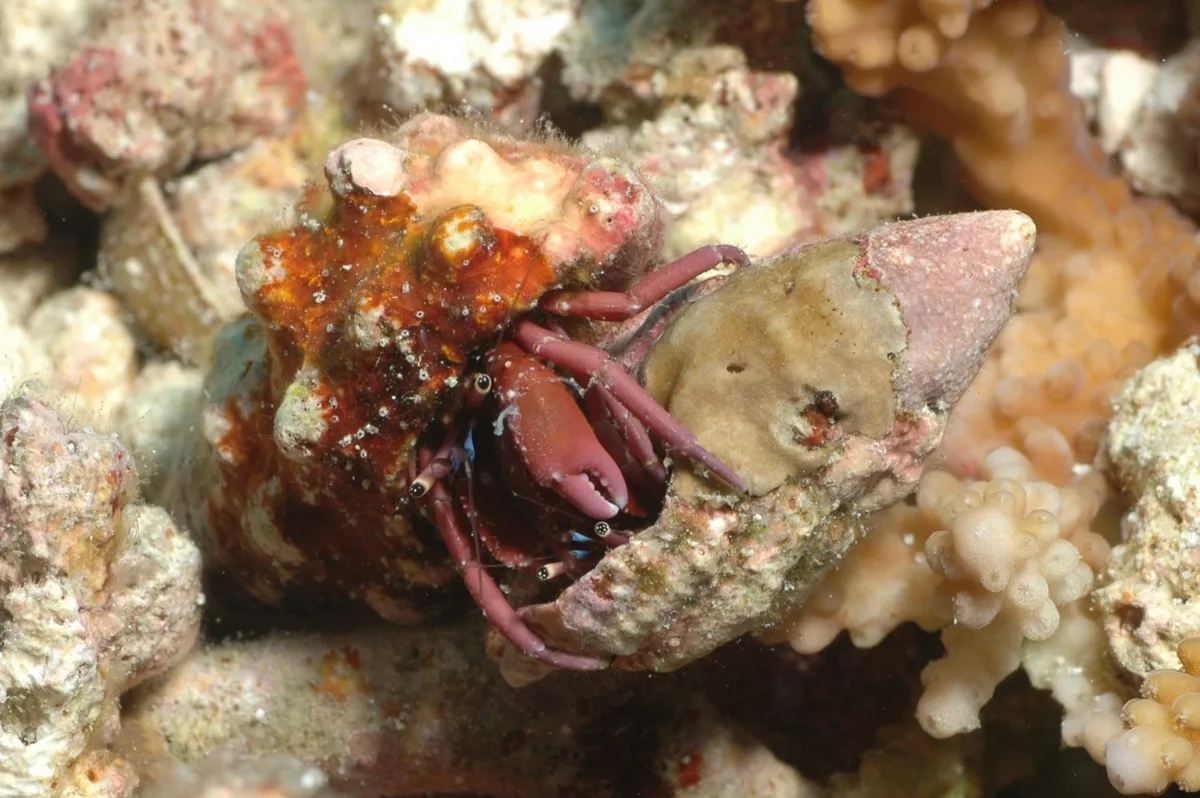
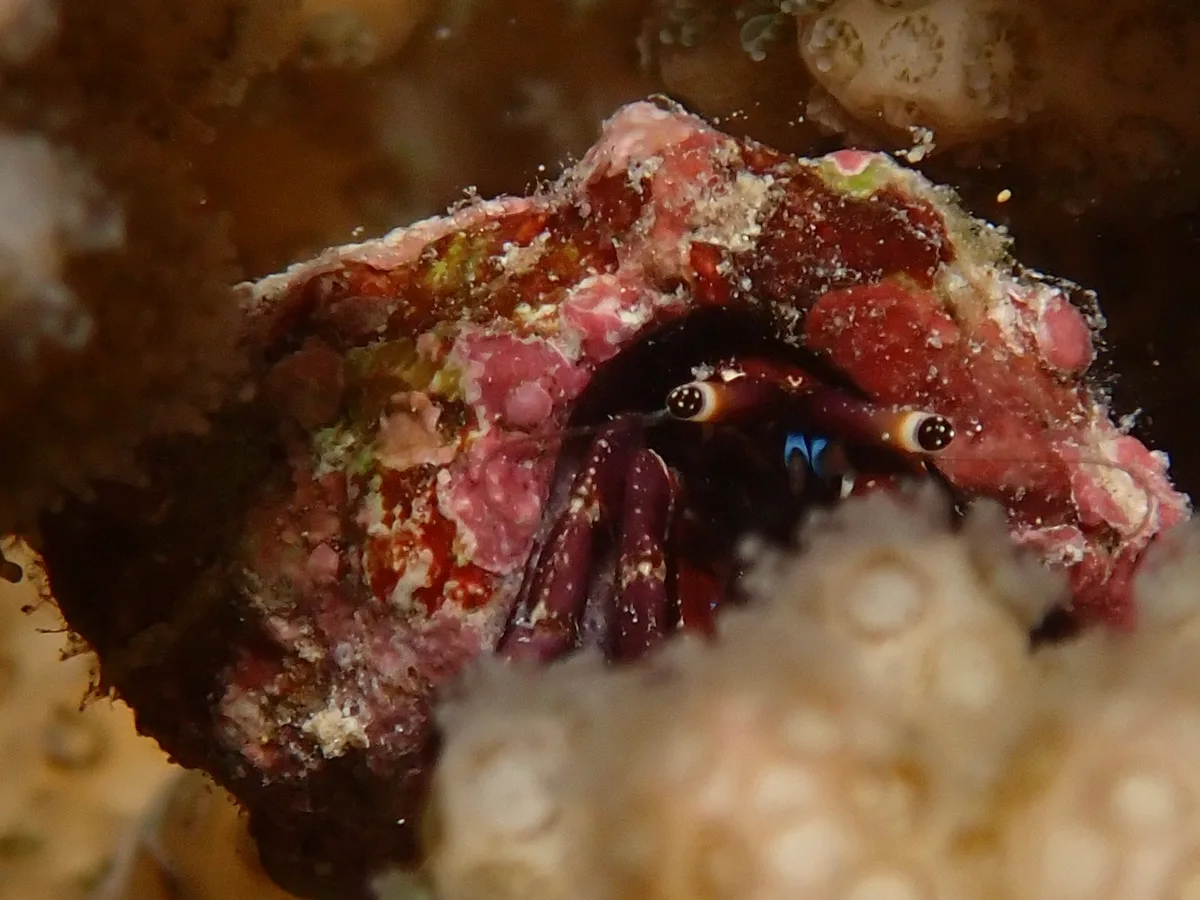
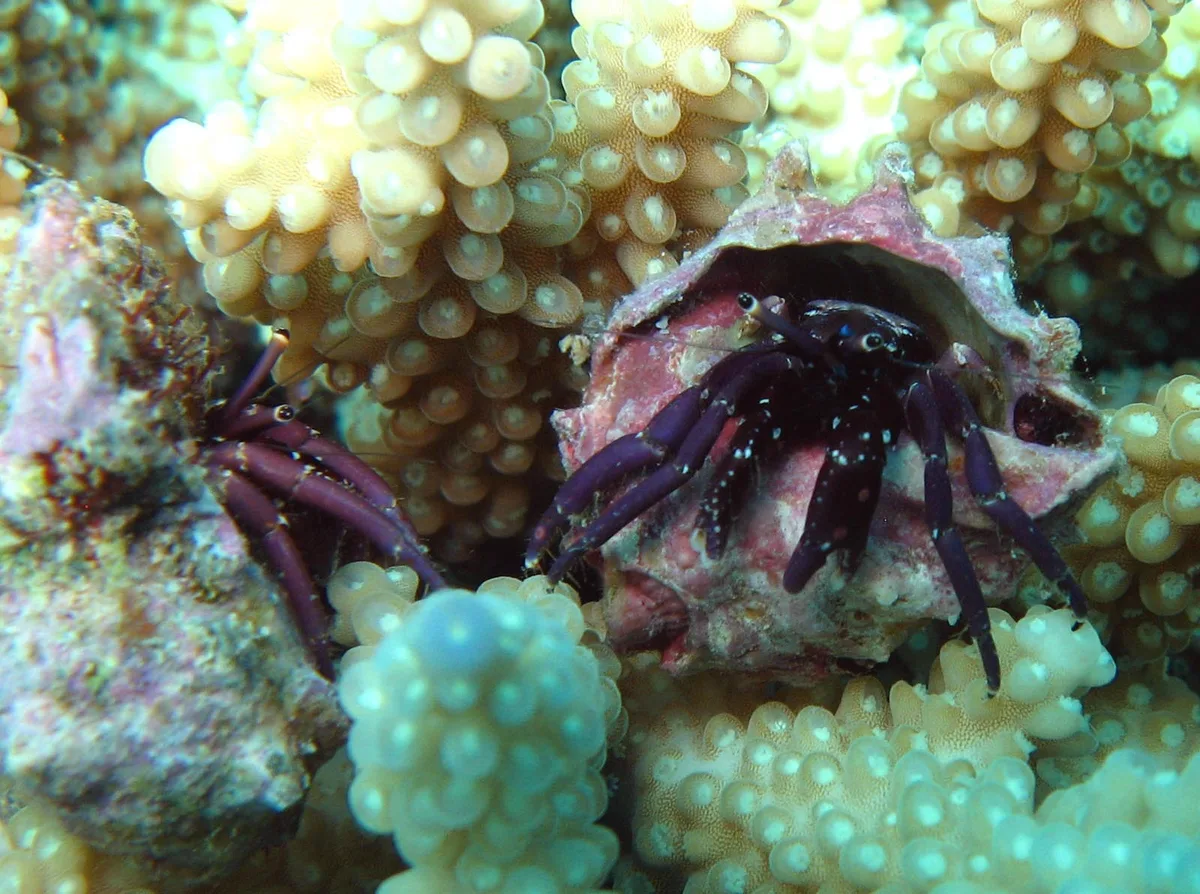
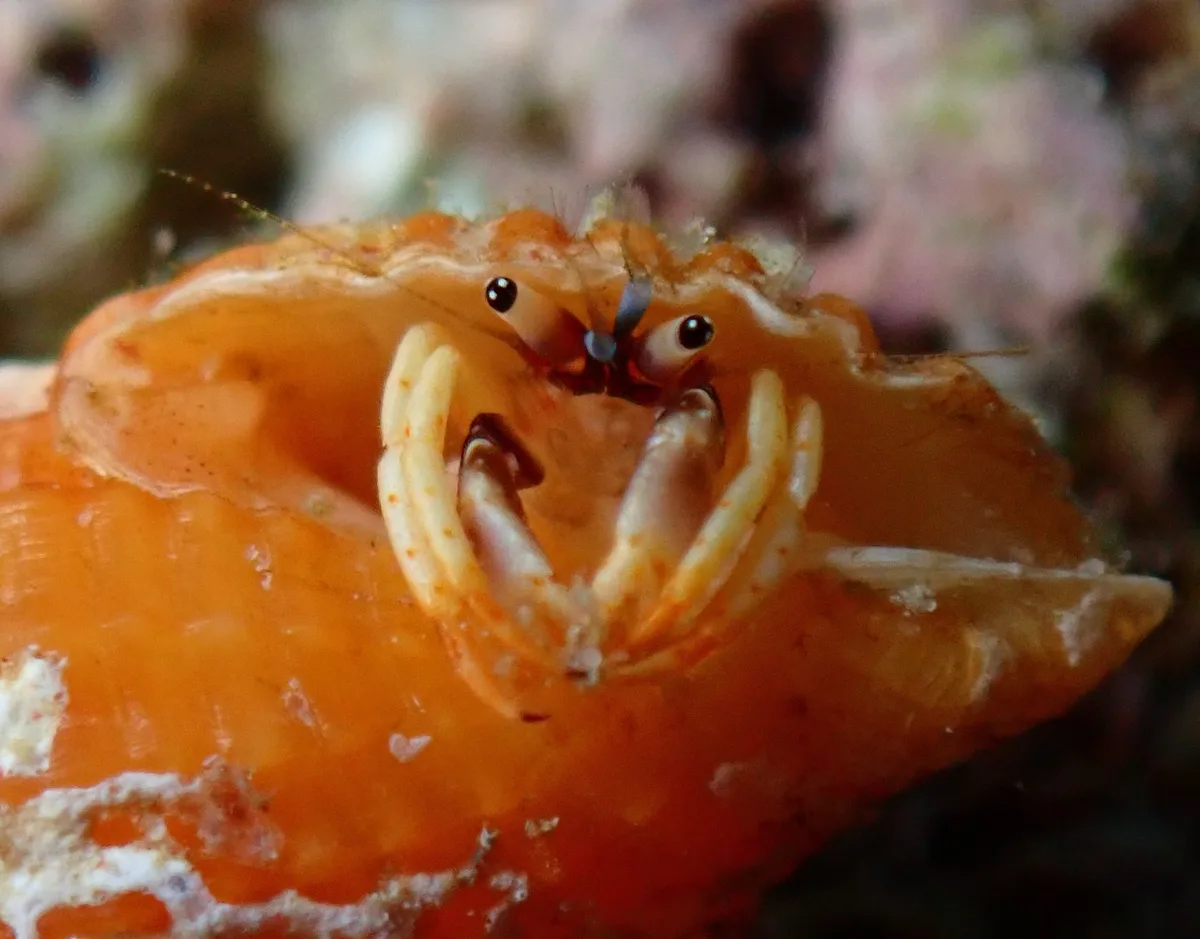
The left claw is a door. In this genus one cheliped grows far larger than the other, and when the animal pulls back into its shell it folds that claw across the opening and seals it - so the last thing a predator meets is a plate of armor exactly the width of the hole. Everything soft is behind it.
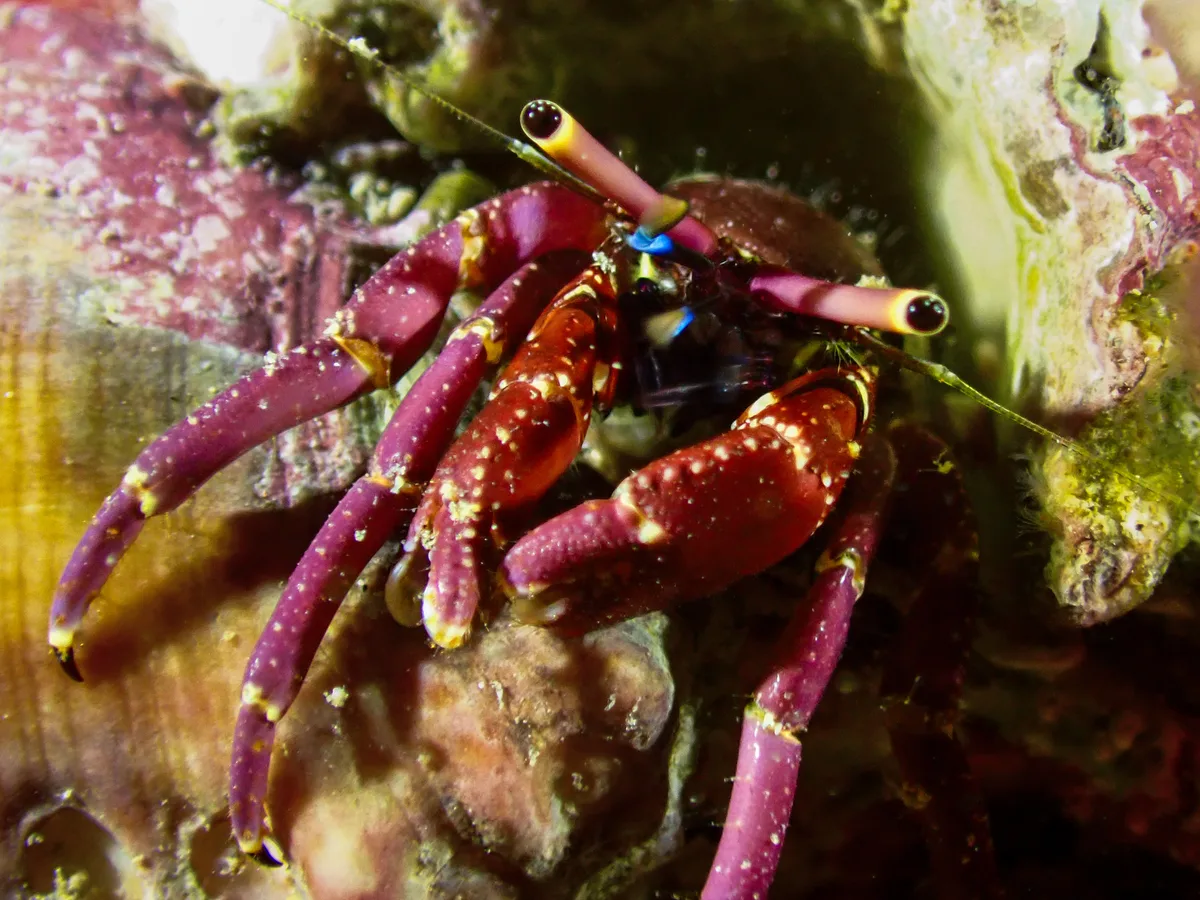
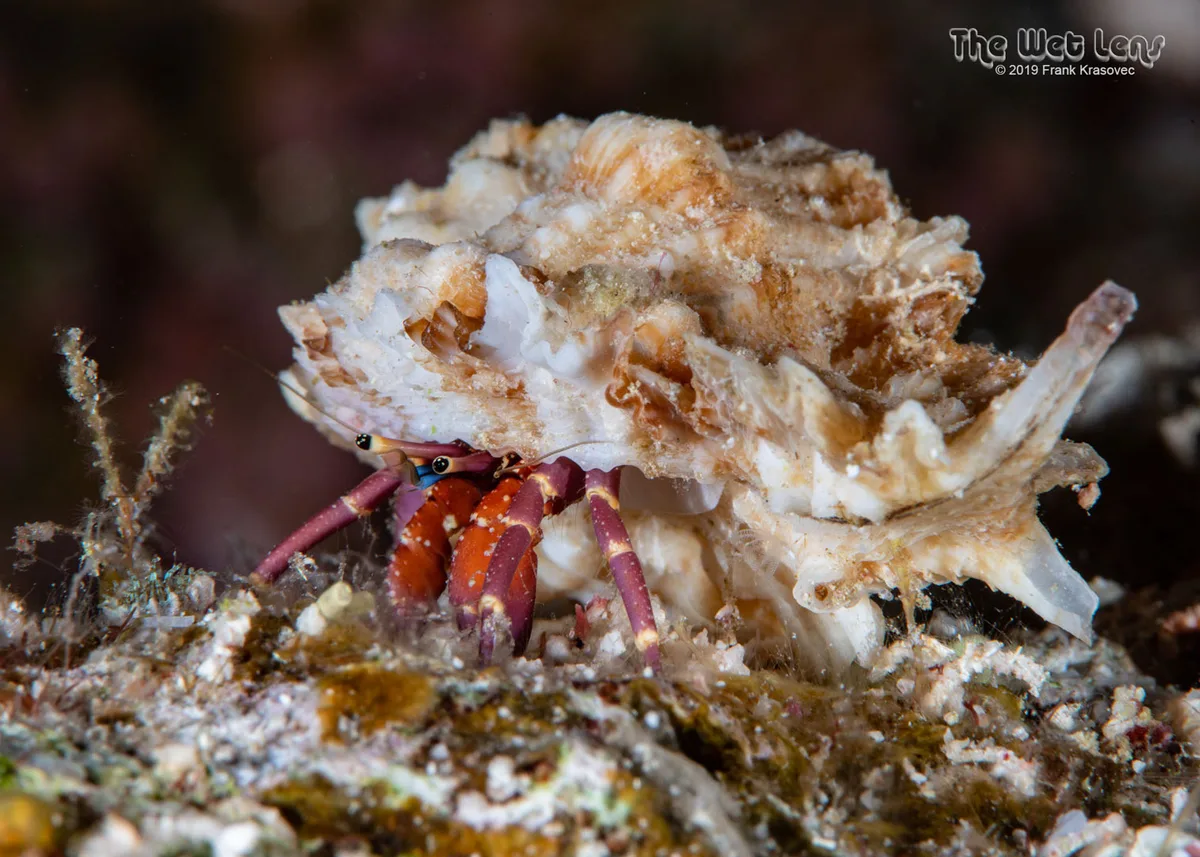
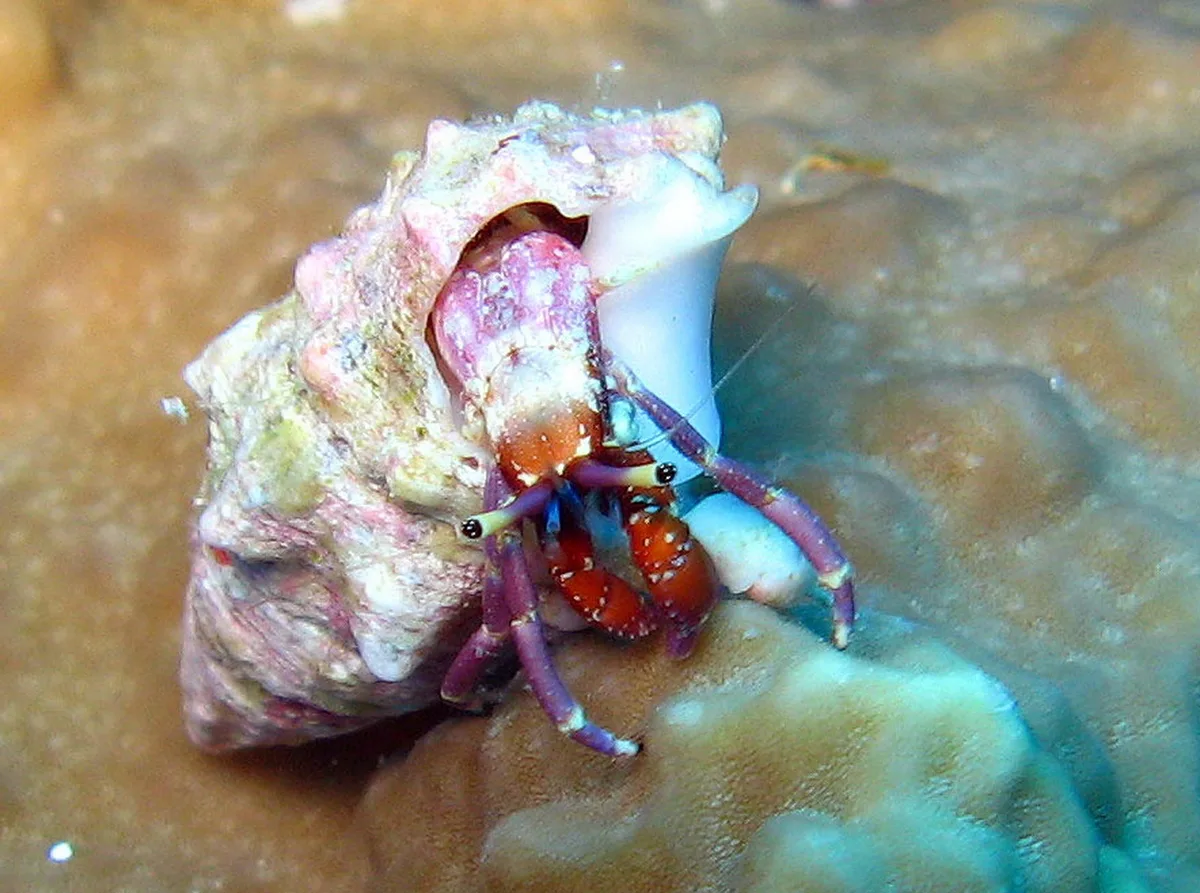
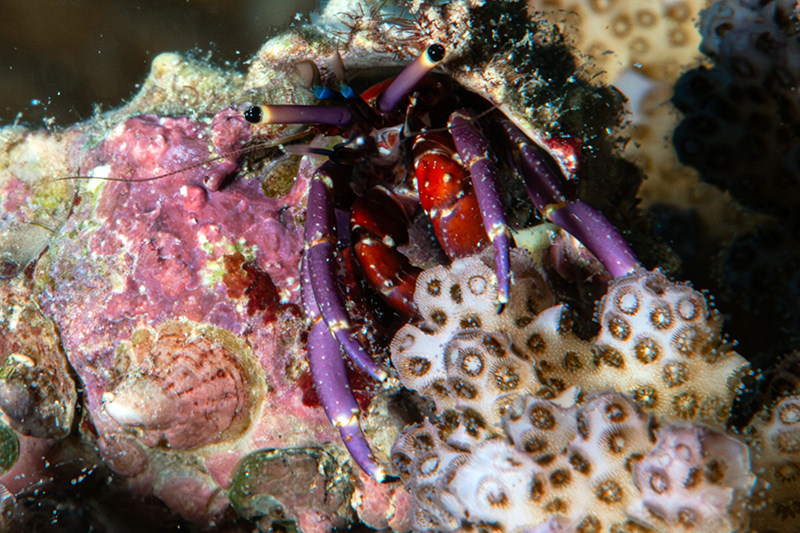
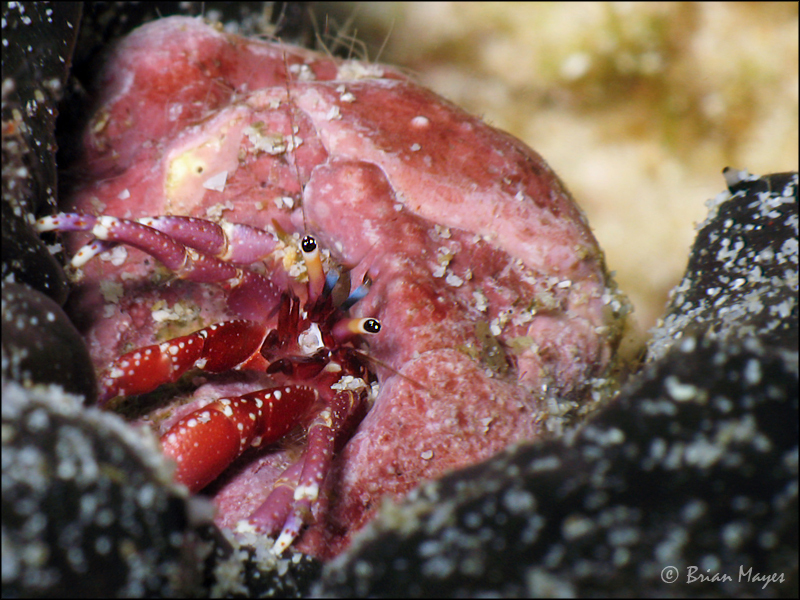
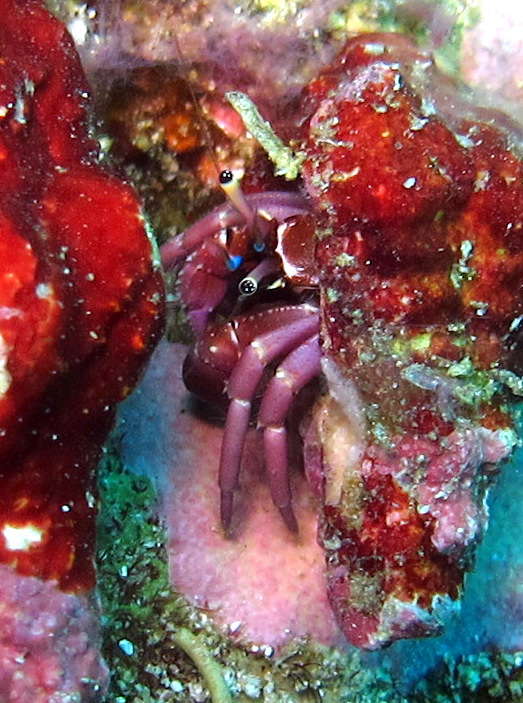
What identifies this one is color, and it is unusually clear for a hermit crab: walking legs purple to magenta with cream bands at the joints, claws deep red under a scatter of small white granules, and long purple eyestalks carrying a pale band just below the eye. There is a bright blue patch at the base of the antennae. It is under two centimeters, and it lives in small snail shells so overgrown with algae and coralline that the shell reads as a lump of rubble with legs.
It is regularly confused with the red hermit crab, which is the same size and also red-clawed. The separation is the legs: purple here, red with white bands there.
The shell is borrowed and it will be outgrown, which is the constraint the whole group lives under. Hermit crabs queue: when a better shell appears, animals gather by size, the largest moves in, the next takes what it vacated, and so on down the line - so one empty shell rehouses a column of crabs in a few minutes. What none of them can do is make one.
Heller described the species in 1861 from this sea.
- walking legs purple to magenta, banded cream at the joints
- claws deep red and covered in small white granules
- long purple eyestalks with a pale band just below the dark eye
- bright blue patch at the base of the antennae
- under two centimeters, in a small overgrown snail shell