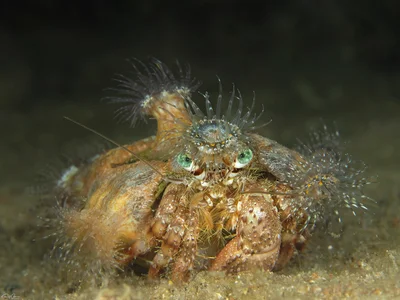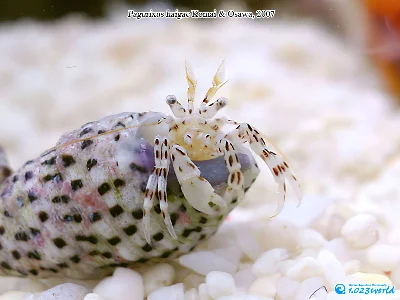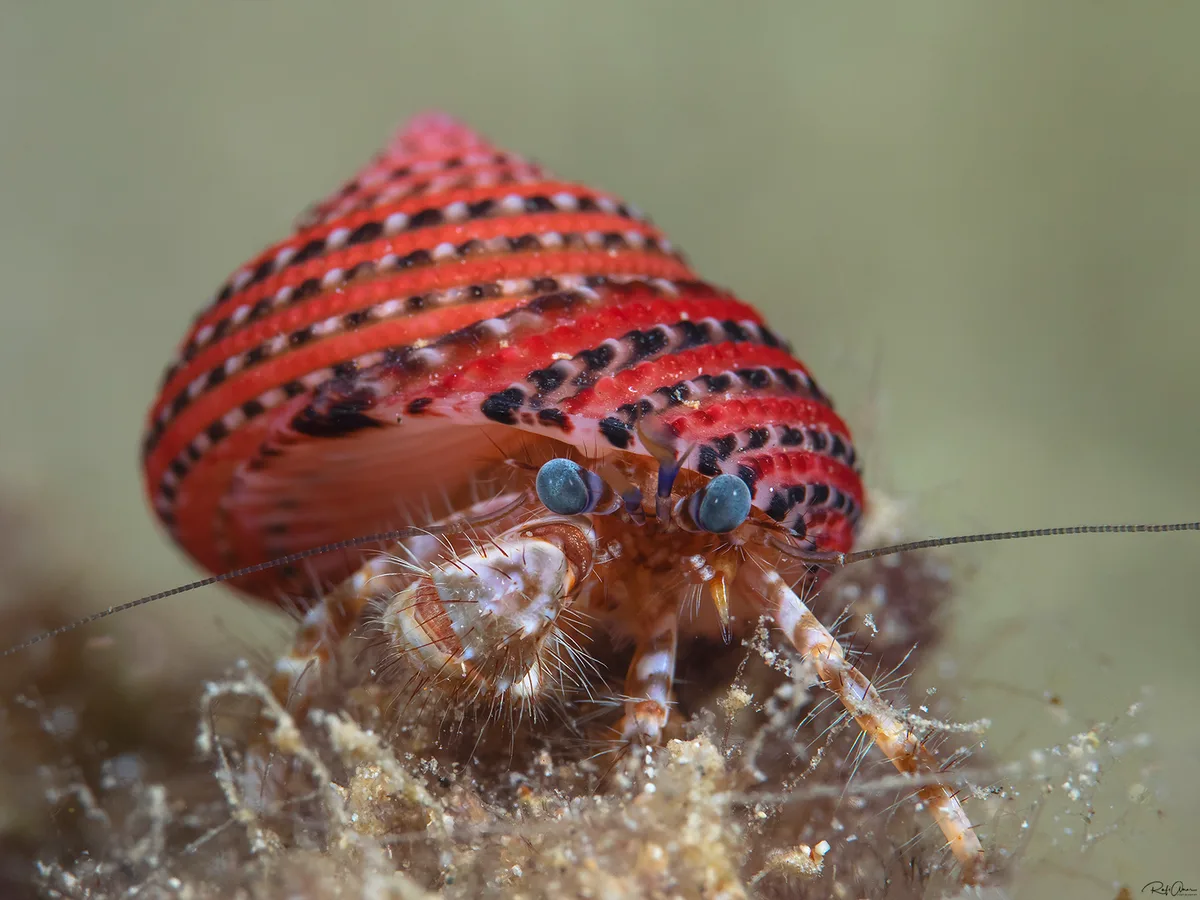
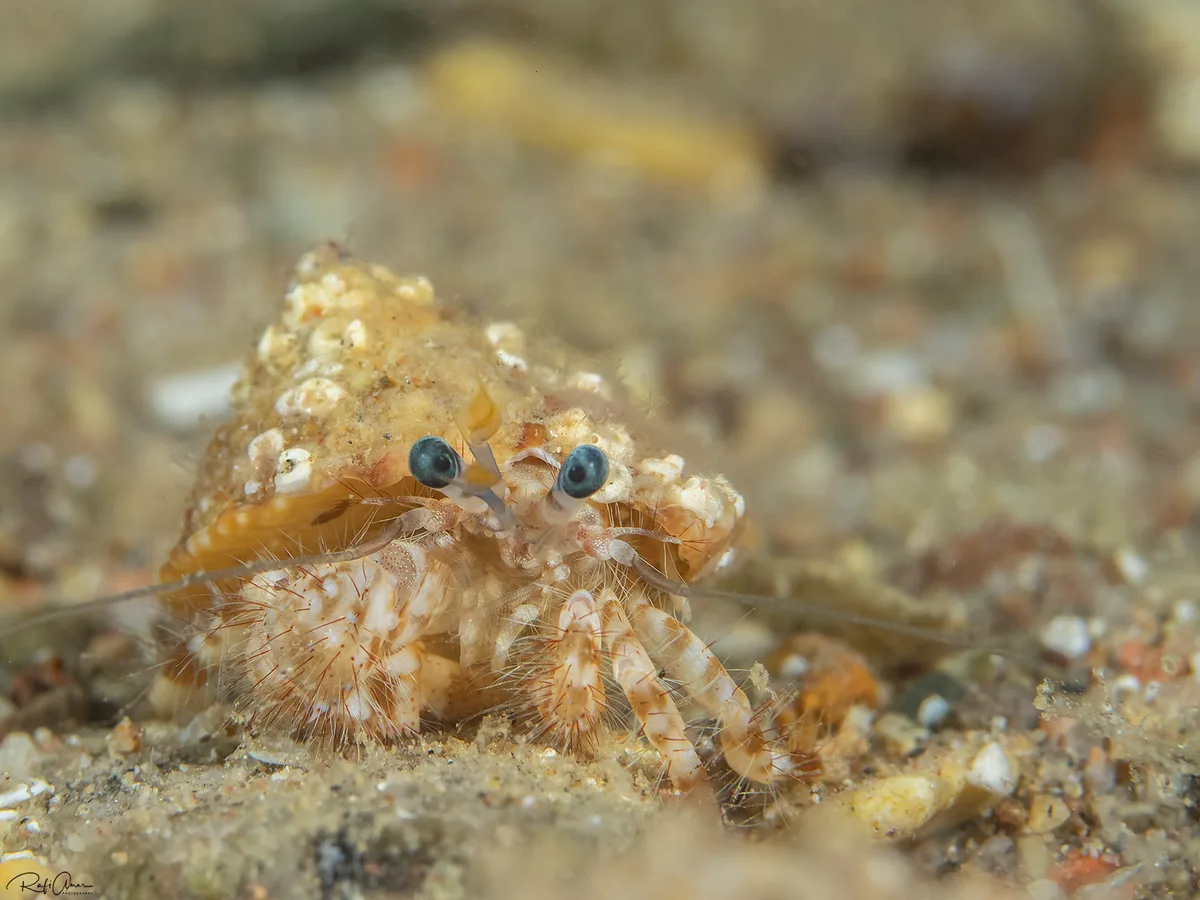
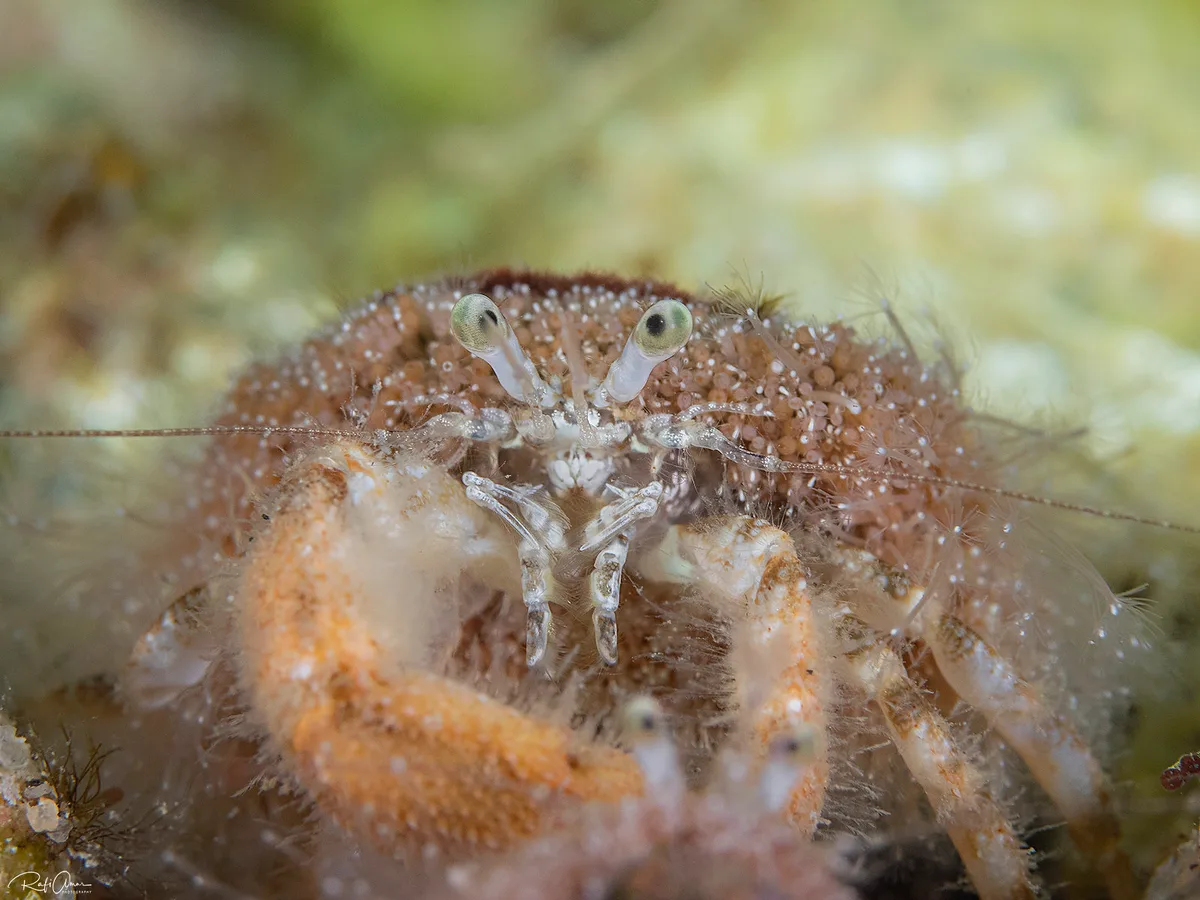
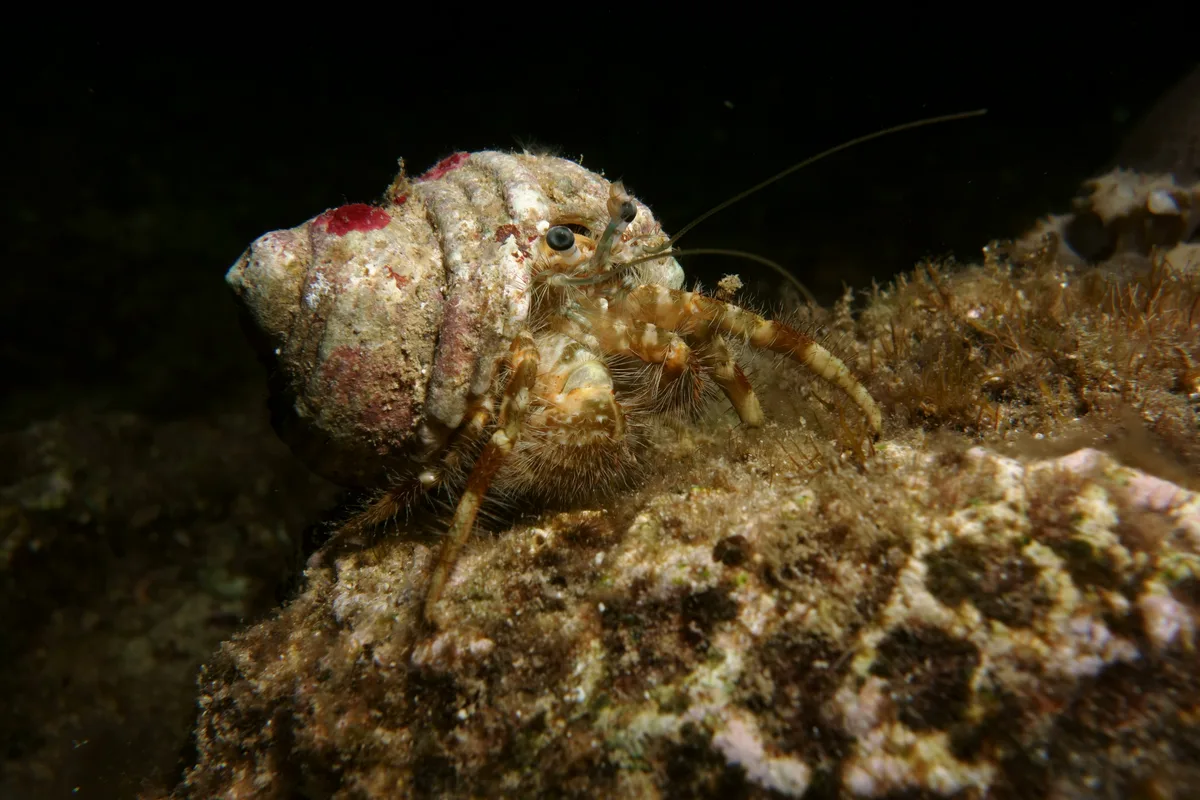
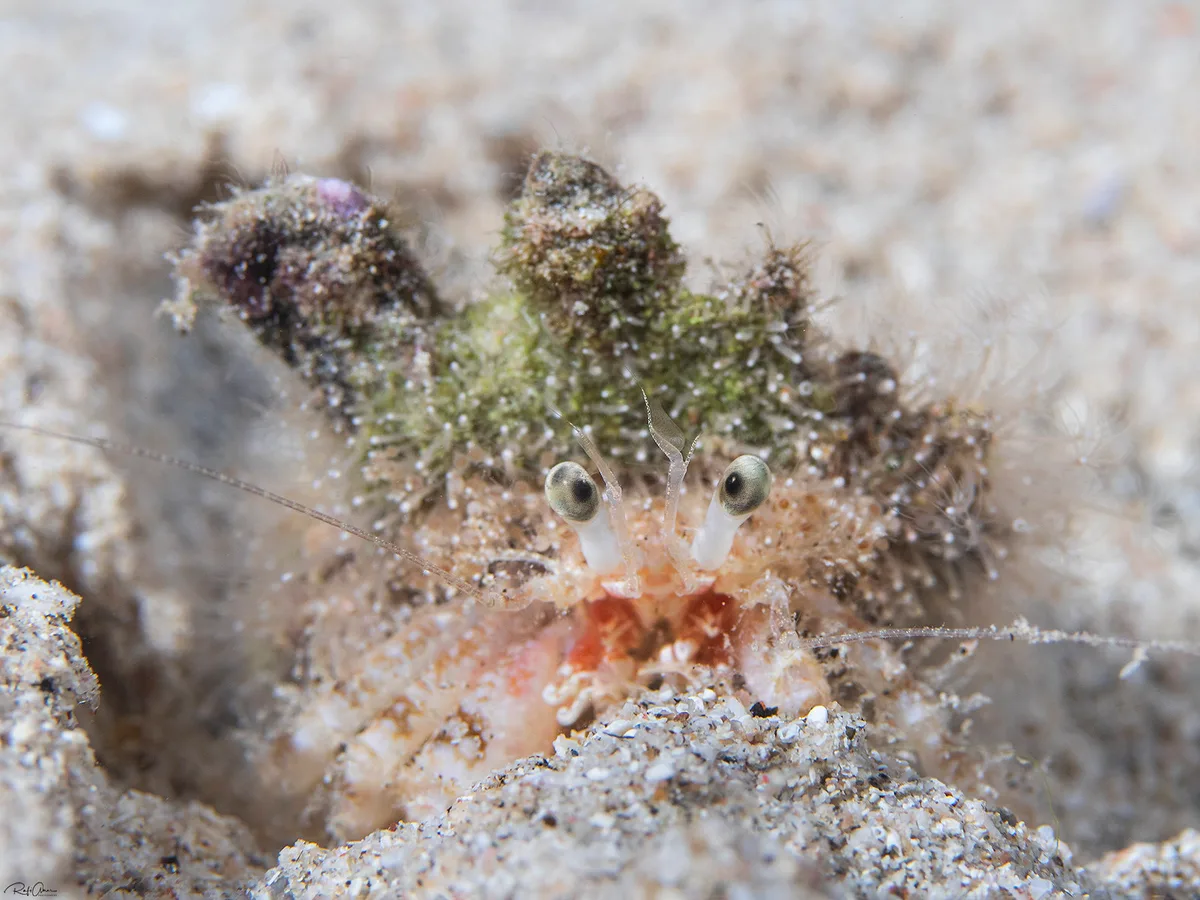
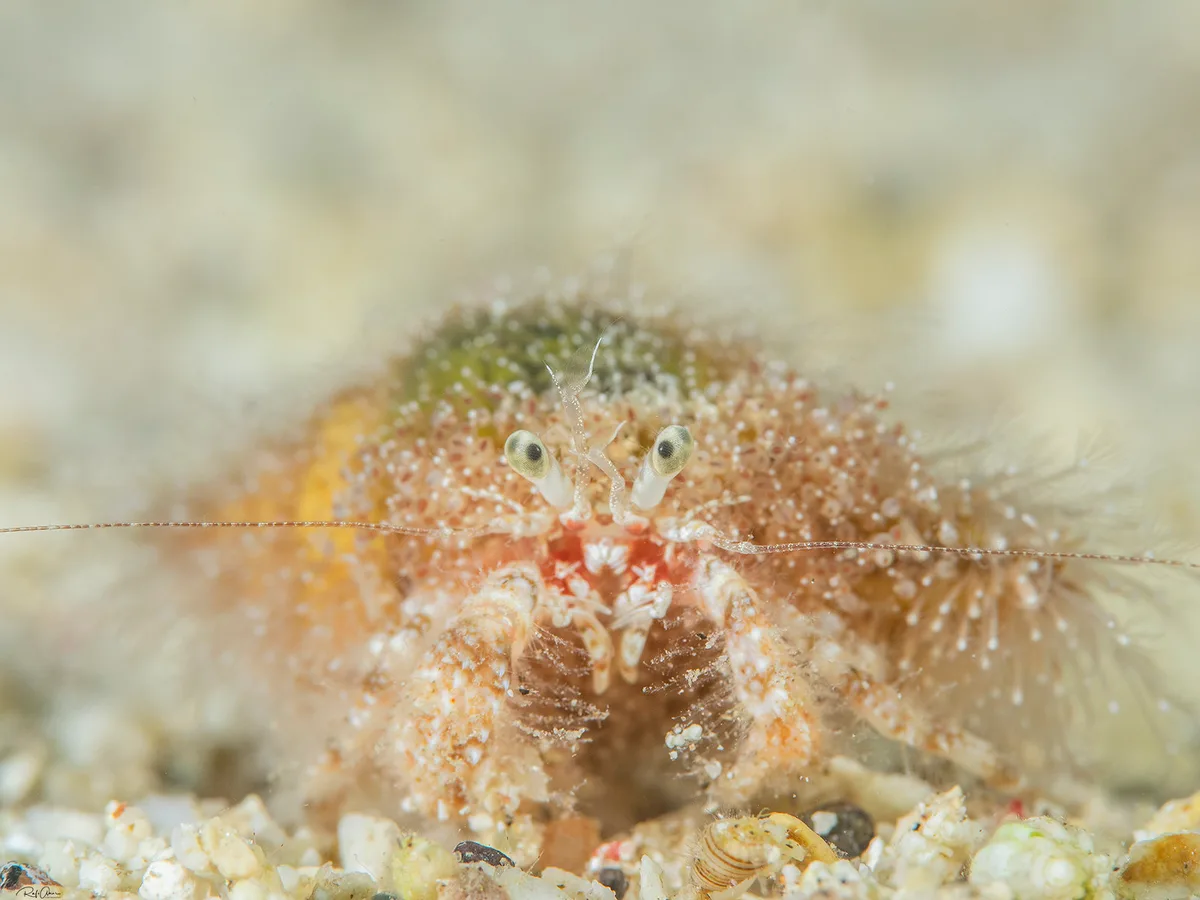
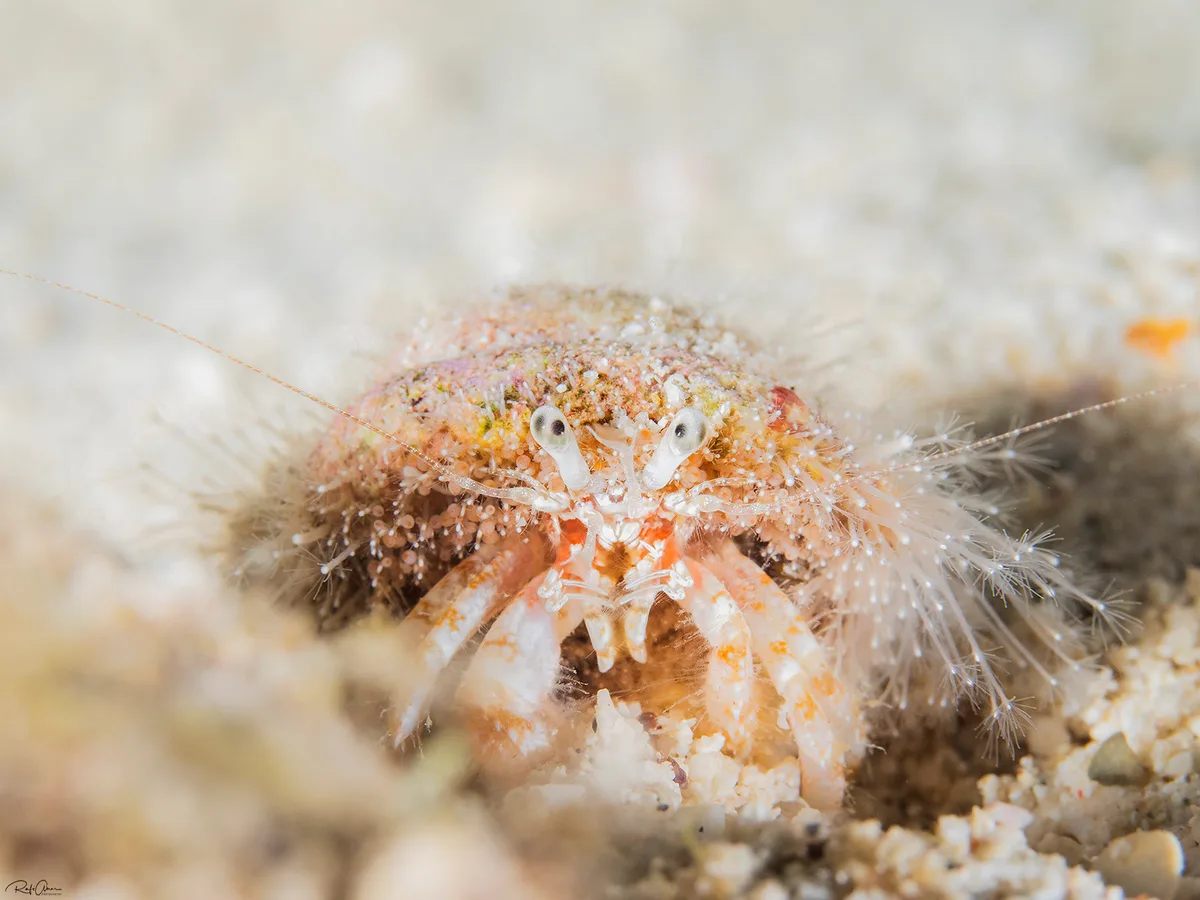
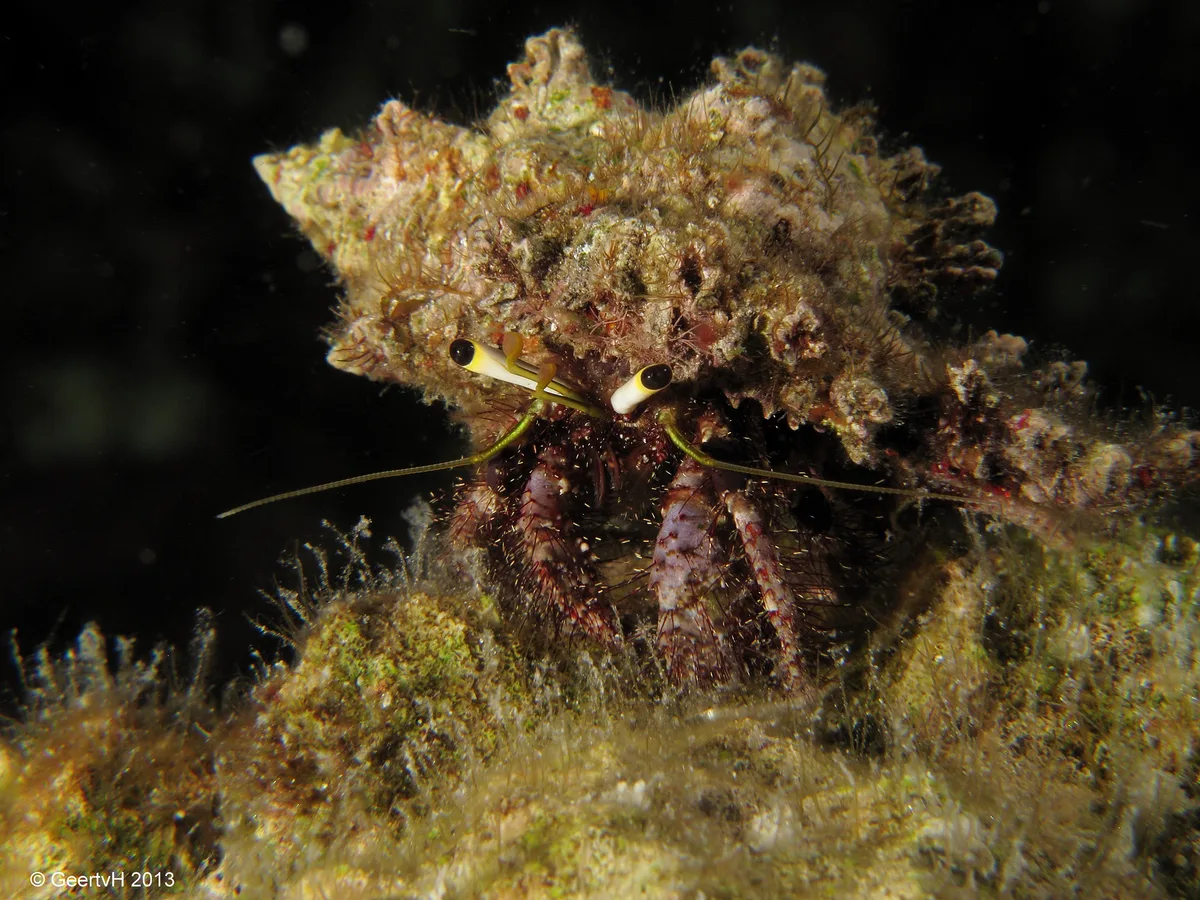
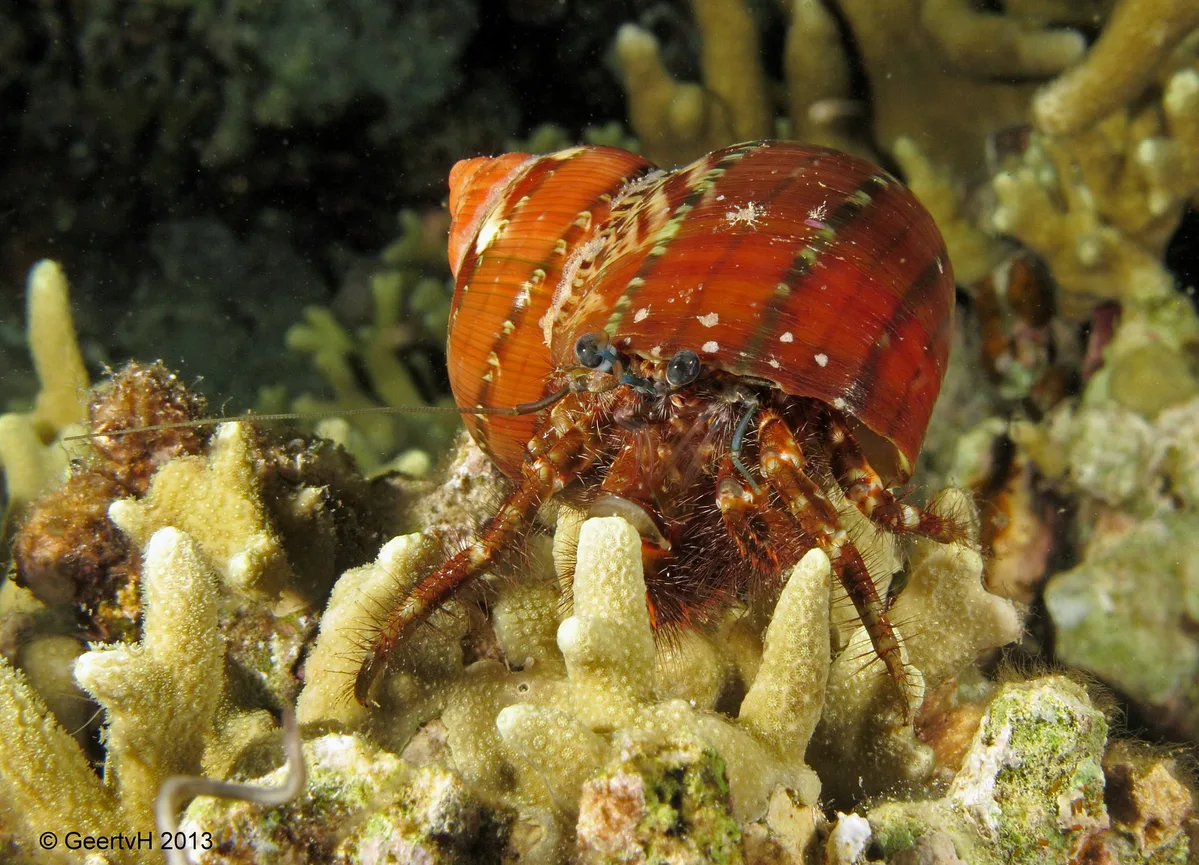
A bristly-clawed hermit crab of open bottom, three centimeters (1.2 in), and one where the asymmetry runs the other way: in this genus the right claw is the big one, where the reef hermits carry an oversized left.
That is not a detail for its own sake - claw asymmetry is one of the characters used to sort the whole group, and which side is enlarged separates whole families. A photograph that shows the claws is worth more than one that shows the shell.
Its abdomen is soft, twisted, and shaped to the inside of a snail shell, held in place by hooked appendages at the tail. That asymmetric body is why a hermit crab cannot simply leave - the animal is built around the shell it inherited.
It feeds on detritus, carrion and small animals at night, working sand and seagrass rather than reef.
- medium hermit crab with bristly, hairy claws
- right claw larger than the left, unlike the reef hermits
- in moderately large snail shells on open bottom
- length up to 3 cm