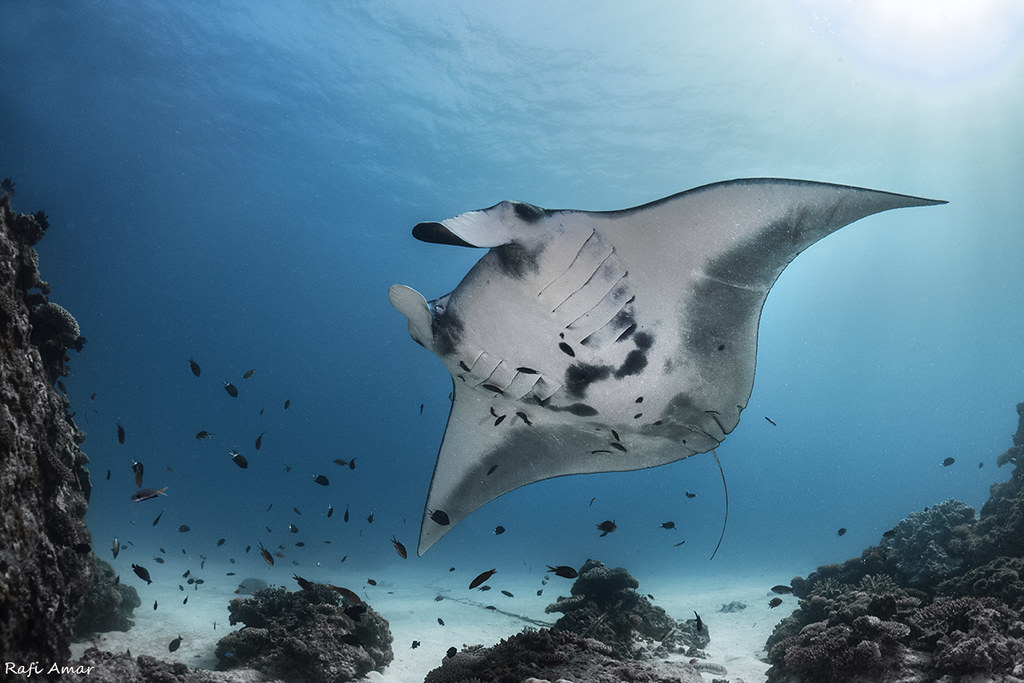
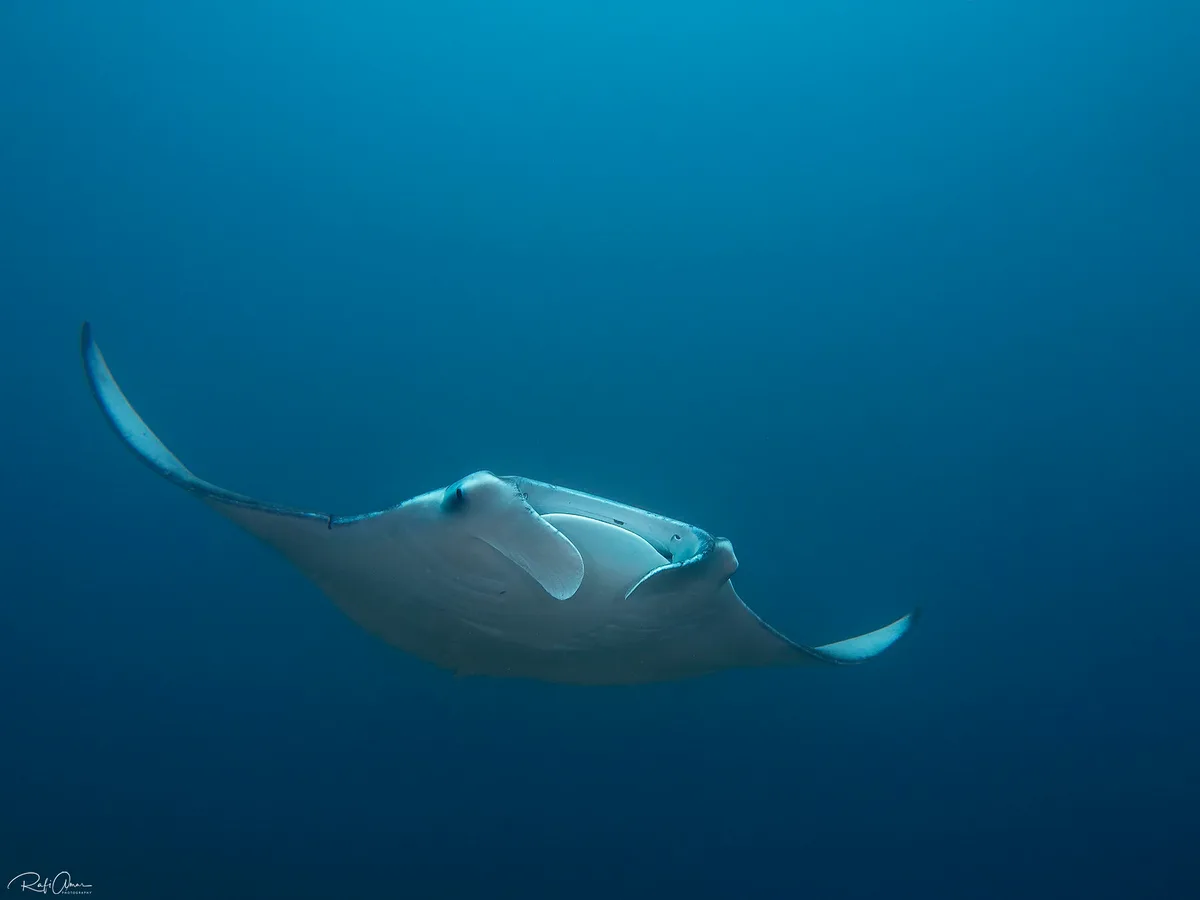
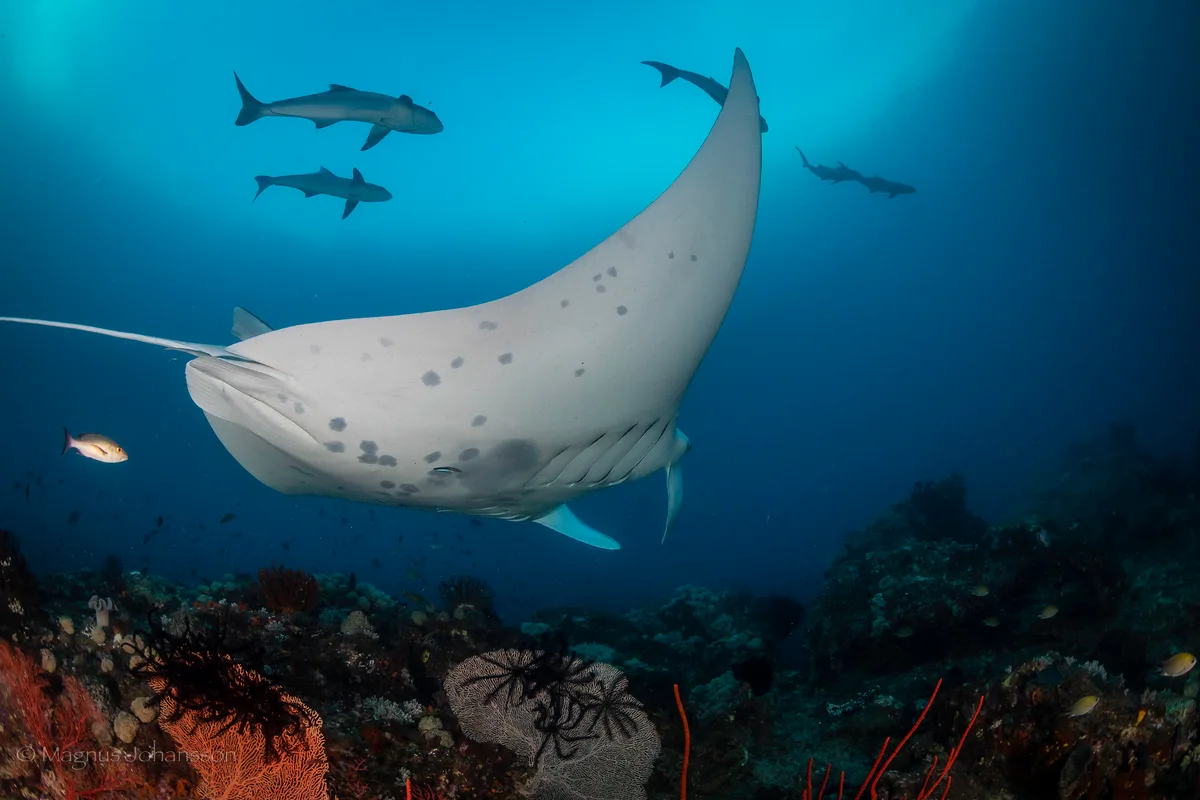
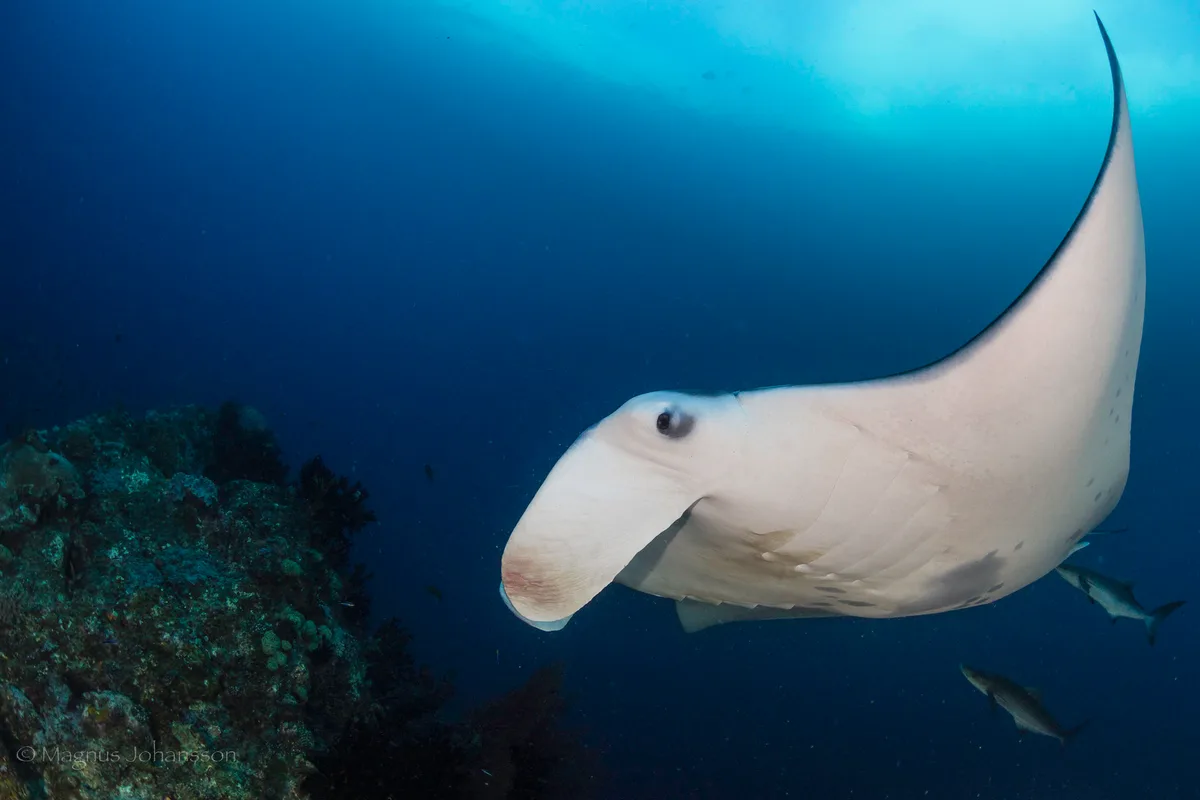
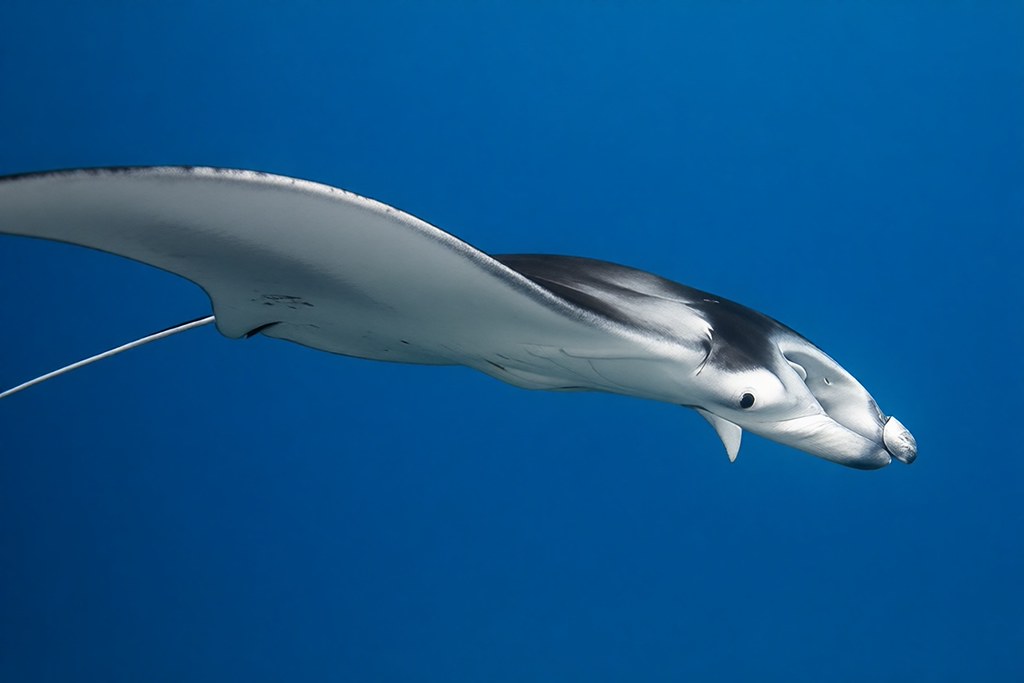
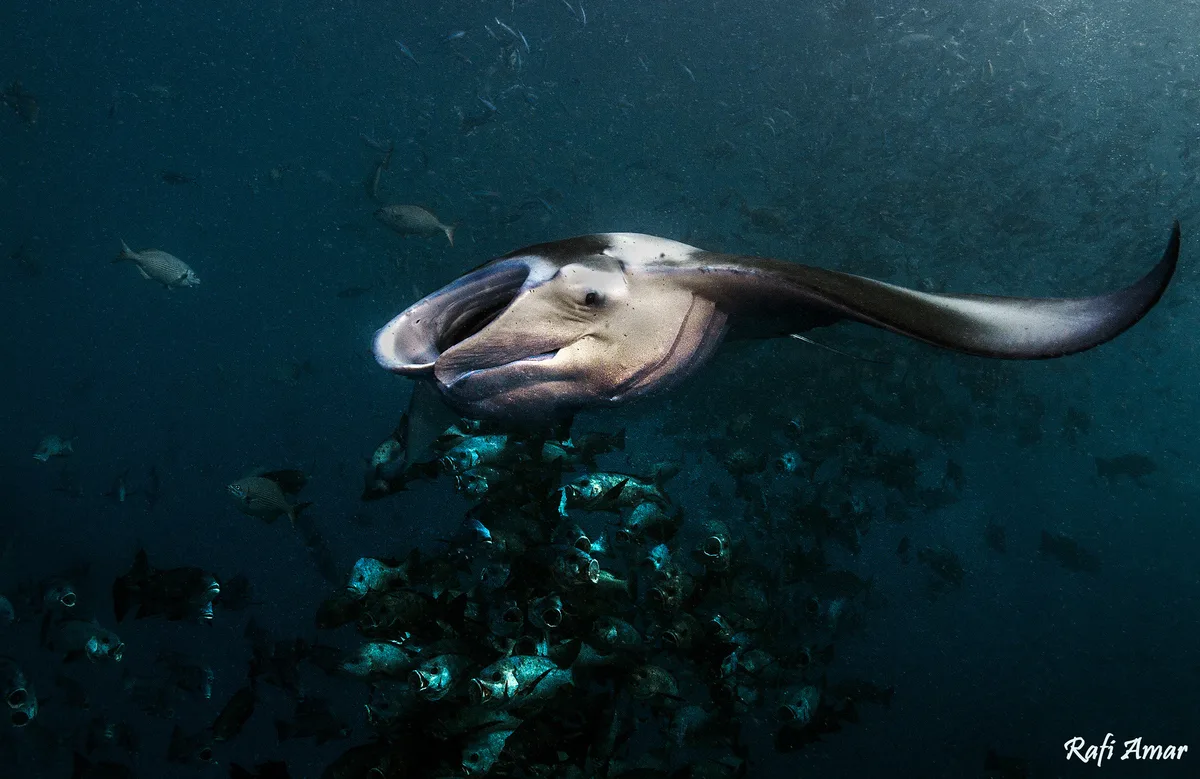
A manta of the coast rather than the open ocean: up to 5 m (16 ft) across, black above with a pale shoulder patch shaped like a Y, where the giant oceanic manta wears a T. That patch, plus size, is the field separation, and it matters because the two species were only separated in 2009.
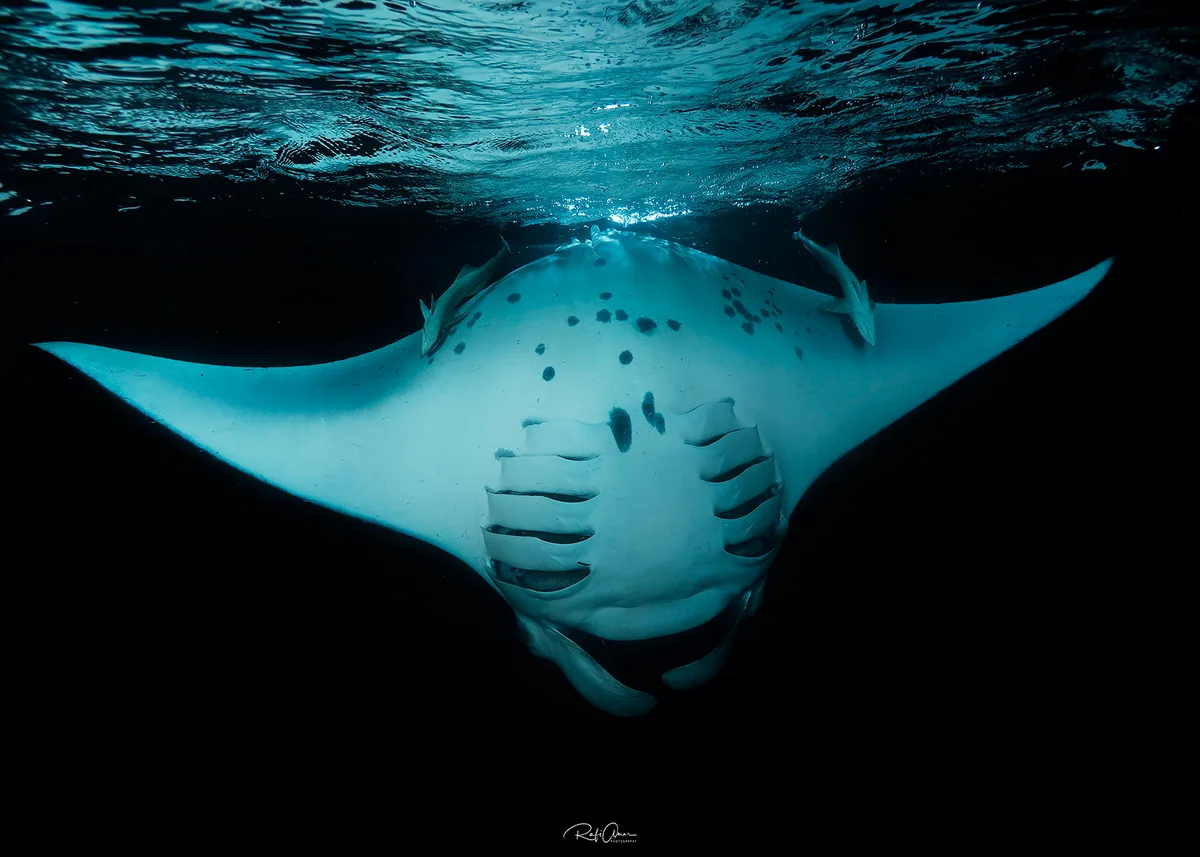
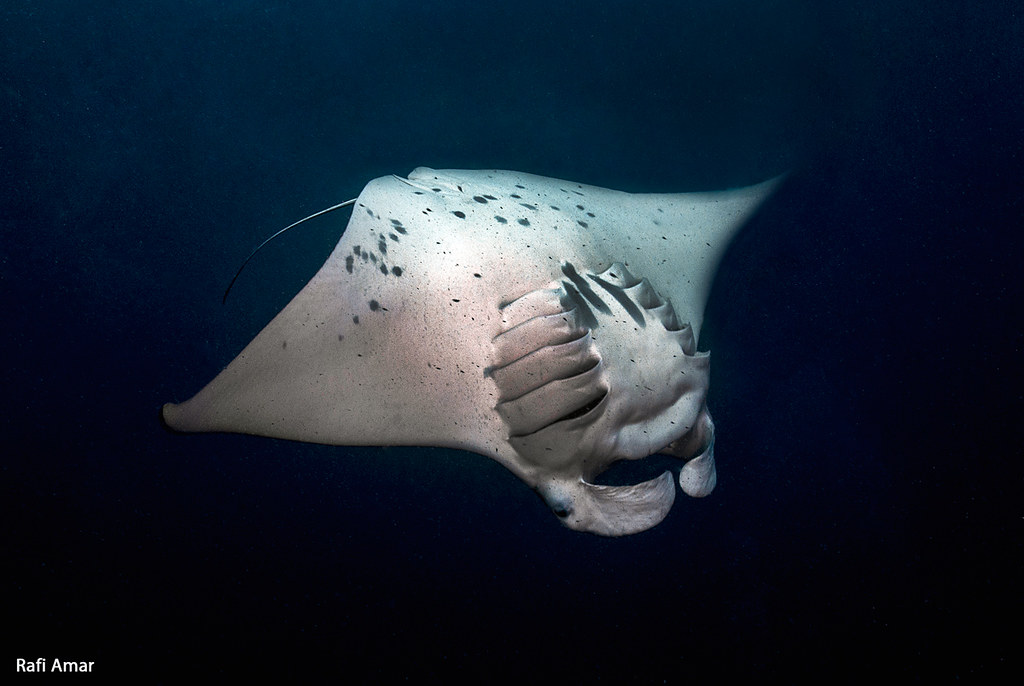
This is the one that stays. Reef mantas hold home ranges of tens of kilometers, use the same cleaning stations for years, and are known individually to researchers and guides from the pattern of black spots on the belly - a fingerprint that does not change over a lifetime that can run past forty years.
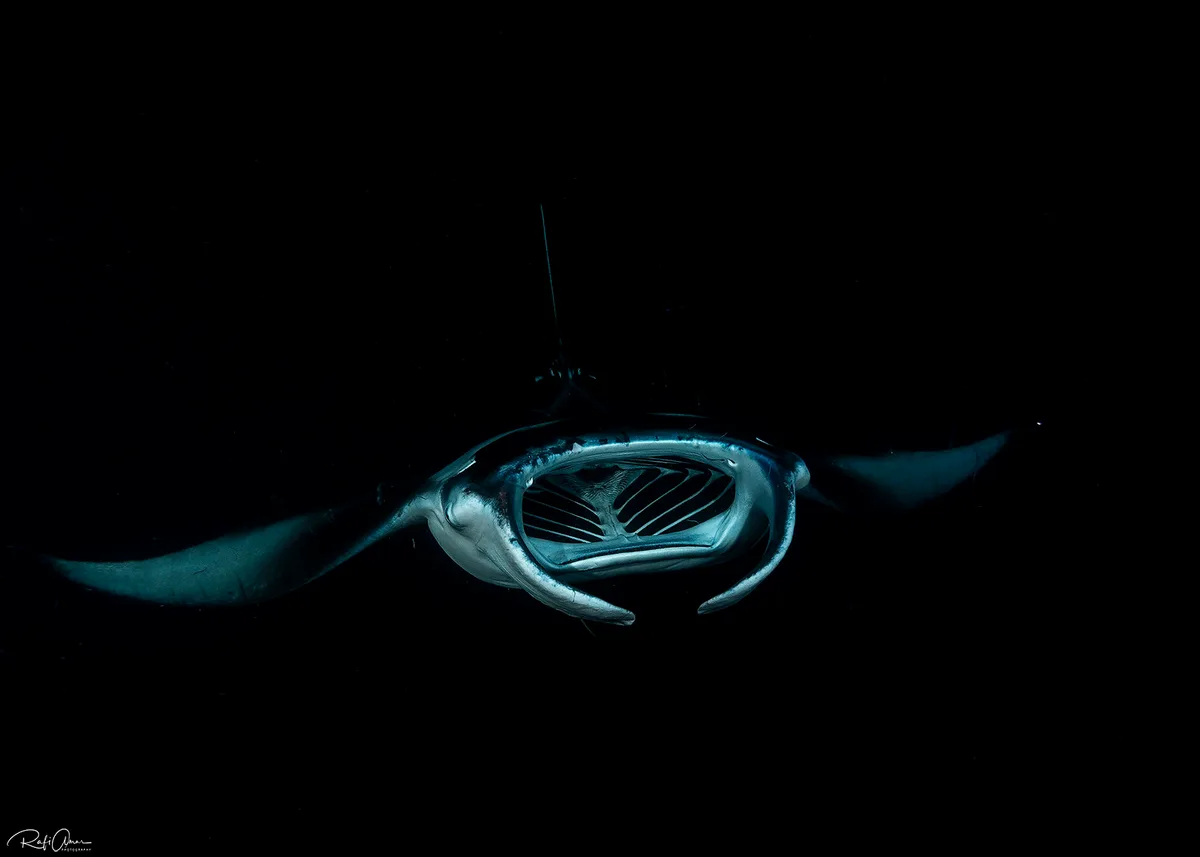
Feeding is filtration on the move, and it is choreographed: mantas at a plankton patch form chains nose to tail, barrel-roll in place to stay inside a dense patch, and sometimes gather into slow rotating cyclones of dozens of animals, each one funneling water into the next.
One pup at a time, after a year of gestation, with several years between births. That reproductive rate, plus a habit of visiting predictable places, is why the species is Vulnerable and why the gill-plate trade hurts it so fast.
The species. Mobula alfredi (Krefft 1868) - Honours Prince Alfred. ETYFish
- large diamond disc, black above with a pale shoulder patch shaped like a Y
- belly spots between the gill slits and behind them, unique to each animal
- mouth at the front of the head, cephalic fins rolled into horns when not feeding
- disc up to 5 m across


