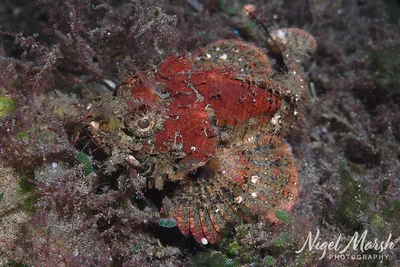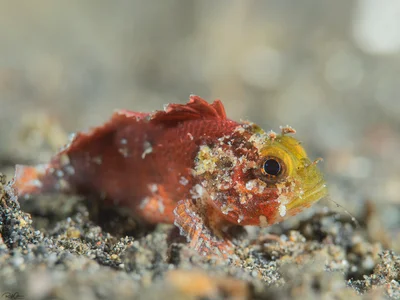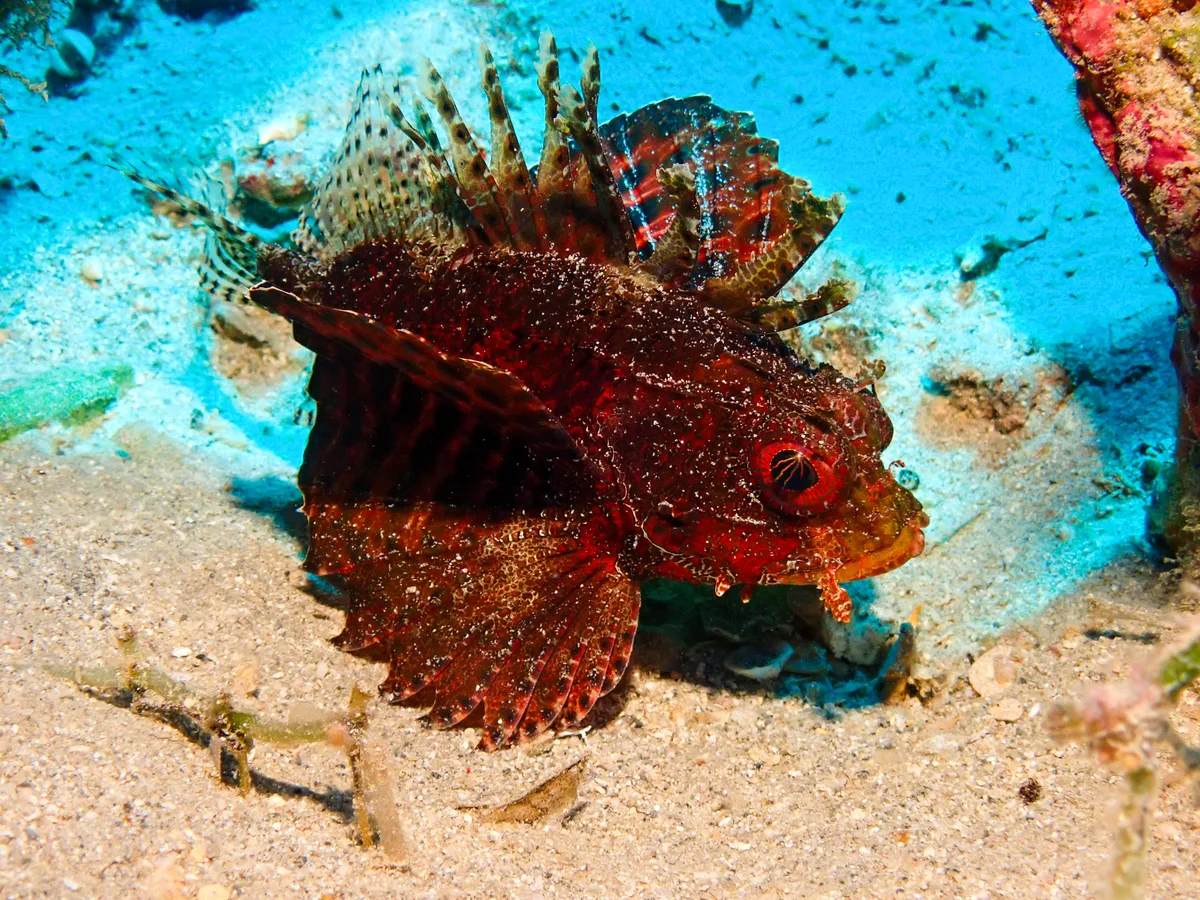
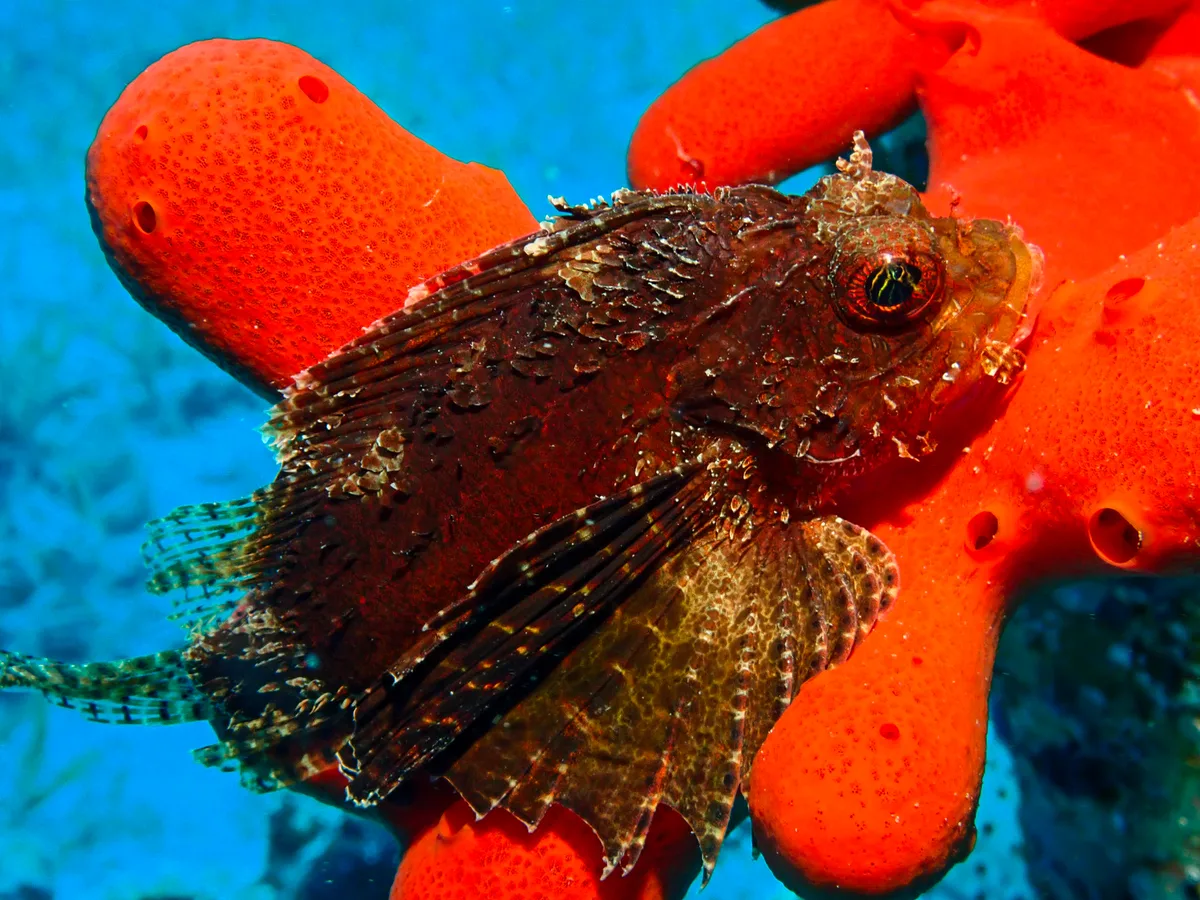
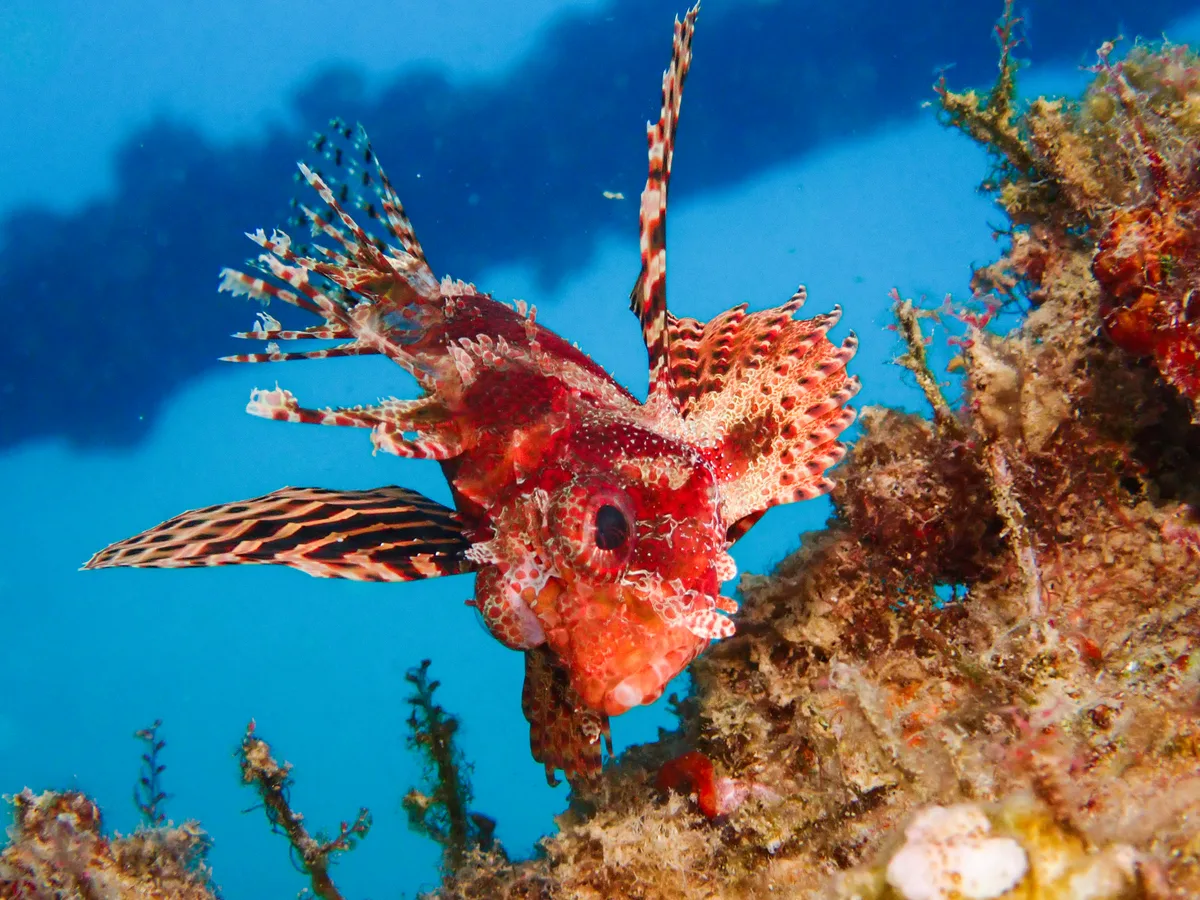
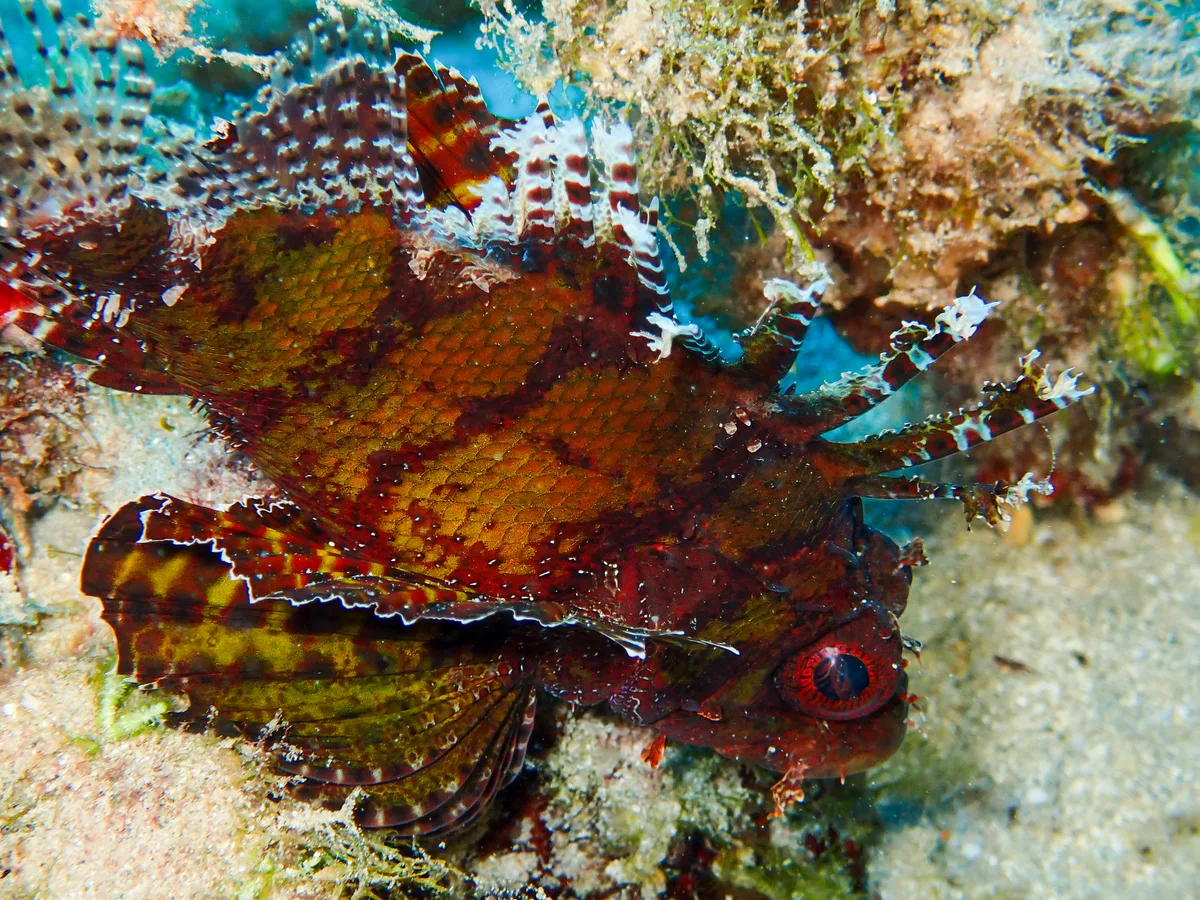
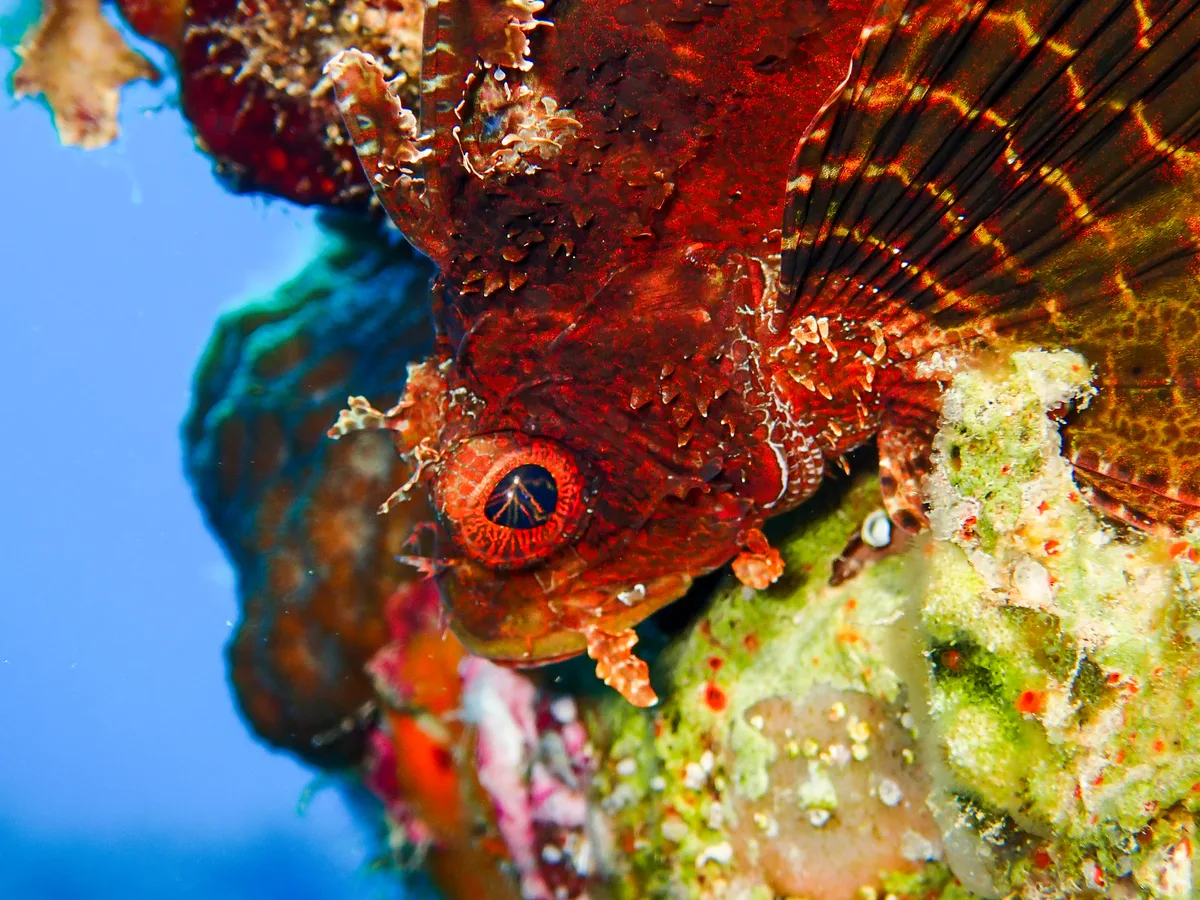
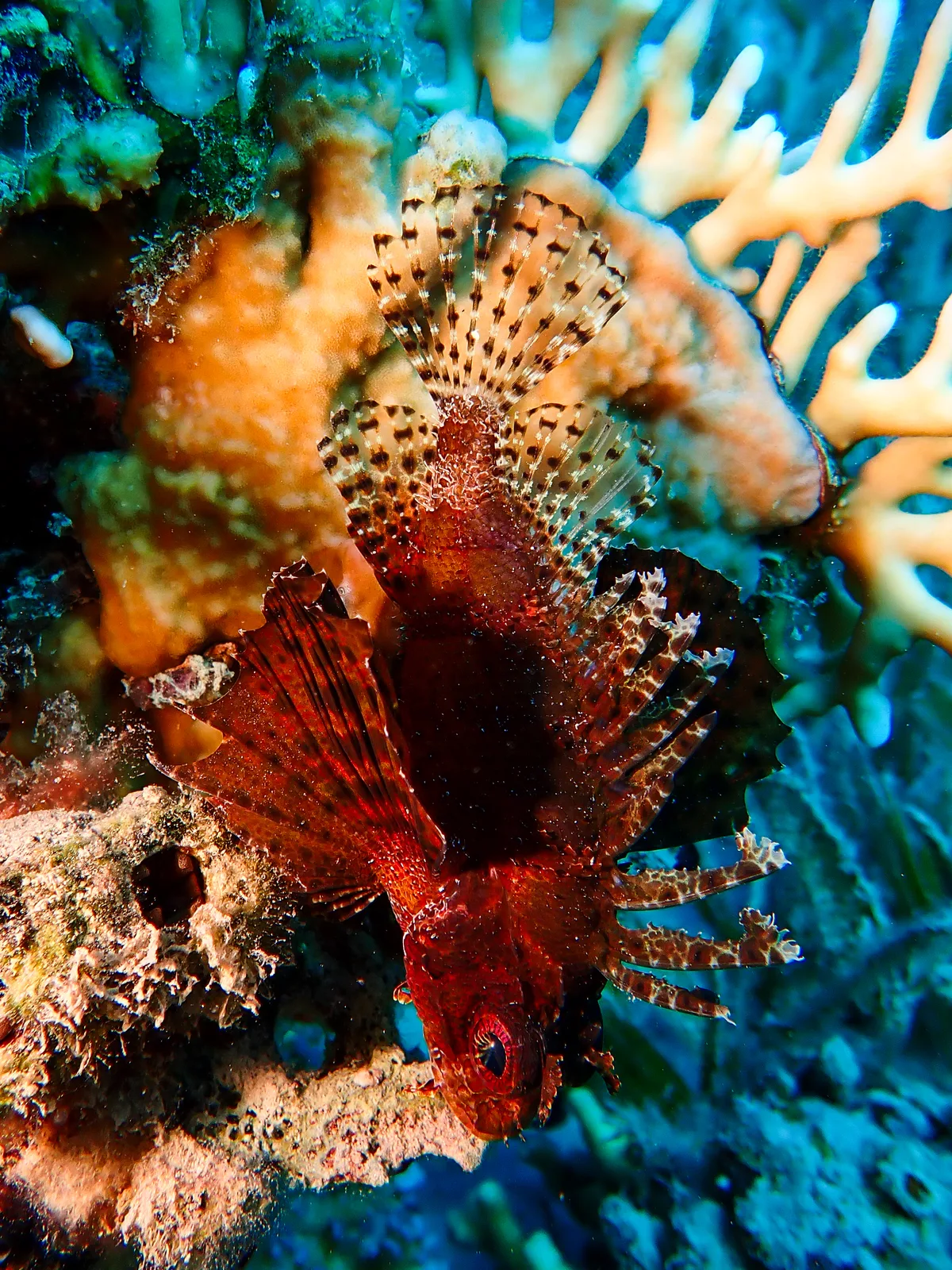
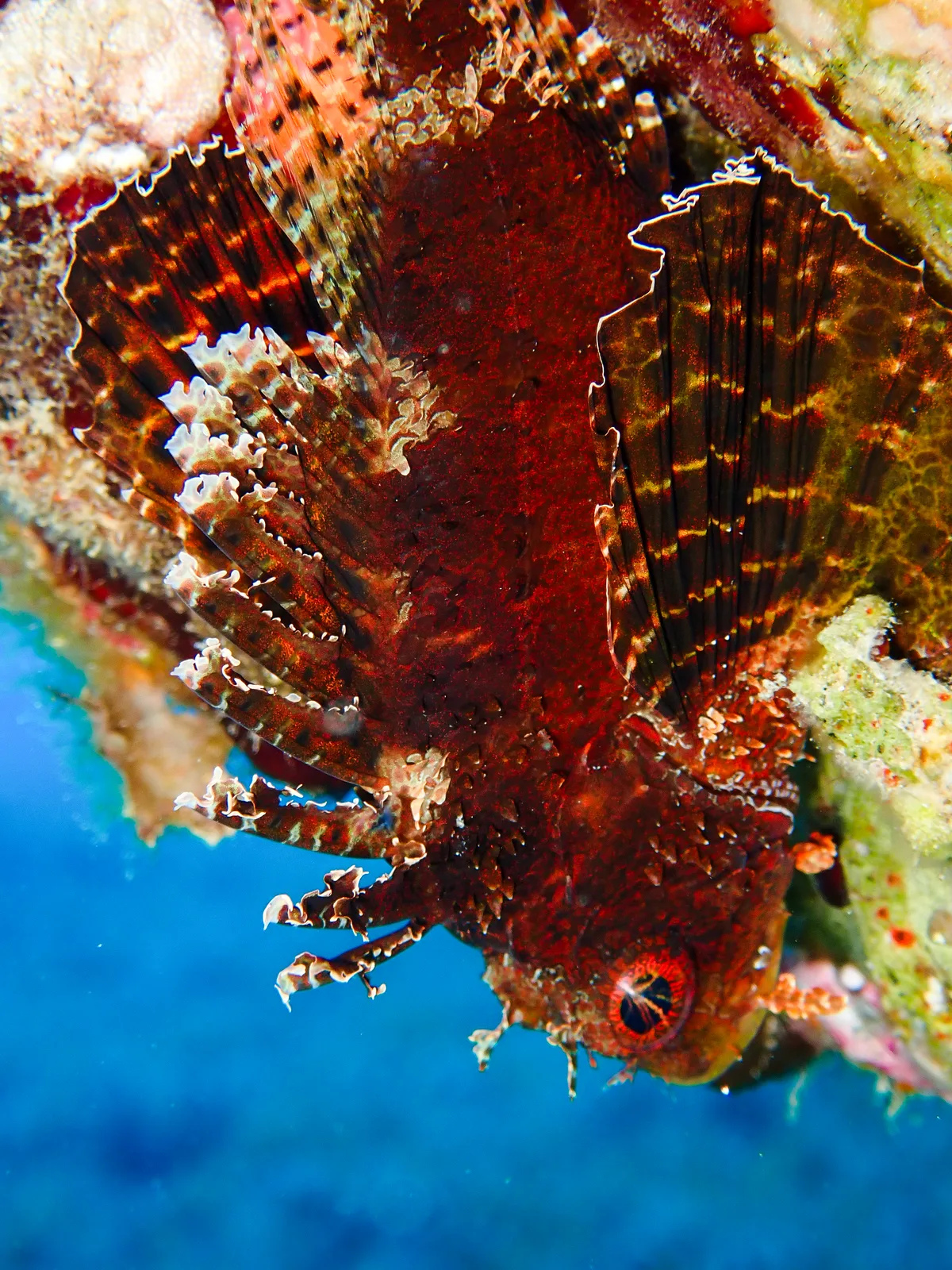
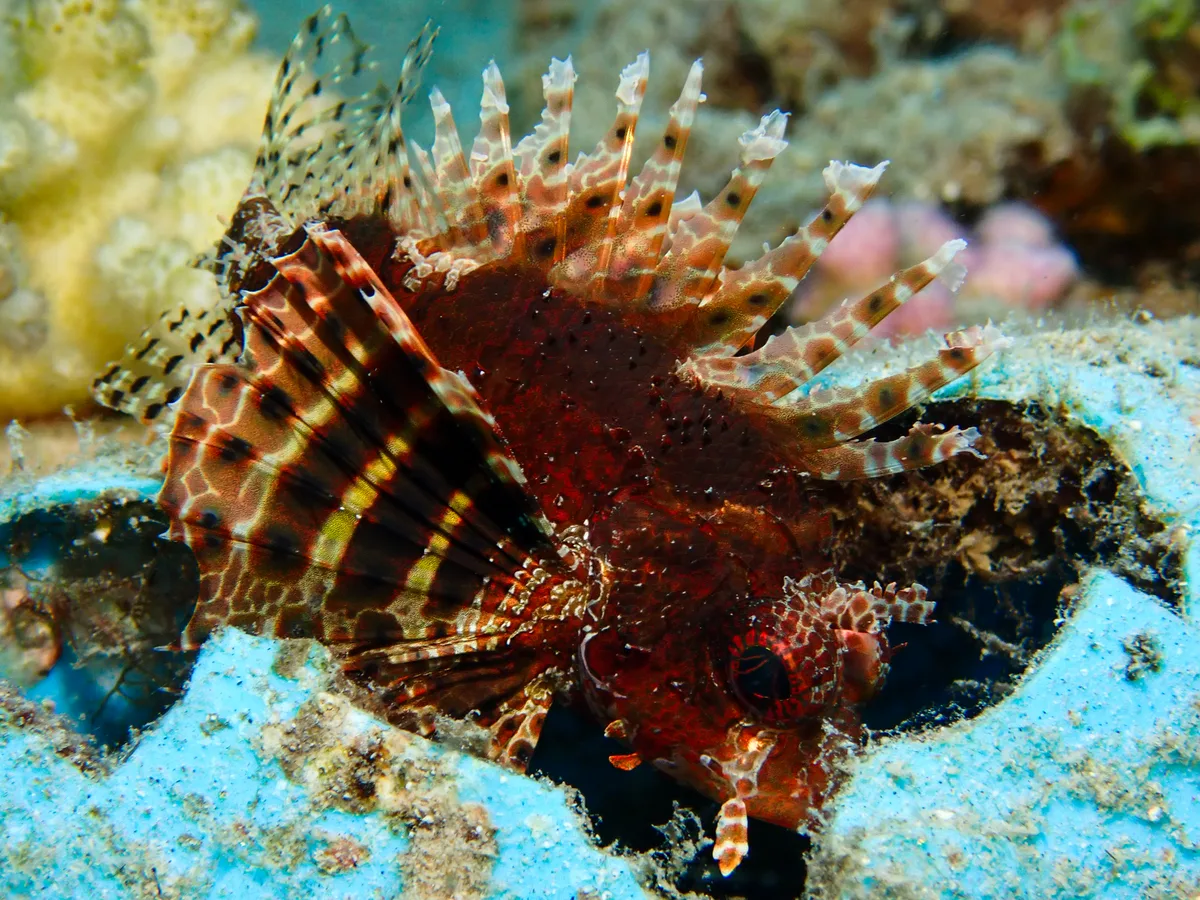
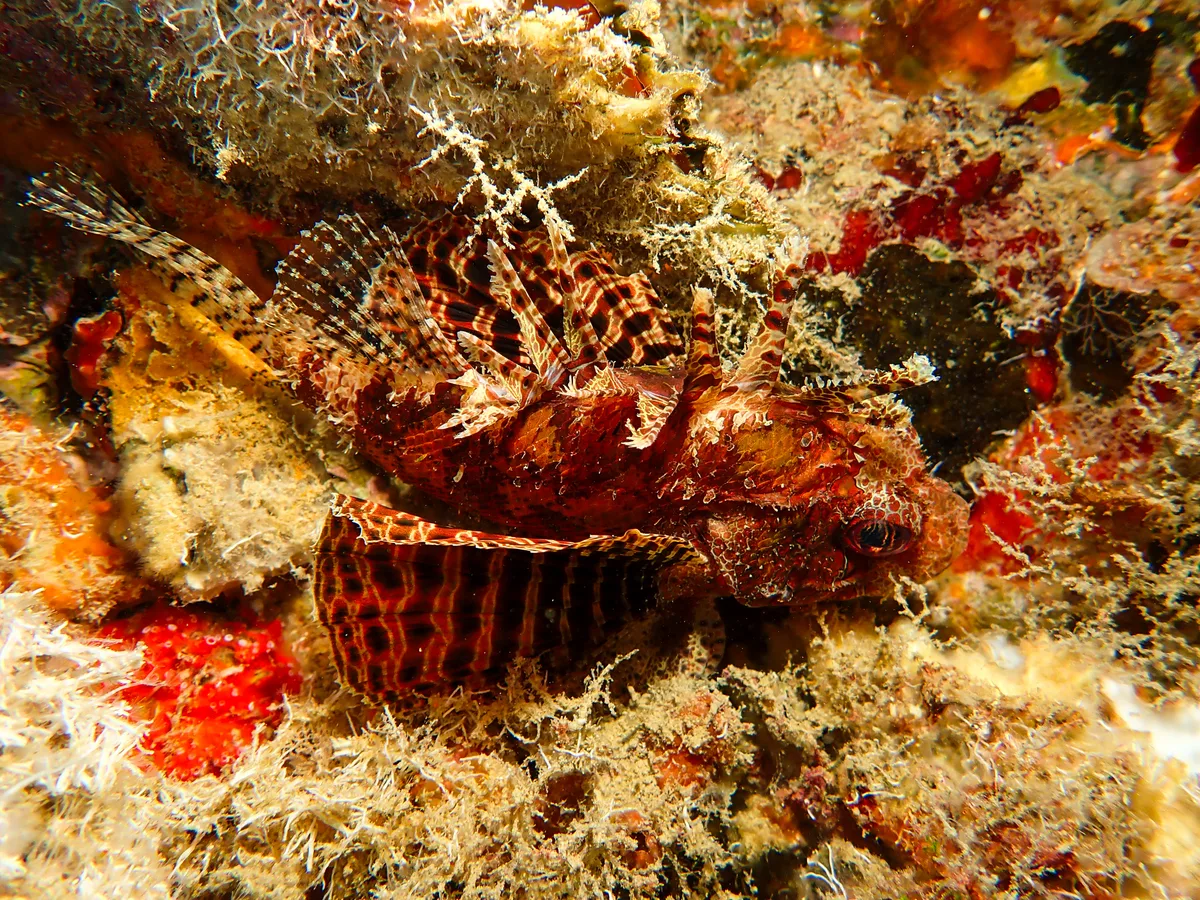
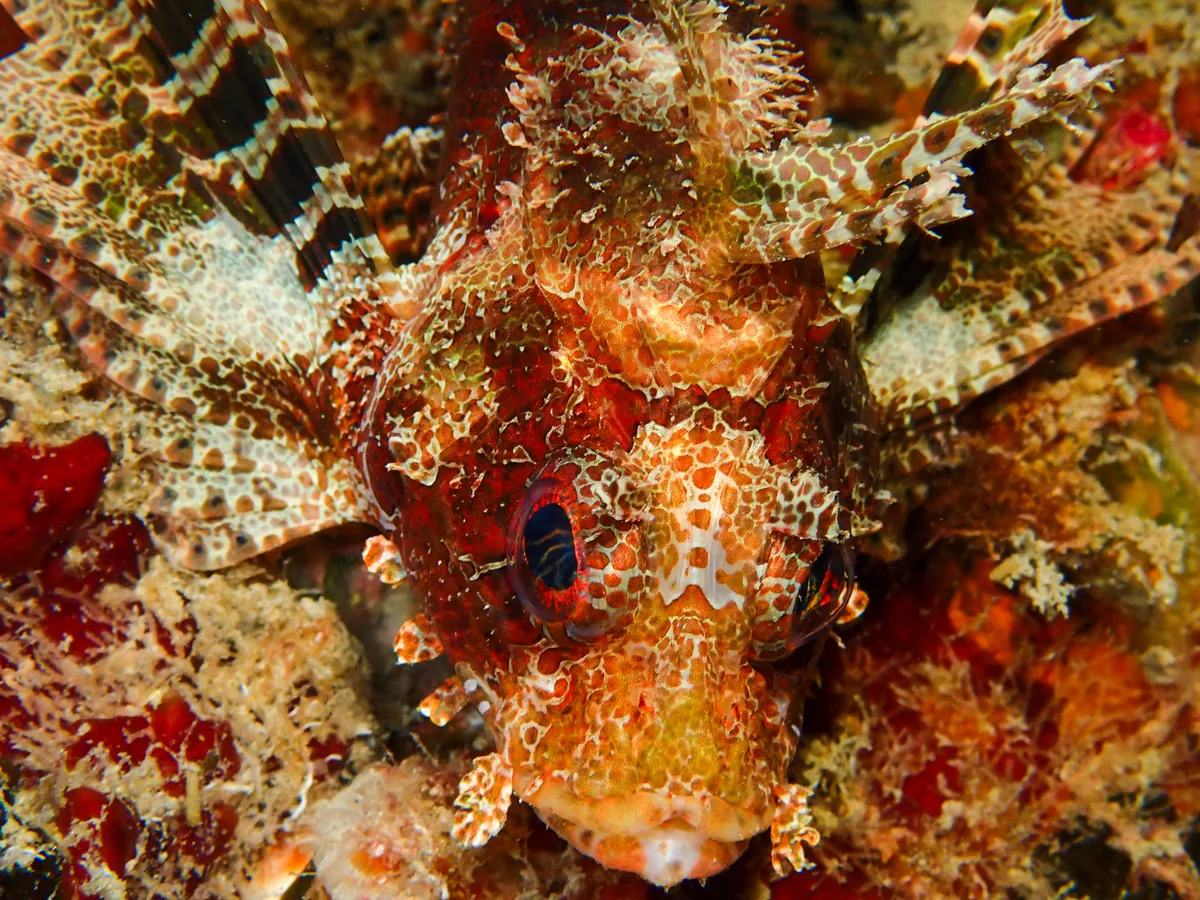
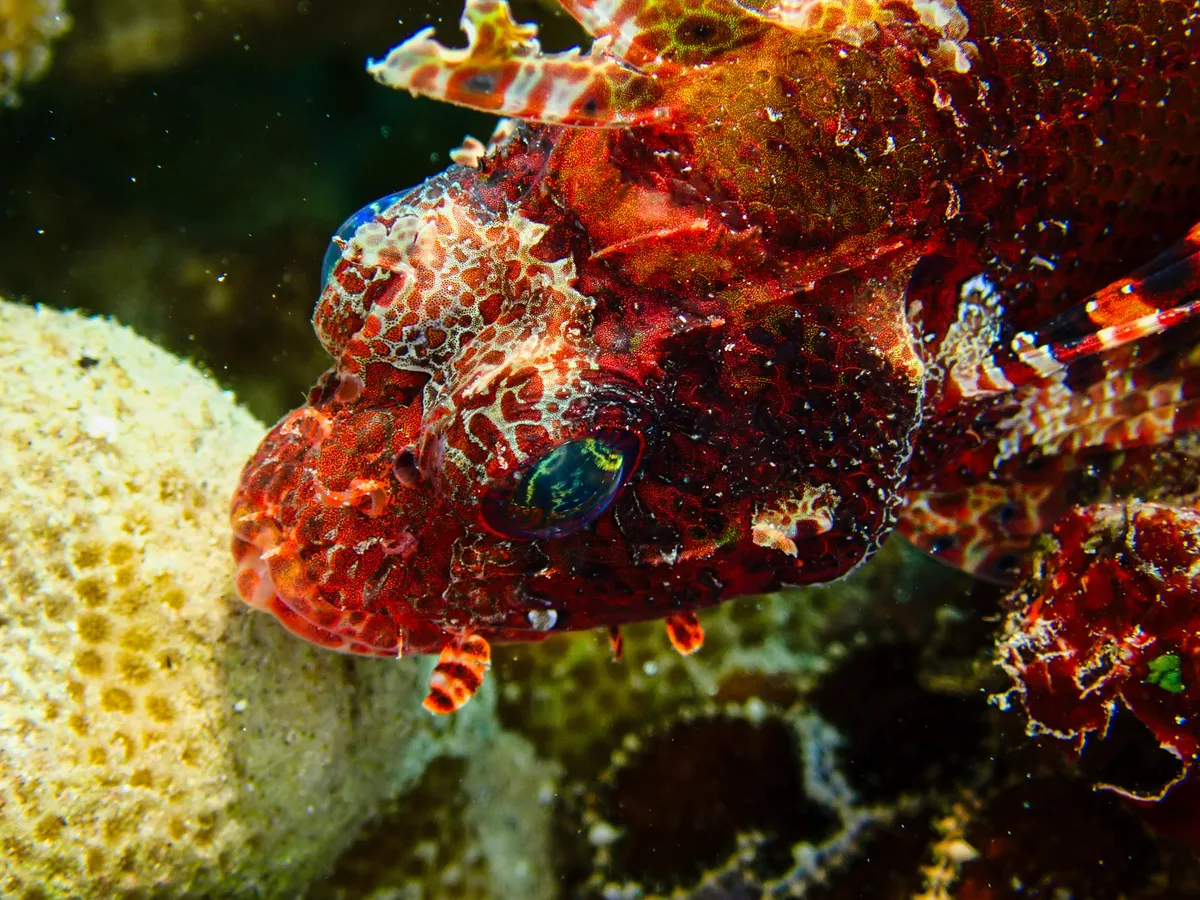
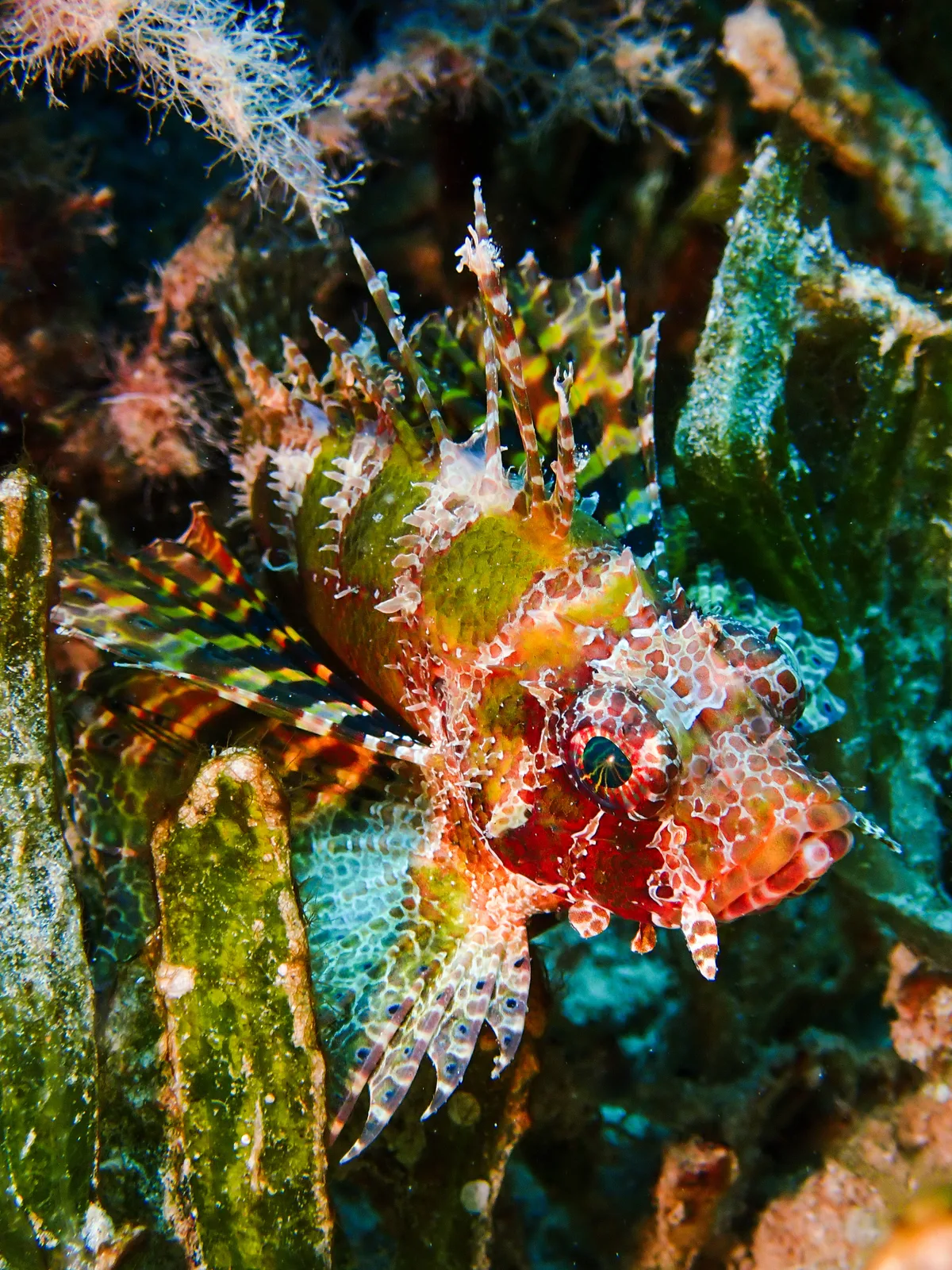
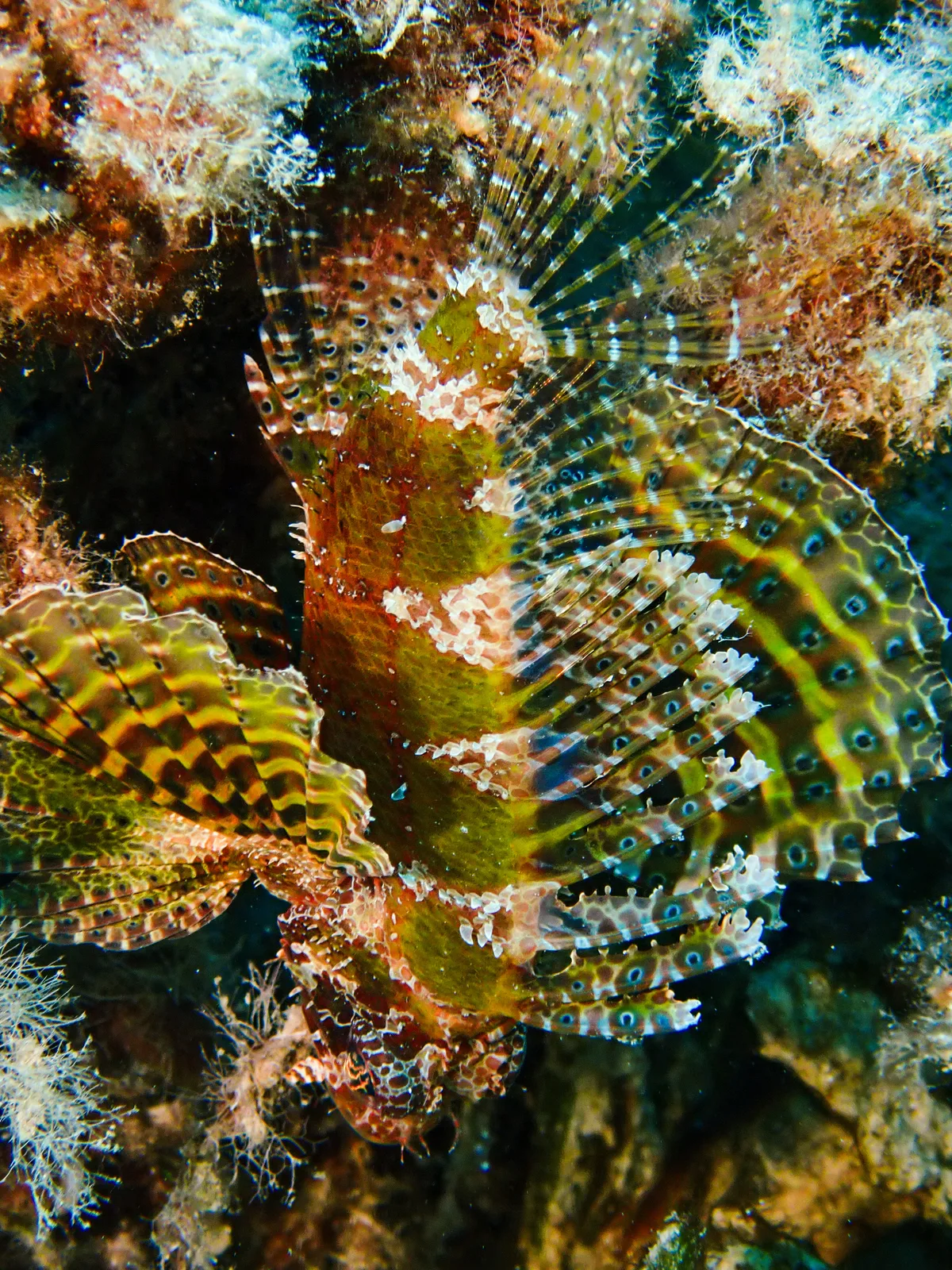
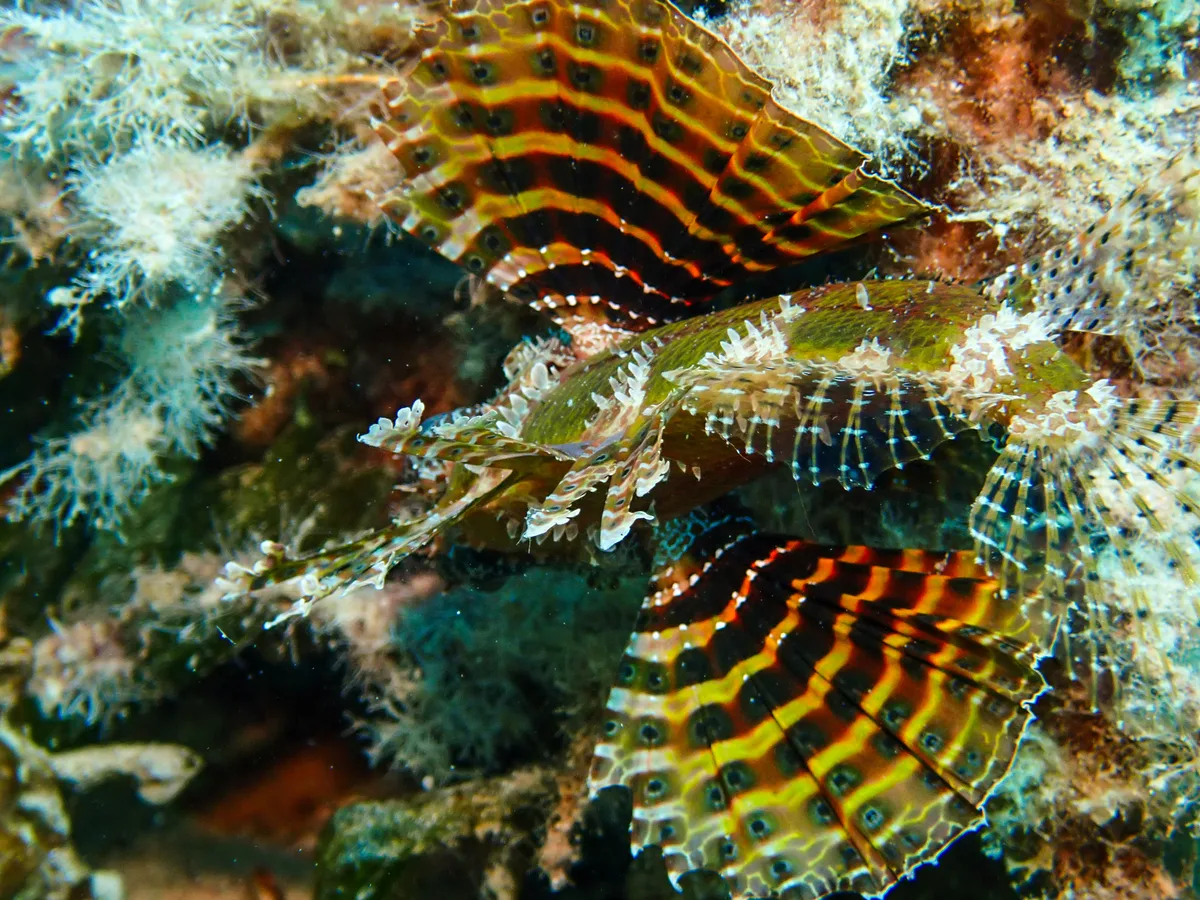
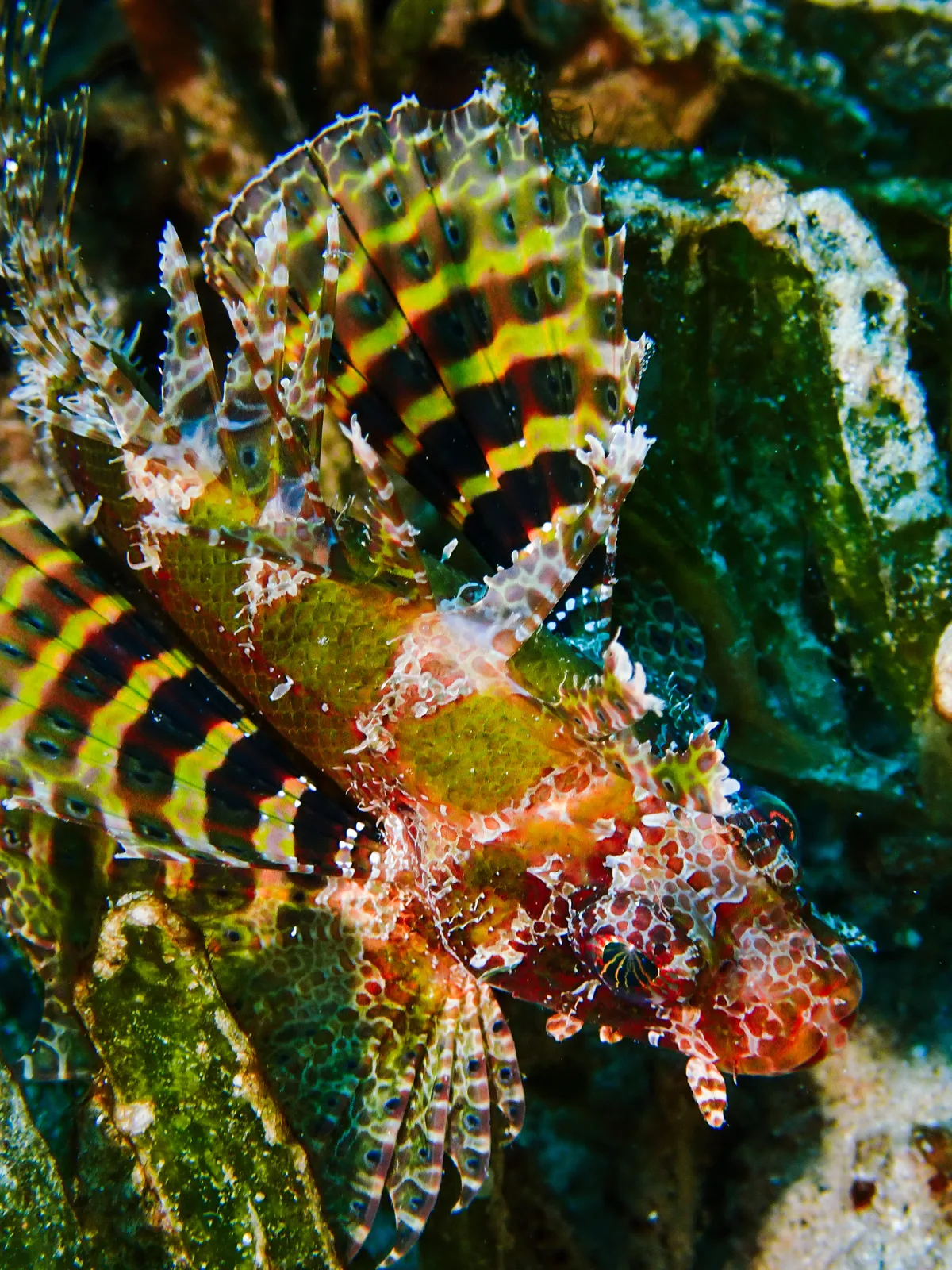
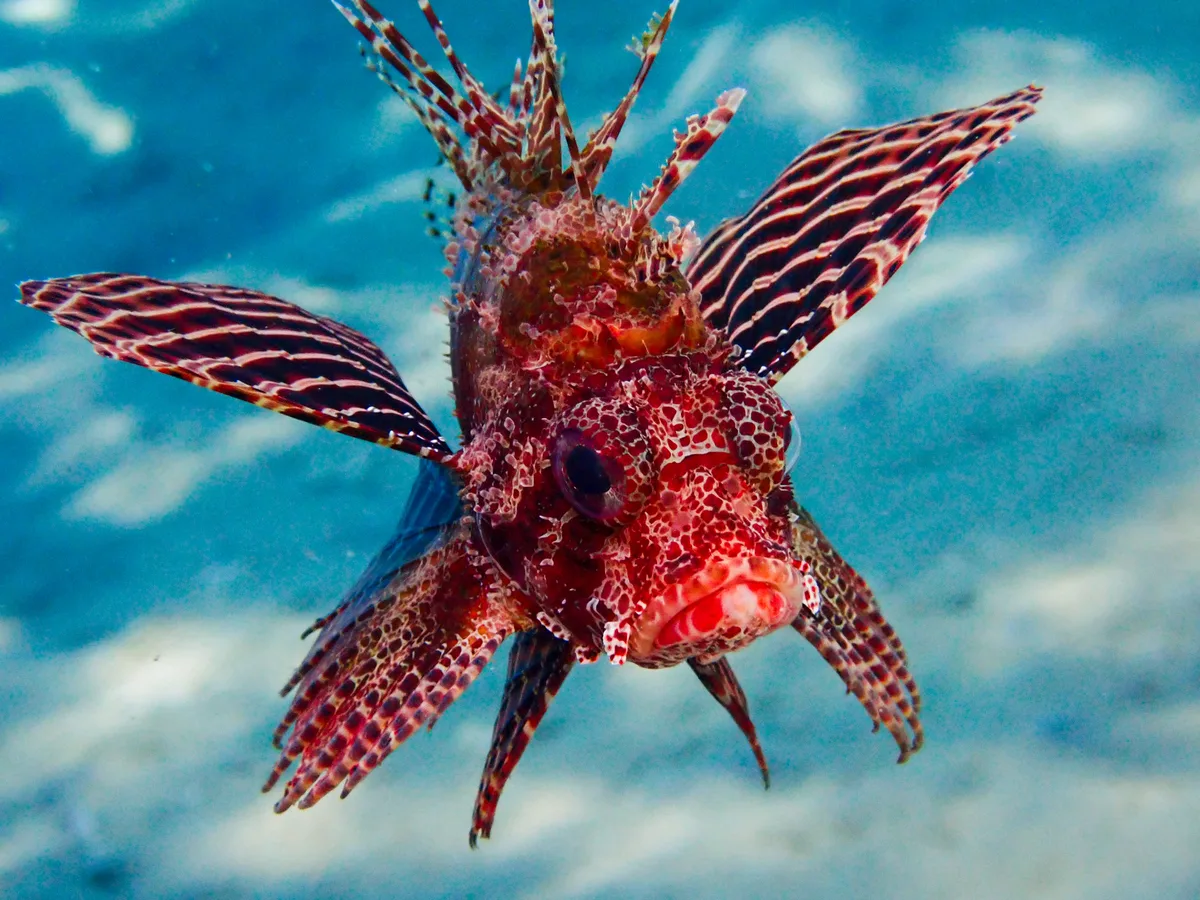
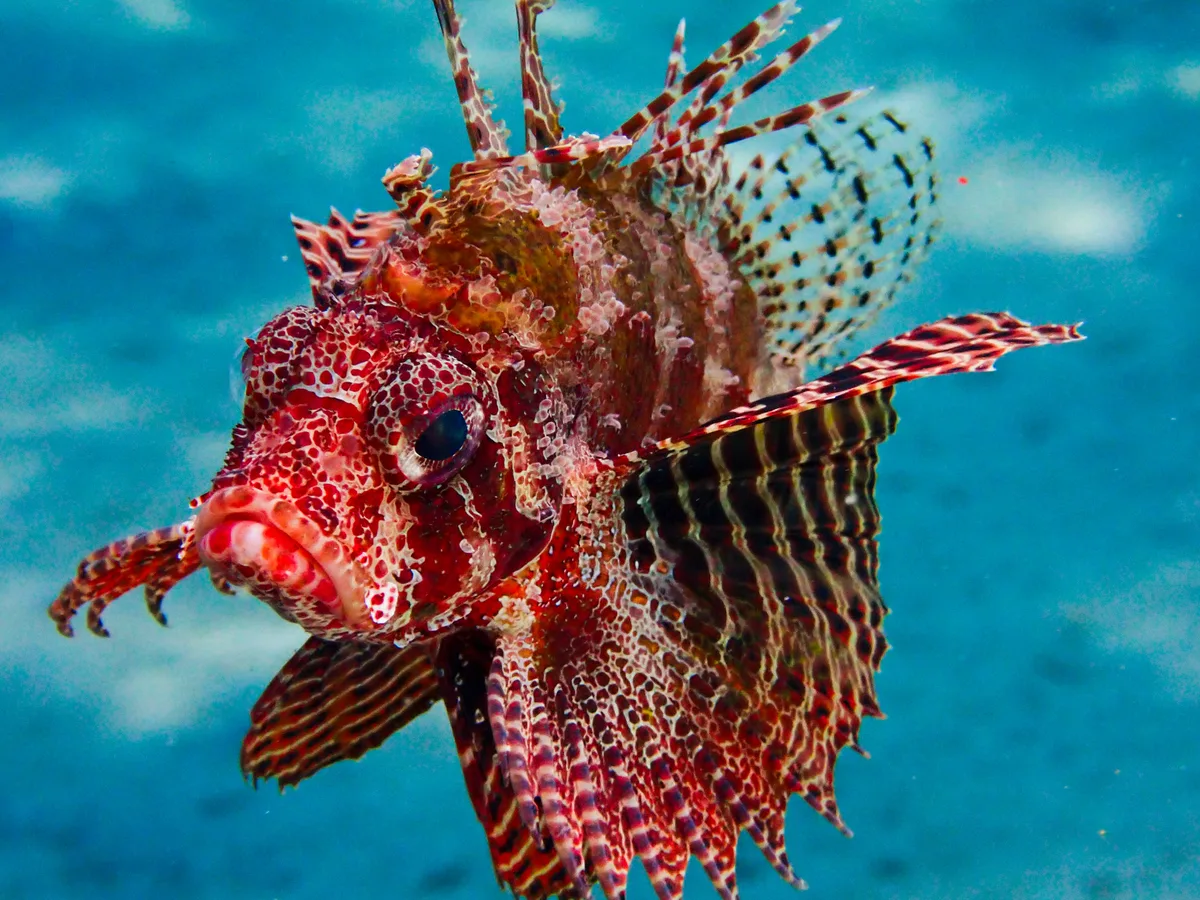
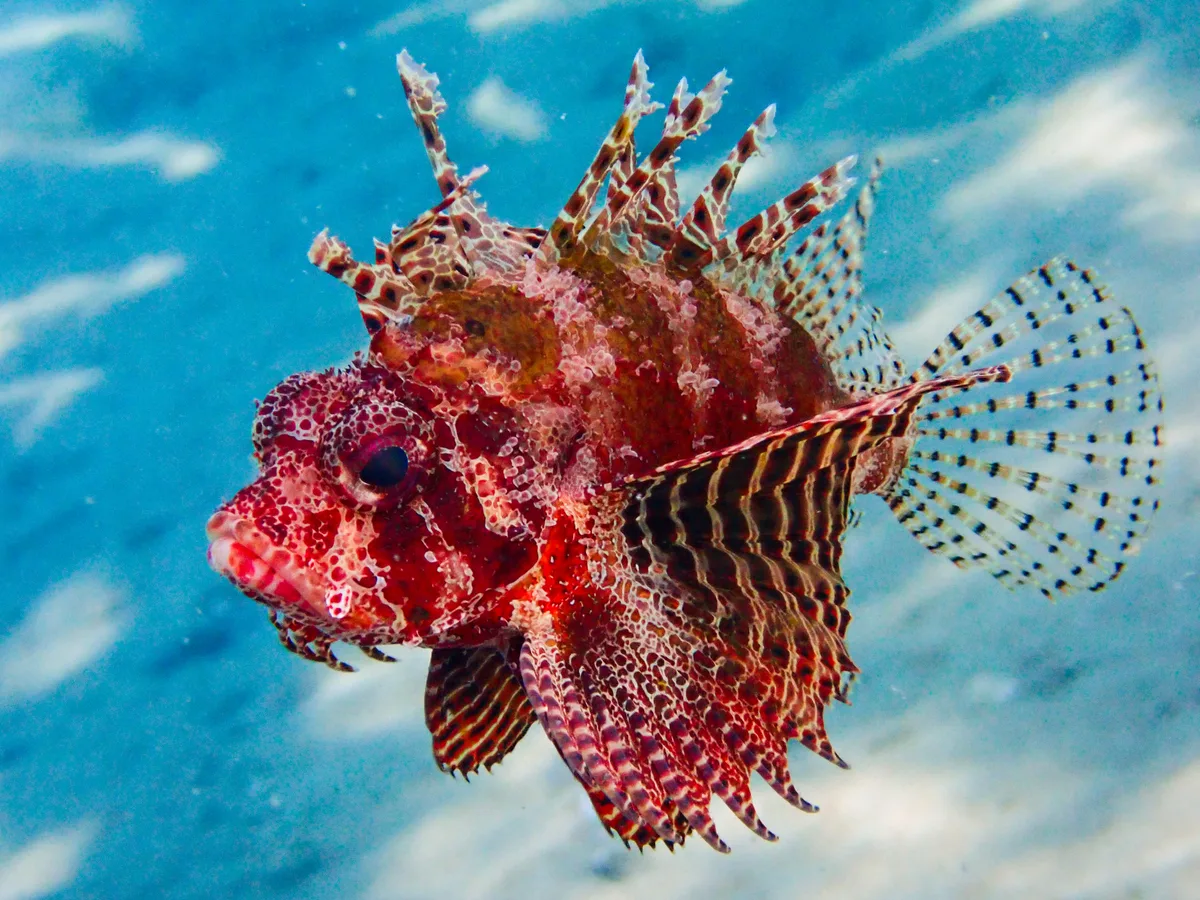
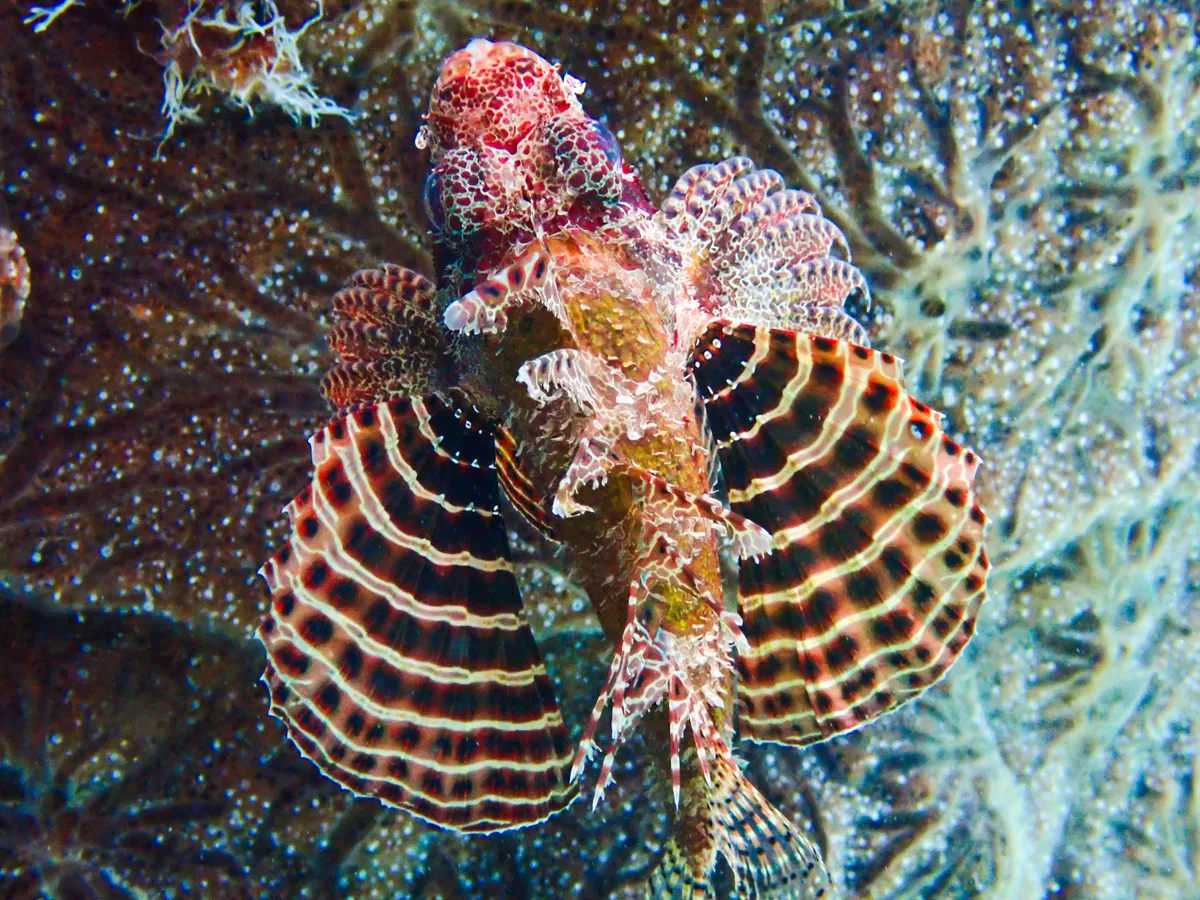
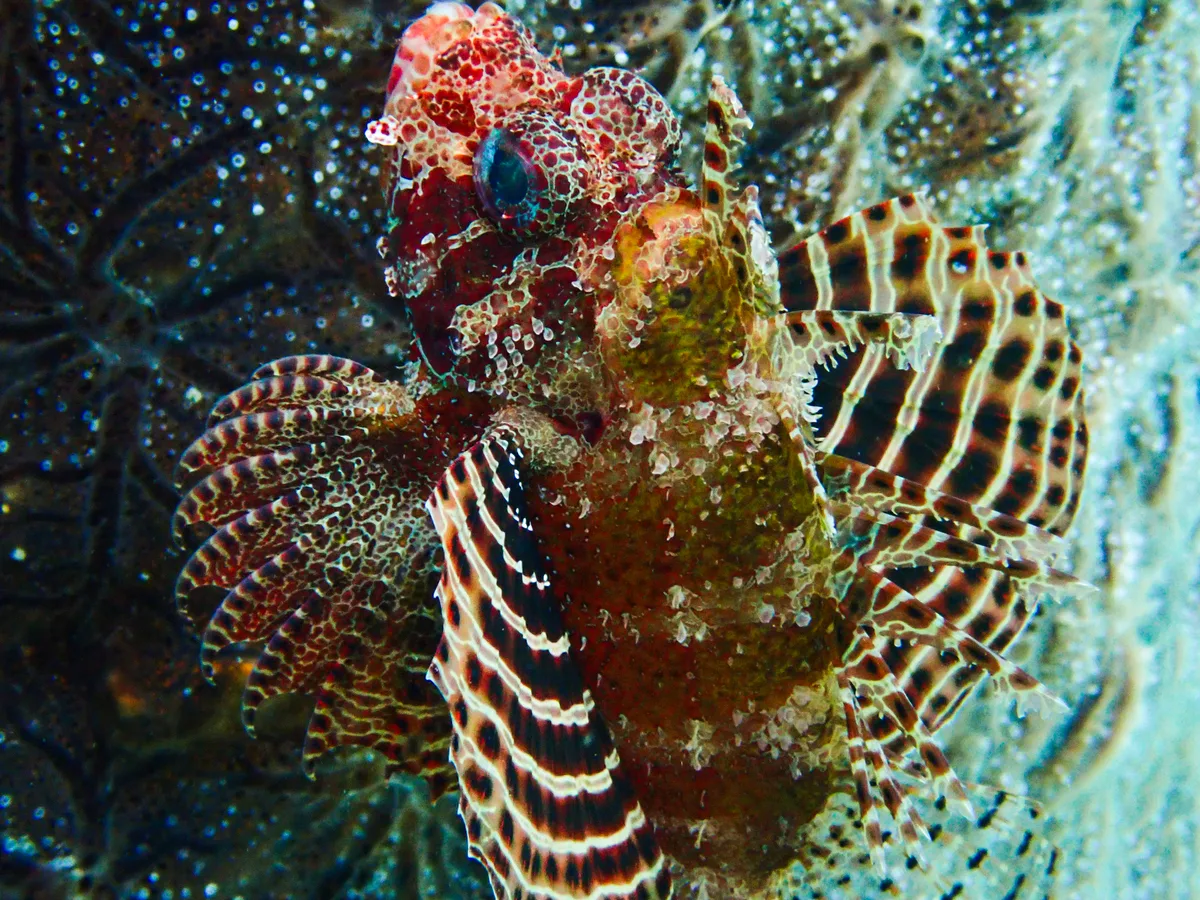
A lionfish the size of a hand, with pectoral fins spread into fans that stay joined by membrane instead of separating into free rays. That single difference separates the dwarf lionfishes from the familiar big ones with the trailing plumes.
The fans are hunting equipment. It herds small fish and shrimps into a corner by spreading them like a net, closes the space, and takes the prey with a strike faster than the eye follows. Big lionfish do the same thing with their long rays; this one does it with a solid surface.
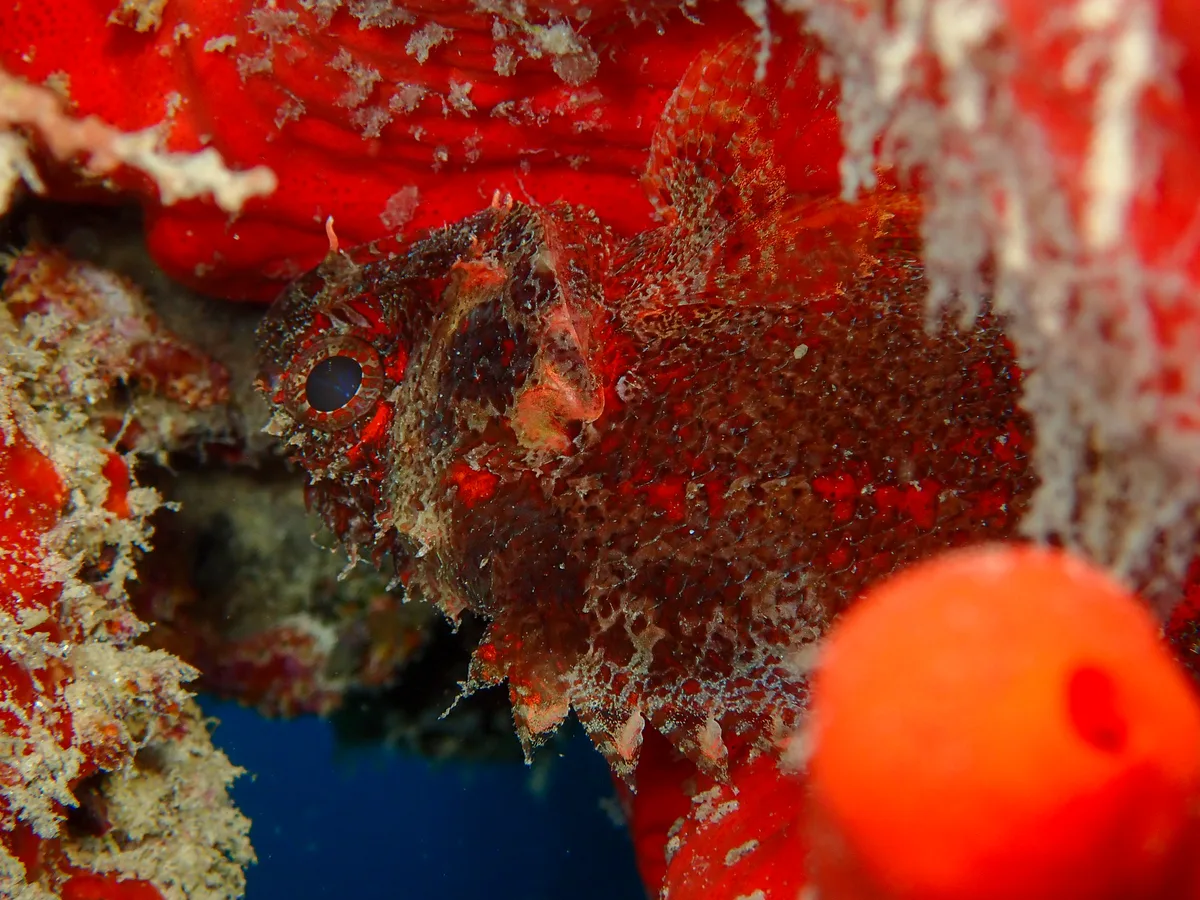
By day it stays under ledges and in crevices, upside down as often as not, and it comes out at dusk. Divers see it far less often than the common lionfish simply because it does not hover in the open.
Eighteen venomous spines - thirteen dorsal, three anal, two pelvic - each grooved, each backed by a gland. The venom is protein and comes apart in hot water at about 45 C (113 F), which is the first aid, followed by a doctor.
The genus. Neochirus Chou, Liu & Liao 2023 - neo (new). ETYFish
The species. Neochirus hemprichi (Matsunuma, Motomura & Bogorodsky 2017) - Honours German naturalist and explorer Friedrich W. Hemprich. ETYFish
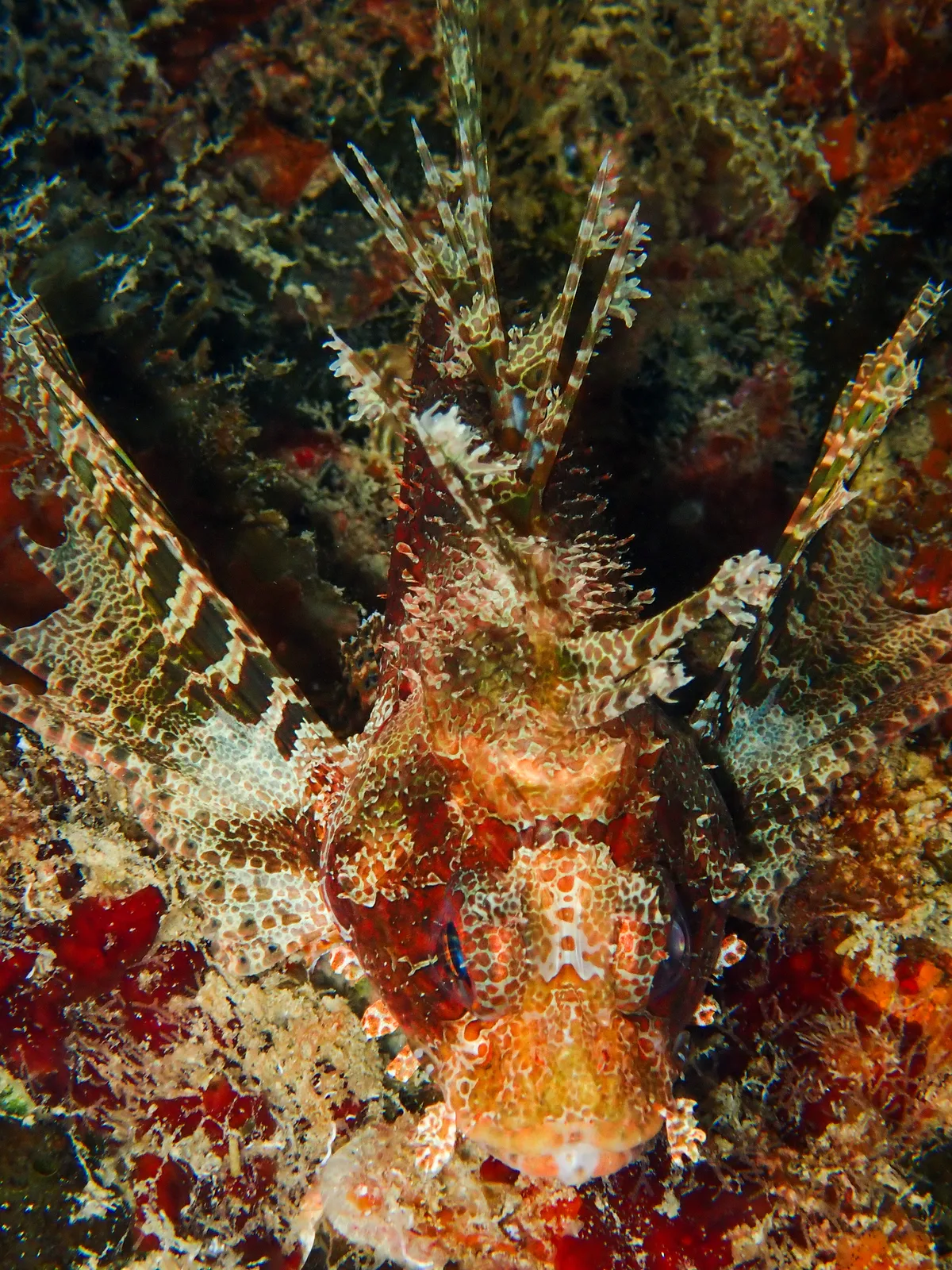
- small lionfish with broad fan-shaped pectoral fins joined by membrane
- banded red-brown and white, fins with fine dark spotting
- much smaller and stockier than the common lionfish
- length up to 13 cm
Why it's threatened
Threat classification from the IUCN Red List.