Nothing else in the sea looks like this, and that is literal: it is the only living member of its family, with no close relatives anywhere.
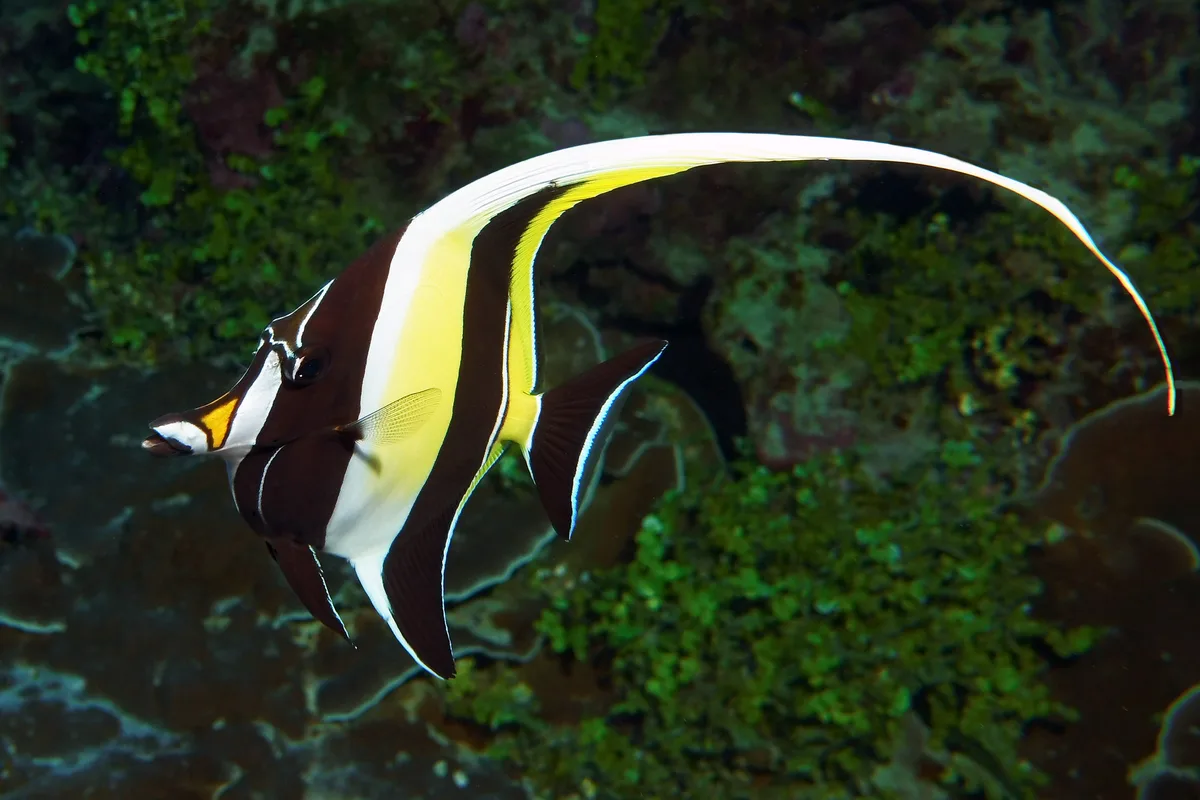
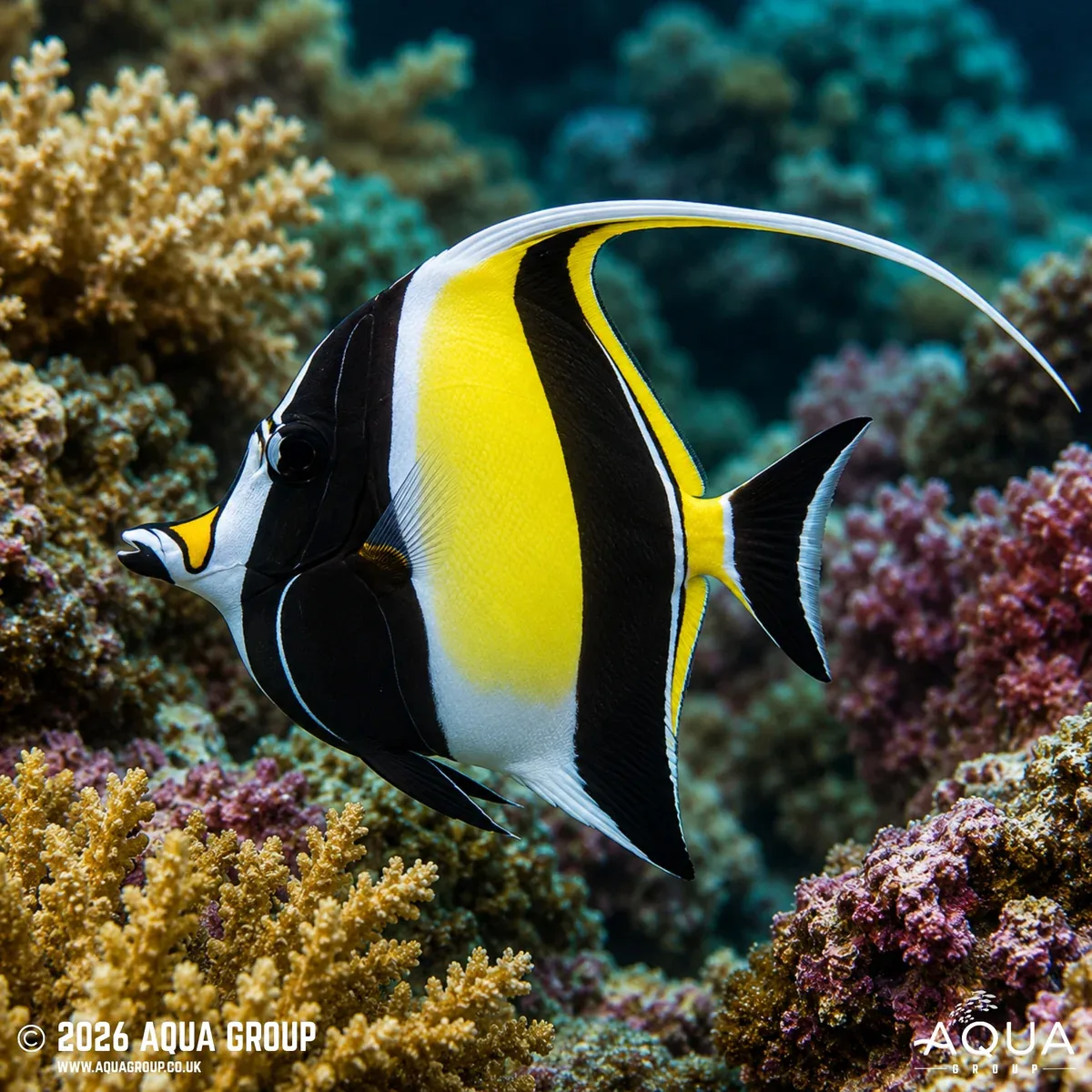
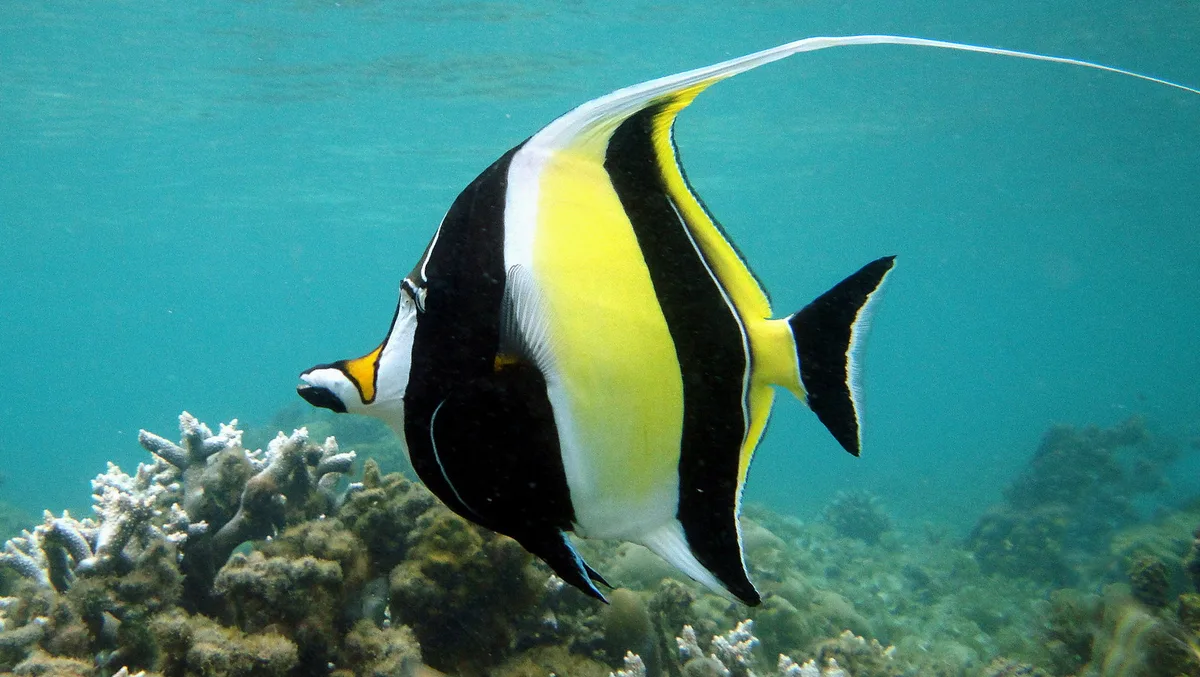
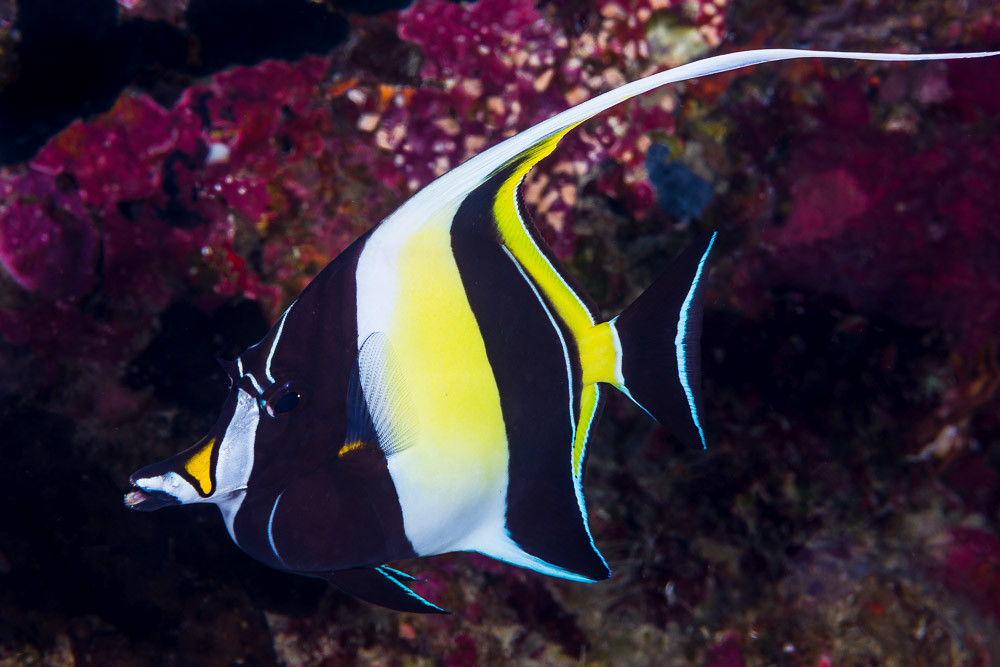
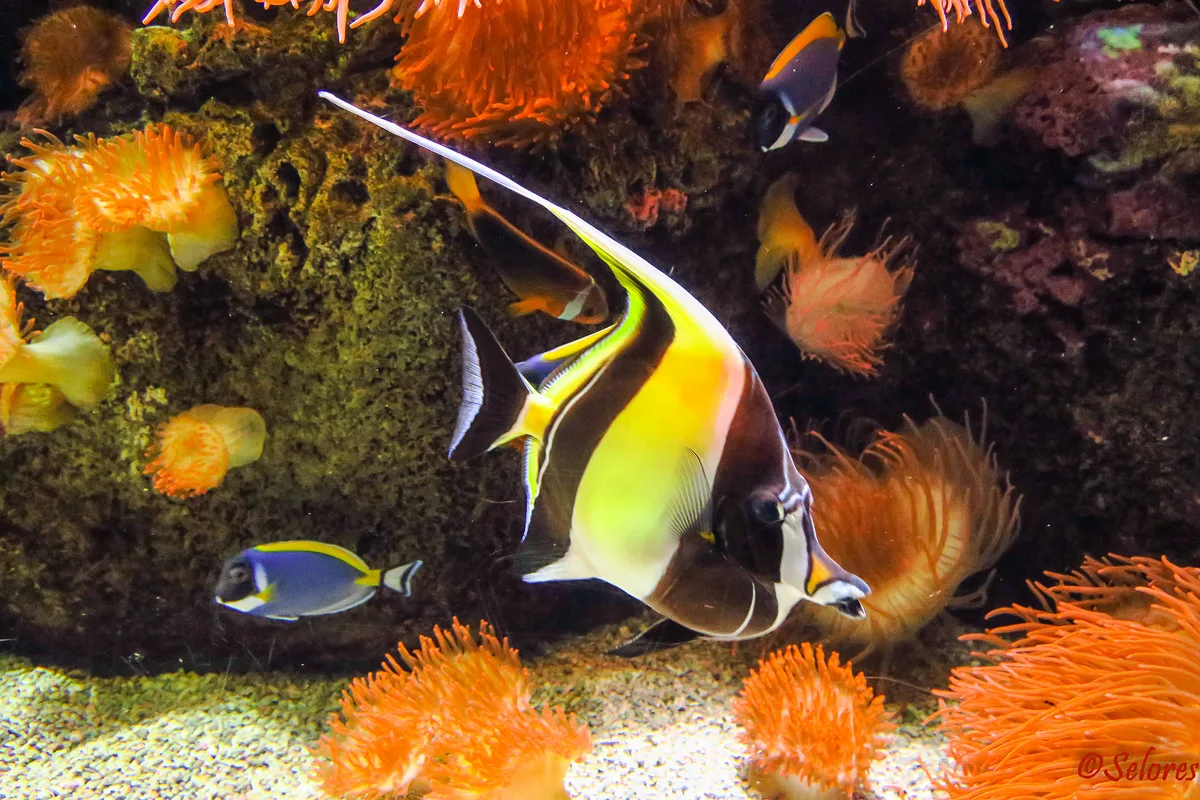
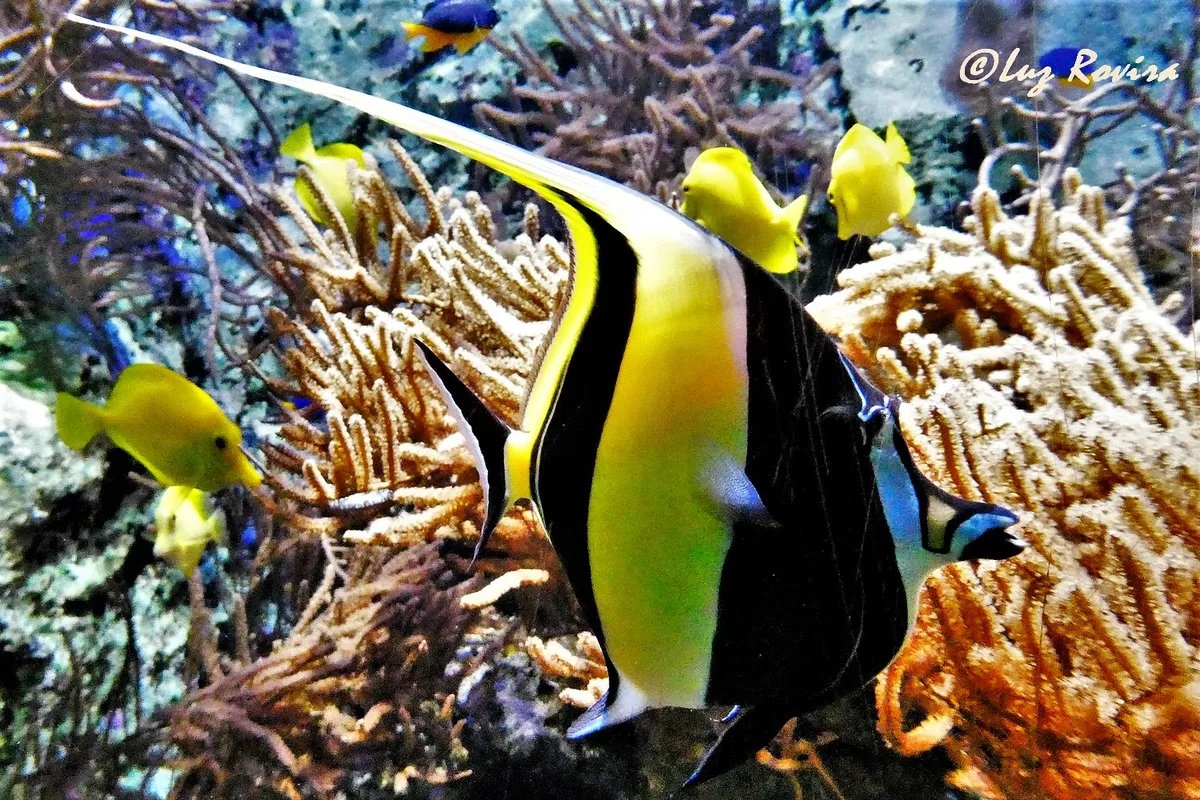
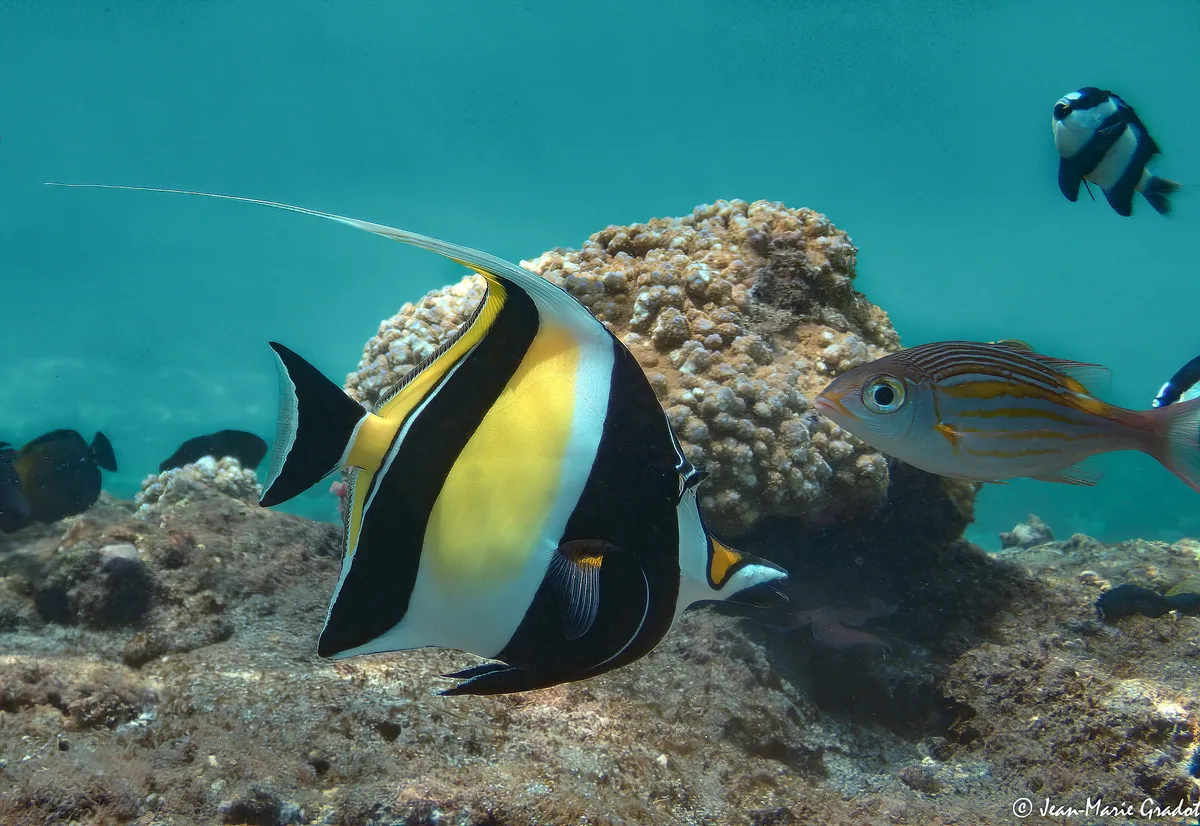
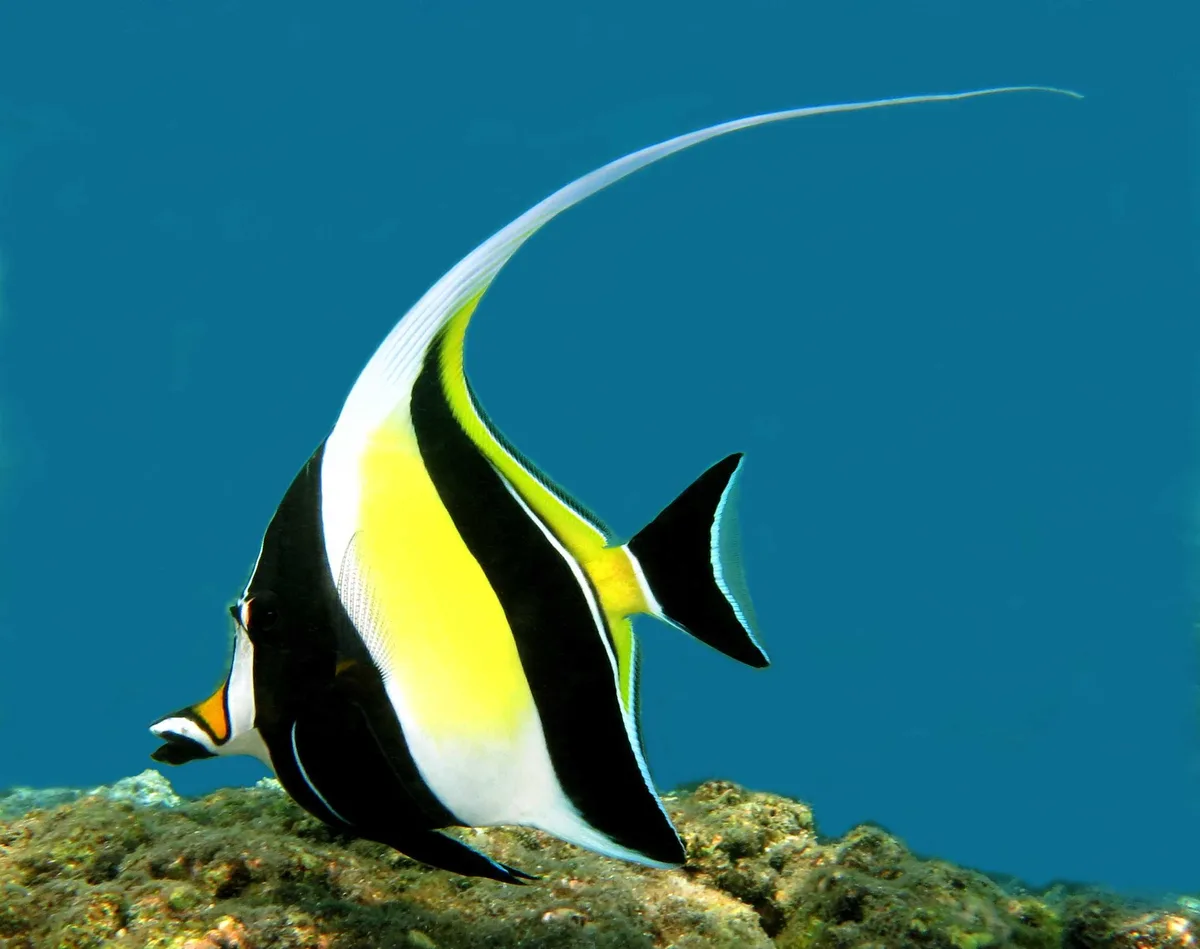
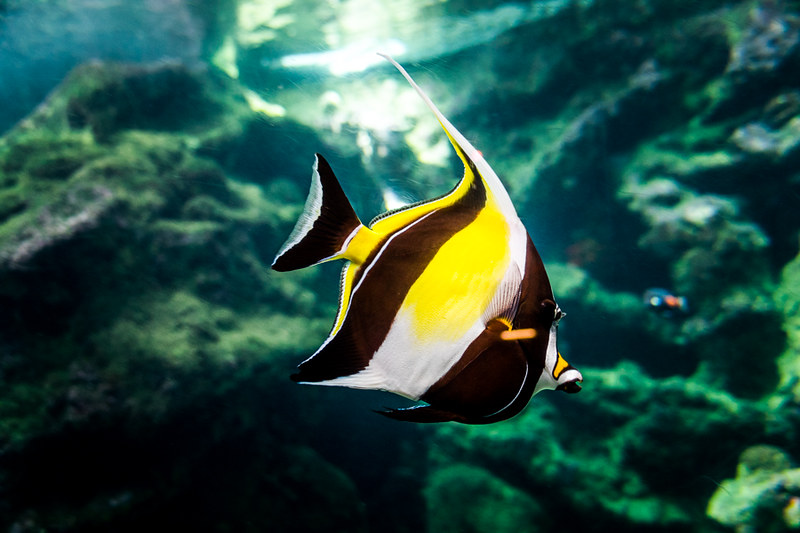
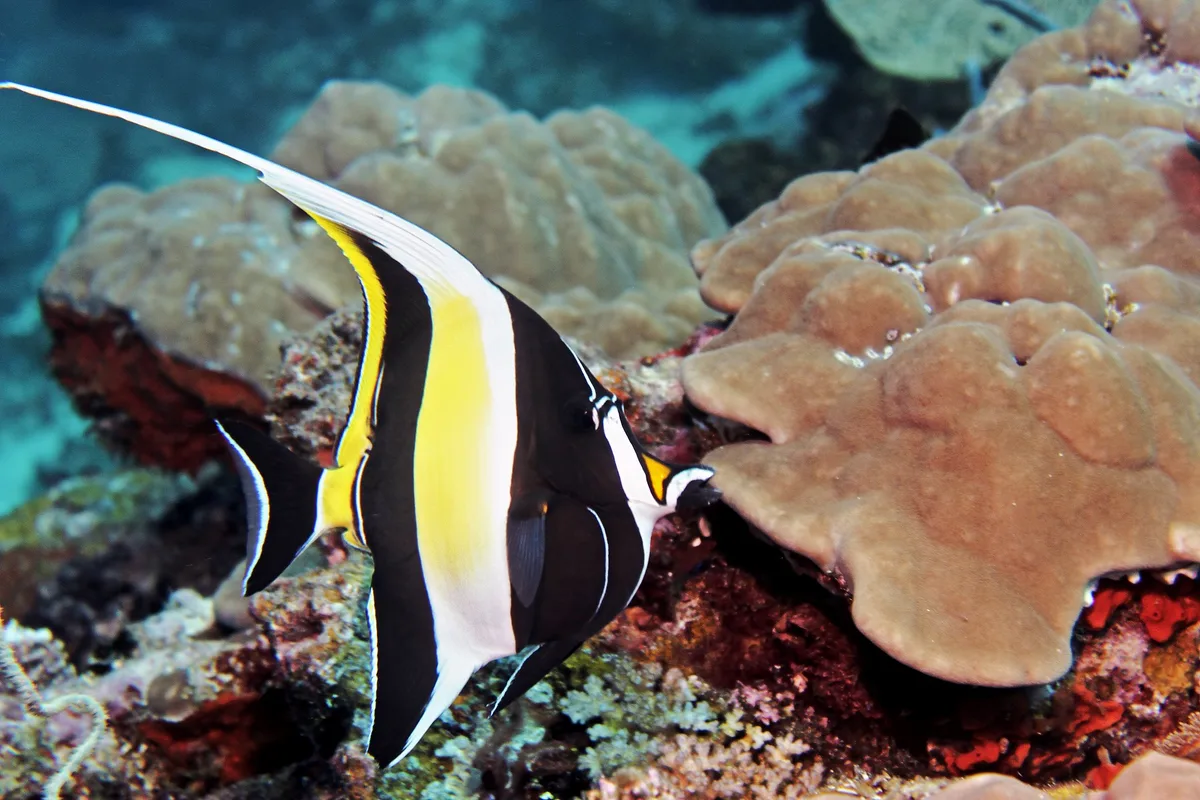
It is a surgeonfish relative that went its own way a long time ago and kept a shape nothing since has repeated: a disc of a body, a tube snout, and a dorsal fin drawn out into a white filament that can trail longer than the fish itself. Juveniles trail even more of it.
What it eats explains most of the rest. About seventy percent of the diet is sponge, picked out of crevices with a snout full of long bristle-like teeth. Sponges are a poor food, defended with silica spicules and chemistry, and a diet built on them means constant work with a specialized tool. It is also the reason this species is famous in the aquarium trade for the wrong thing: it is one of the hardest fish in the world to keep alive, because almost nobody can supply what it actually eats, and most of the ones sold die within months.
On the reef it is common, in pairs or small groups, from the shallows down to nearly two hundred meters, and it will let you approach if you are slow.
The species name means horned, for the two small bony bumps adults carry above the eyes.
The genus. Zanclus Cuvier 1831 - zanklon (Greek for sickle). ETYFish
The species. Zanclus cornutus (Linnaeus 1758) - horned. ETYFish
- two broad black bands on white, with a yellow saddle over the snout
- dorsal fin drawn out into a white filament longer than the fish
- tube snout with a small mouth full of bristle-like teeth
- adults with a pair of small bony horns above the eyes
- up to 23 cm
Why it's threatened
There are no known major threats.
Threat classification from the IUCN Red List.