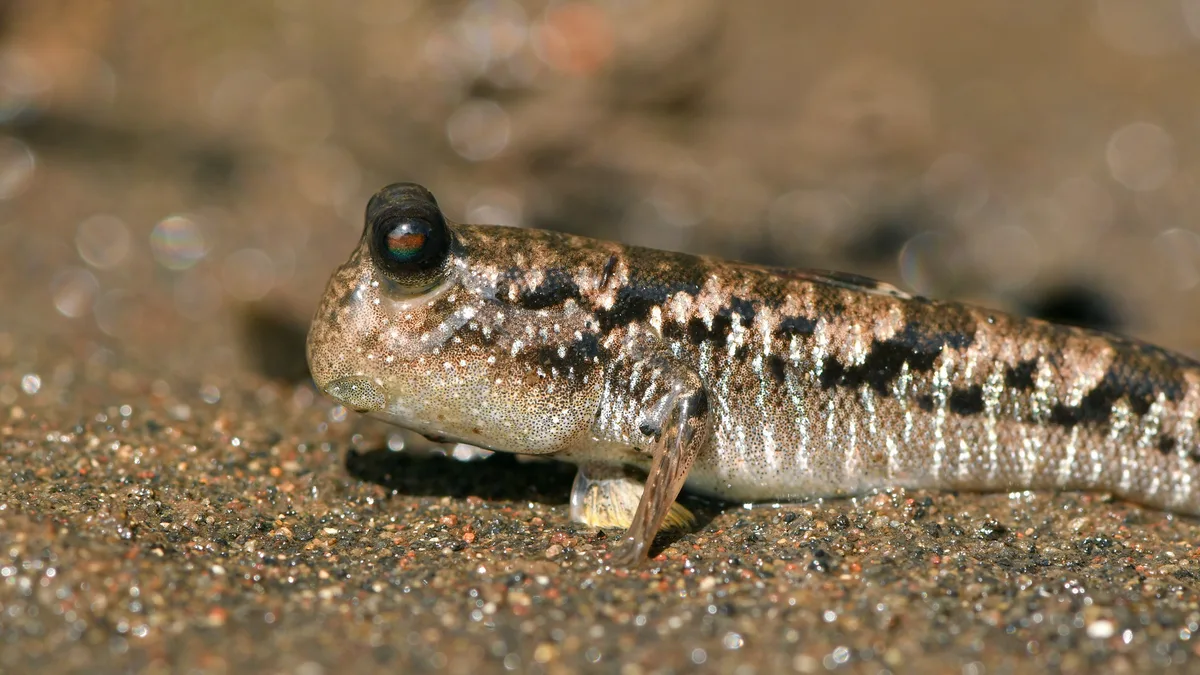
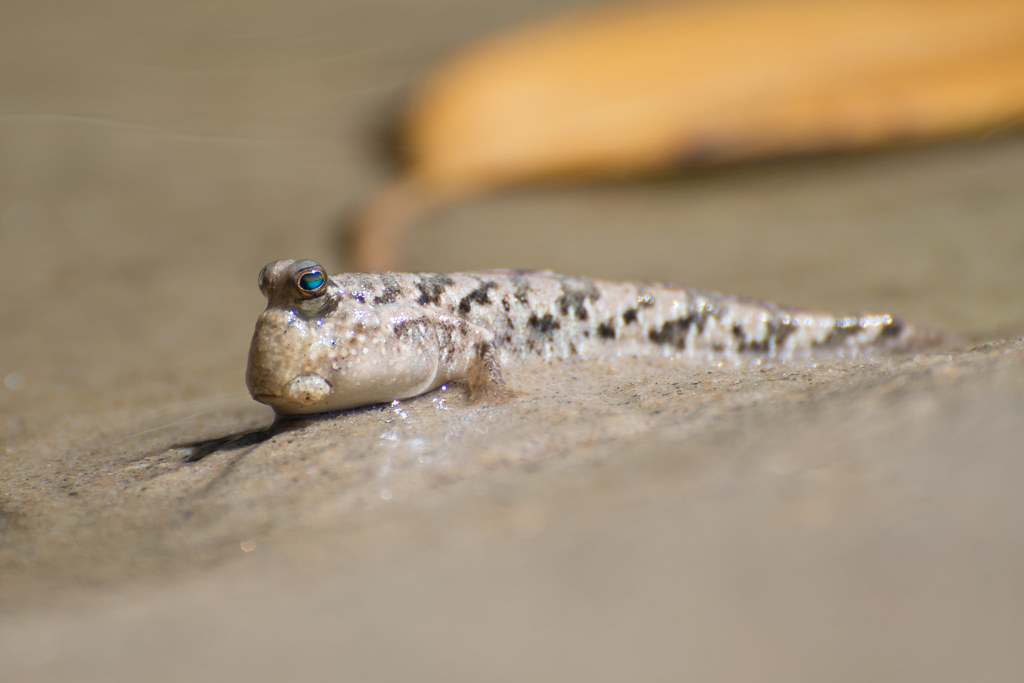
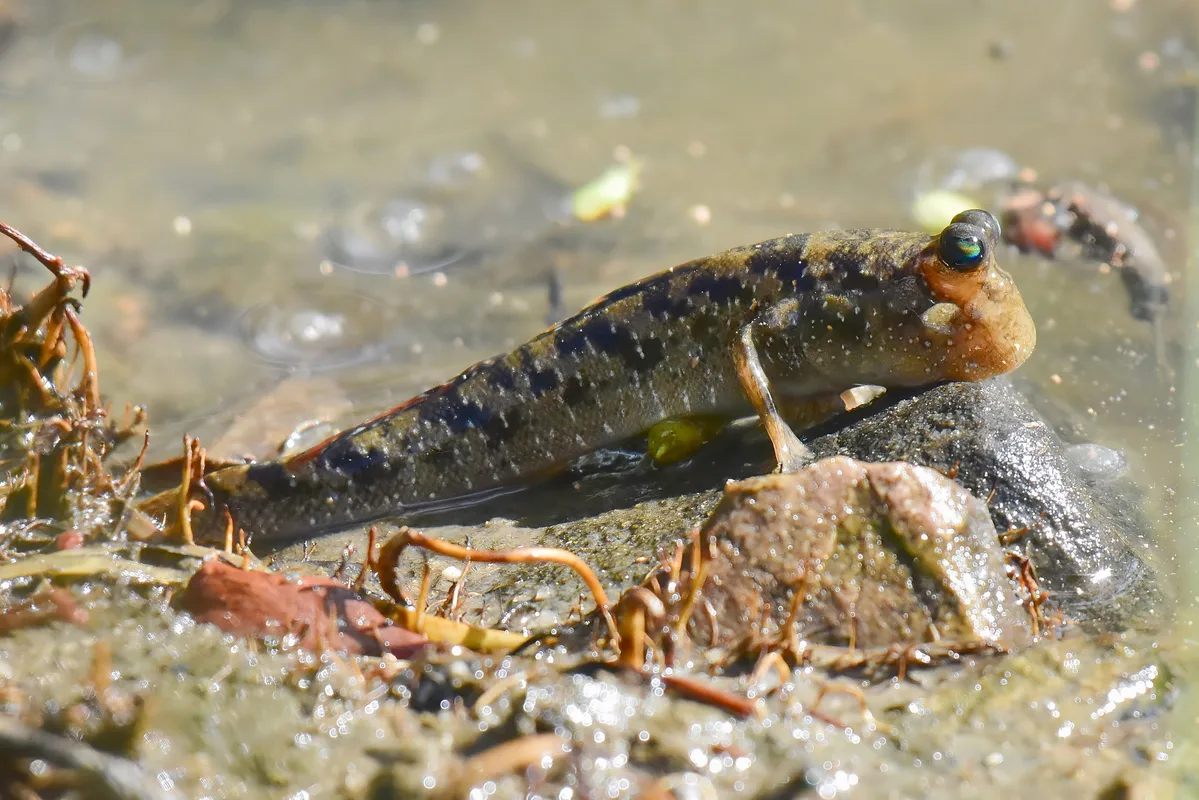
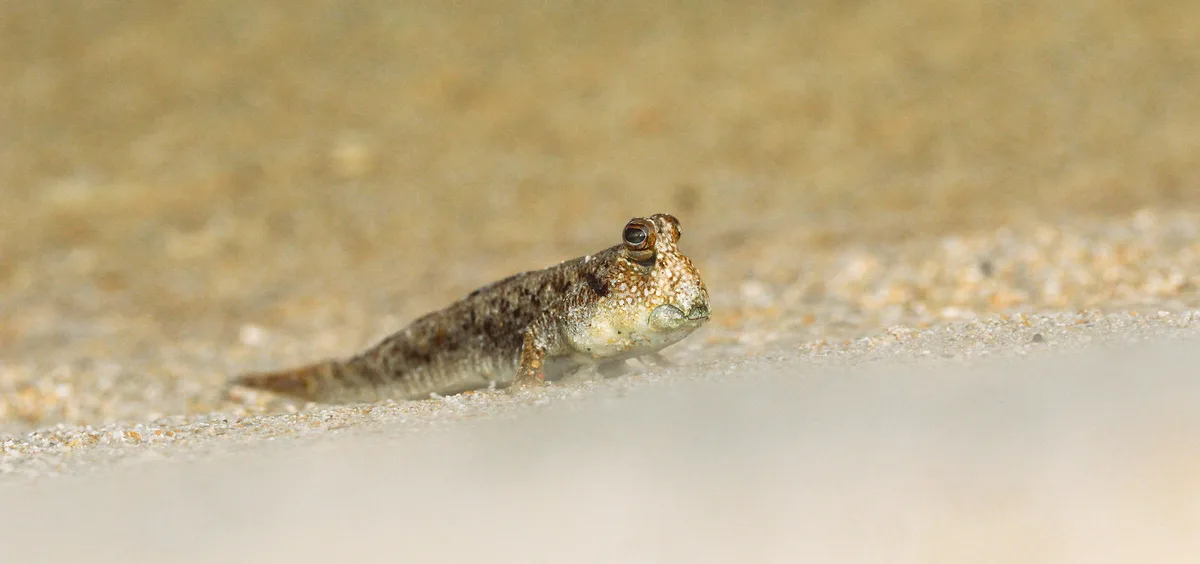
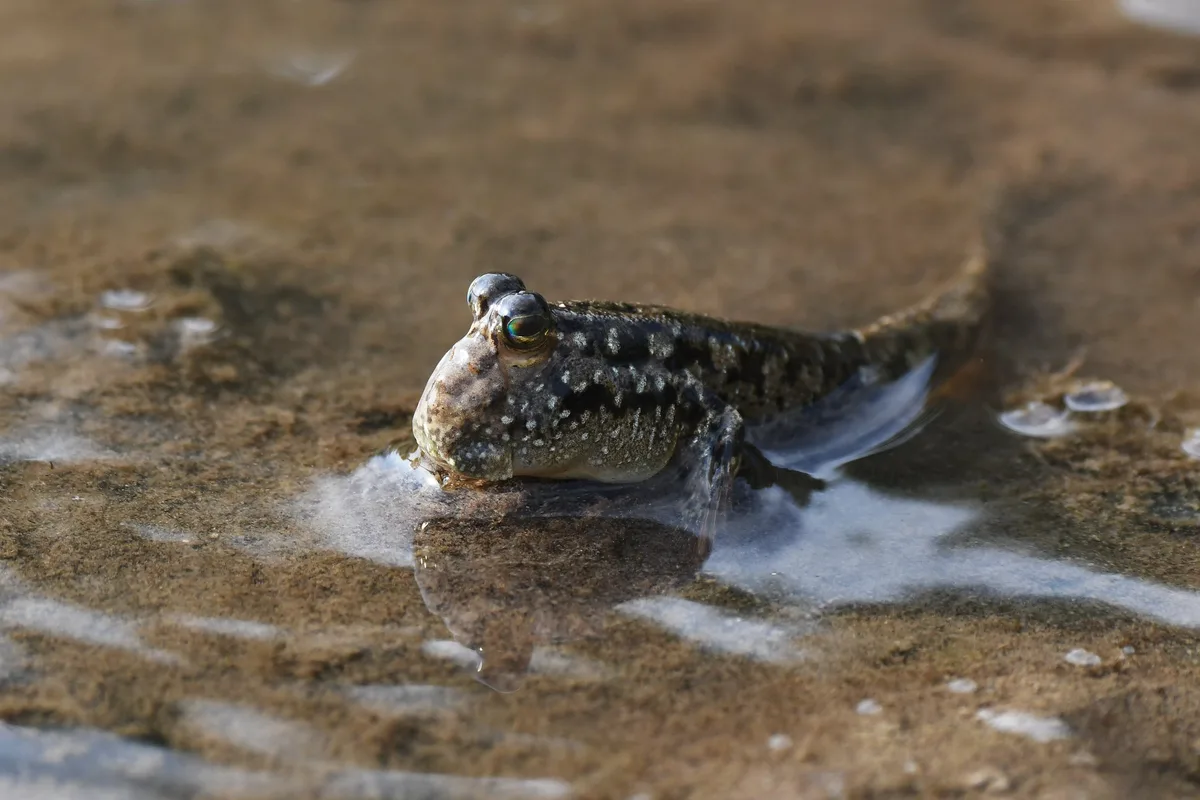
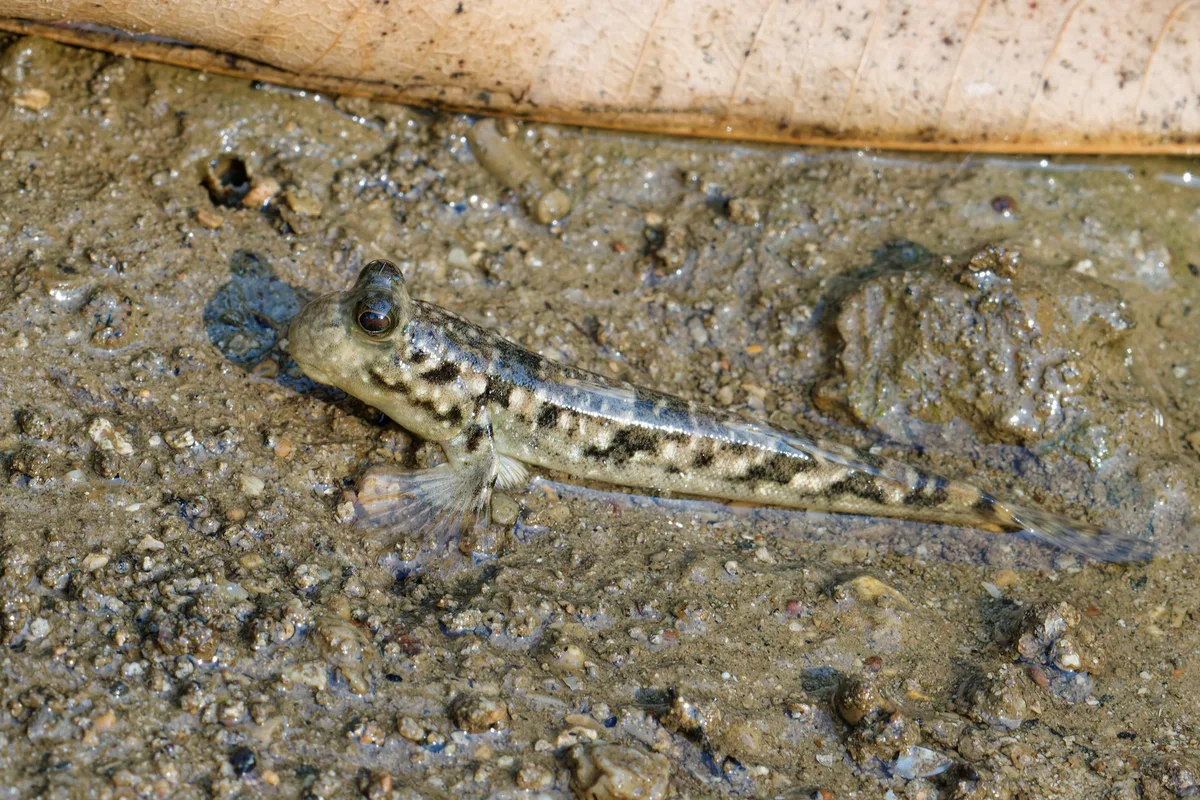
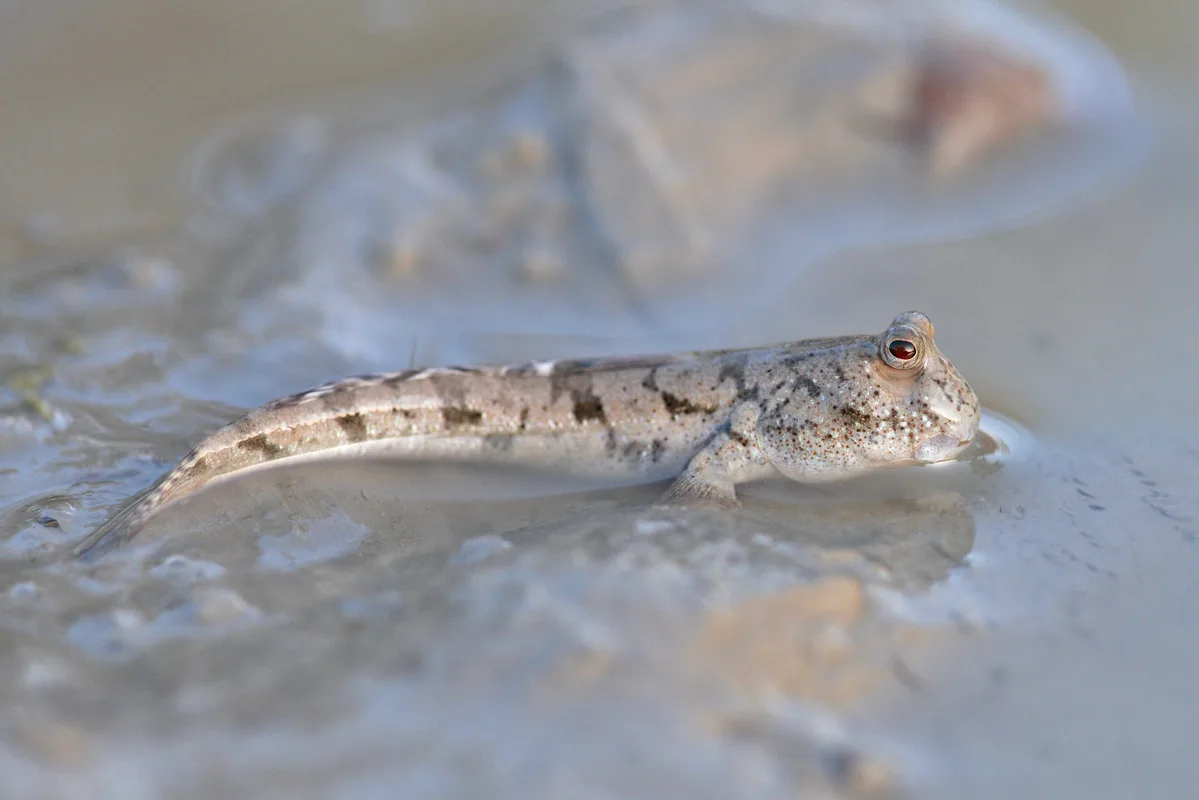
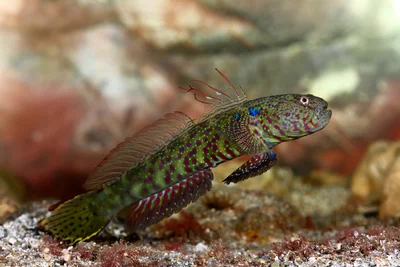
A fish that spends most of its life out of the water. Eyes sit on top of the head and swivel independently, the pectoral fins work as forelimbs, and the animal props itself upright on mangrove mud and tidal flats, skittering across the surface in a series of flips when disturbed. Length reaches about 19 cm (7.5 in).
Breathing is done three ways: through the skin, through the lining of the mouth and throat, and by carrying a mouthful of water over the gills like a diver's tank, which is why one is often seen gulping at a puddle before setting off across dry mud. Males dig burrows in the mud and defend them, raising the dorsal fin at rivals, and the eggs are laid in an air pocket the male maintains by carrying mouthfuls of air down to it. Look for them on mangrove edges at low tide, not underwater - this is a fish a diver meets from the shore.
Housing & urban areas · Commercial & industrial areas
No major are known to currently impact this species. It has, however, been hypothesized that anthropogenic discharge (i.e., urban and industrial wastes) might have an affect on populations of P. argentilineatus, thus causing abnormal growth patterns and deformities (i.e., unilateral anophthalmia) (Kruitwagen et al. 2006).
Threat classification from the IUCN Red List.
Comments
Please, sign in to leave a comment
Continue with a social account - yours will be created automatically.