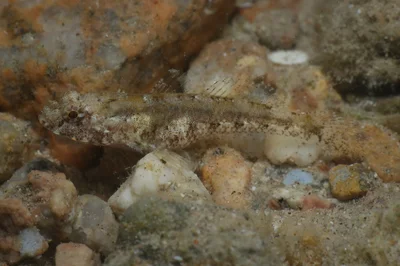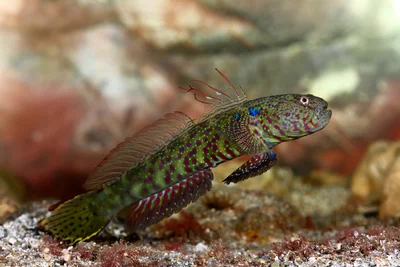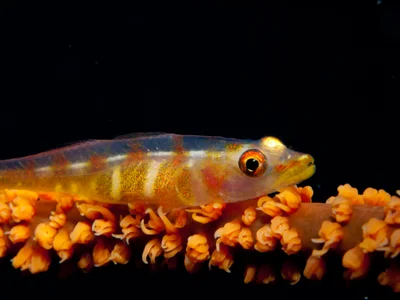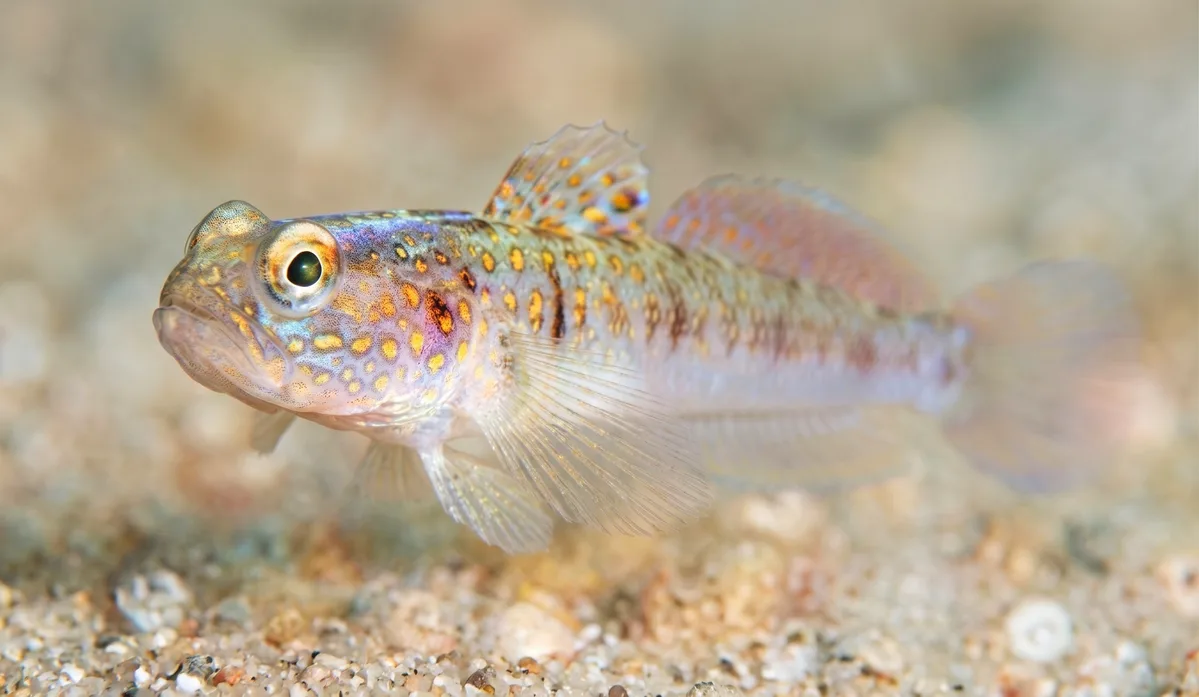
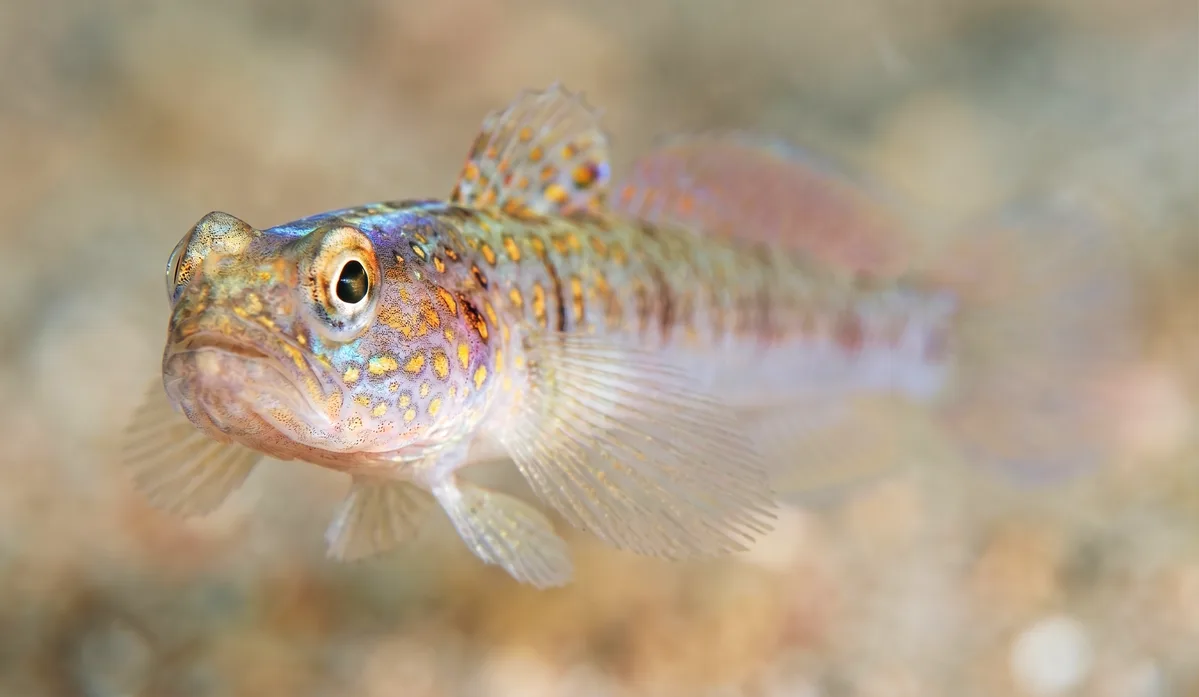
A pale sand goby marked with orange-brown bars and fine blue spots about the head, sitting at the mouth of a burrow with its first dorsal fin raised. It reaches about 10 cm (4 in) and is almost never seen away from the hole.
The hole is not its own. A snapping shrimp digs and maintains it, working almost blind, and keeps one antenna in contact with the goby while it pushes spoil out of the entrance. The goby watches, and a flick of its tail sends both animals underground before a predator arrives. Each partner gives up something - the shrimp does the labour, the goby surrenders its independence - and neither does well alone. Approaching one is an exercise in patience: stop at three or four meters, wait, and the shrimp reappears first, testing the water with its antennae before it resumes digging.
The species. Vanderhorstia mertensi Klausewitz 1974 - Honours German herpetologist Robert Mertens. ETYFish
- pale body with orange-brown bars and blue spots on the head
- tall first dorsal fin, often held raised
- sits at a burrow mouth with a shrimp working beside it
- length up to 10 cm
Why it's threatened
There are no major threats currently known to impact this species.
Threat classification from the IUCN Red List.