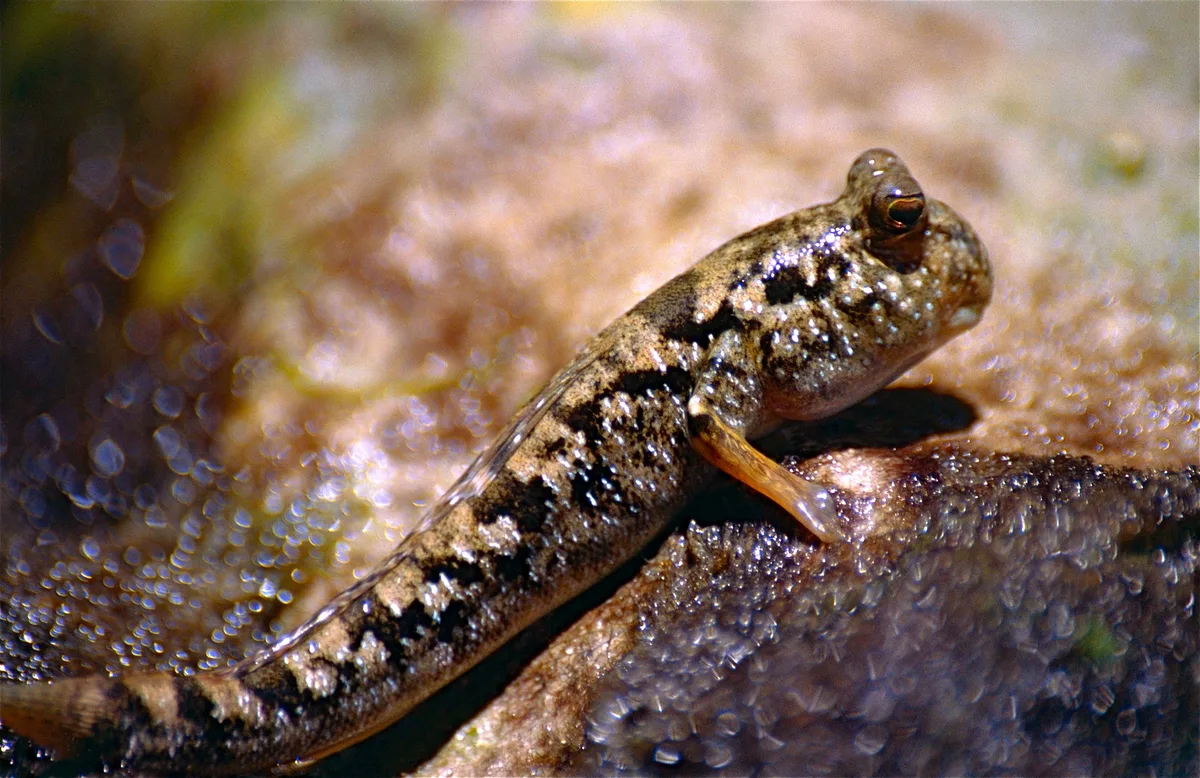
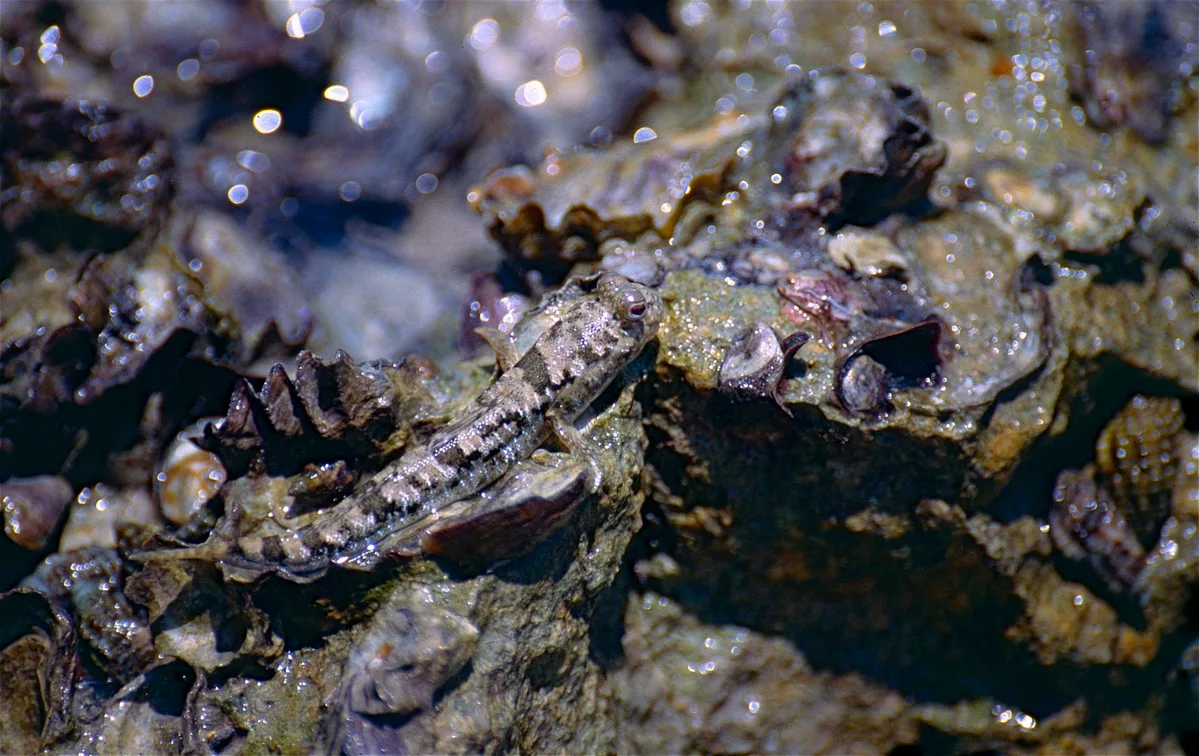
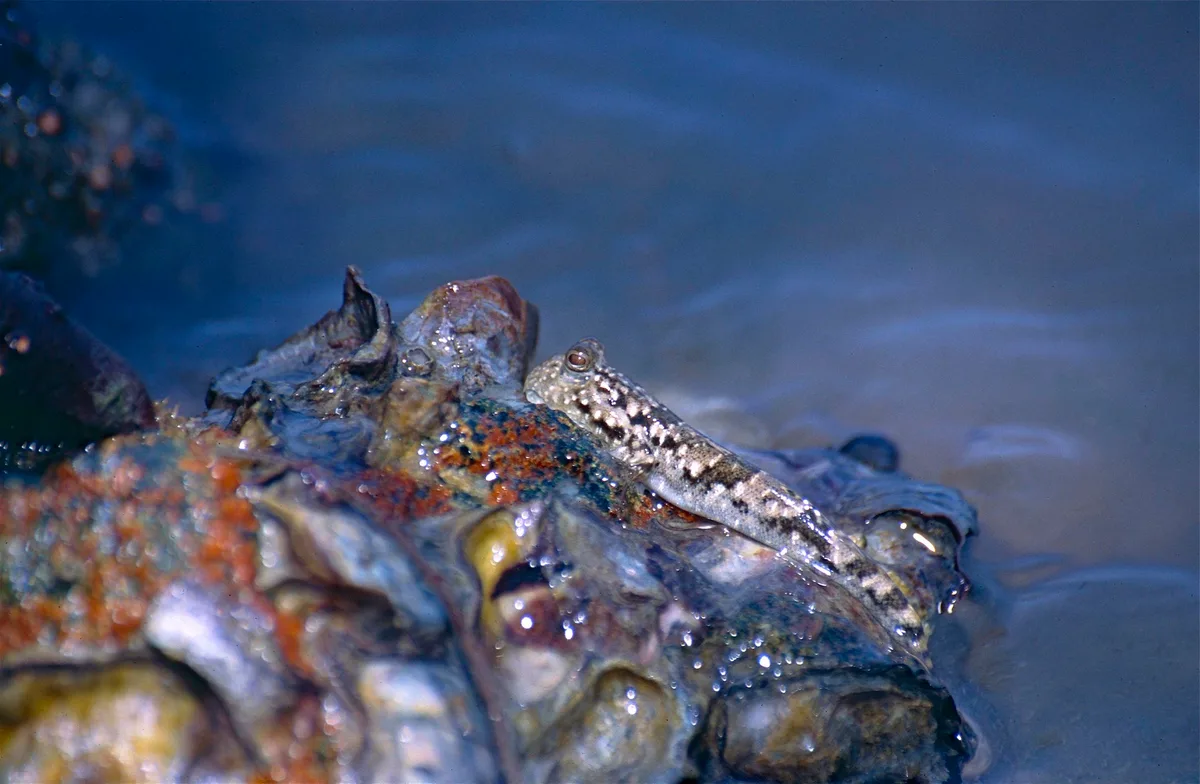
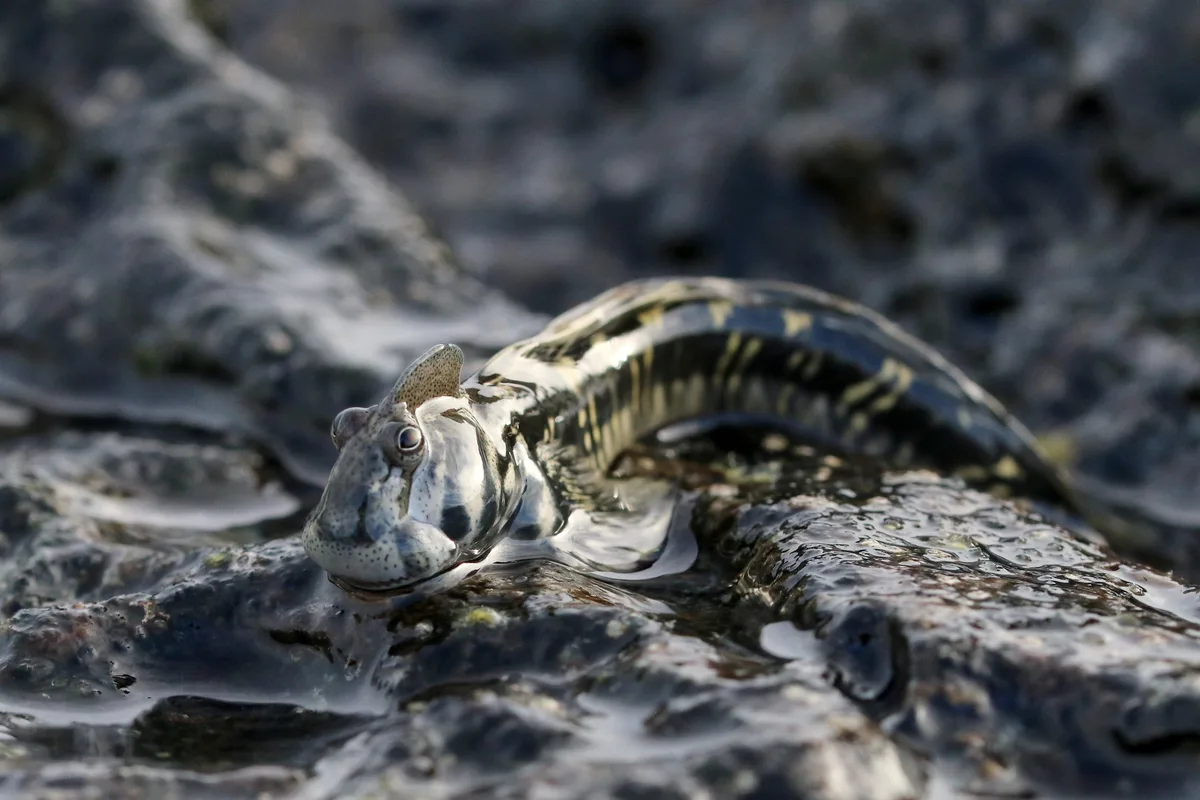
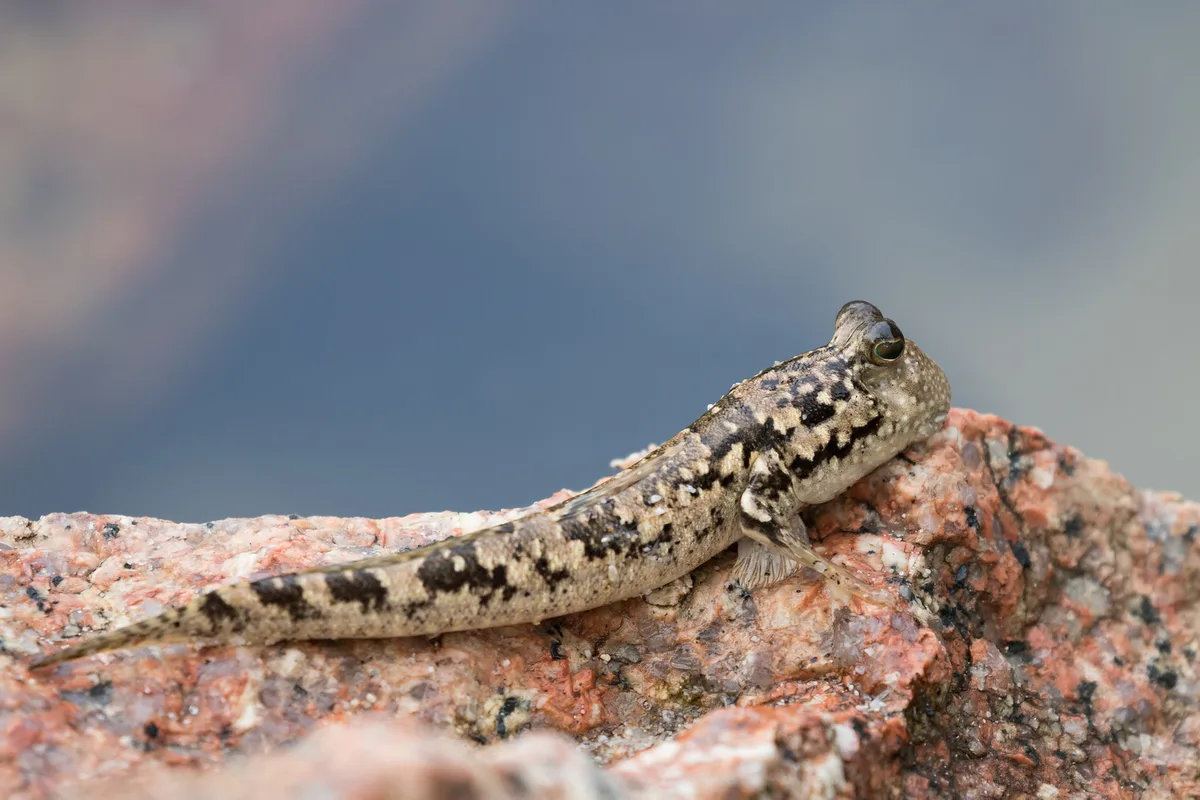
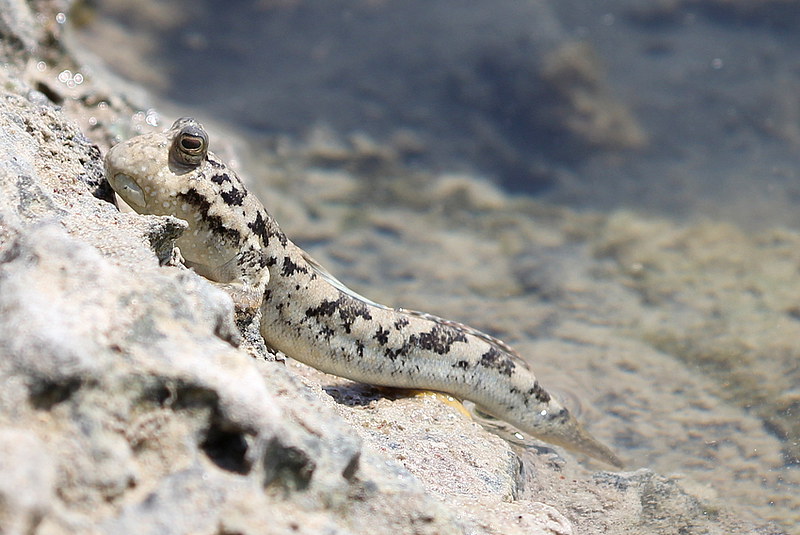
A smaller, stockier mudskipper of about 12 cm (5 in), plain brown with faint pale flecks and none of the silvery streaking that names its relative. It works mangrove roots and rocky tidal shores, and climbs - a mudskipper found half a meter above the waterline on a root is normally this species.
Mudskippers hold territory on the flats and settle disputes by display: dorsal fins go up, the animals face off, and the loser retreats without contact. They feed on small crabs, insects and worms taken from the surface of the mud, snapping them up with a mouthful of water that acts as a tongue, since a fish out of water cannot swallow dry. Tidal shorelines with mangrove are the place to look, at low water, from land. Both mudskippers here sit at the edge of what a marine catalogue covers, which is exactly what makes them worth including.
The species.Periophthalmus kalolo Lesson 1831 - A local name for this fish. ETYFish
How to recognise it
smaller and stockier than the silverlined mudskipper
brown with faint pale flecks, no clear silver lines
climbs onto mangrove roots and rock above the waterline
length up to 12 cm
Why it's threatened
Residential & commercial development
Housing & urban areas · Commercial & industrial areas · Tourism & recreation areas
There are no known widespread threats to this species, however, in some parts of its range, impacts come from numerous development activities cause deterioration in most benthic habitats. Substantial sea bottom dredging for material and its deposition in shallow water to extend land or to form a basis for huge developments, directly removes large areas of shallow, productive habitat, though in some cases the most important effect is the accompanying sedimentation or changes to water flows and conditions (Sheppard et al. 2010).
Threat classification from the IUCN Red List.
Comments
Please, sign in to leave a comment
Continue with a social account - yours will be created automatically.