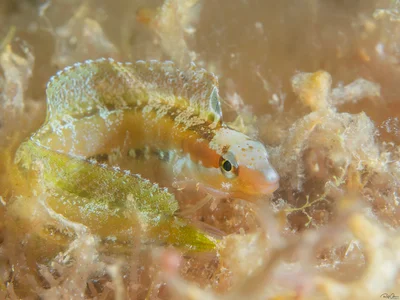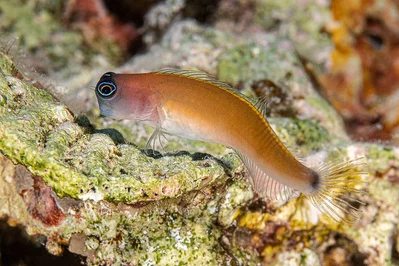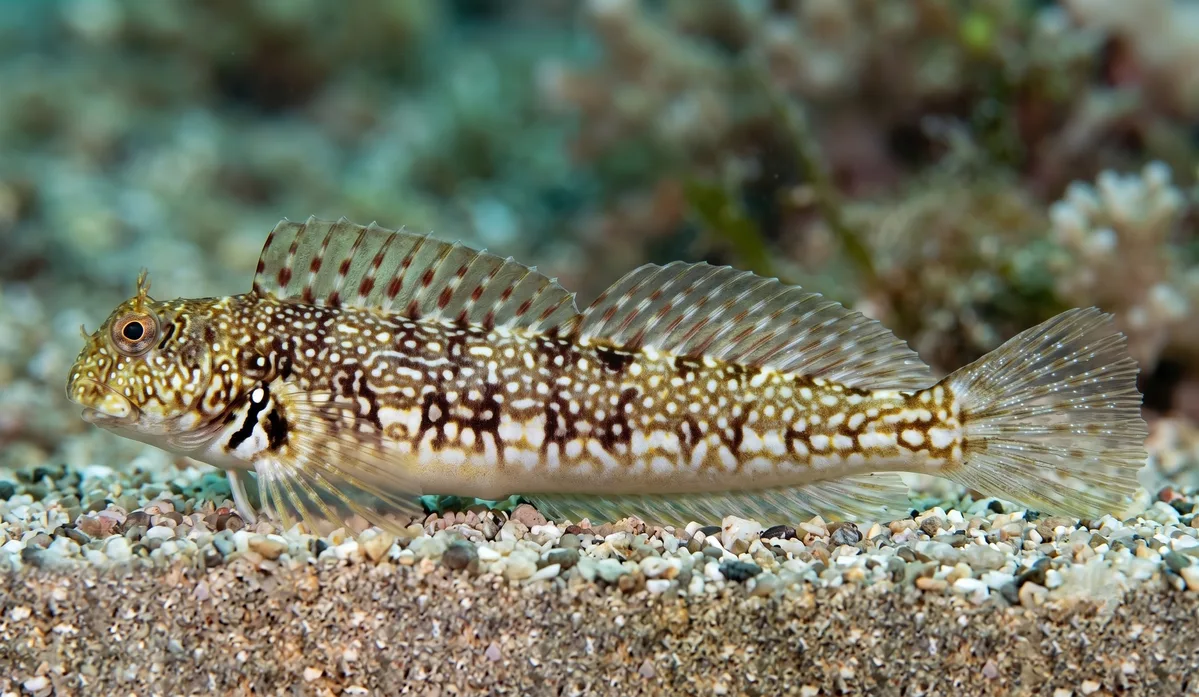
A blunt-headed blenny with a barred gray-brown body and a distinctly yellow tail, the contrast that names it. Small branched tentacles stand above each eye, the dorsal fin runs almost the length of the back, and the mouth carries the comb of fine teeth the family uses to scrape algae. Length reaches about 11 cm (4.3 in), and males in breeding condition develop a raised crest on the head.
It lives in the tide zone proper - intertidal rock, surge channels and pools - where it grazes algal film through the day. Rather than swimming away when disturbed, the fish skips across wet rock from pool to pool in a series of flicks of the tail, and can hold out of water for minutes at a time, breathing through skin and gill chambers kept damp. Along 🌊 Red Sea shorelines it is one of the commonest fish above the waterline, though a diver will almost never meet it: everything it needs is in the first two meters of depth, most of it above the surface at low tide.
The genus. Istiblennius Whitley 1943 - istios (sail) + blennius (blenny). ETYFish
The species. Istiblennius flaviumbrinus (Rüppell 1830) - flavus (yellow) + umbrinus (umber). ETYFish
- yellow tail against a barred gray-brown body
- blunt head with a fringe of tentacles above the eyes
- skips between tide pools rather than swimming off
Why it's threatened
There are no major threats known for this species.
Threat classification from the IUCN Red List.