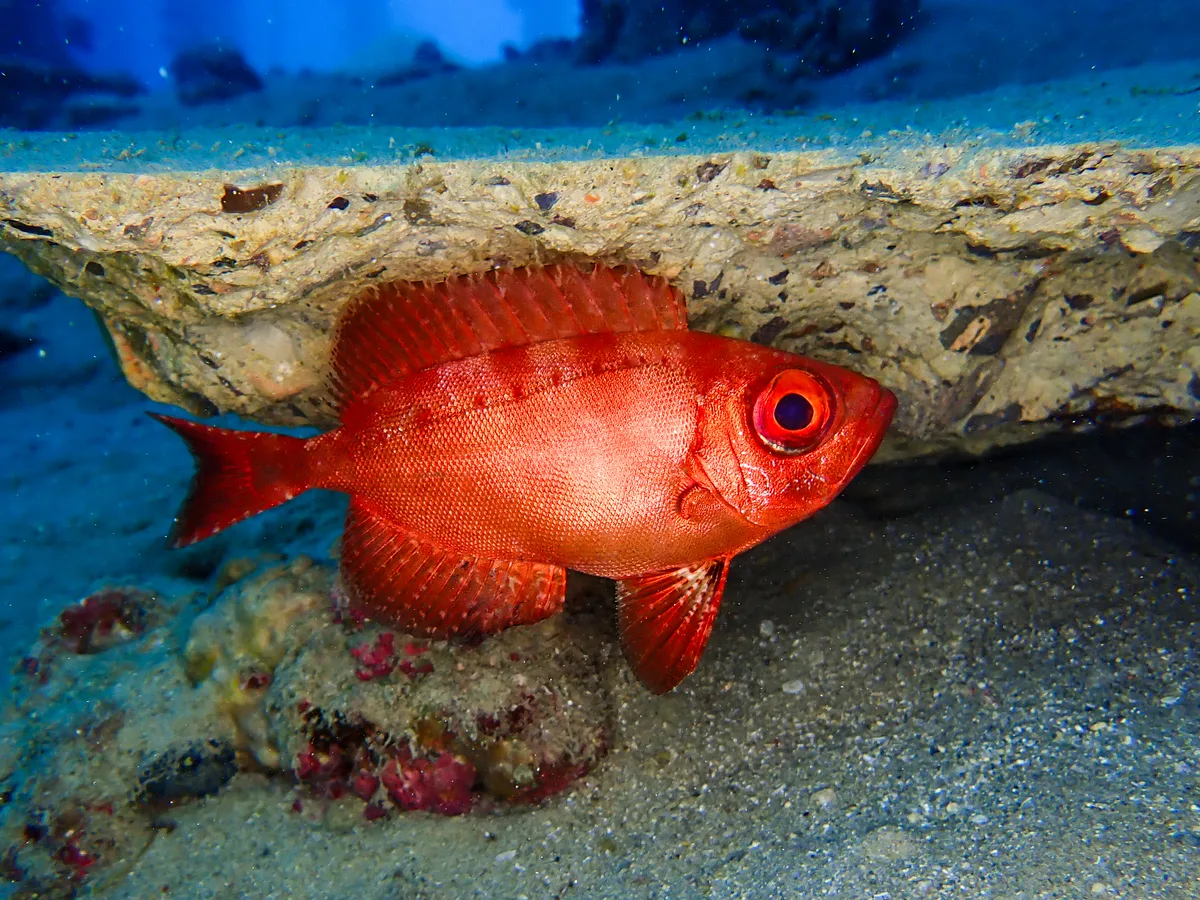
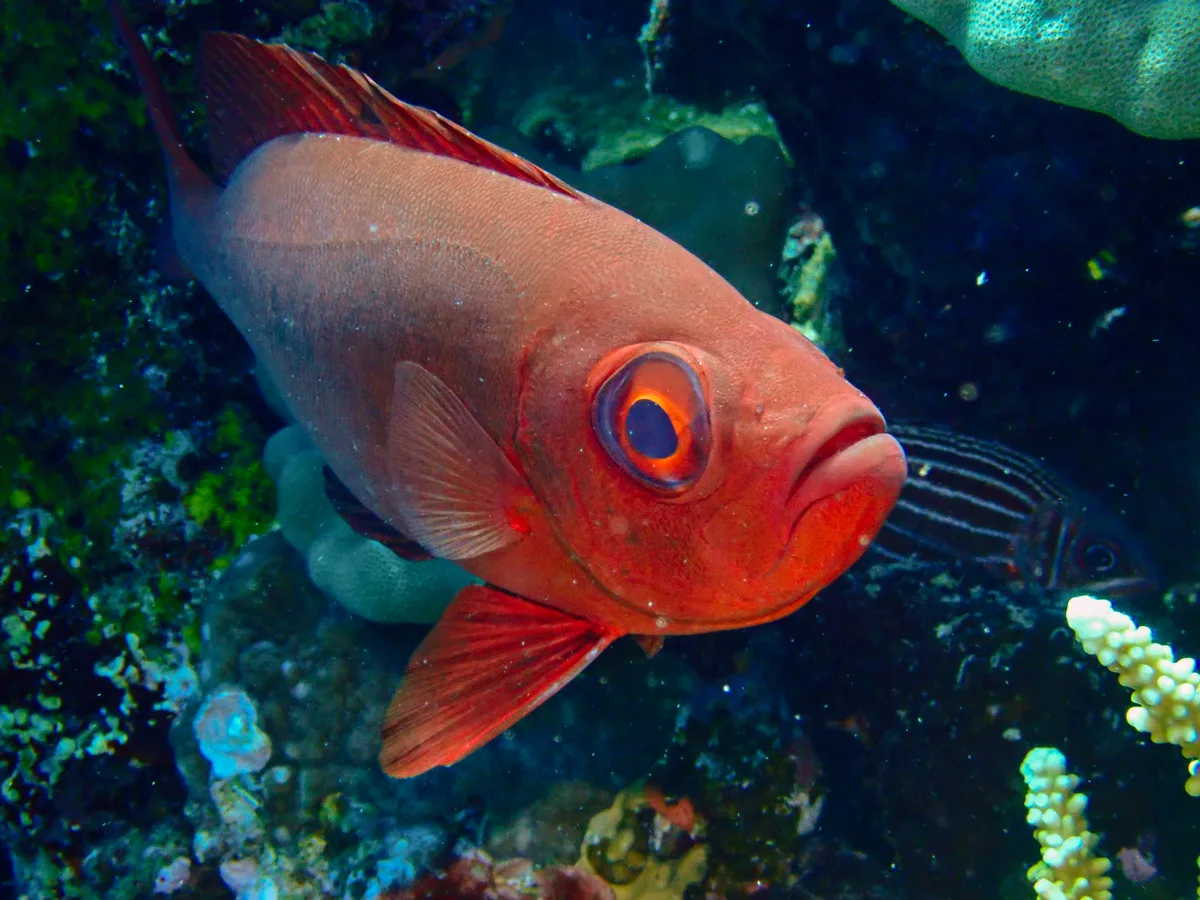
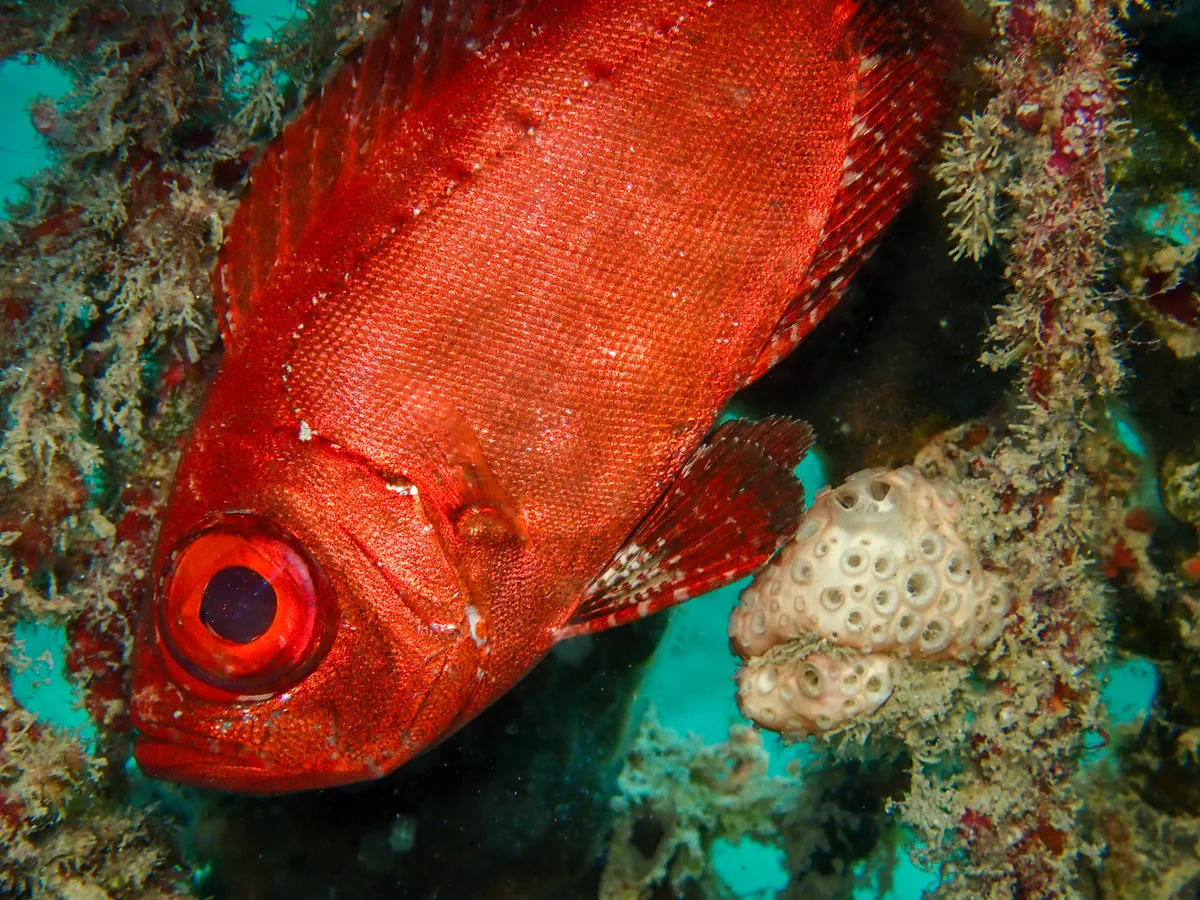
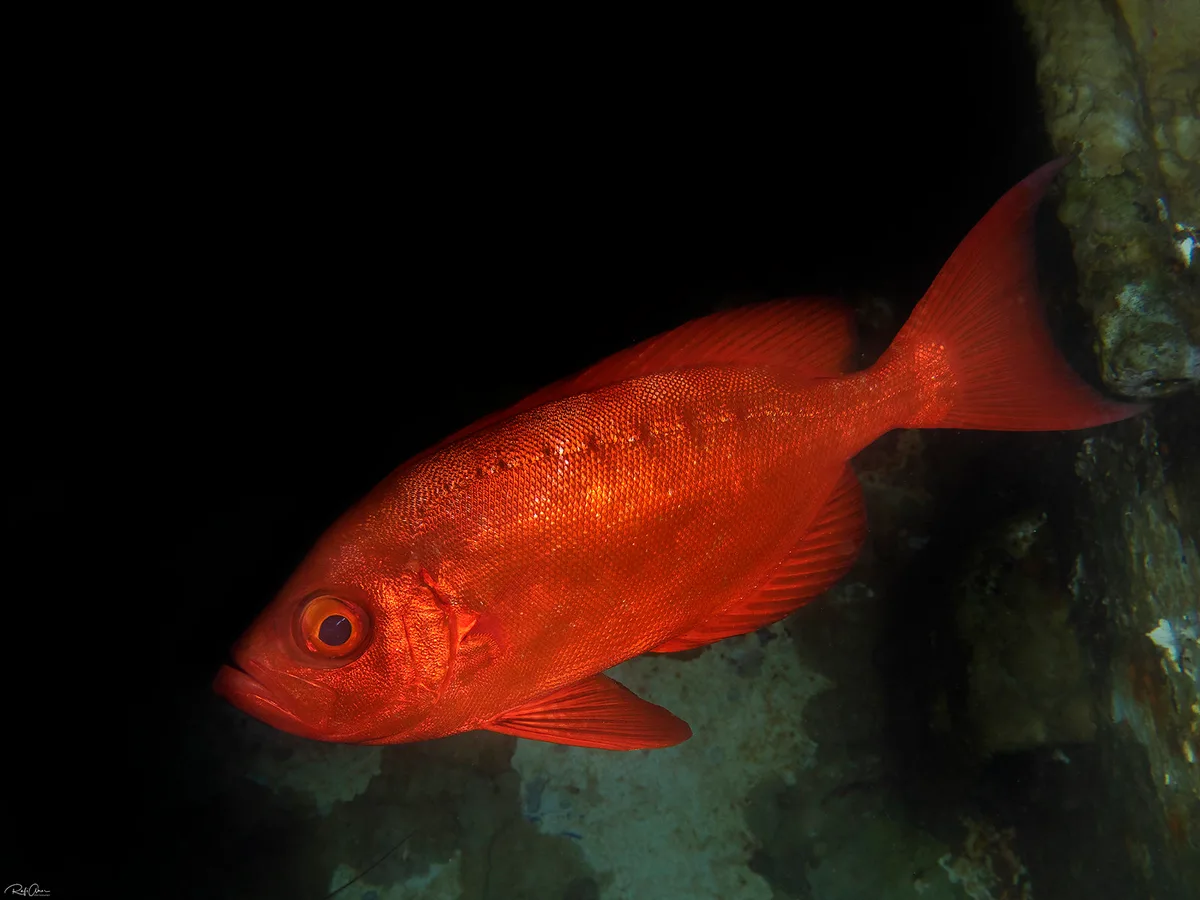
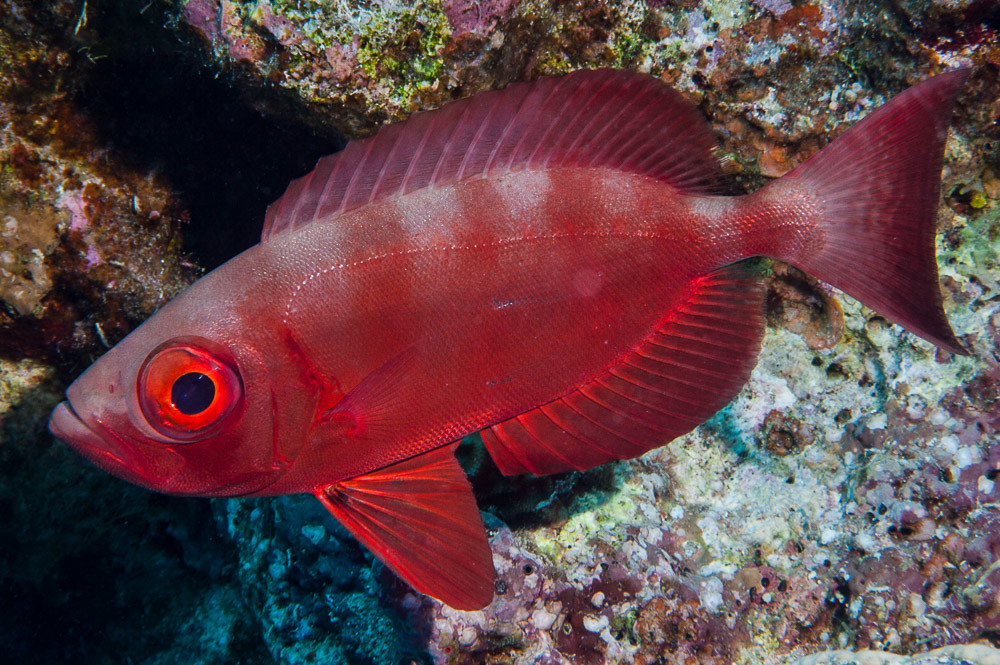
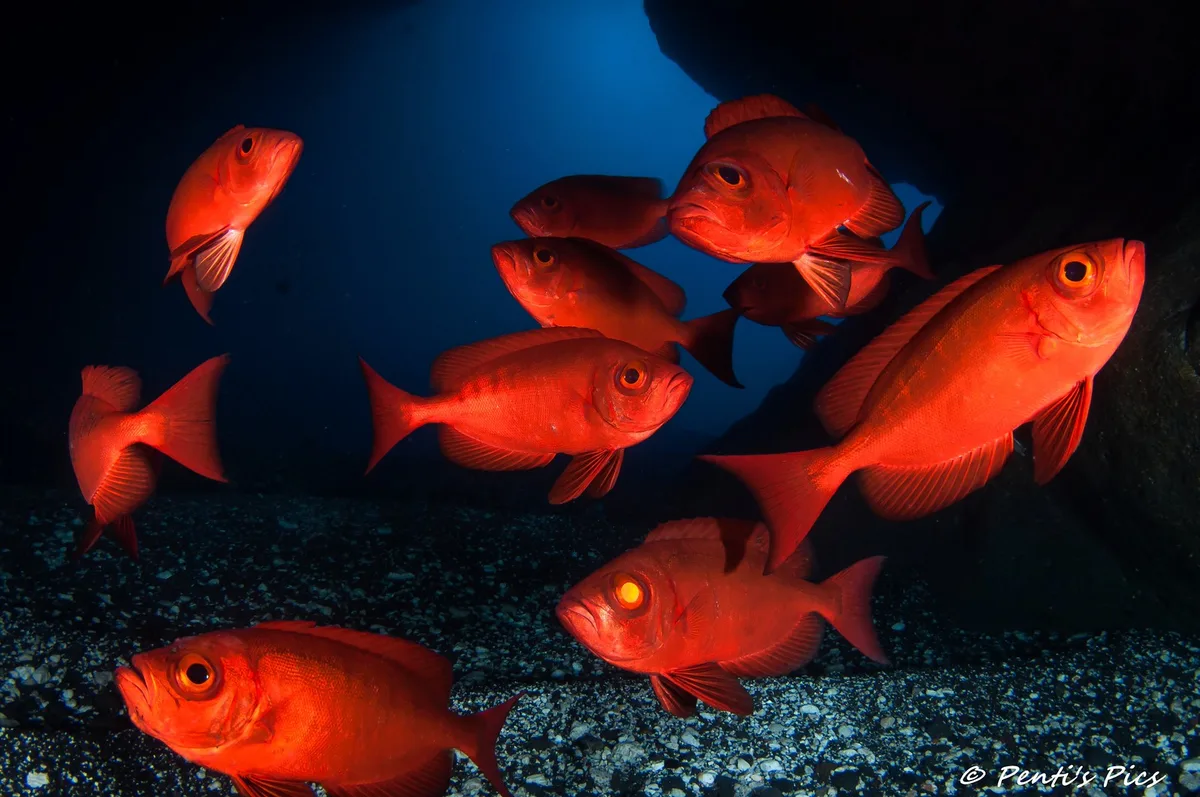
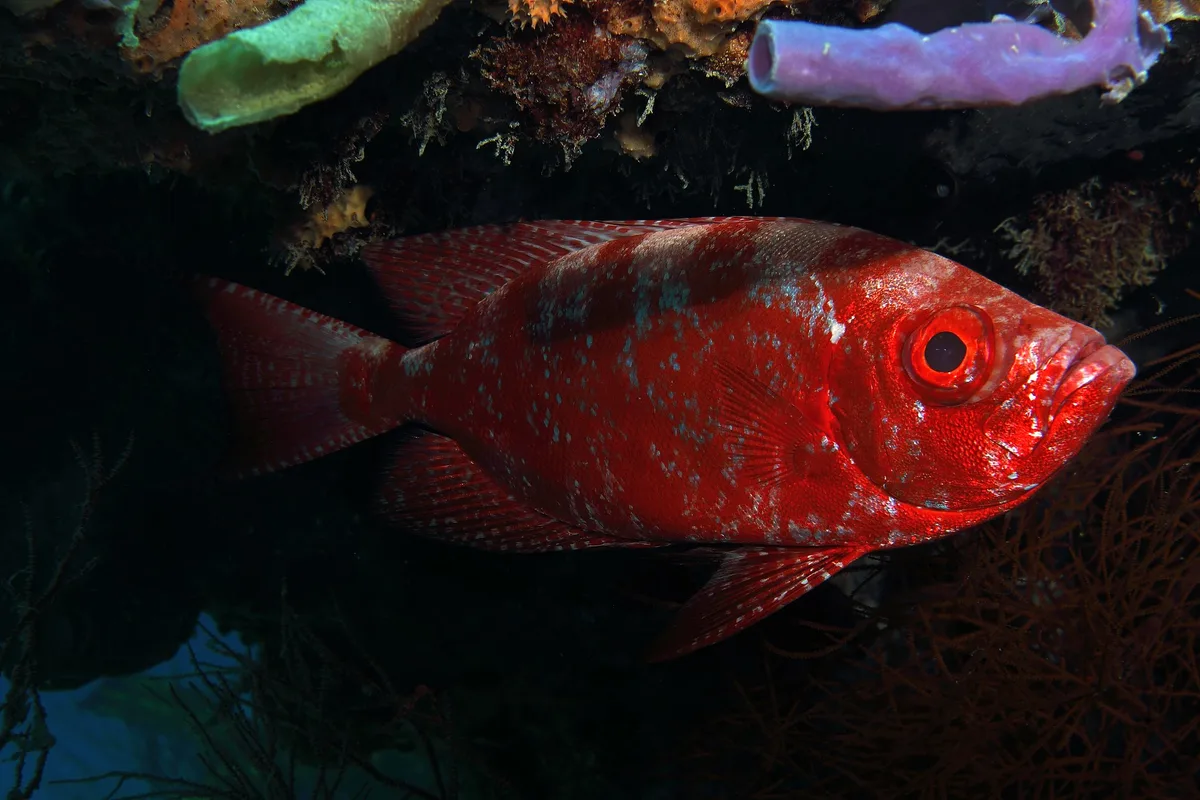
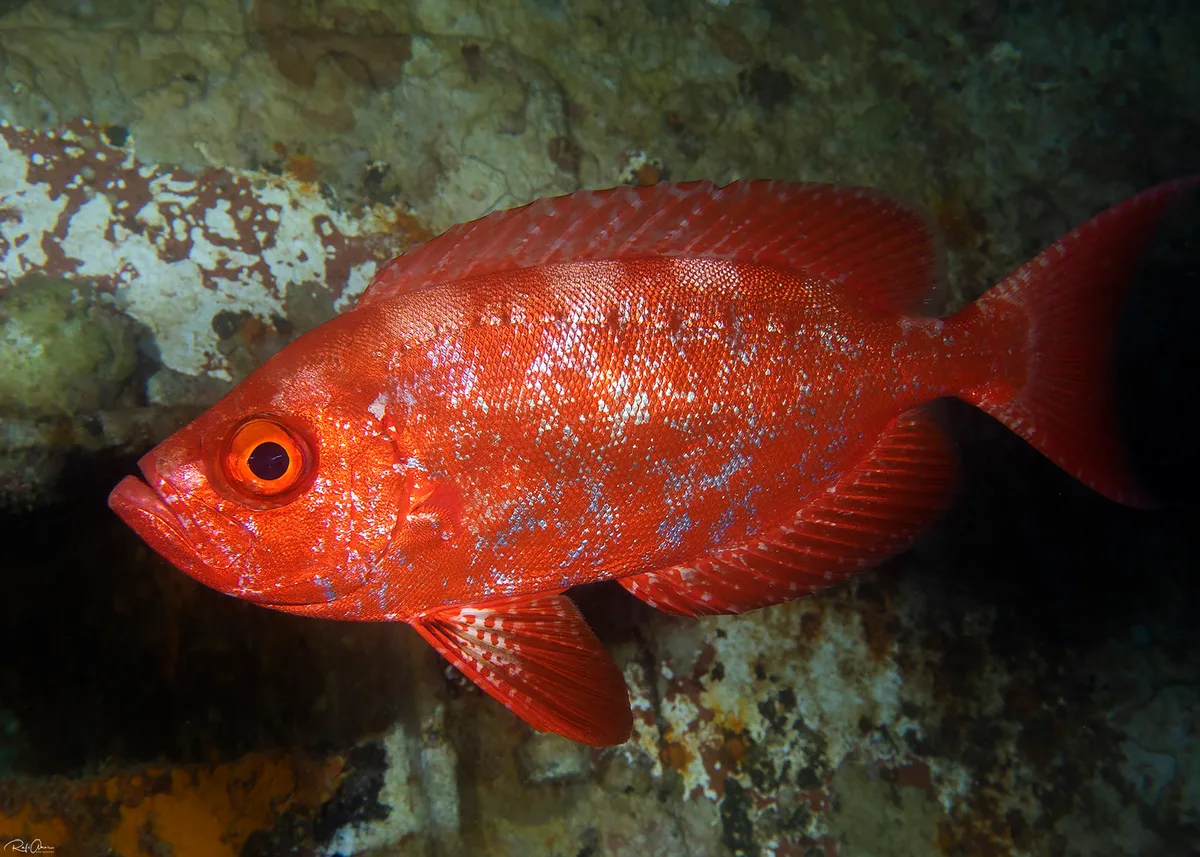
Red is the first color the sea takes away. Below about 15 m there is no red light left to reflect, so a red fish looks black, and at 40 m a bigeye is a shadow with an eye in it. It is the cheapest camouflage in the ocean, and this fish can switch it off in about a second: solid red, silver with broad red bars, or blotched, all on the same animal within a few breaths.
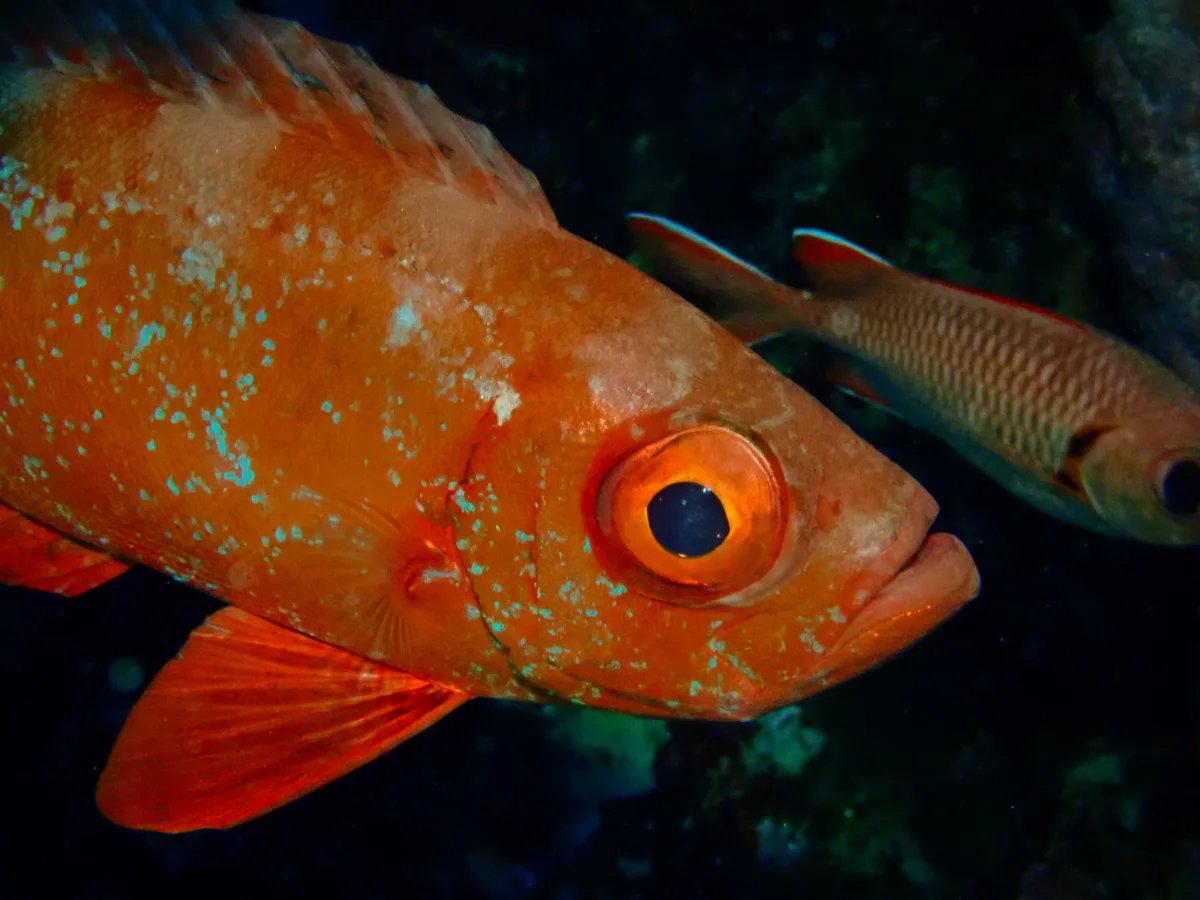
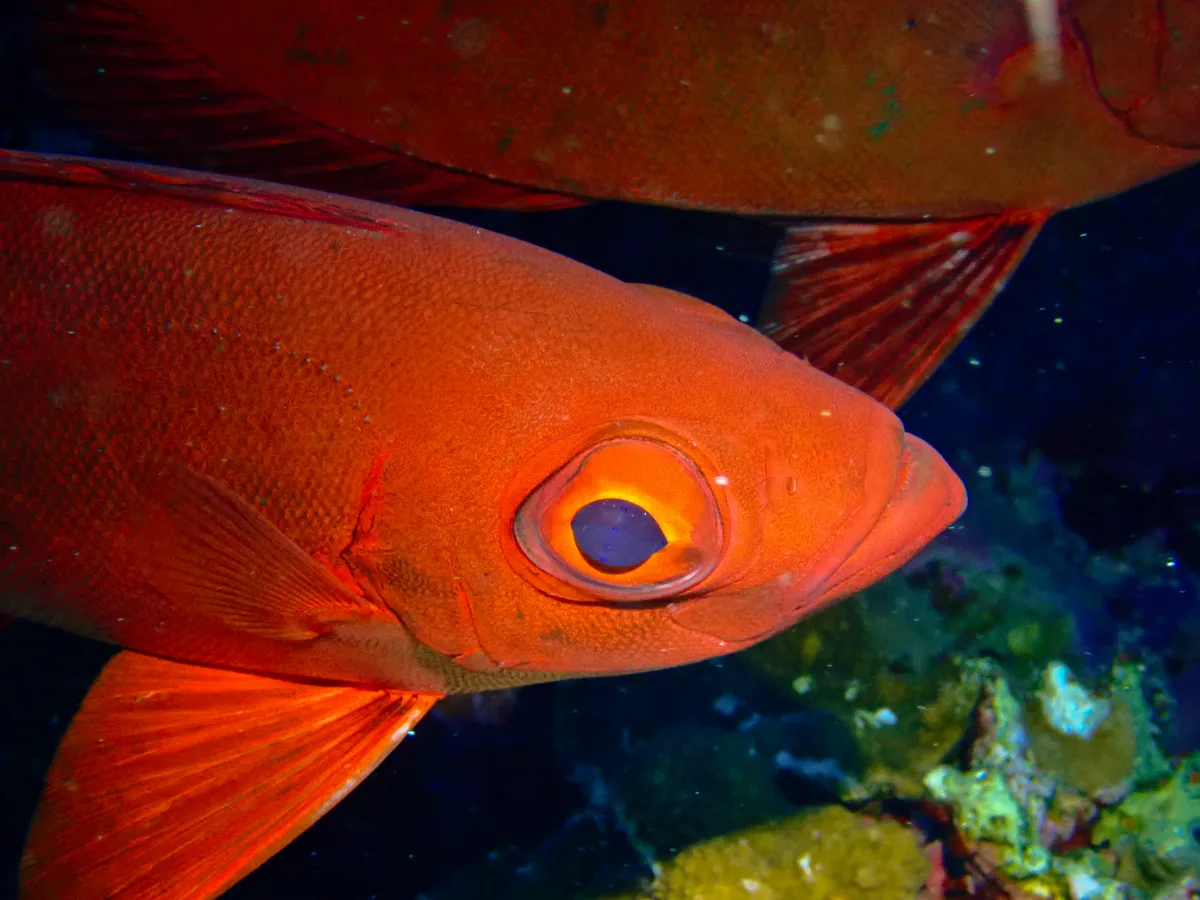
The eye is the other half of the design. It is enormous, packed with rod cells and backed by a reflective layer that bounces light back through the retina for a second pass, which is why a torch catches it as a bright coin from ten meters away. The fish hunts after dark on small fish, shrimp, crabs and squid.
By day it hangs alone or in loose groups on outer slopes, under overhangs and around wrecks, usually between 30 and 50 m, though the species goes down past 200. It hovers slightly nose-up and moves only when you get too close.
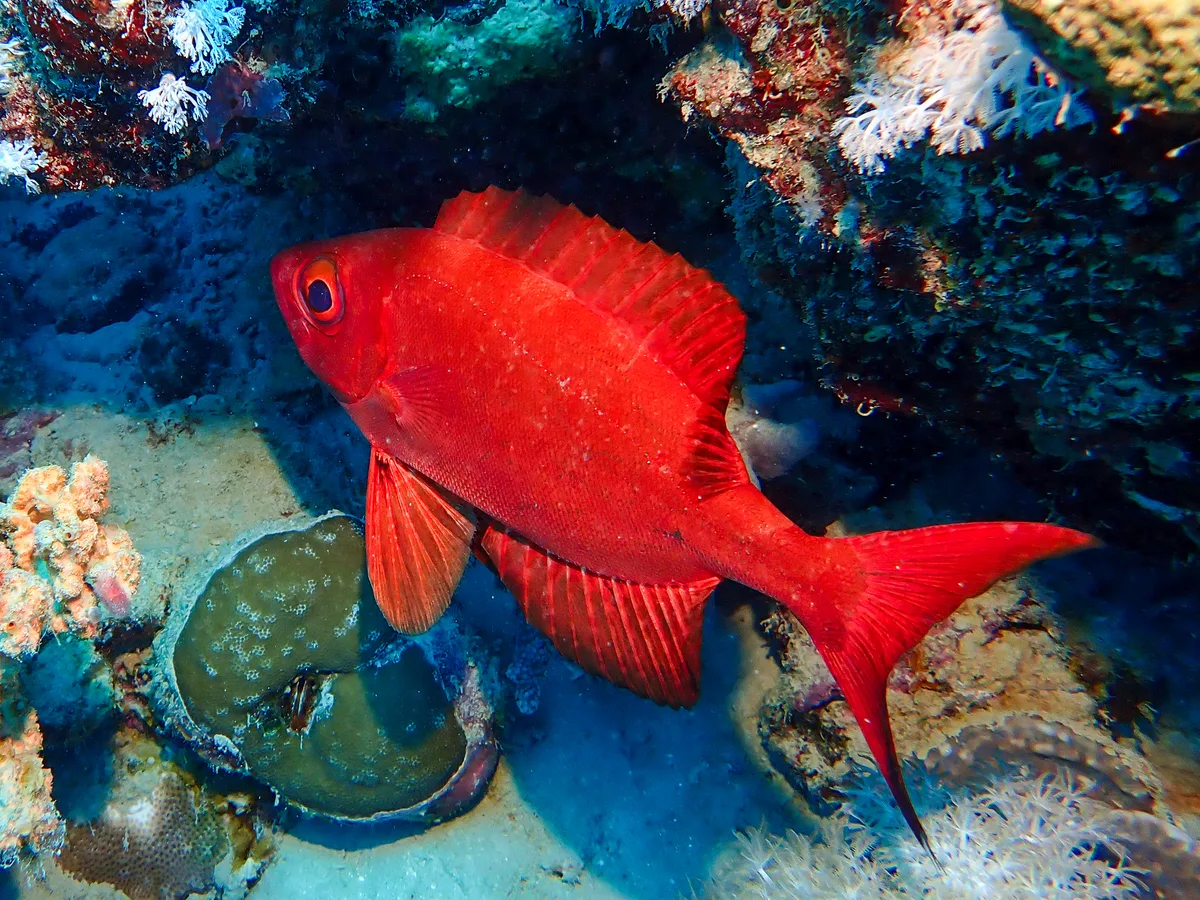
The tail is the identification. Here the rear margin is cut into a crescent with the corners drawn out; the similar bigeyes have a tail that is rounded or barely concave.
The genus. Priacanthus Oken 1817 - prion (saw) + acanthus (thorn or spine). ETYFish
The species. Priacanthus hamrur (Fabricius 1775) - Arabic name for this fish. ETYFish
- very large eye that flares in a torch beam
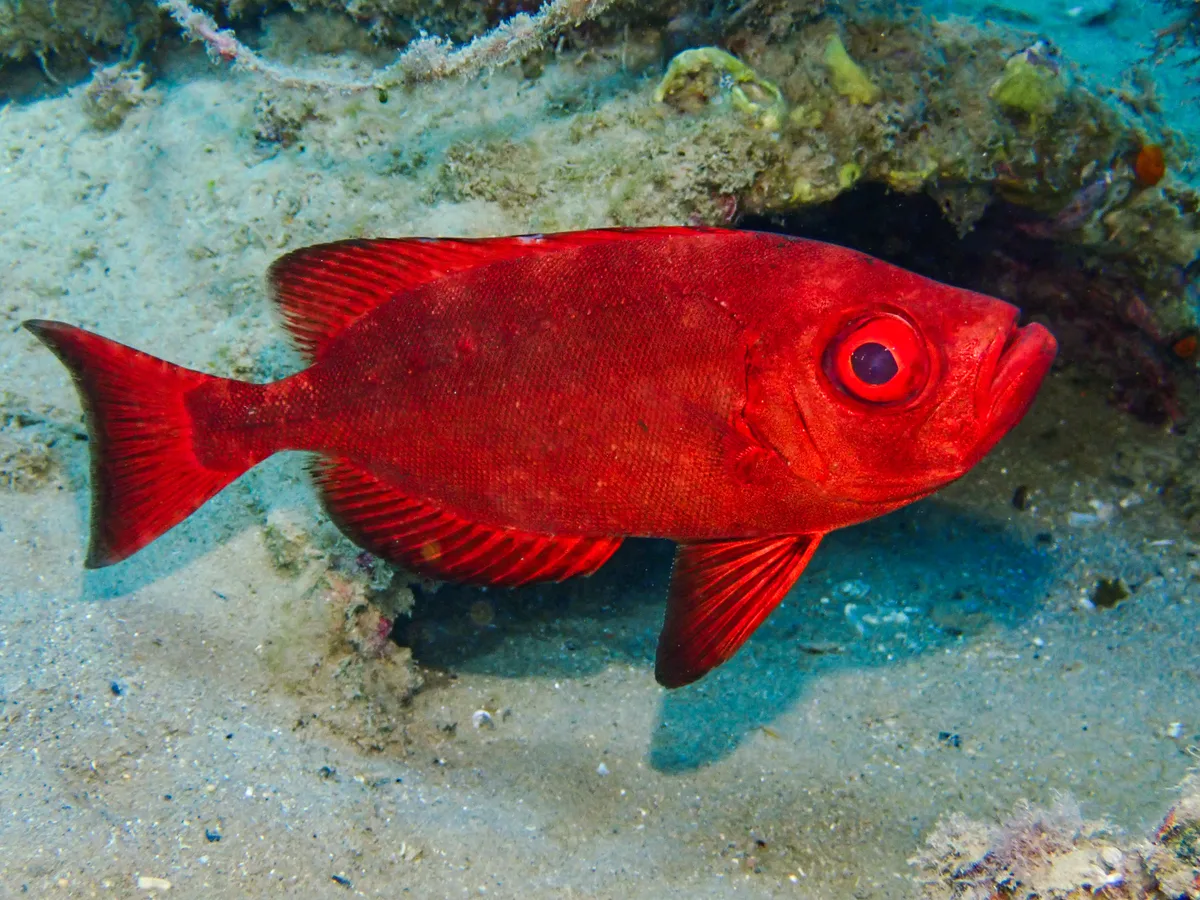
- deep, flat-sided body, solid red or silver with red bars
- tail cut into a crescent, the corners drawn out
- oblique mouth with a jutting lower jaw
- up to 45 cm