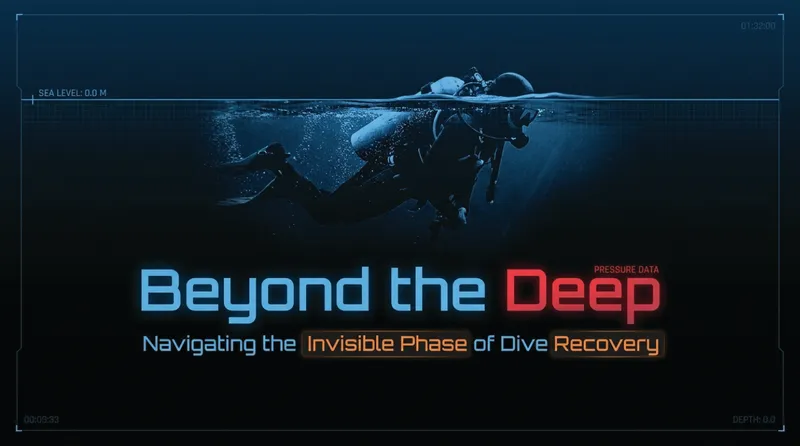
Beyond the Deep: 8 Surprising Things You Must Never Do After Scuba Diving

Safety doesn't stop at the shoreline; it demands a transition period that many divers overlook. The dive does not truly end when you break the surface or stow your fins. Instead, it enters an "invisible" phase where the body must adjust to being back on land.
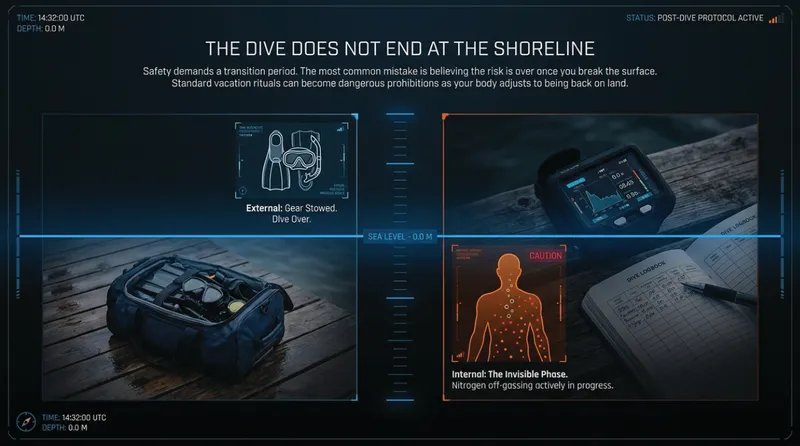
It is a common mistake to think the risk is over once the gear is rinsed, yet many standard vacation rituals - the very activities we use to unwind - can become dangerous prohibitions in the hours following a dive. As a diver, your ability to navigate this post-dive window is just as critical as your buoyancy control in the depths.
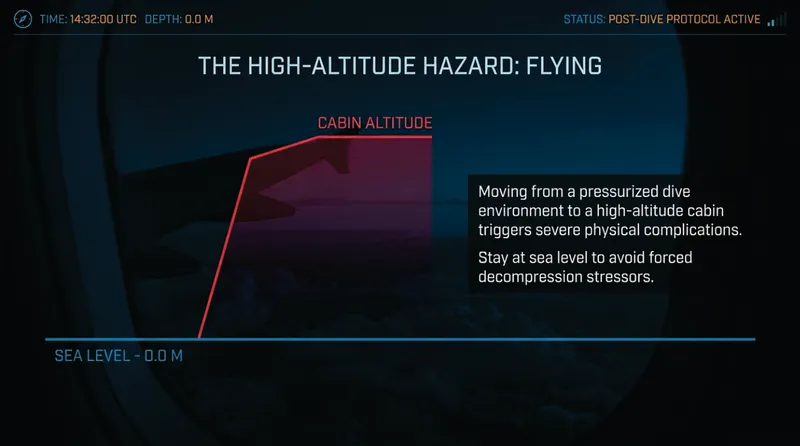
The High-Altitude Hazard: Flying After Diving
For the traveling diver, the return journey requires careful timing. Flying immediately after a dive is strictly prohibited because the move from a dive environment to a high-altitude cabin creates a dangerous transition. This is the most critical rule for those on diving holidays; the shift to a lower-pressure environment in an aircraft can trigger severe physical complications that could have been avoided by staying at sea level.
Things You Should Never Do Immediately After Diving: Flying After Diving
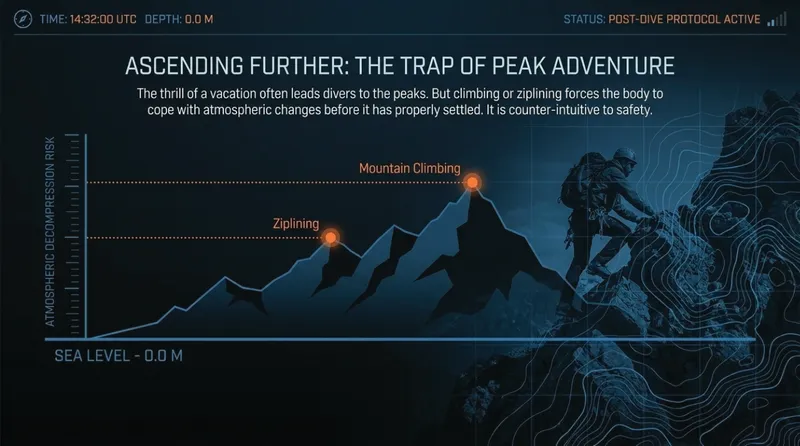
Ascending Further: Mountain Climbing and Ziplining
The thrill of a vacation often leads divers to seek adventure in the peaks as soon as they leave the water. However, mountain climbing and ziplining are high-altitude activities that carry the same risks as boarding a plane. For an adventurer looking to maximize their day, these might feel like a natural progression, but they are counter-intuitive to safety. Moving to a higher elevation through climbing or a zipline course forces the body to cope with altitude changes before it has properly settled after a dive.
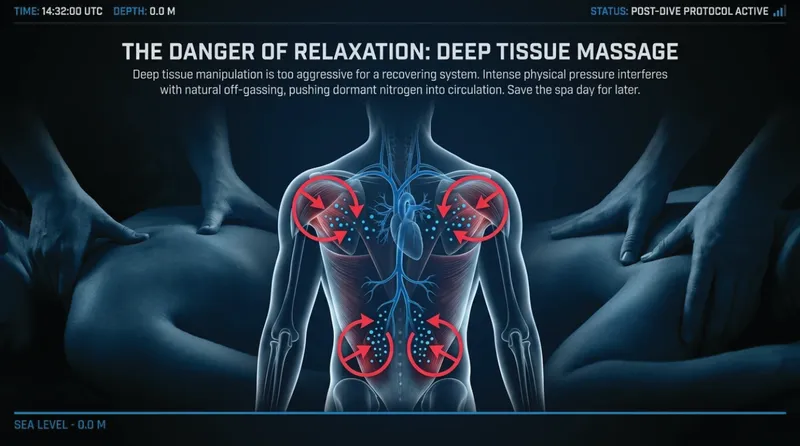
The Danger of Relaxation: Deep Tissue Massage
While a deep tissue massage is a staple of relaxation, it is a hazardous choice following a dive. The intense physical manipulation and pressure applied to the body can interfere with how your system recovers. This level of physicality - normally used to work out knots and tension - is too aggressive for a body that needs a calm, undisturbed transition back to its normal state. Save the spa day for later in the week to ensure your recovery remains on track.
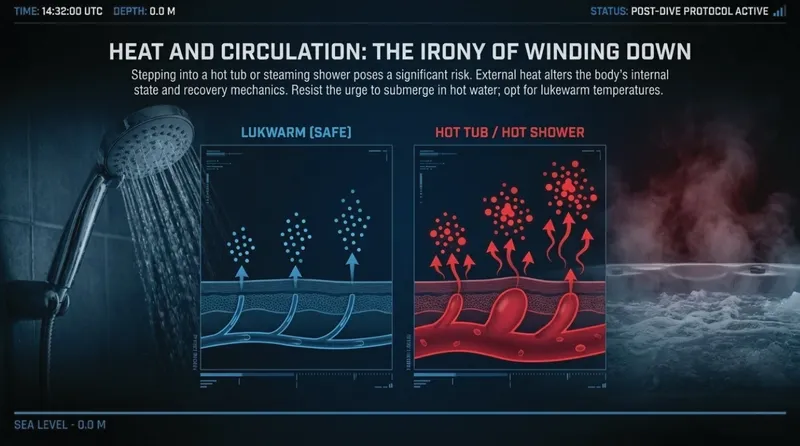
Heat and Circulation: Relaxing in a Hot Tub or Shower
There is a striking irony in dive safety: the very activities we use to warm up and relax are often the most dangerous. Stepping into a hot tub or taking a steaming shower immediately after a dive poses a significant risk. The introduction of external heat changes how the body handles its recovery and alters its internal state. Divers must resist the urge to submerge in hot water, opting for lukewarm temperatures to avoid compromising their safety.
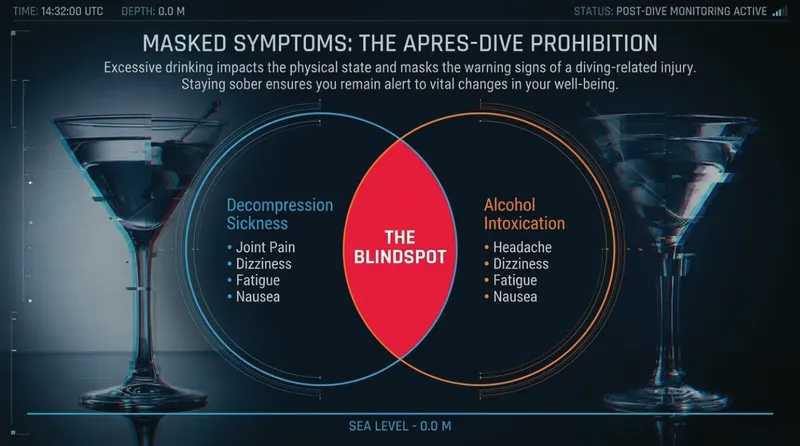
Masked Symptoms: Excessive Drinking
The "apres-dive" culture often revolves around a celebratory drink, but excessive alcohol consumption is a major prohibition. Drinking creates a dangerous situation by impacting the body's physical state and, more critically, masking the warning signs of a diving-related injury. Because the effects of alcohol can mimic certain post-dive symptoms, it can prevent a diver from realizing they are in trouble. Staying sober ensures you remain alert to any changes in your physical well-being.
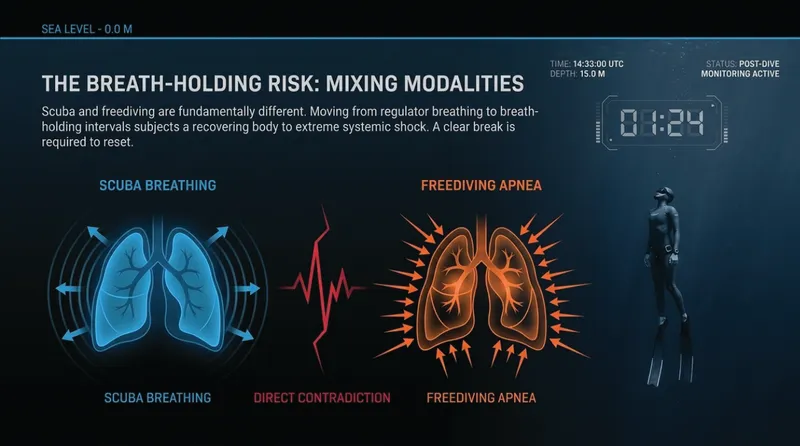
The Breath-Holding Risk: Freediving After Scuba Diving
Though both activities happen in the water, scuba and freediving are fundamentally different and should never be mixed in the same afternoon. Moving from breathing through a regulator to a series of breath-holding intervals subjects the body to extreme stress. The physical demands of freediving are a direct contradiction to the rest required after a scuba session. A clear break is required between these two disciplines to allow the body to reset.
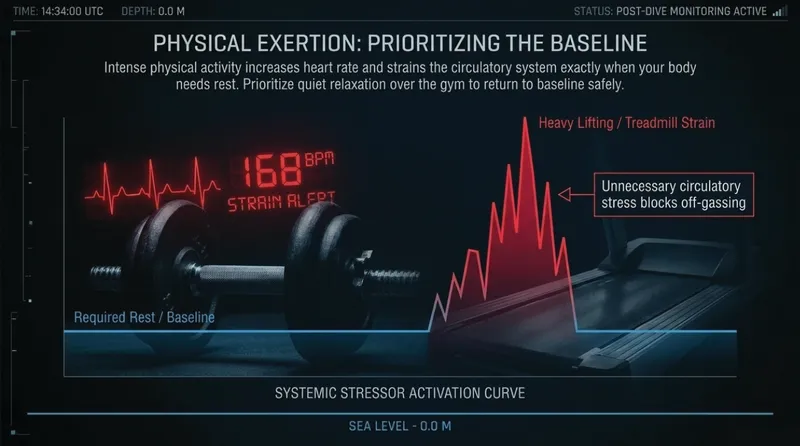
Physical Exertion: Exercising After Diving
Hitting the gym or engaging in a strenuous workout after a dive is a strict "never-do." Intense physical activity increases your heart rate and puts unnecessary strain on your circulatory system at a time when your body needs to be at rest. This level of exertion interferes with the natural recovery process. To ensure you return to your baseline safely, prioritize quiet relaxation over the treadmill or heavy lifting.
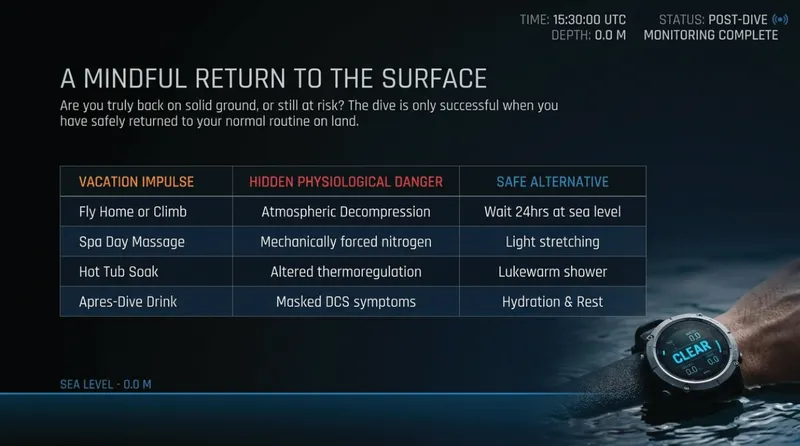
Conclusion: A Mindful Return to the Surface
Safety in the water is a deliberate process that must continue long after the logbook is signed. The transition from the depths back to your daily routine requires a mindful approach to how you treat your body. Before you plan your next post-dive excursion or celebration, look closely at your itinerary.
If your post-dive ritual involves any of these eight activities, are you truly back on solid ground, or are you still at risk?
The dive is only truly successful when you have safely returned to your normal routine on land.
PADI Divemaster and underwater storyteller with over 7 years of hands-on Red Sea diving experience, documenting marine life, mapping dive sites, and promoting responsible ocean conservation.