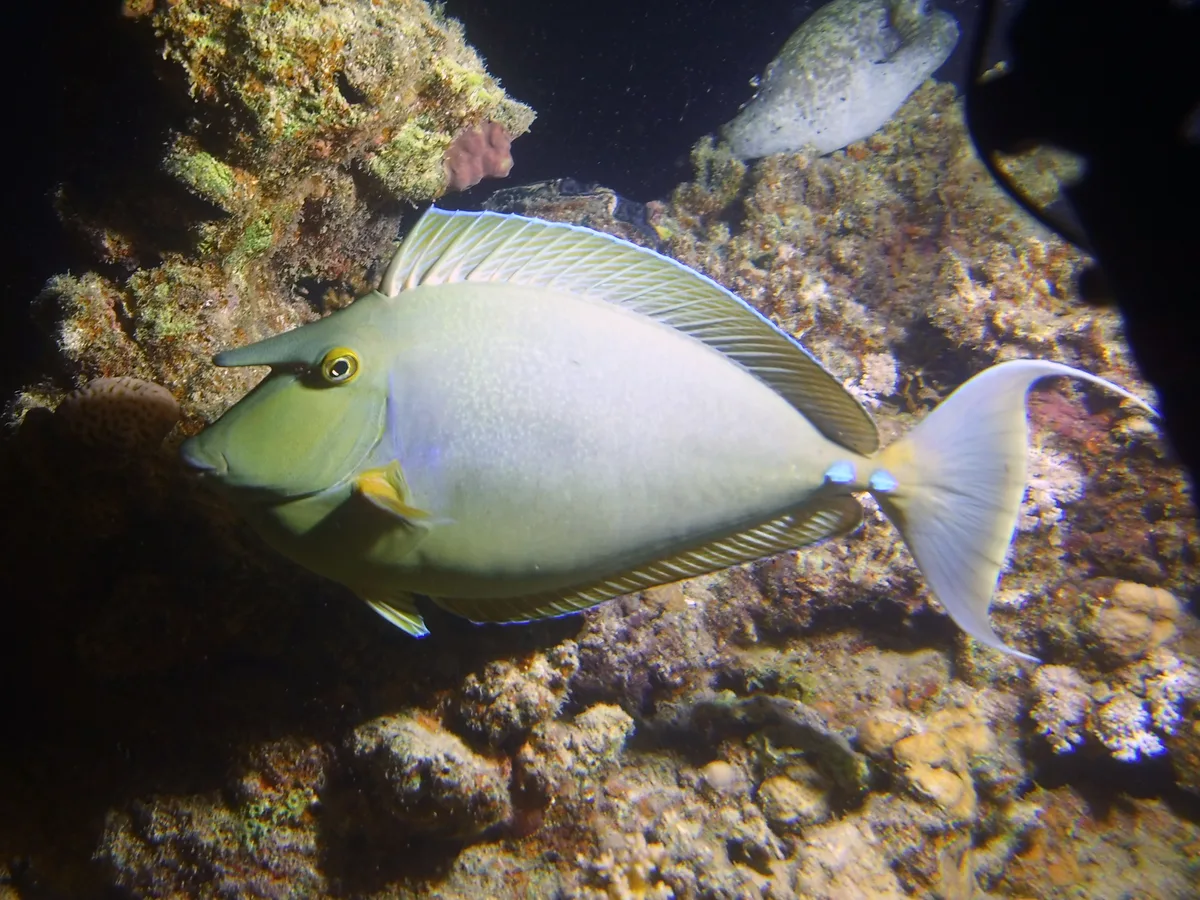
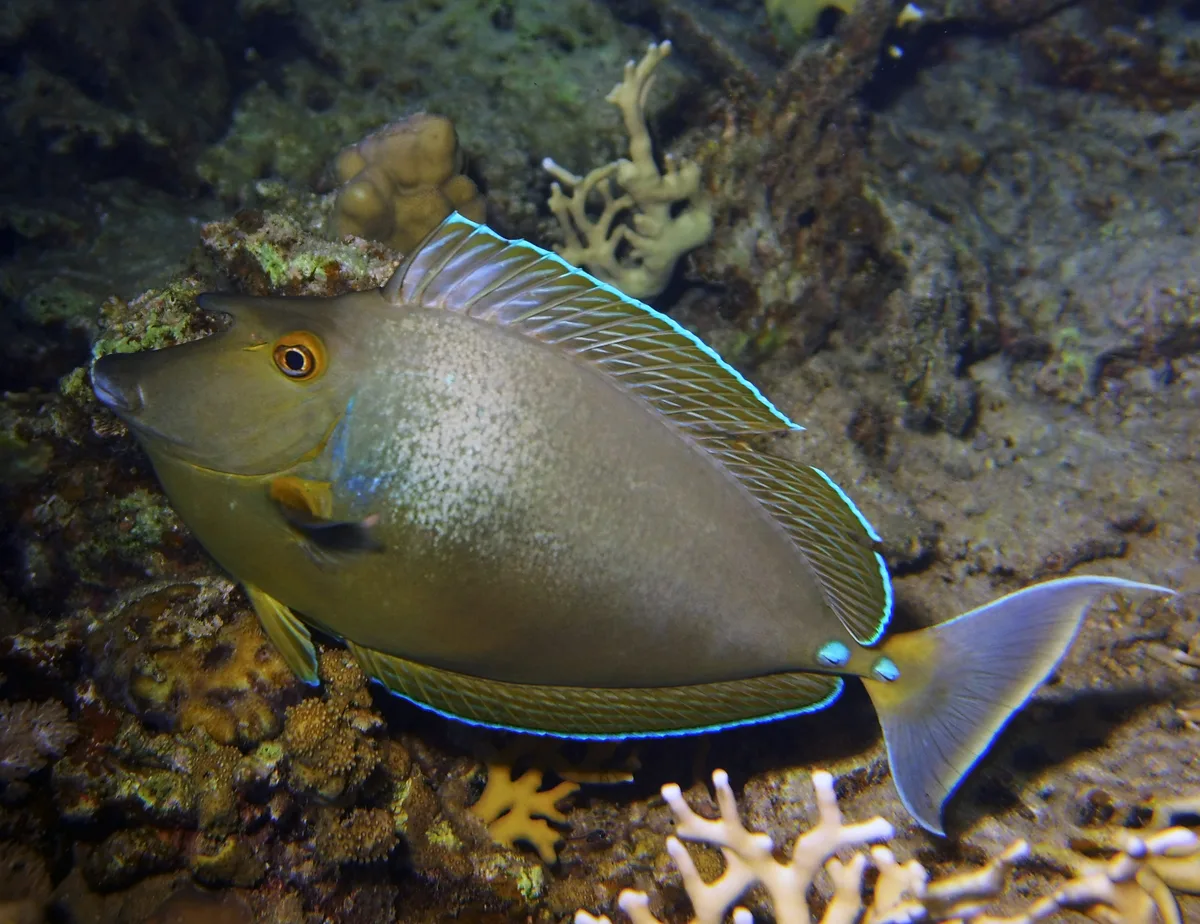
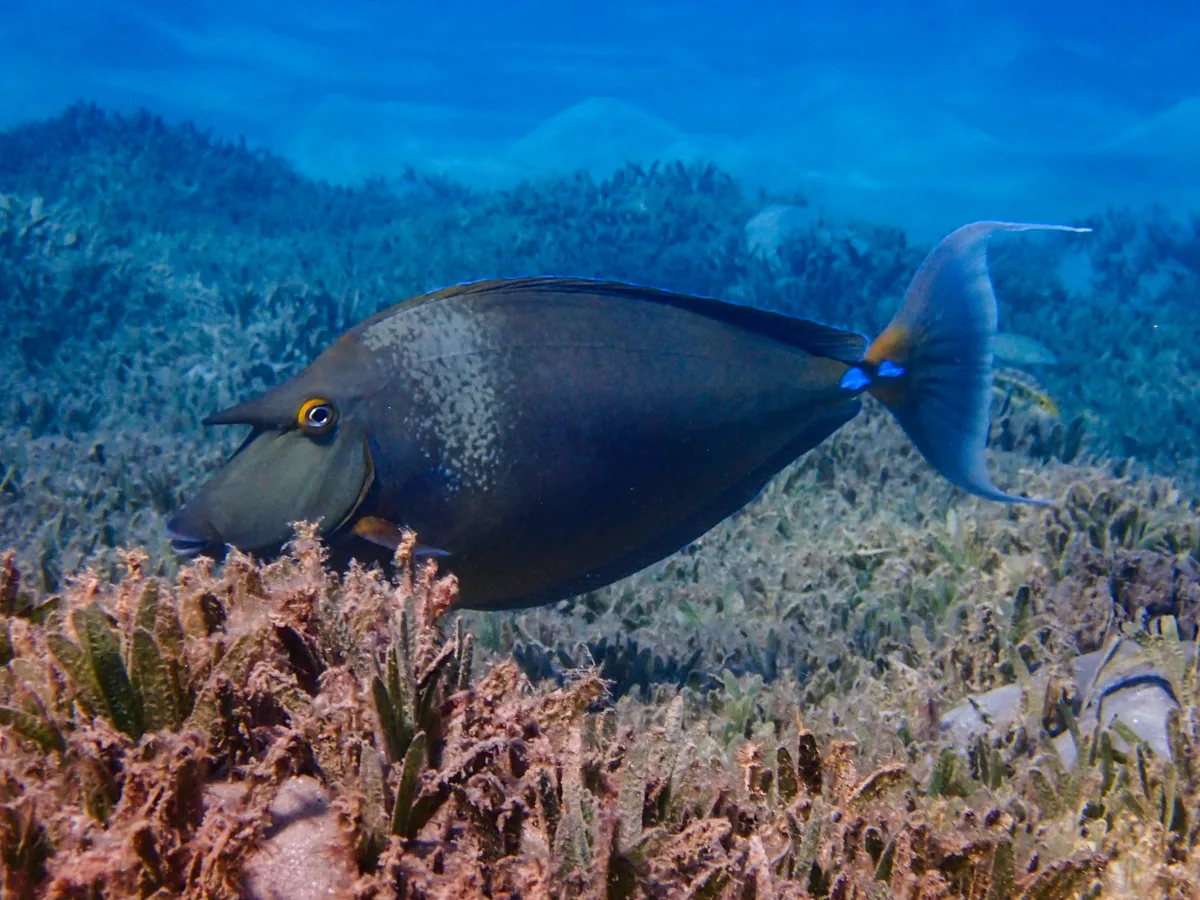
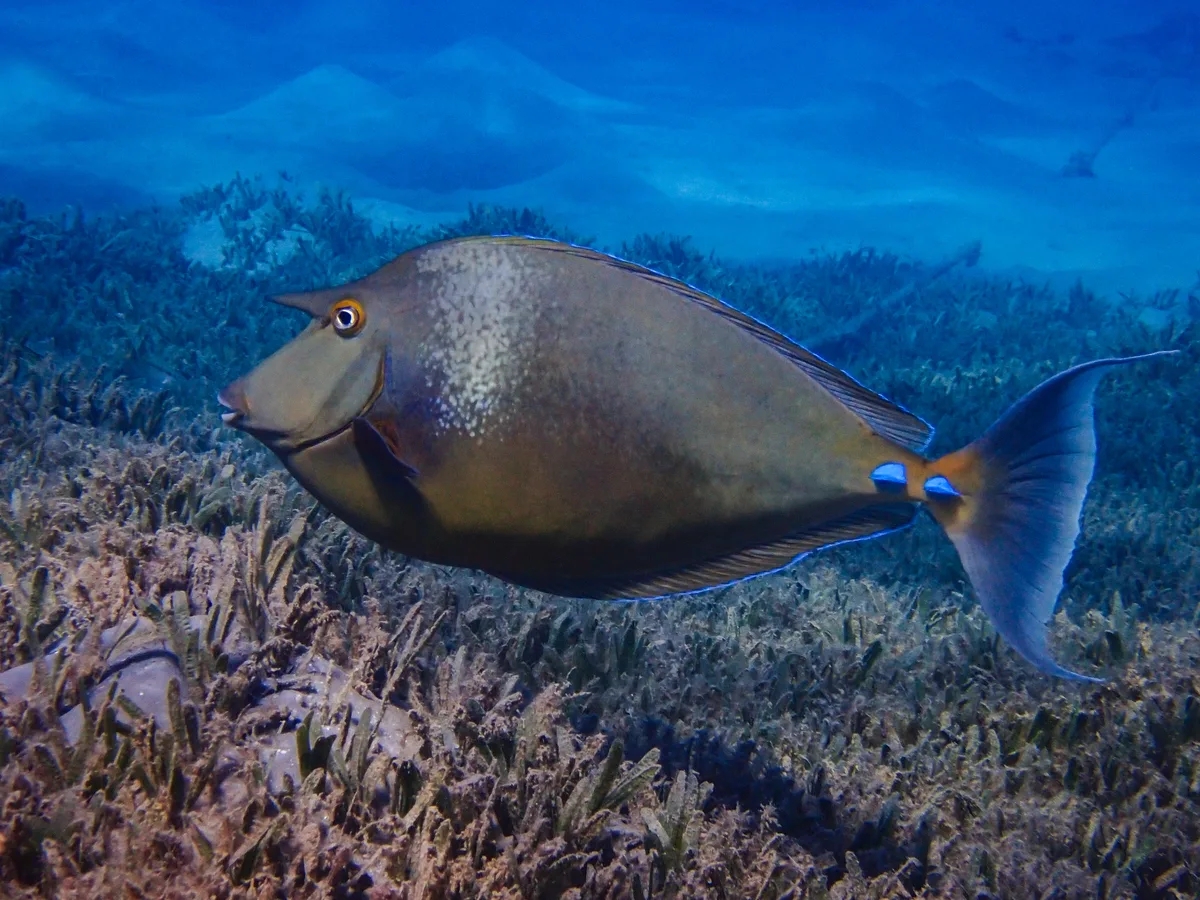
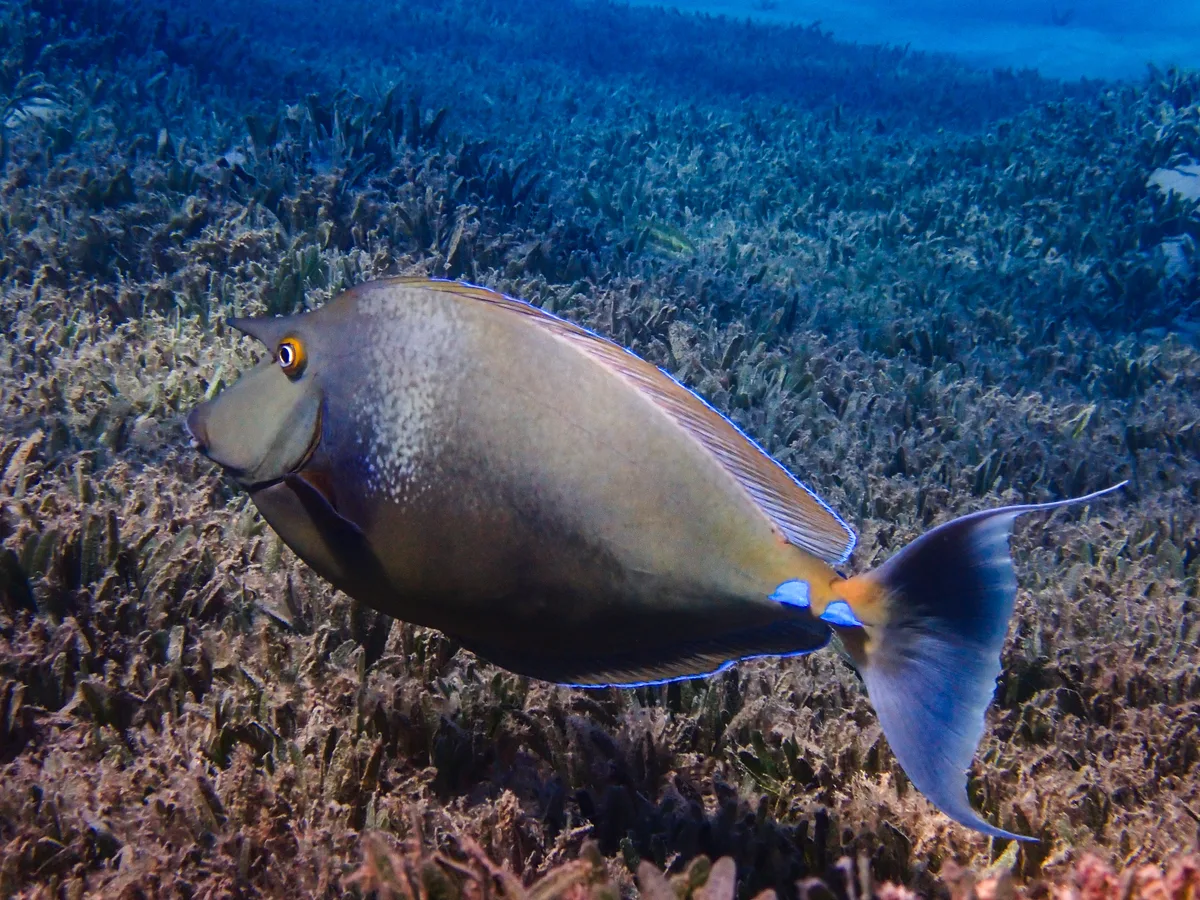
A heavy olive surgeonfish with a horn on its forehead and a pair of bright blue blades on each side of the tail base. Seventy centimeters (28 in), and the largest of the unicornfishes here.
The blades are not spines that fold away, as in the true surgeonfishes - they are fixed, permanently erect, and edged like scalpels. The fish uses them by swimming past an opponent and flicking its tail sideways, and the same movement in a net or a pair of hands opens a hand to the bone. That is the entire reason for the flag on this card.
The horn is stranger and less understood. It grows with age, it is present in both sexes, it is not used as a weapon, and no convincing explanation exists for it beyond signaling. Young fish have no horn at all.
It grazes leathery brown algae in surge zones where few other herbivores work, which makes it one of the reef's more important lawnmowers. It is heavily speared across its range and large fish in some regions carry ciguatoxins.
Naso unicornis is a targeted food fish. There have been significant reductions in biomass in parts of its range.
Surgeonfishes show varying degrees of habitat preference and utilization of coral reef habitats, with some species spending the majority of their life stages on coral reef while others primarily utilize seagrass beds, mangroves, algal beds, and /or rocky reefs. The majority of surgeonfishes are exclusively found on coral reef habitat, and of these, approximately 80% are experiencing a greater than 30% loss of coral reef area and degradation of coral reef habitat quality across their distributions. However, more research is needed to understand the long-term effects of coral reef habitat loss and degradation on these species' populations. Widespread coral reef loss and declining habitat conditions are particularly worrying for species that recruit into areas with live coral cover, especially as studies have shown that protection of pristine habitats facilitate the persistence of adult populations in species that have spatially separated adult and juvenile habitats (Comeros-Raynal et al. 2012).
Threat classification from the IUCN Red List.
Comments
Please, sign in to leave a comment
Continue with a social account — yours will be created automatically.