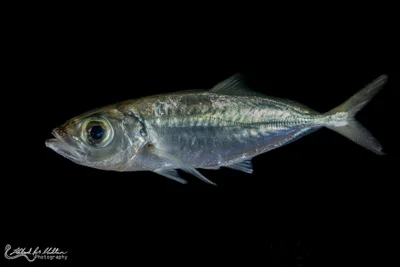
![Buck-Nosed Trevally [Trachinotus blochii] in the Seychelles near the paradise island of Praslin. 2008.](https://images.redseacreatures.com/creatures/photos/snubnose-pompano/1786649663399-549132797-1200.webp)

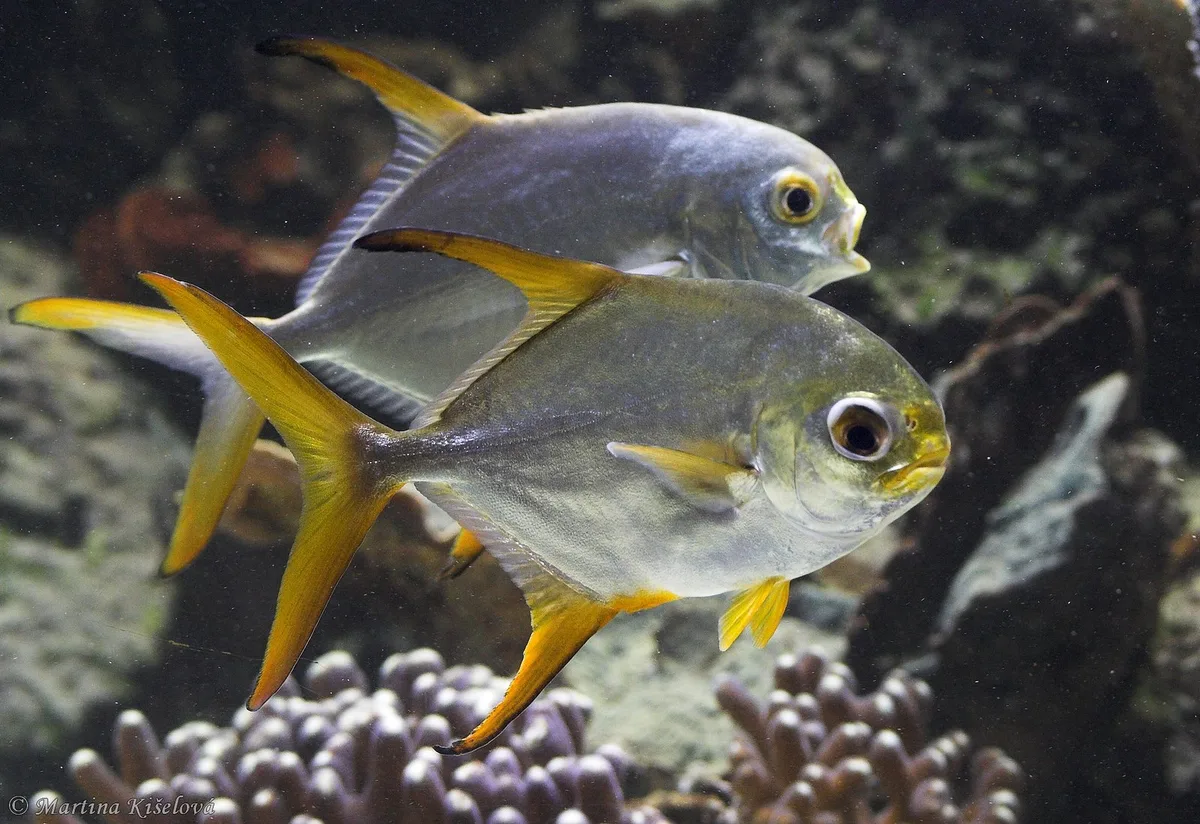
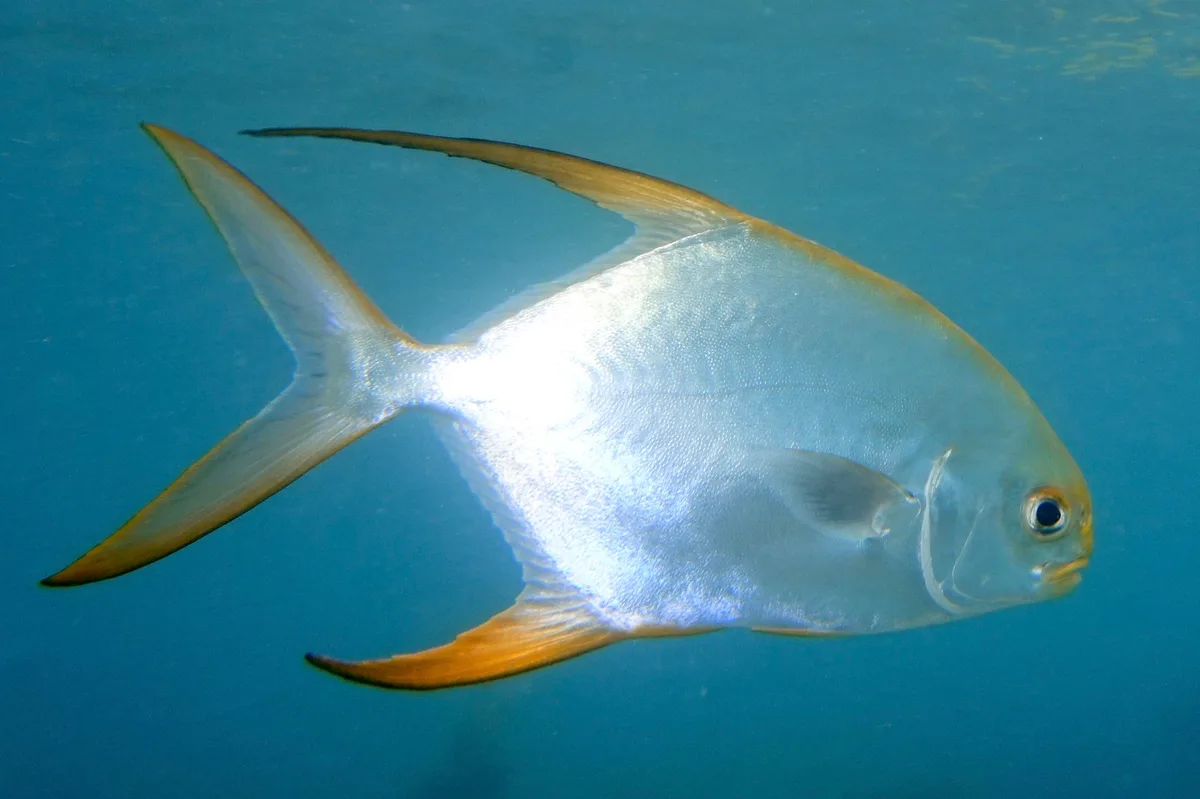
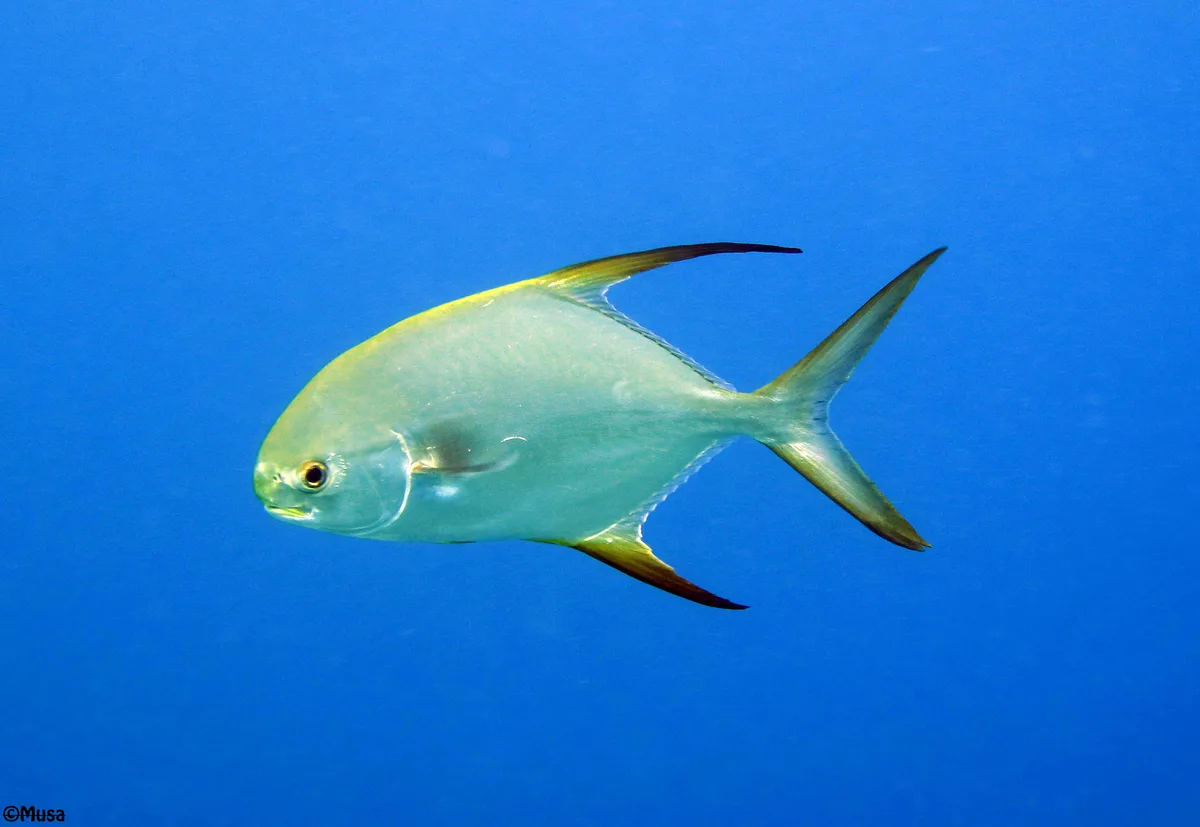
A deep silver slab with a blunt, oddly gentle face, up to 110 cm (43 in) but usually far smaller. Divers meet it in the least likely place for a big jack: the shallows, over bare sand, sometimes in water barely deep enough to cover it.
The face explains the address. There are no cutting teeth in that mouth. Instead the jaws carry crushing plates in the throat, and the fish makes its living on shellfish - clams, snails, crabs - which it takes off the flats and grinds up. Adults are known to eat their way through beds of bivalves methodically, and the blunt snout is a tool for turning sediment rather than for chasing.
Young fish live in the surf, in water full of sand and bubbles that larger predators avoid, and grow there before moving out. That habit made this species one of the mainstays of tropical mariculture: it grows fast, tolerates crowding and eats pellets, so a good part of the pompano sold across Asia was raised in a cage rather than caught.
On the reef it is a passing shape rather than a resident. Large individuals in some regions have caused ciguatera poisoning, which is what the flag on this card refers to.
The genus. Trachinotus Lacepède 1801 - trachys (rough) + notus (back). ETYFish
The species. Trachinotus blochii (Lacepède 1801) - manuscript name coined by Commerçon. ETYFish
- deep silver body, blunt rounded snout with no visible teeth
- yellow tinge on the belly and the lower fins
- sickle-shaped fins, tail deeply forked
- usually alone or in twos over open sand
- length up to 110 cm
Why it's threatened
There are no known major threats to Trachinotus blochii in the Persian Gulf.
Threat classification from the IUCN Red List.