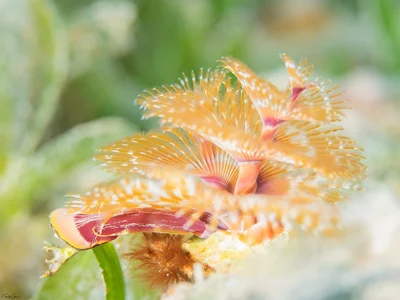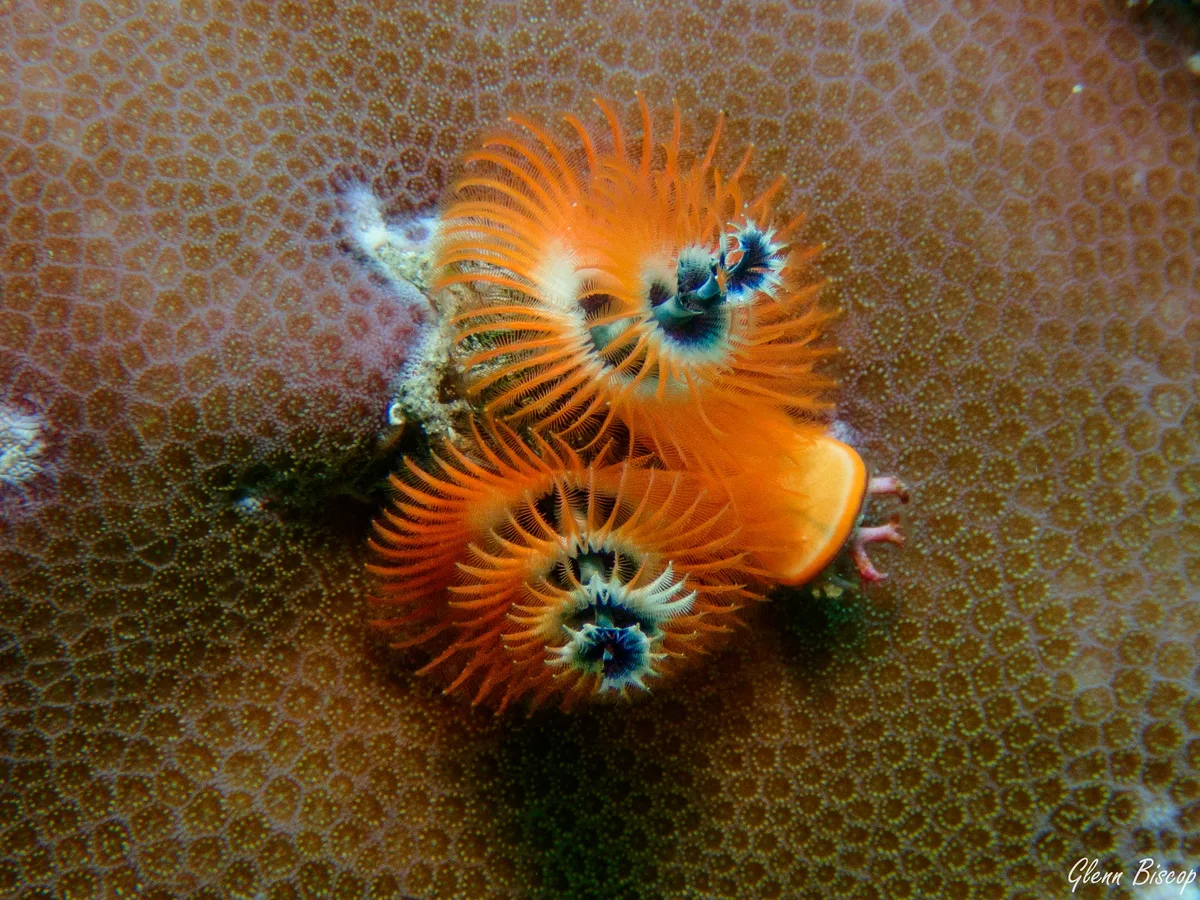
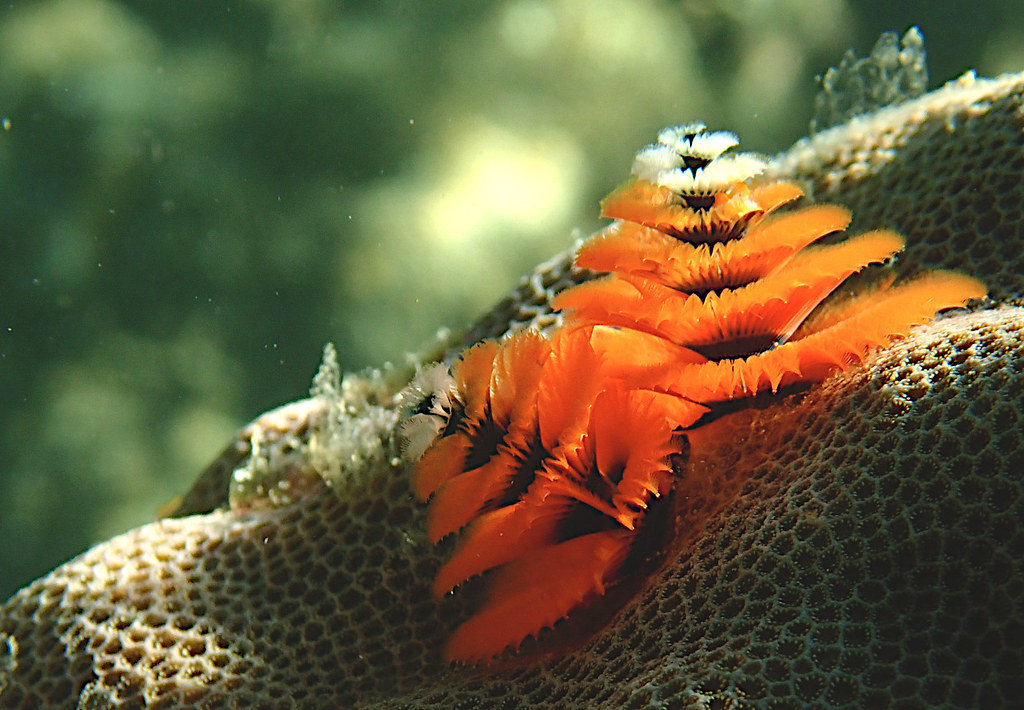
Spirobranchus corniculatus displays two branchial crowns, often bicoloured within the same individual, which extend from a calcareous tube embedded in living coral. The crowns, used for feeding and respiration, can reach up to 4 cm (1.6 in) in diameter. Its common name, Horned Christmas Tree Worm, refers to its distinctive calcified operculum. This trapdoor, which seals the tube when the worm retracts, bears multiple branched, antler-like horns. The horns are a key identifier, especially since crown colors are highly variable and not reliable for species distinction.
This sessile polychaete lives embedded within the skeletal matrix of scleractinian corals, particularly massive Porites species, at depths ranging from 1 to 30 m (3 to 100 ft). It is a filter feeder, using its ciliated branchial crowns to capture plankton and detritus from the water column. When disturbed by movement or changes in light, the worm rapidly retracts its crowns into its tube, sealing the entrance with its horned operculum. The worm establishes itself as a larva on a coral colony, which subsequently grows its skeleton around the worm's self-secreted calcareous tube. This long-term association, often lasting decades, benefits the coral by having its immediate surface kept clear of sediment by the worm's feeding currents. In return, the coral provides a protected, self-repairing dwelling for the worm.
- paired spiral crowns, often two colors in one animal
- trapdoor carries branched horns, visible when the crown is retracted
- usually in massive Porites heads
- crowns up to 4 cm across