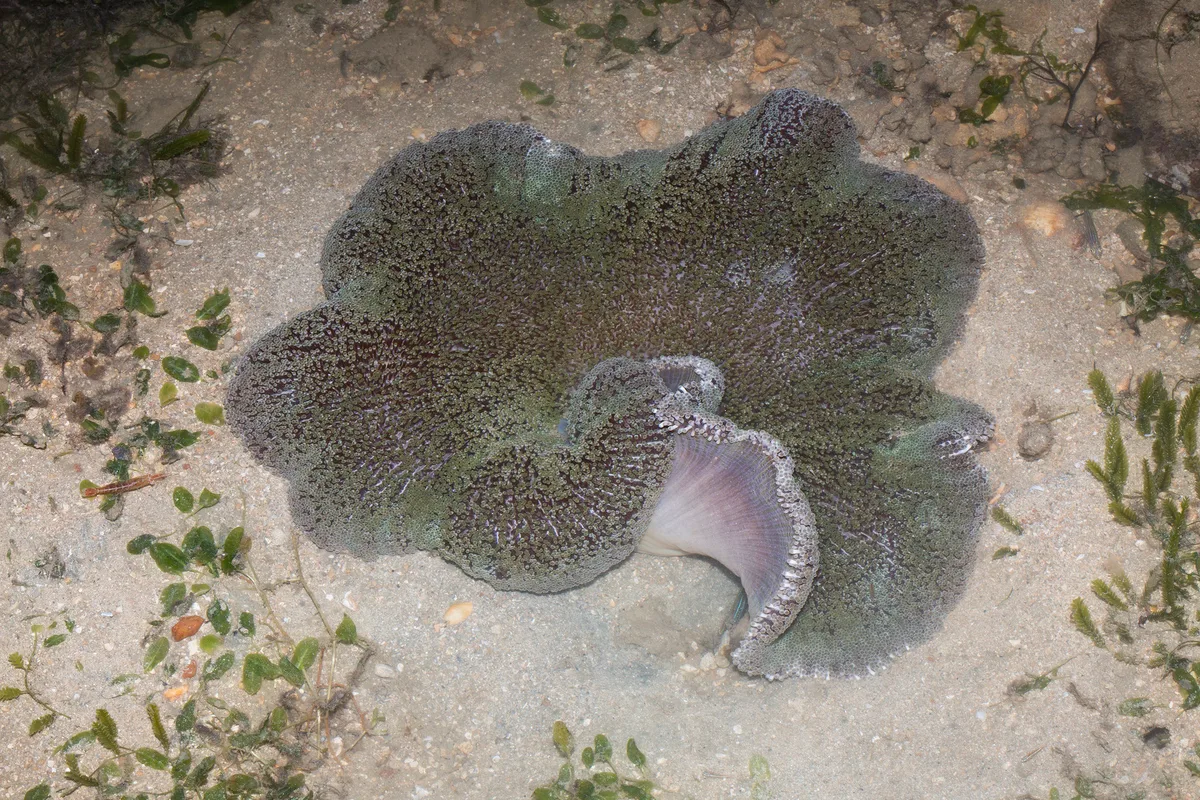
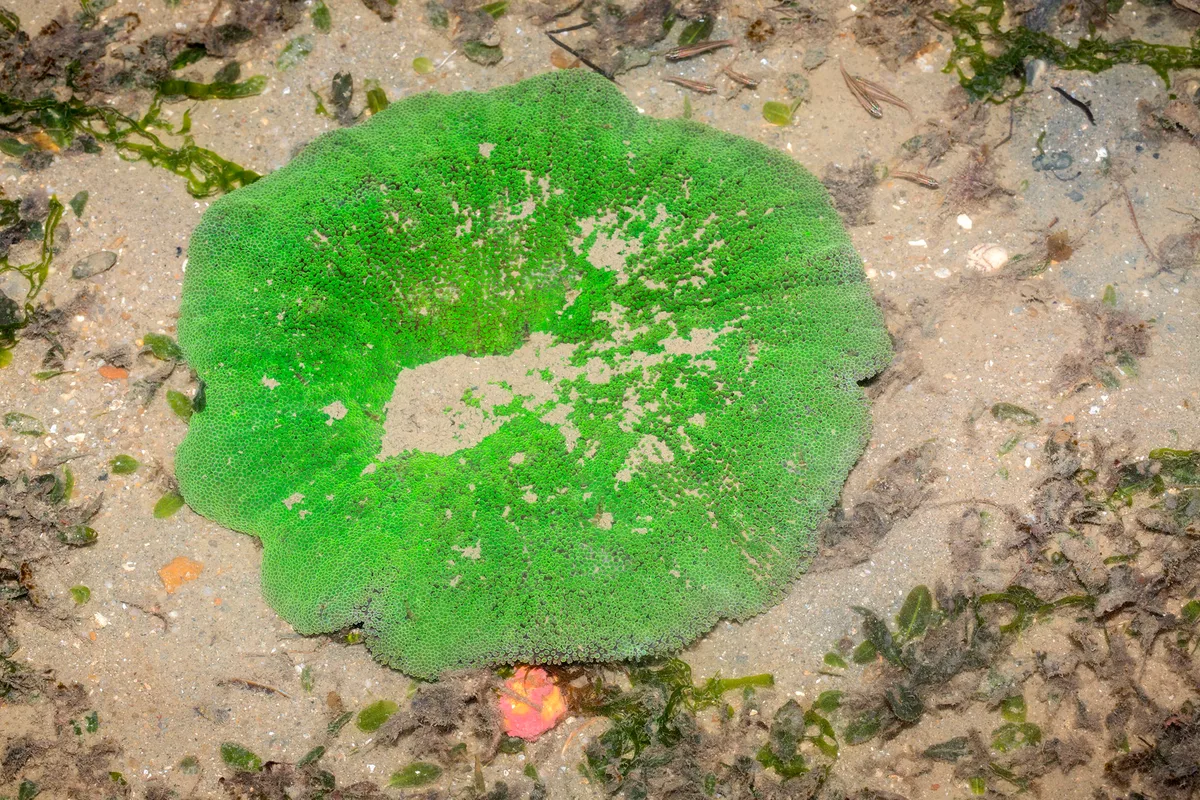
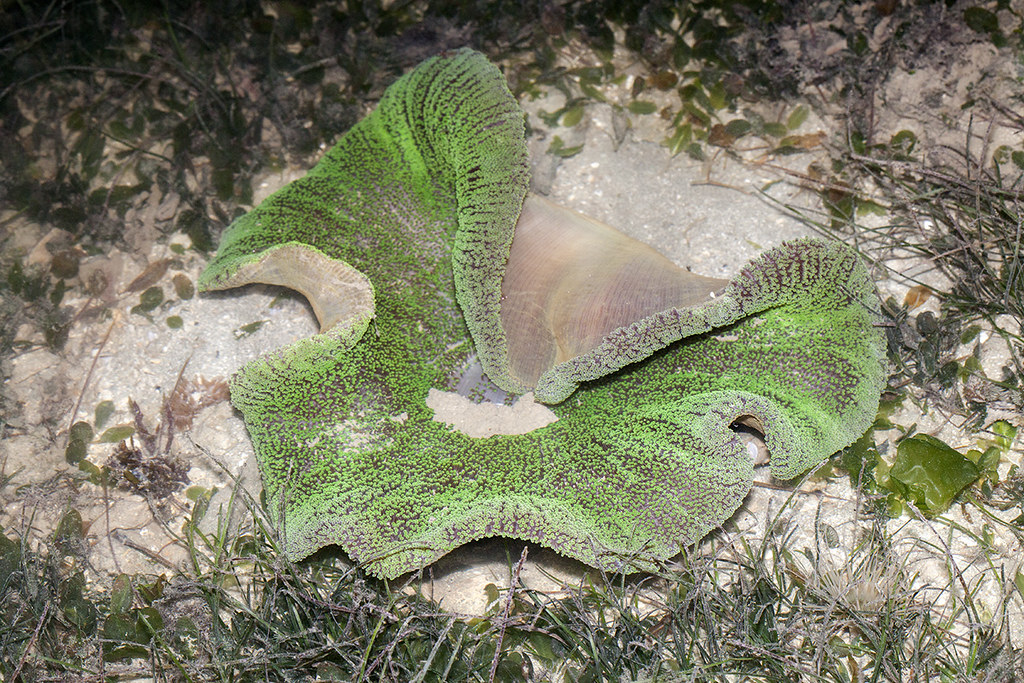
Most anemones you can brush against and pull away from. This one holds on.
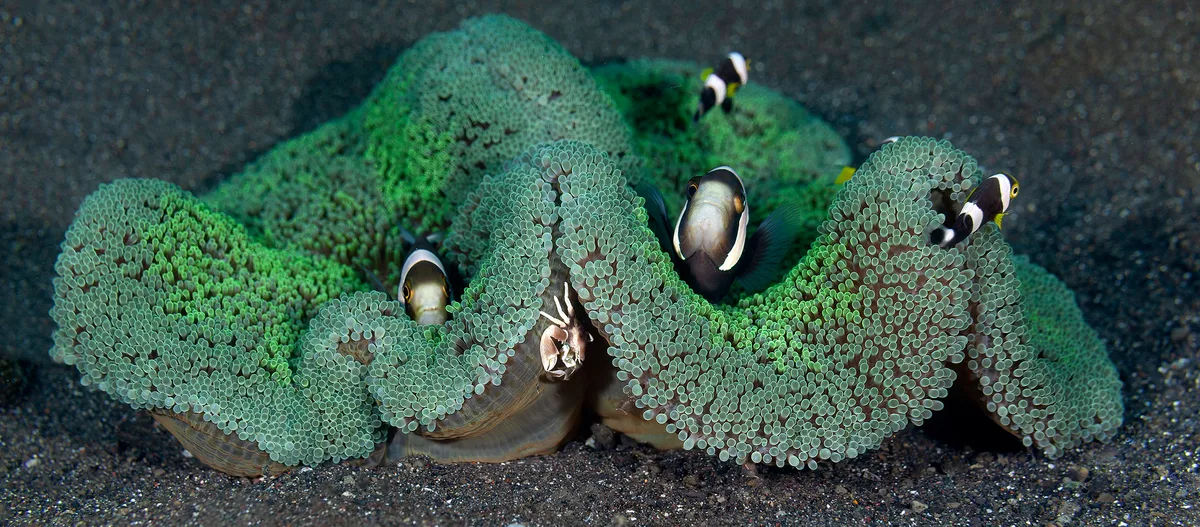
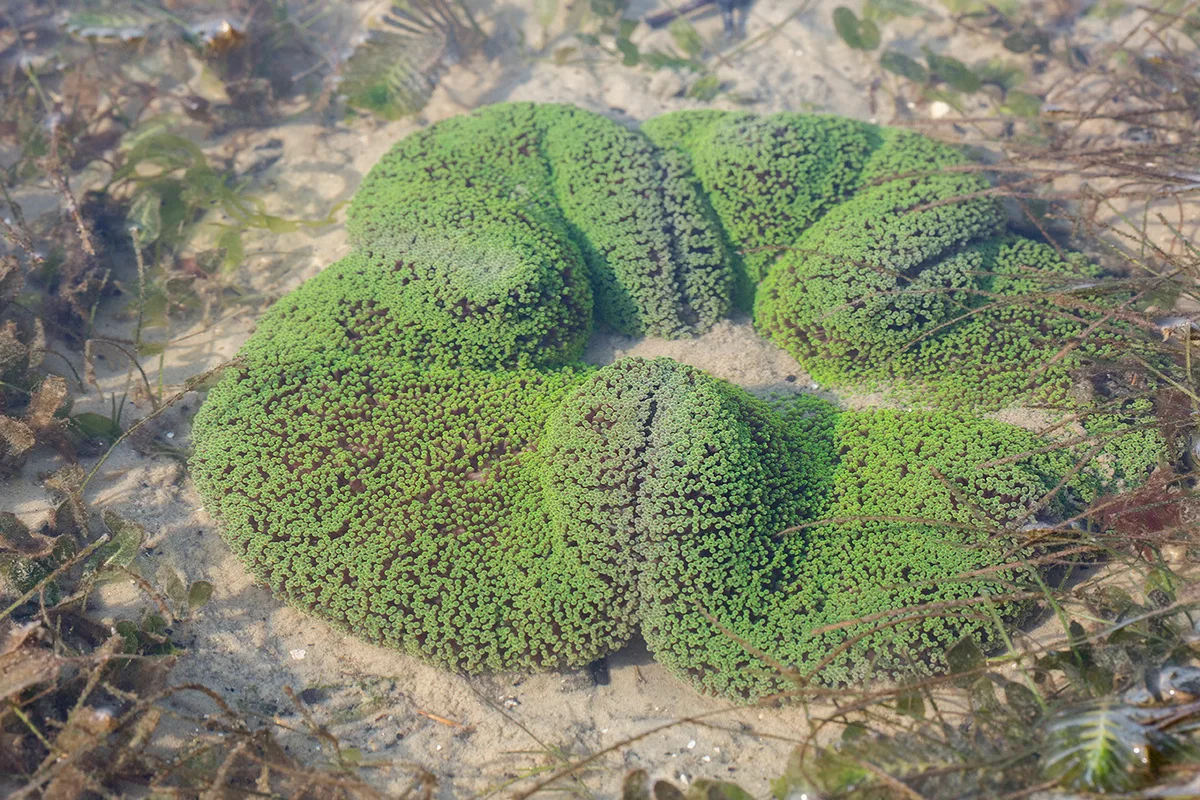
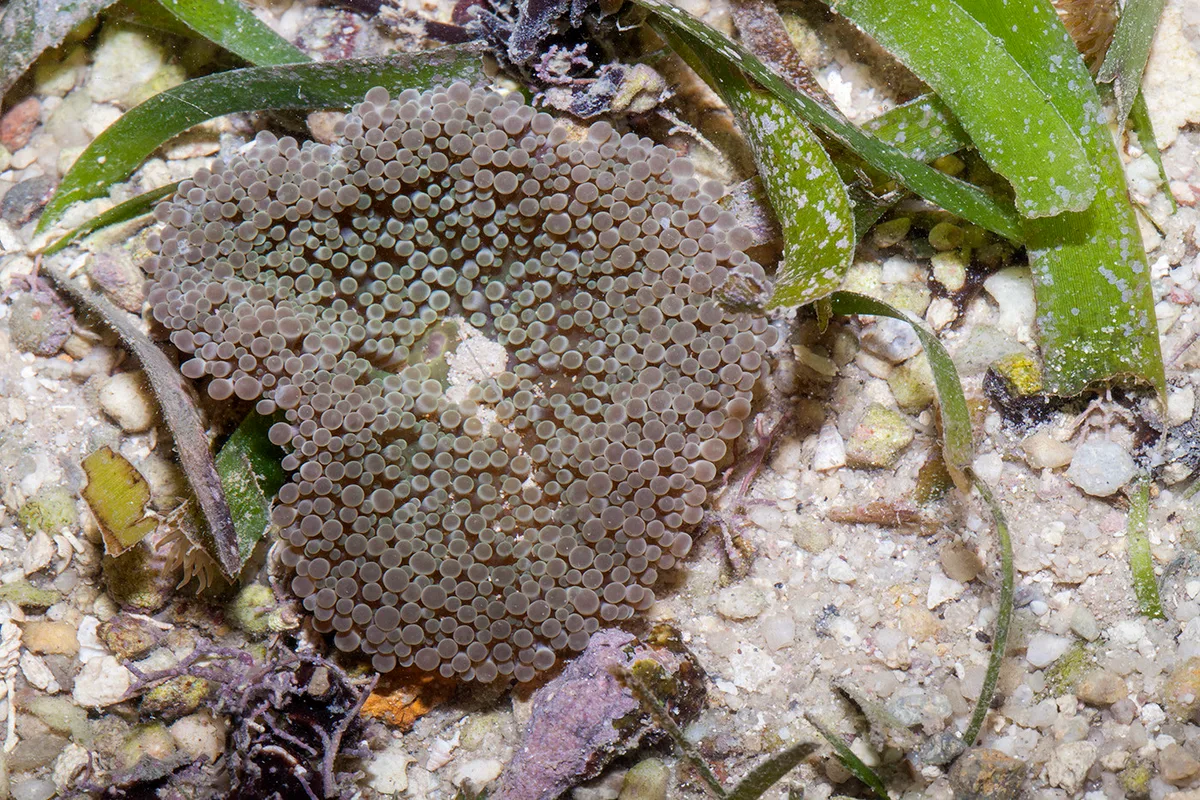
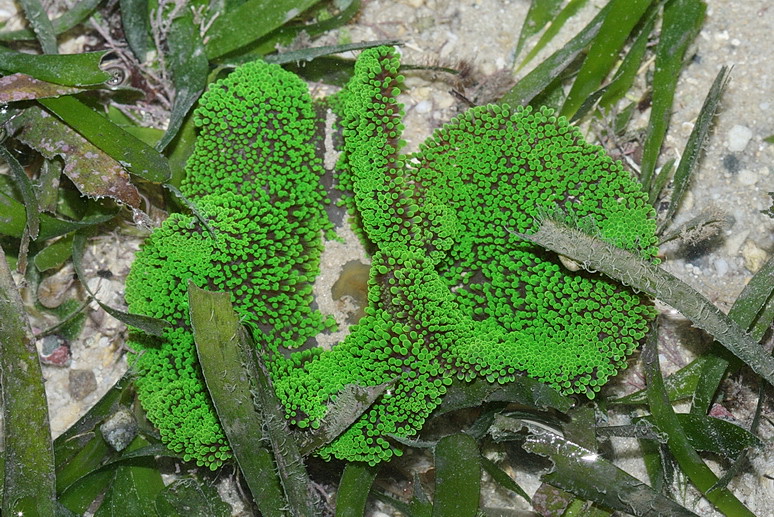
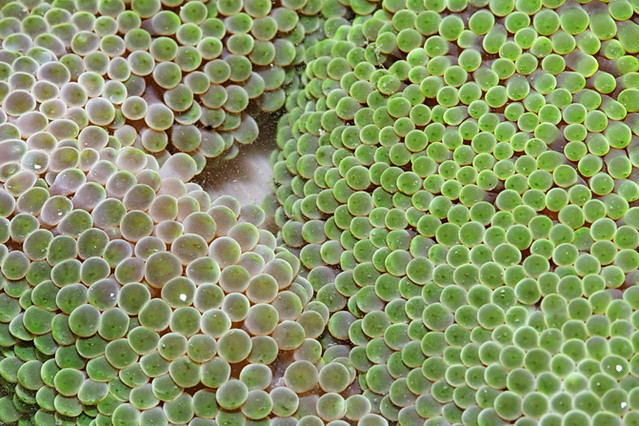
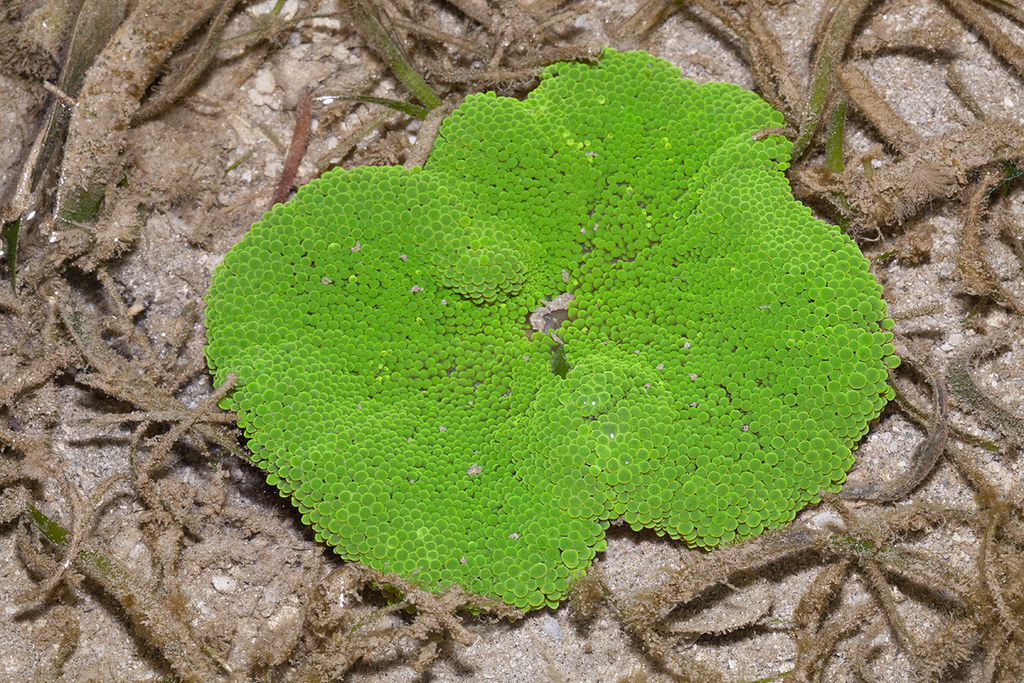
The tentacles of a carpet anemone are short, dense and genuinely adhesive: touch the surface and it sticks to skin, and pulling back tears tentacles off rather than releasing. That matters because the stinging cells fire the whole time contact lasts, so a hand laid on a carpet anemone gets a far bigger dose than a brush against a normal one. Stings from this genus raise welts and blisters and can leave marks for weeks. It is the one anemone here worth actively keeping clear of.
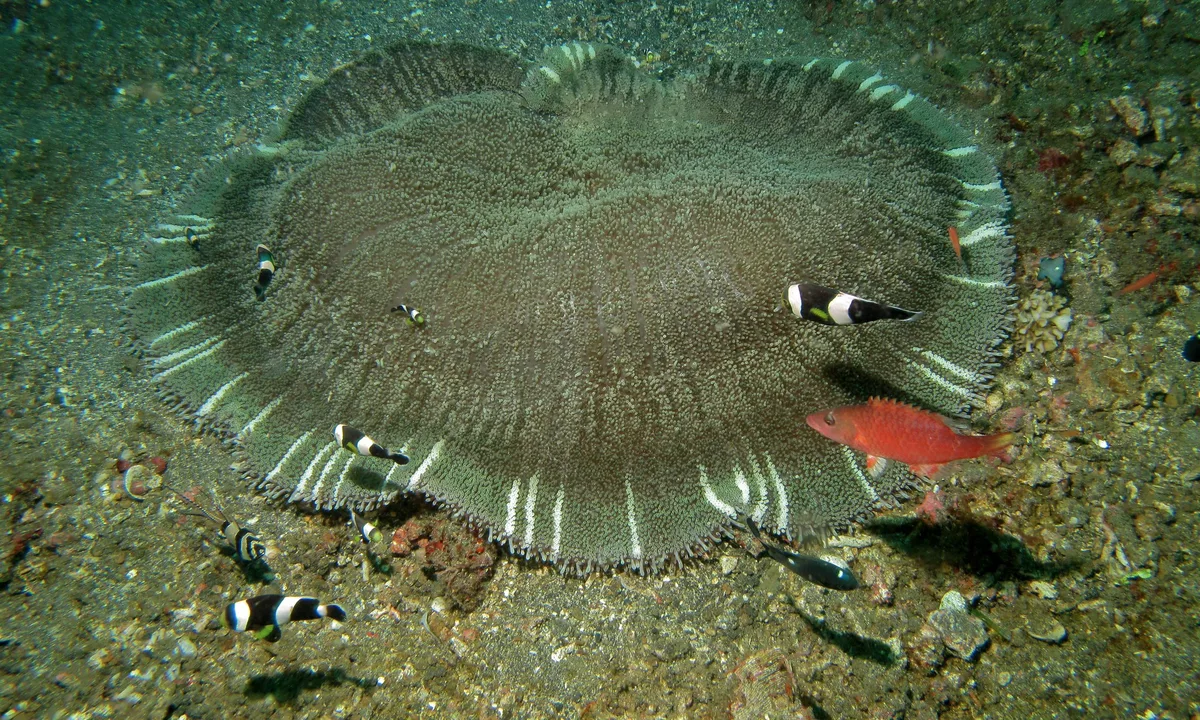
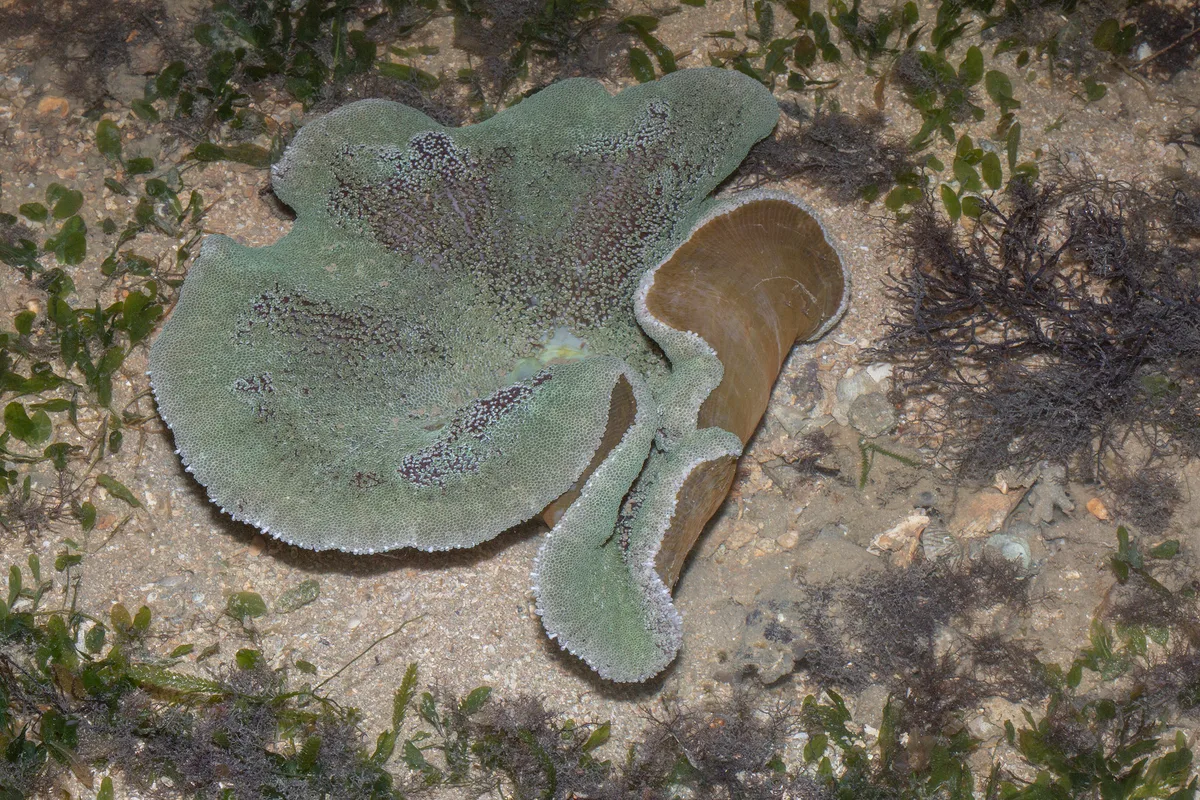
The grip is not aimed at people. It is how the animal feeds: it sits flat on sand with its column buried and the disc spread out like a doormat, up to eighty centimeters across, and anything that lands on it is held and folded inward to the mouth.
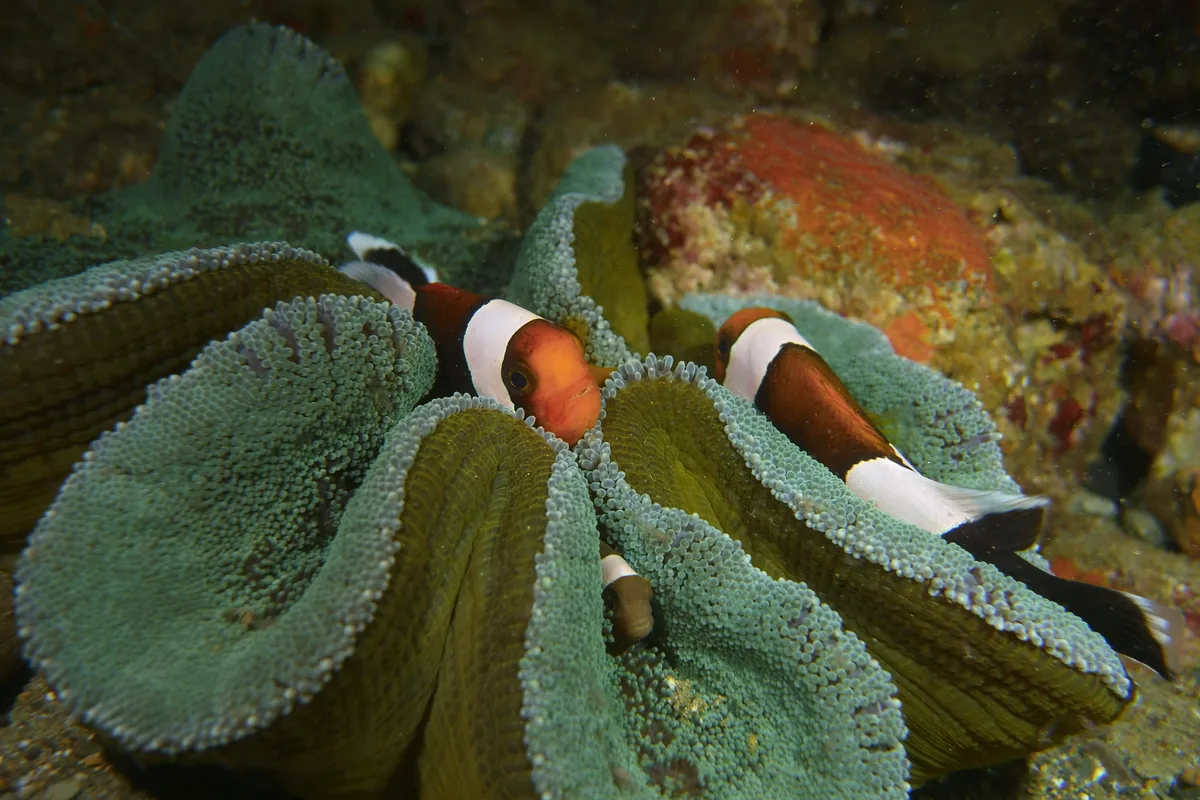
Which makes the tenants interesting. Several clownfish species live in exactly this anemone, coated in a mucus that stops the stinging cells from firing, and so do commensal shrimp and small crabs. They spend their lives on a surface that catches and digests animals of their own size.
When it contracts it pulls the whole disc down into the sand and leaves nothing but a puckered ring on the bottom.
- dense carpet of short tentacles, sticky to the touch
- tentacles of two lengths giving a mottled surface
- sits flat on sand with the column buried
- disc 50 to 80 cm across