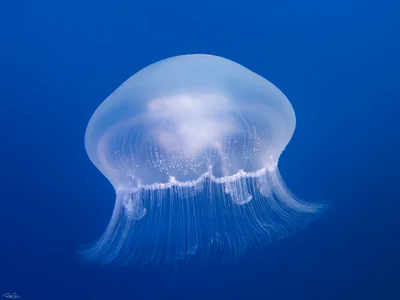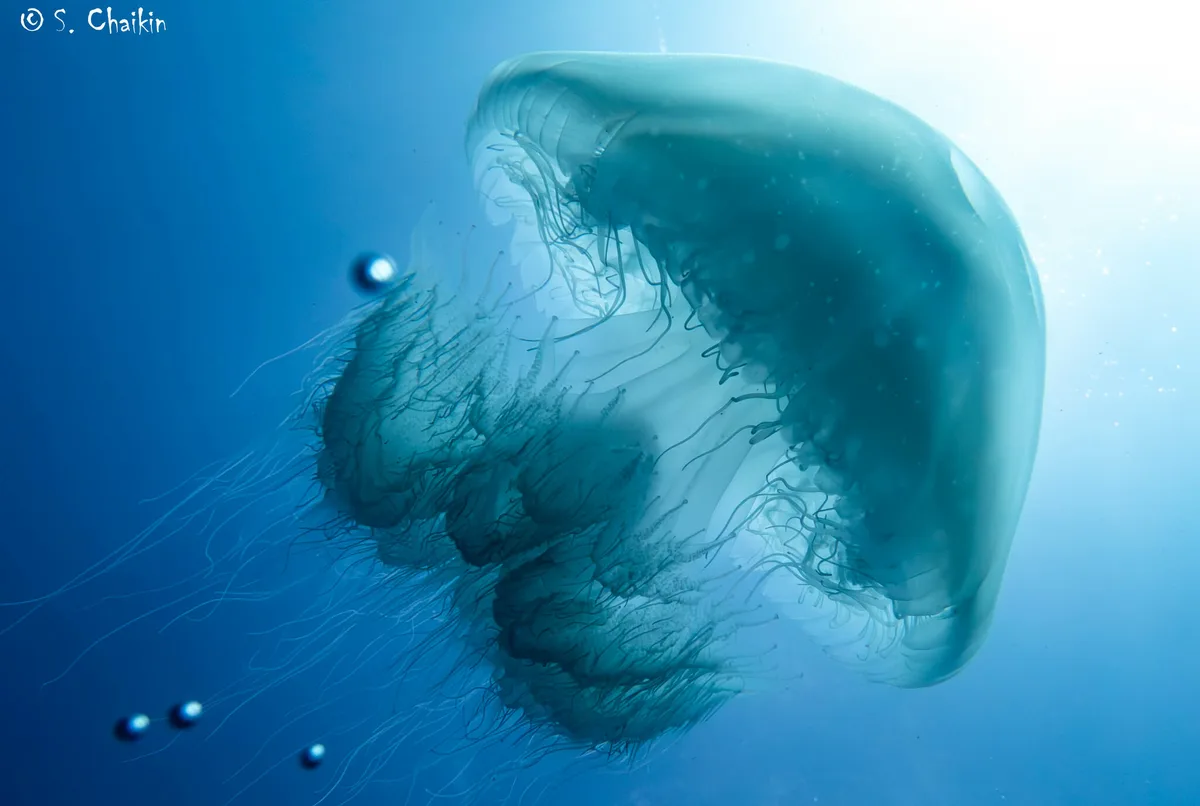
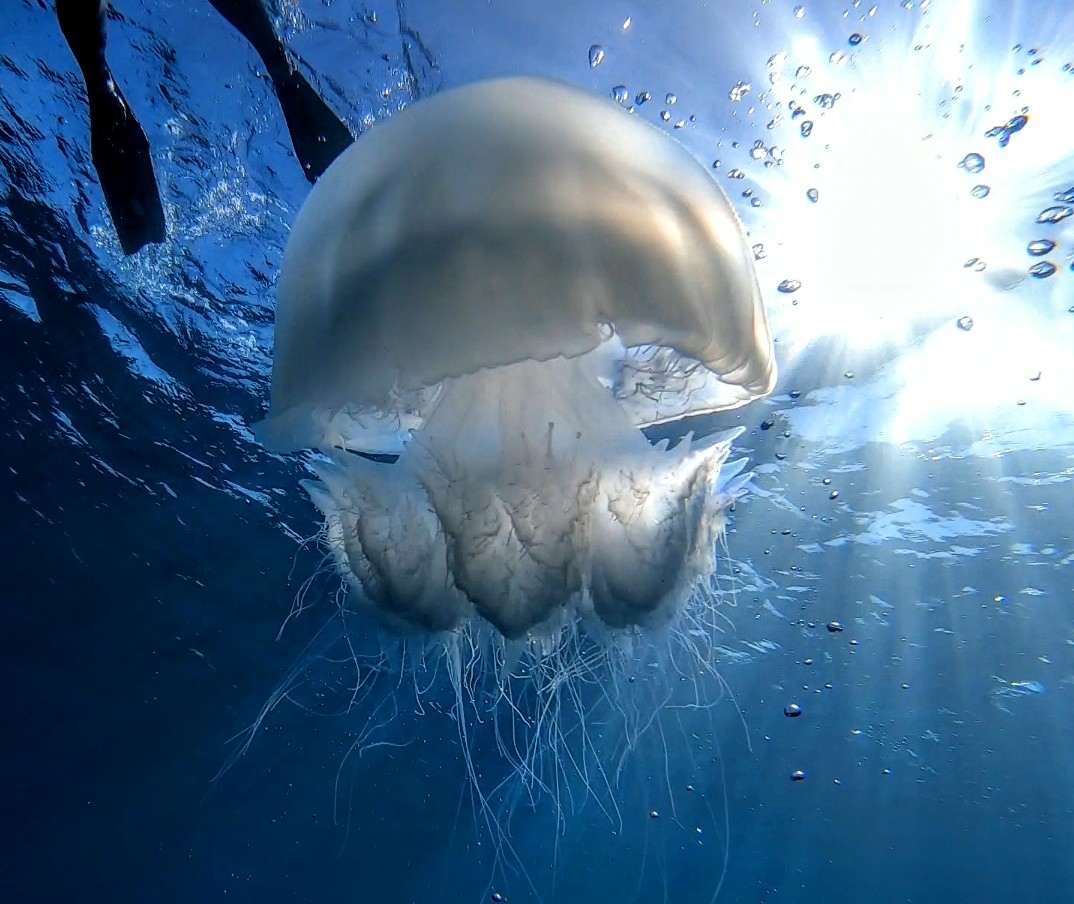
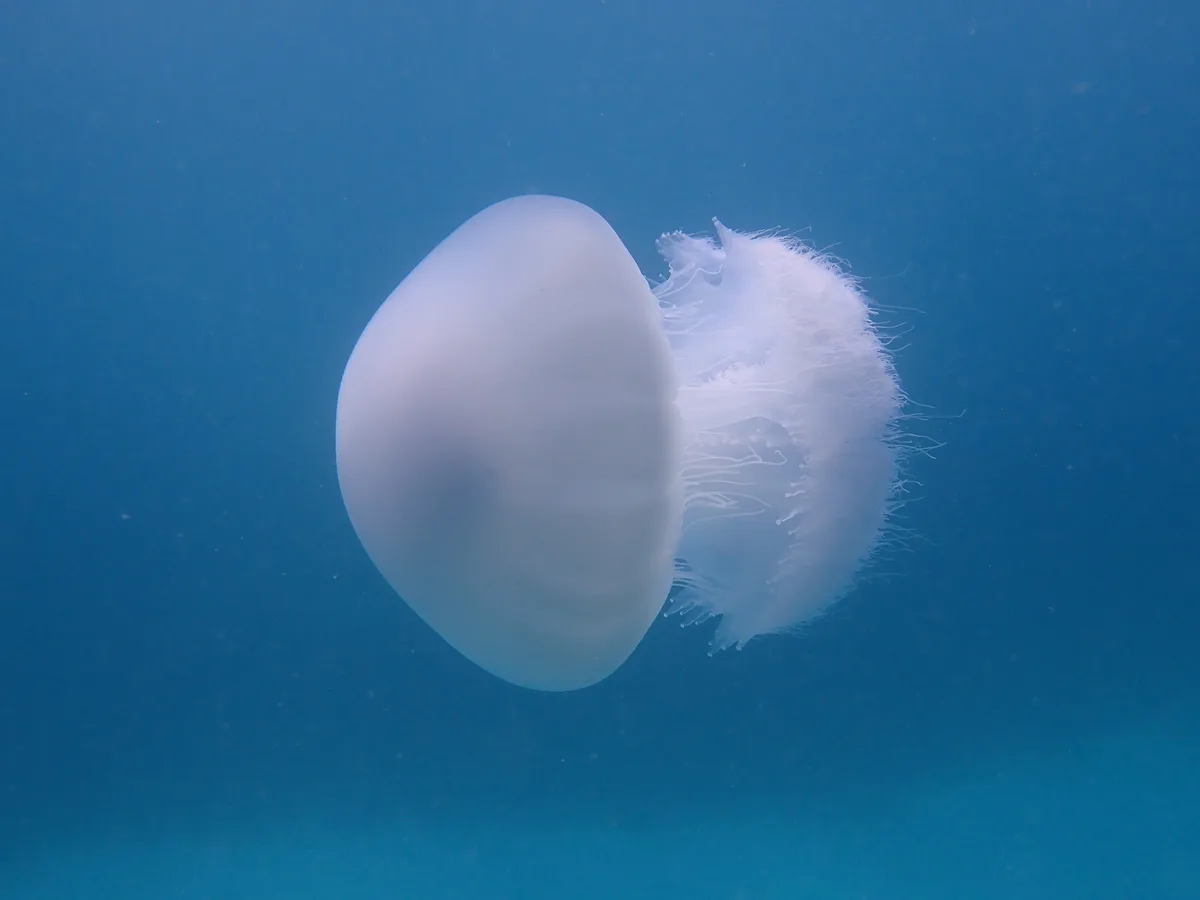
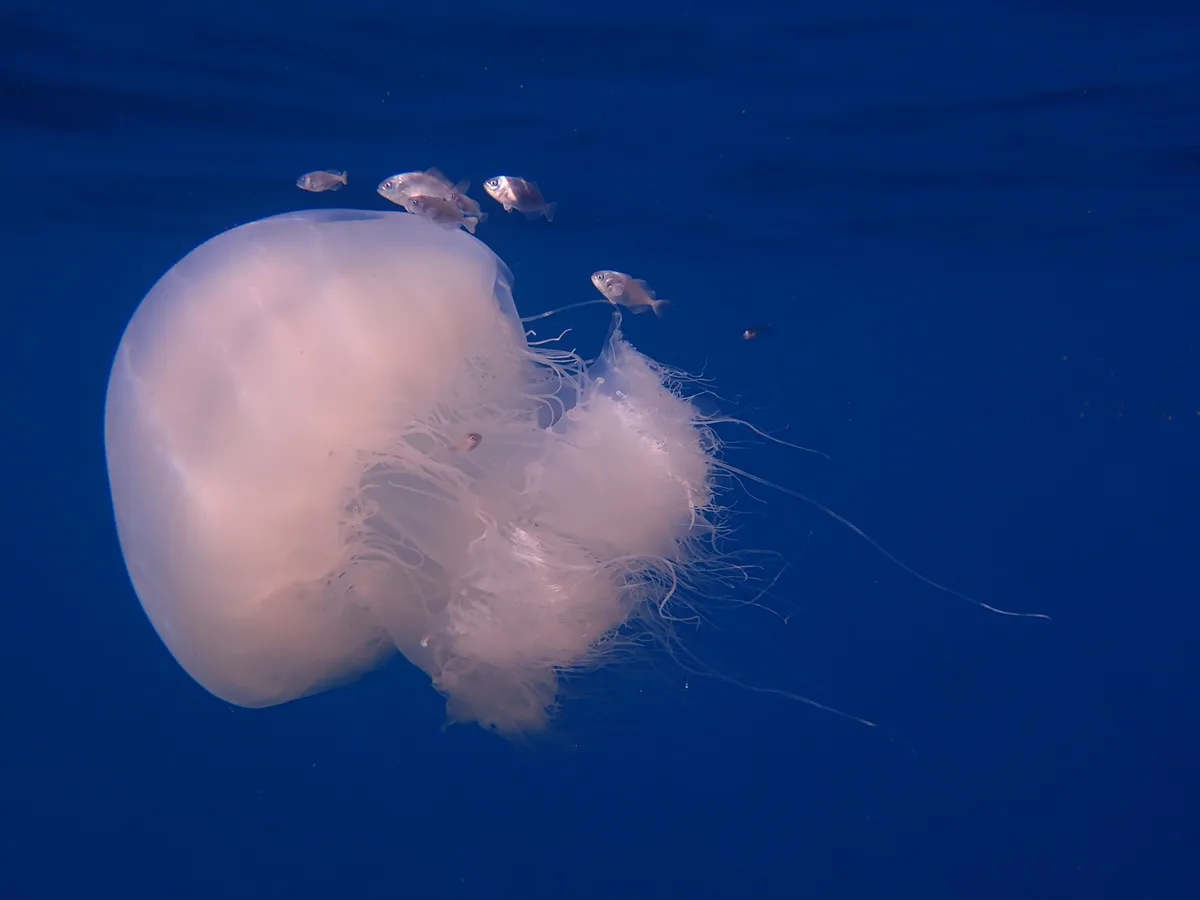
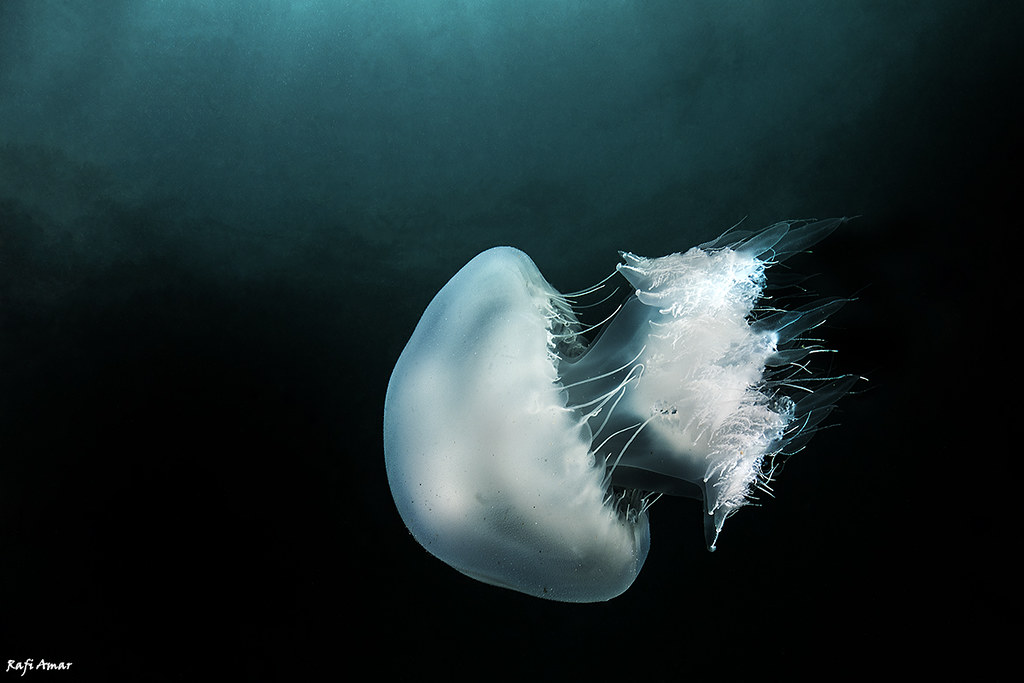
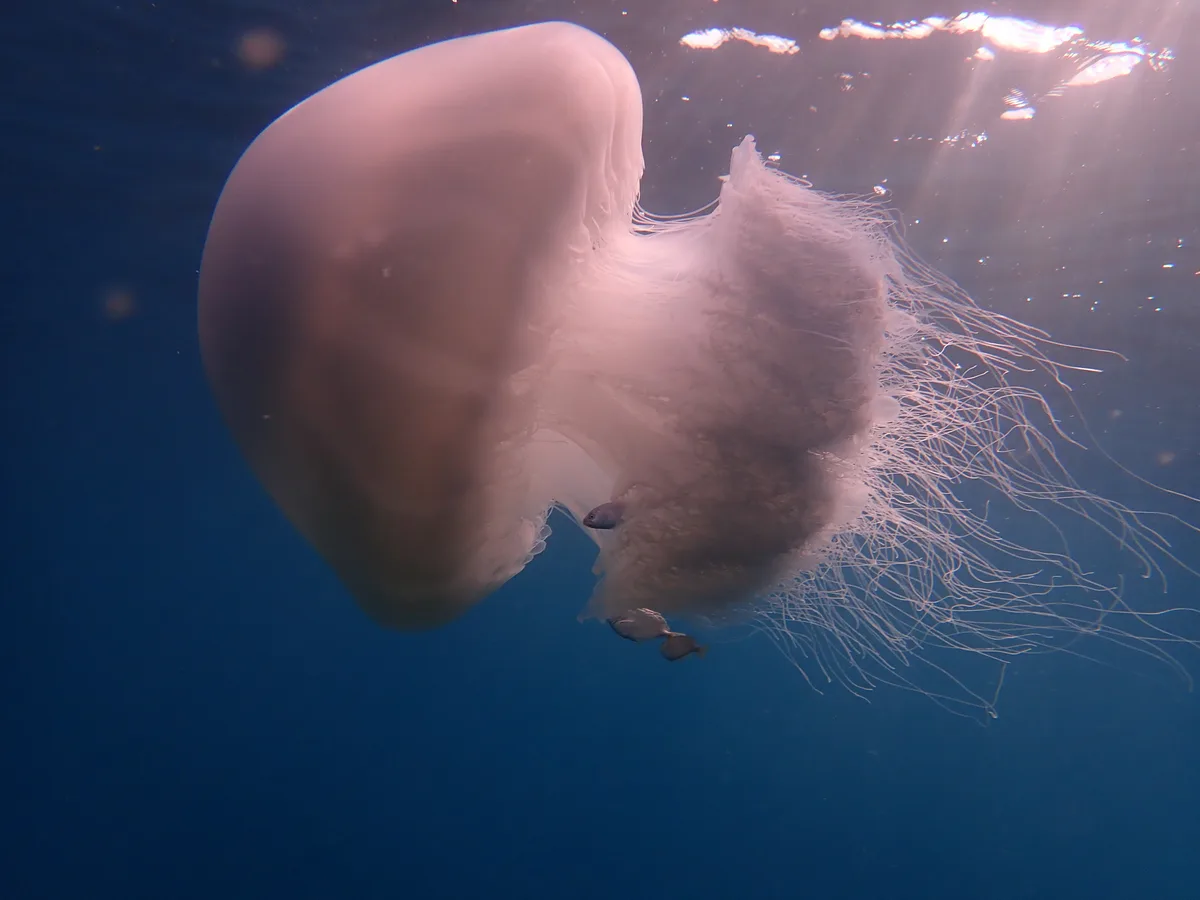
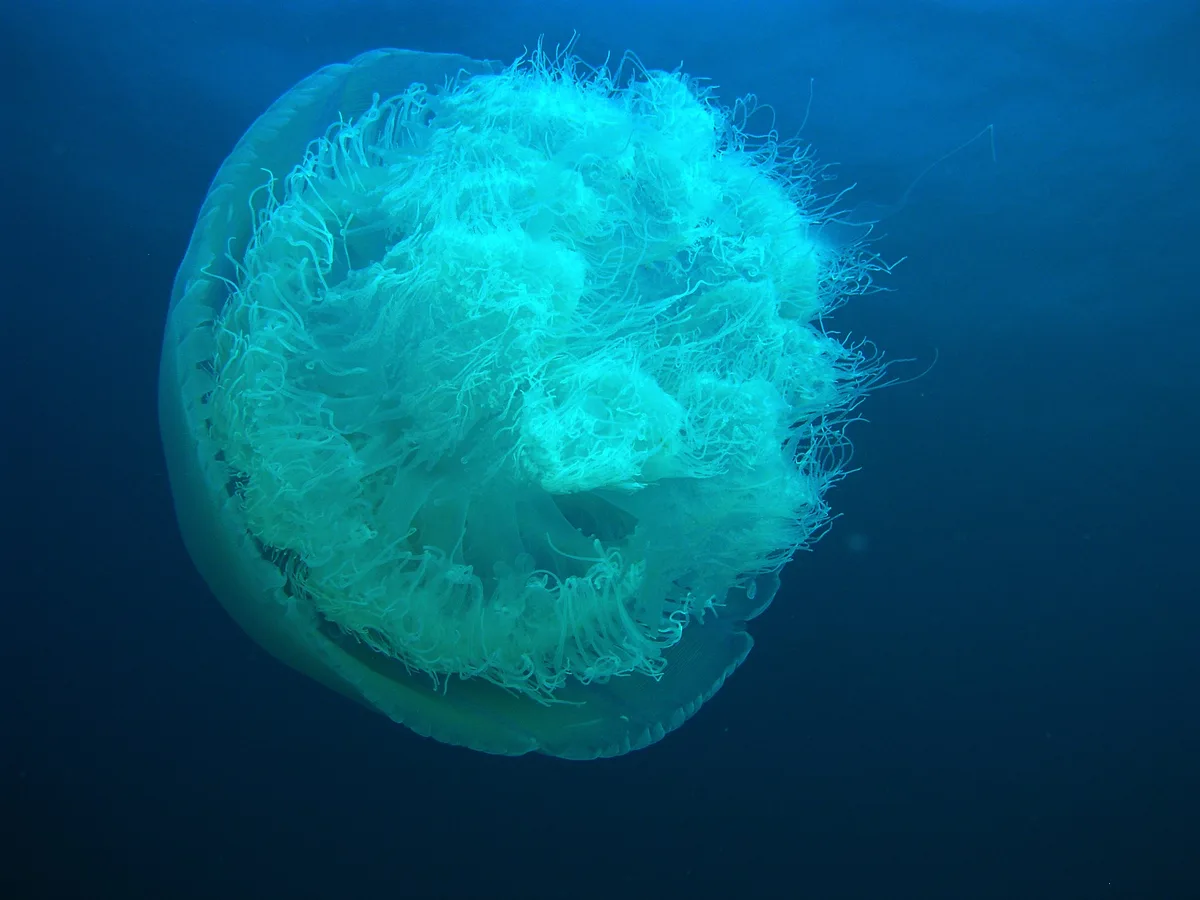
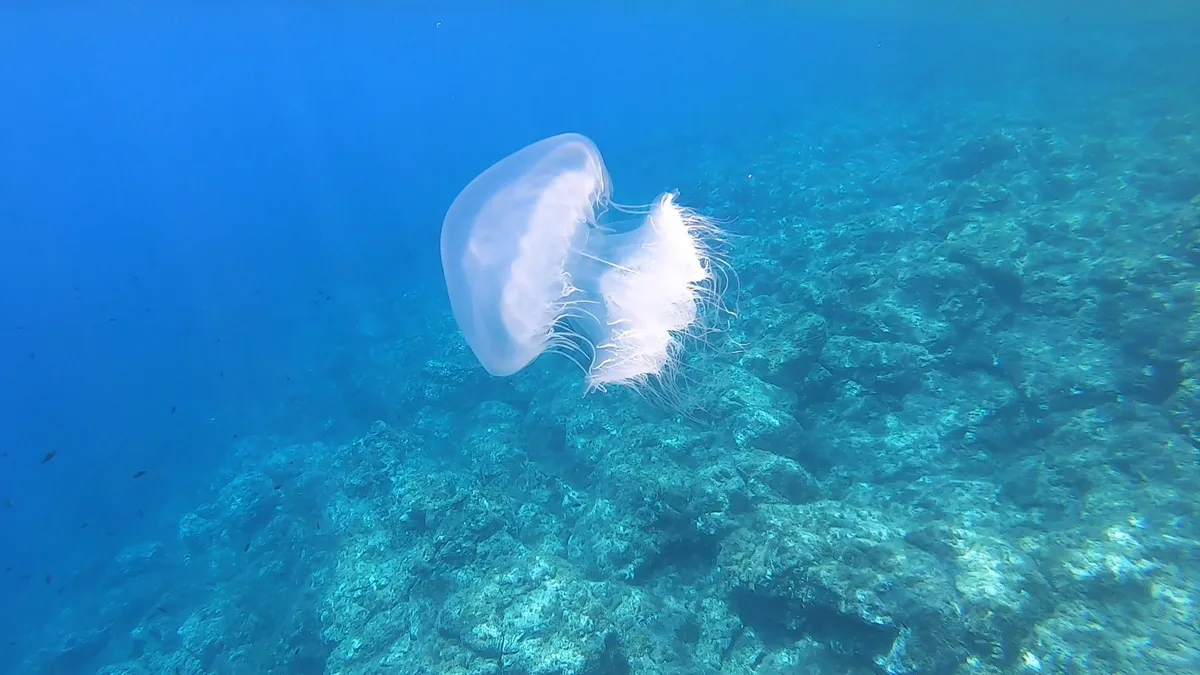
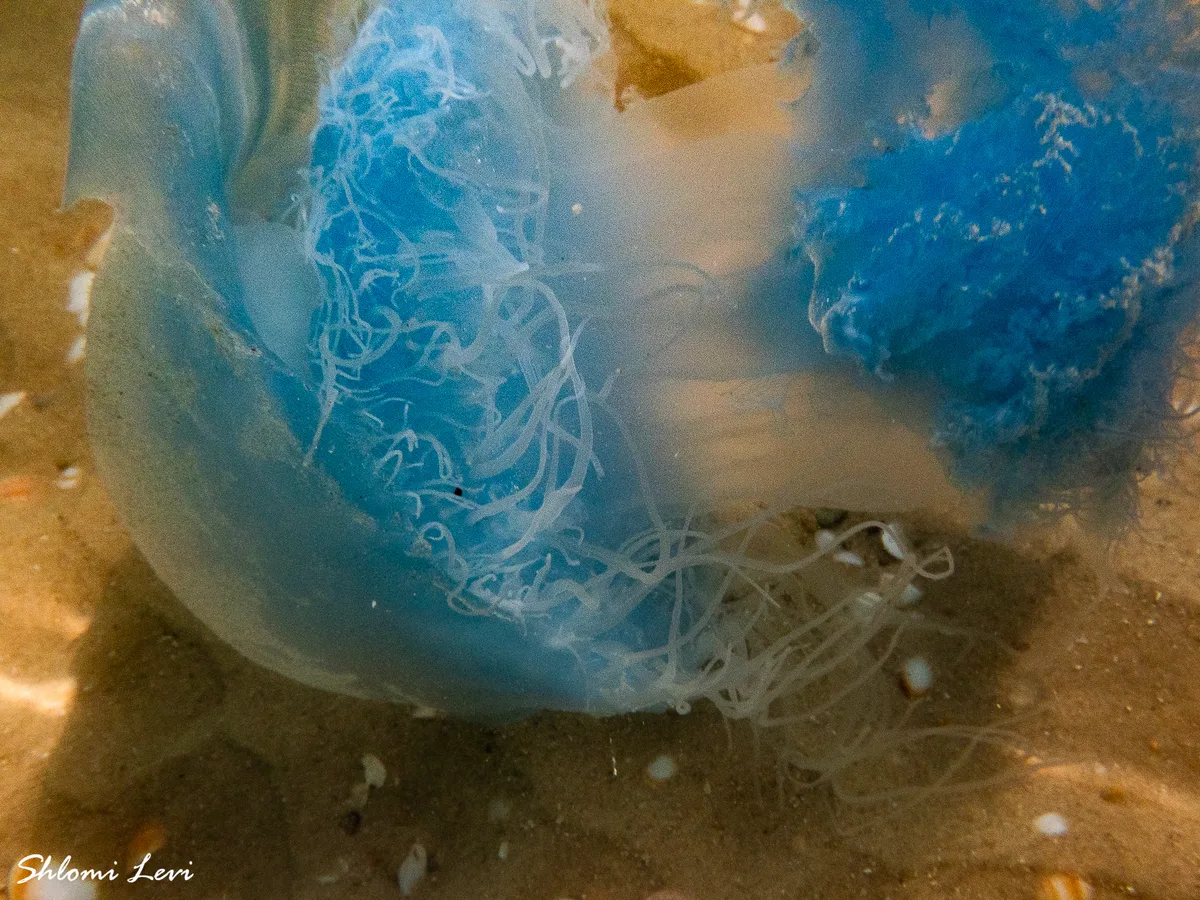
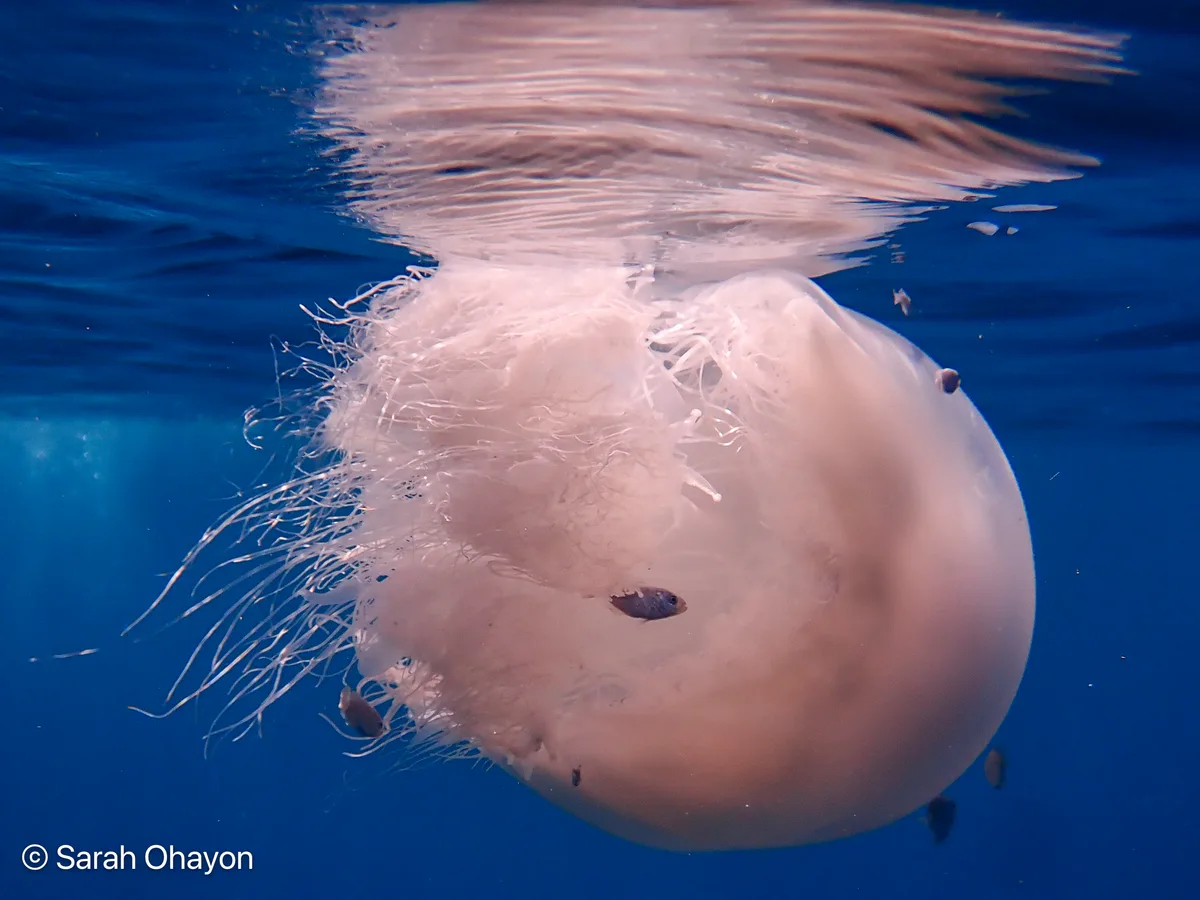
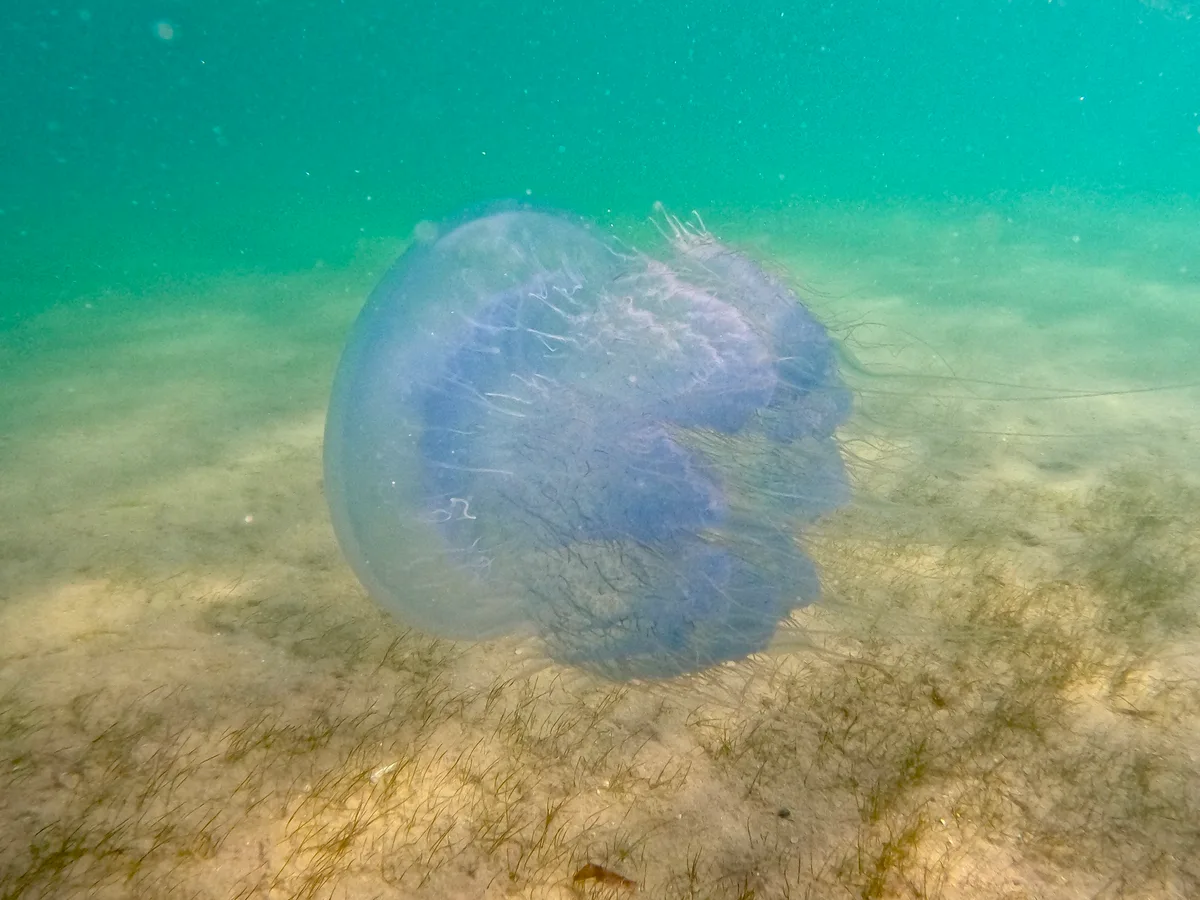
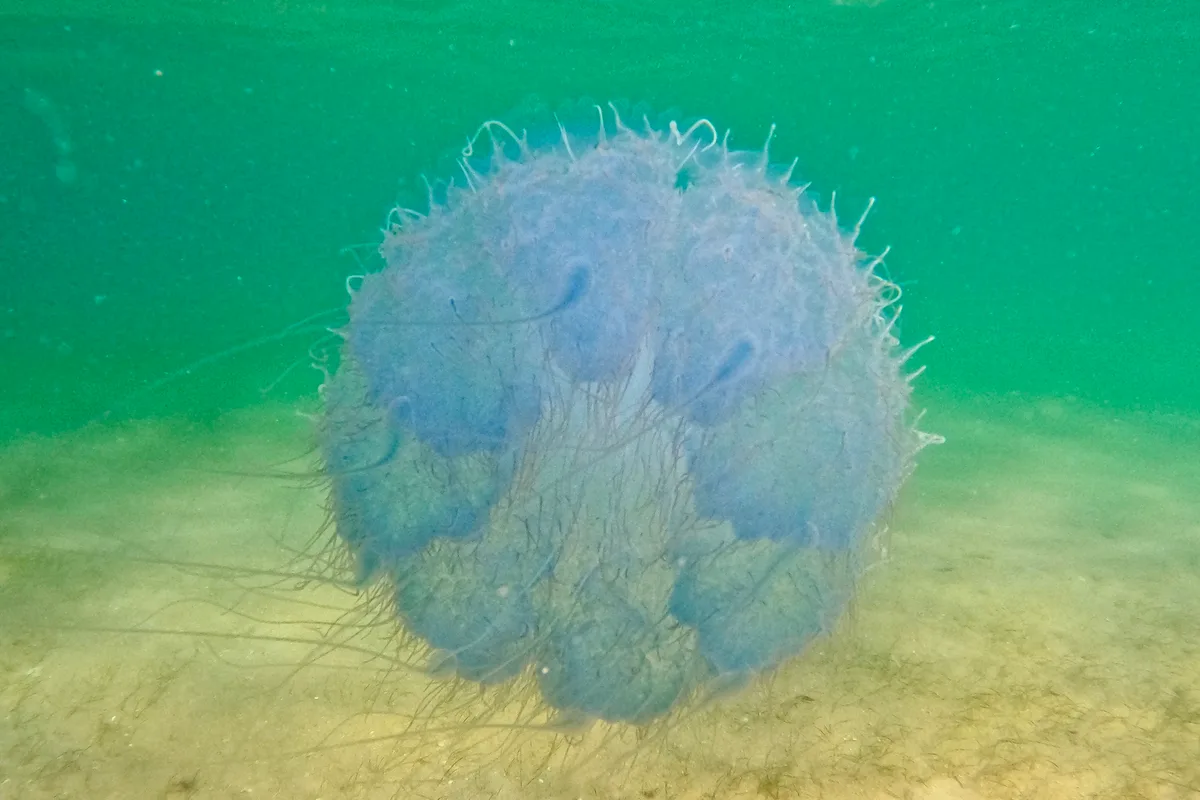
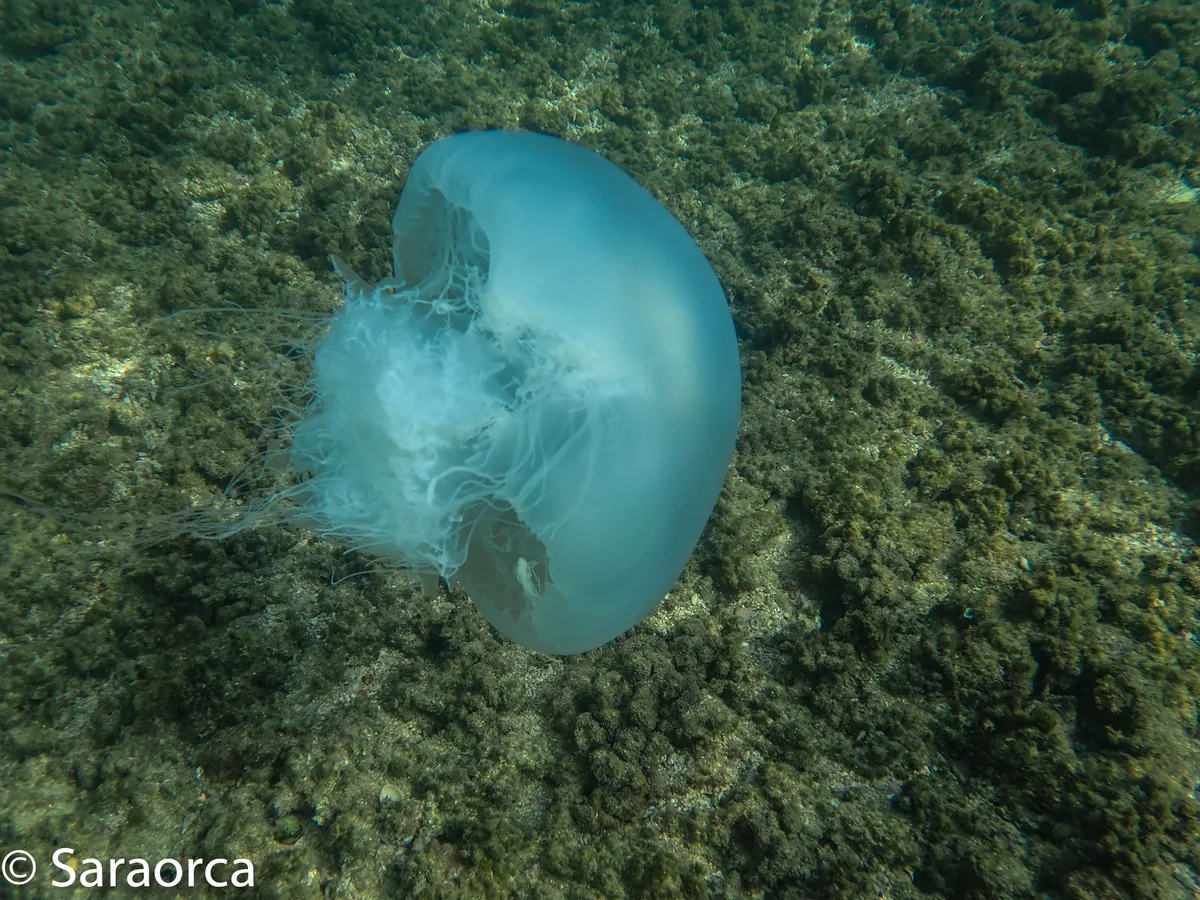
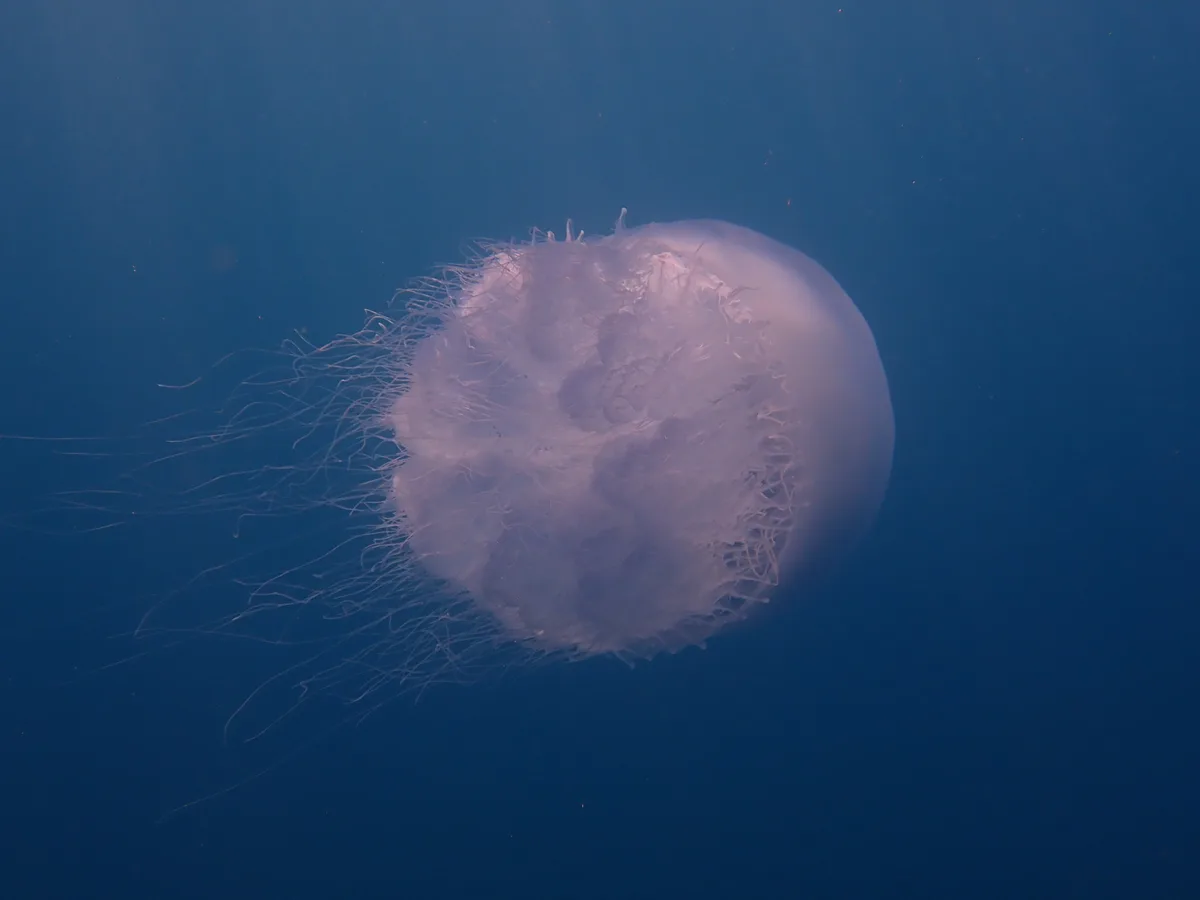
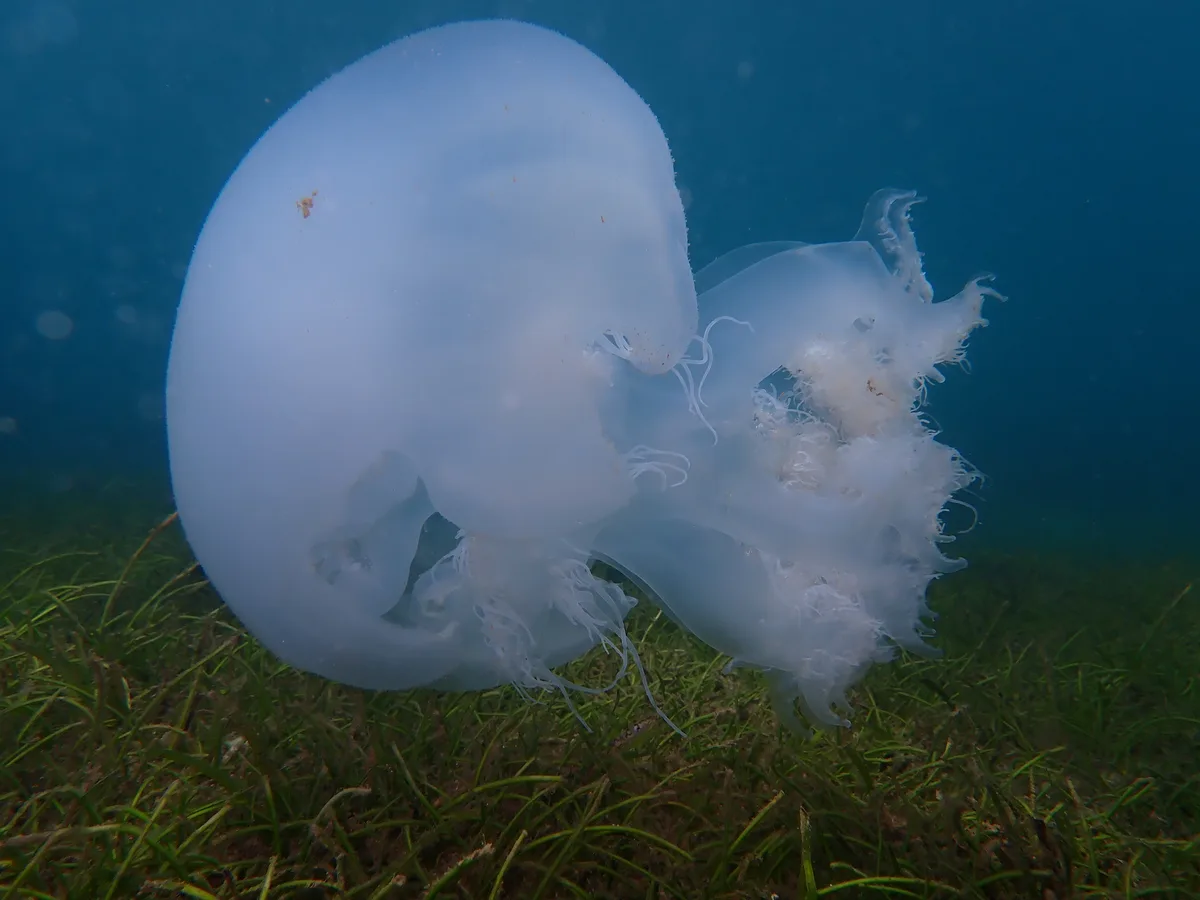
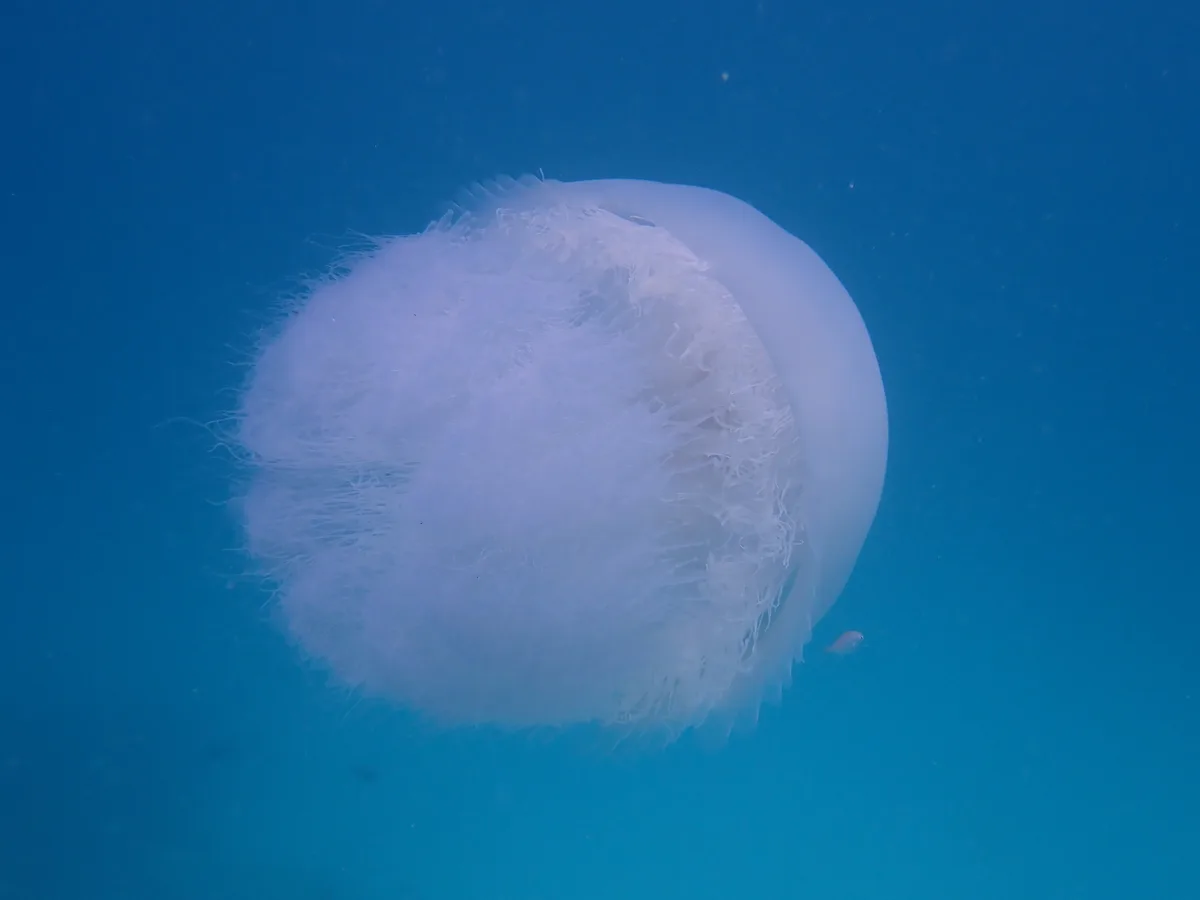
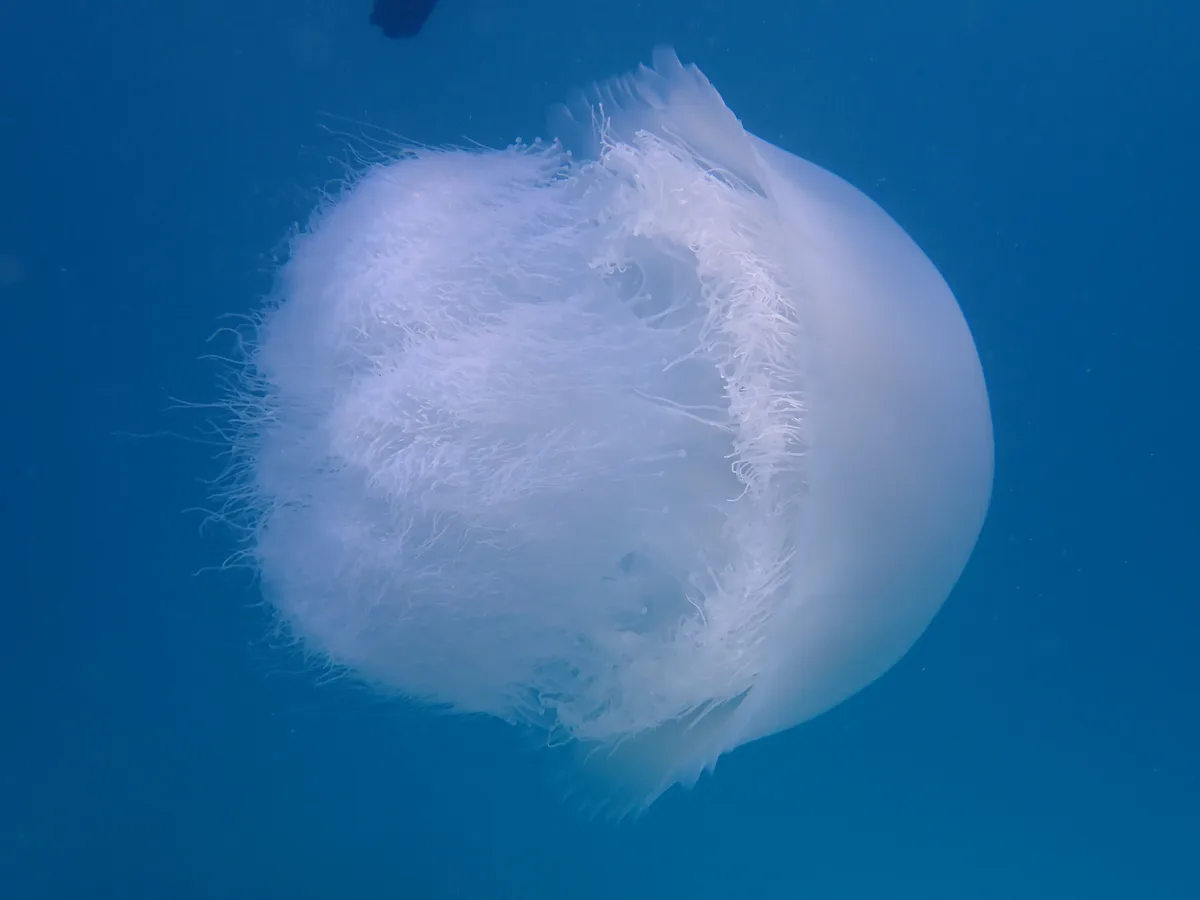
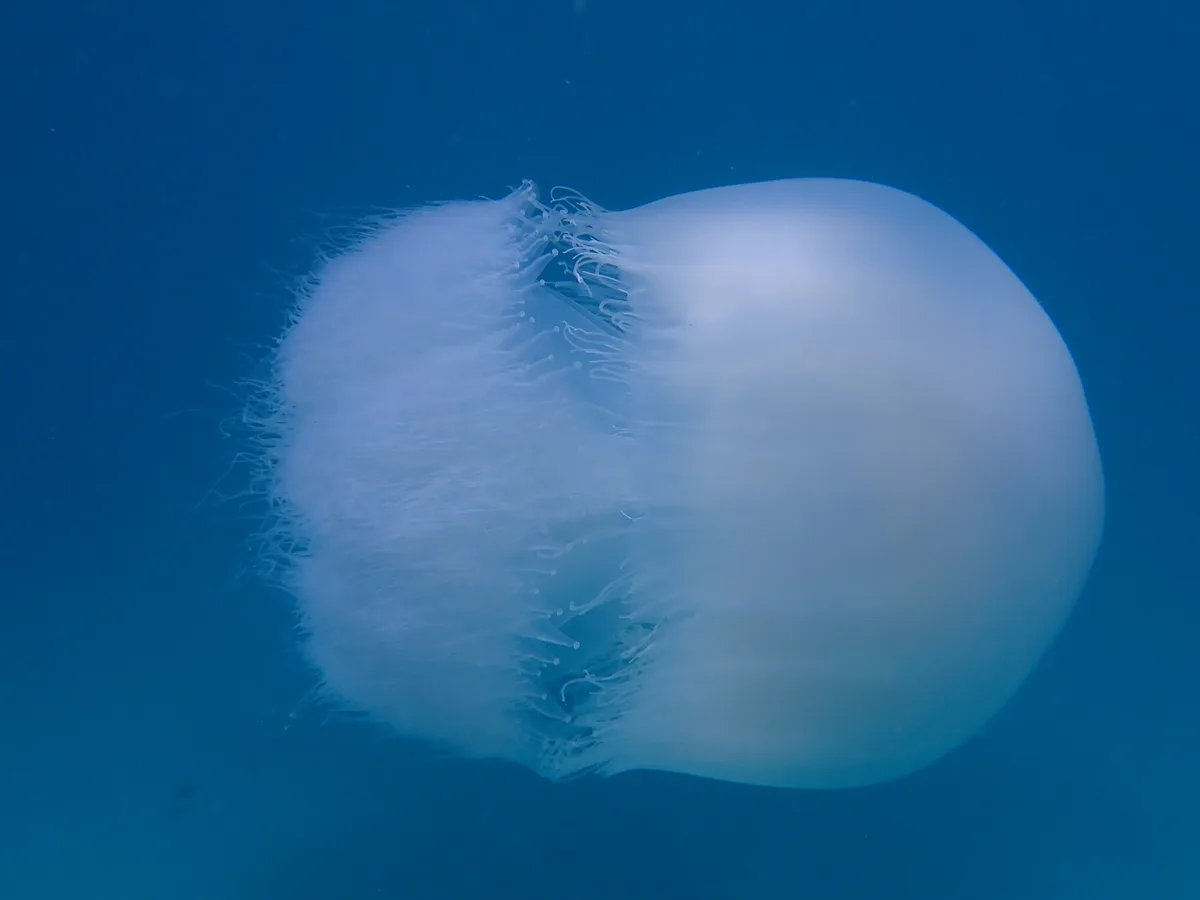
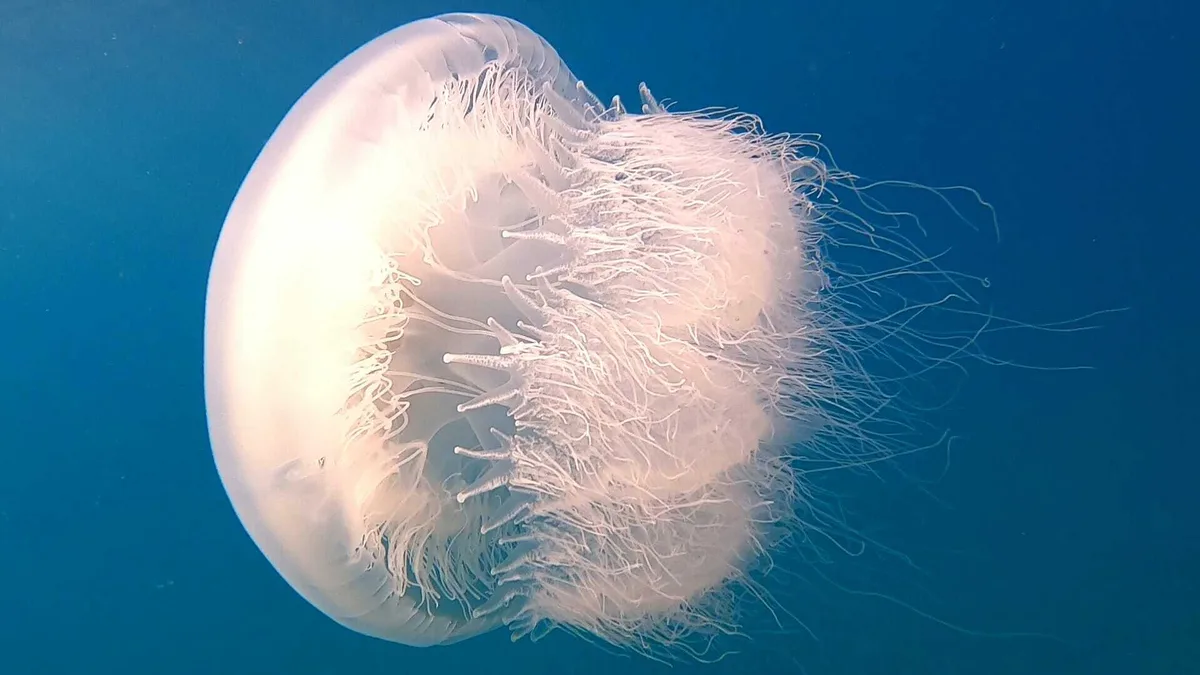
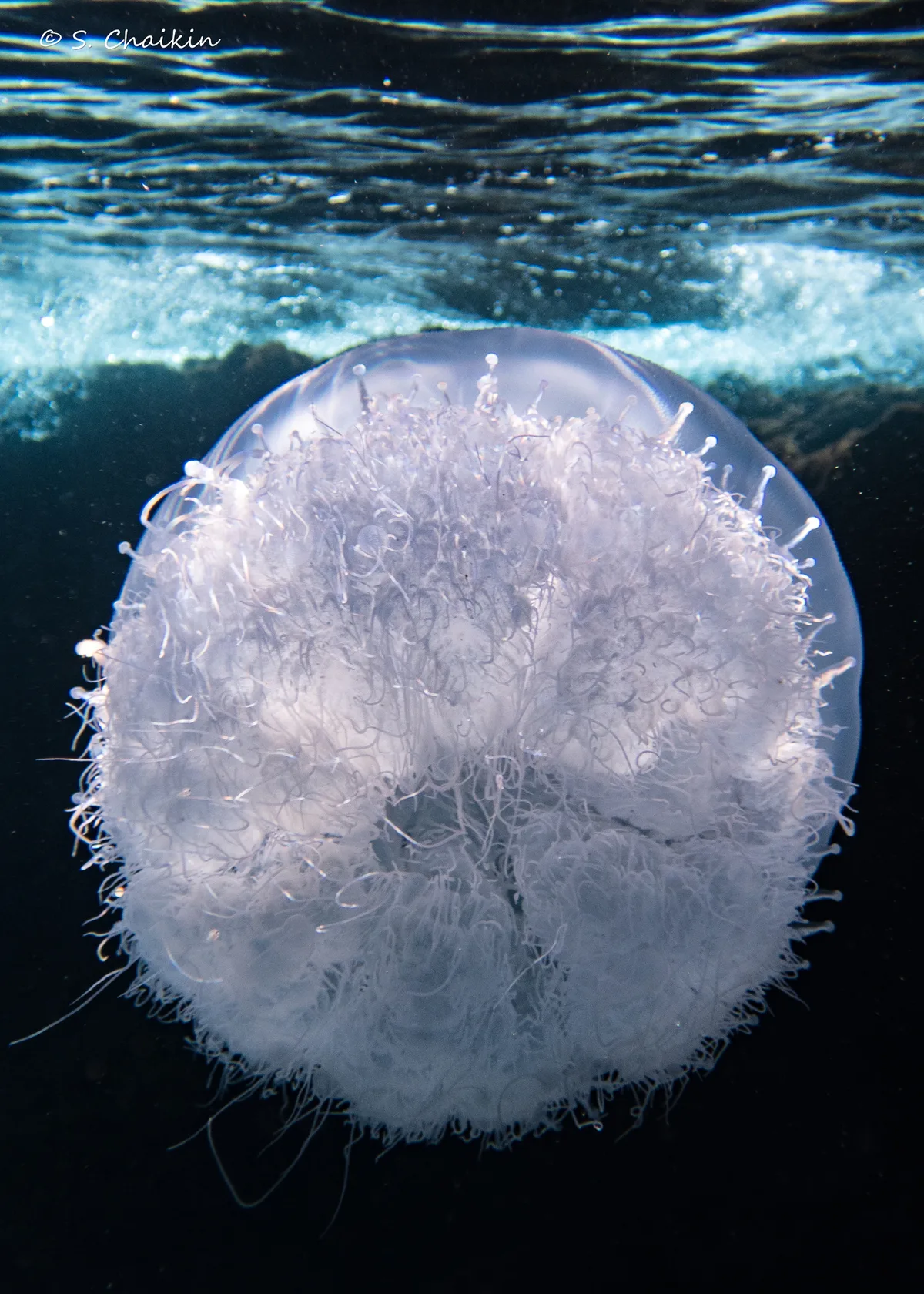
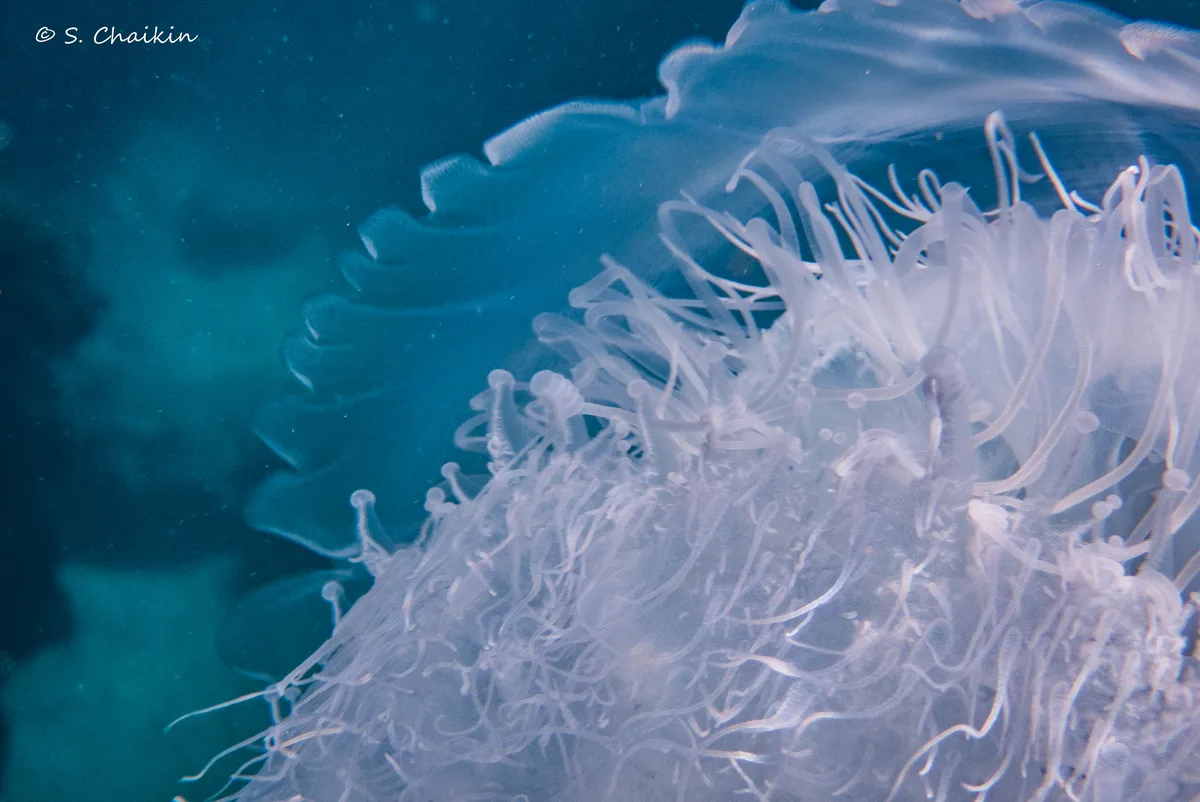
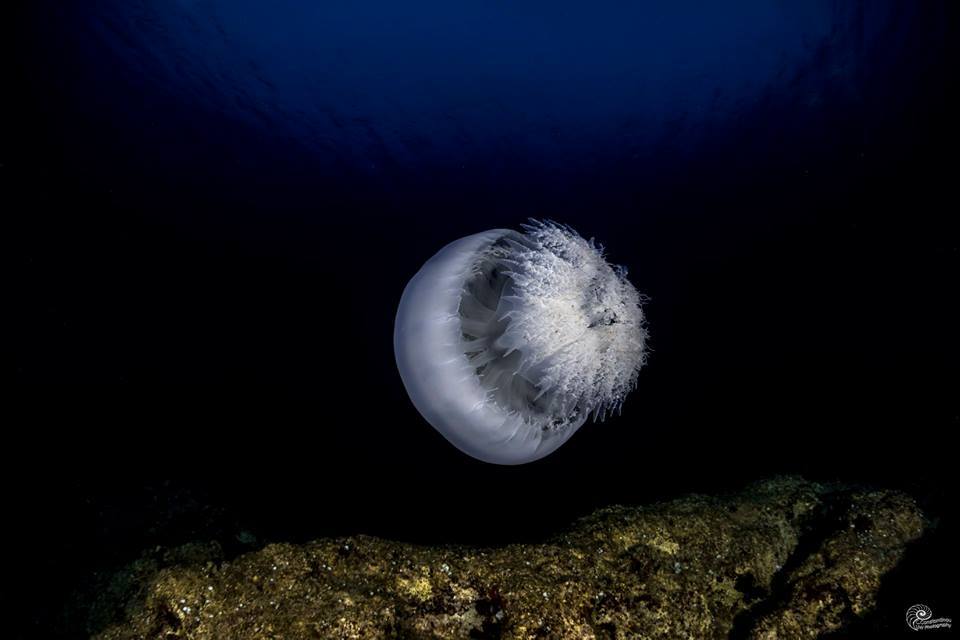
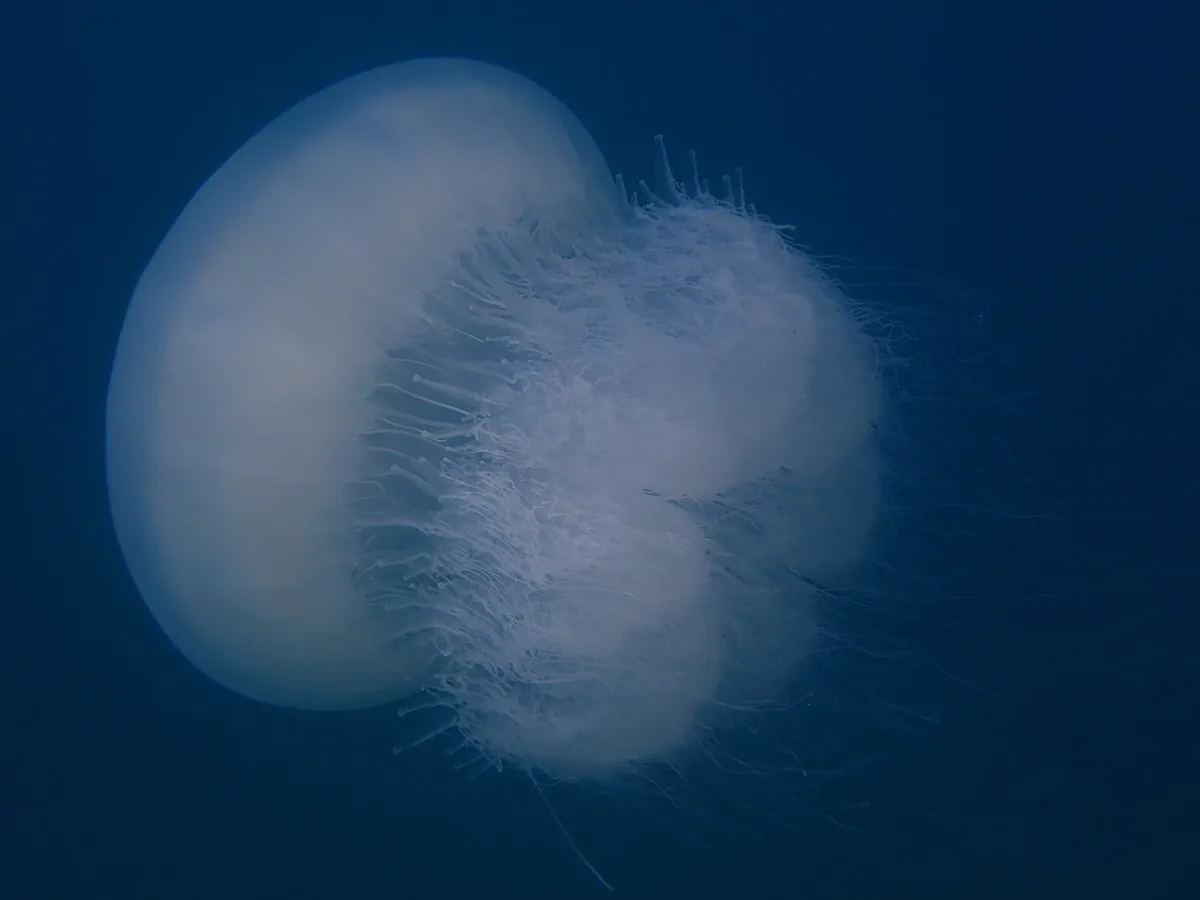
The dangerous part of this jellyfish is not where a swimmer looks for it. There are no tentacles around the rim of the bell at all; the stinging equipment hangs underneath instead, in thick frilled arms trailing long filaments behind and below. So the clear-looking water just past a passing bell is the part that stings, and people are caught by the half of the animal they have already swum past.
It is worth taking seriously. The sting raises burning welts that last for days, and the swarms are dense enough to close beaches. In the water, keep the whole animal in sight and give the trailing filaments the clearance you would give fire coral.
The species was described in 1990 from the eastern Mediterranean - not from here. It had arrived there through the Suez Canal (🇪🇬 Egypt) out of this sea, and by the time anyone put a name to it, it was already the animal fouling Israeli power-station intakes every summer. The name records the journey rather than the origin: nomadica, the wanderer. It is one of the cleanest cases in the catalogue of a local animal becoming somebody else's problem, and one of the few where the invaded coast knew the species before its own did.
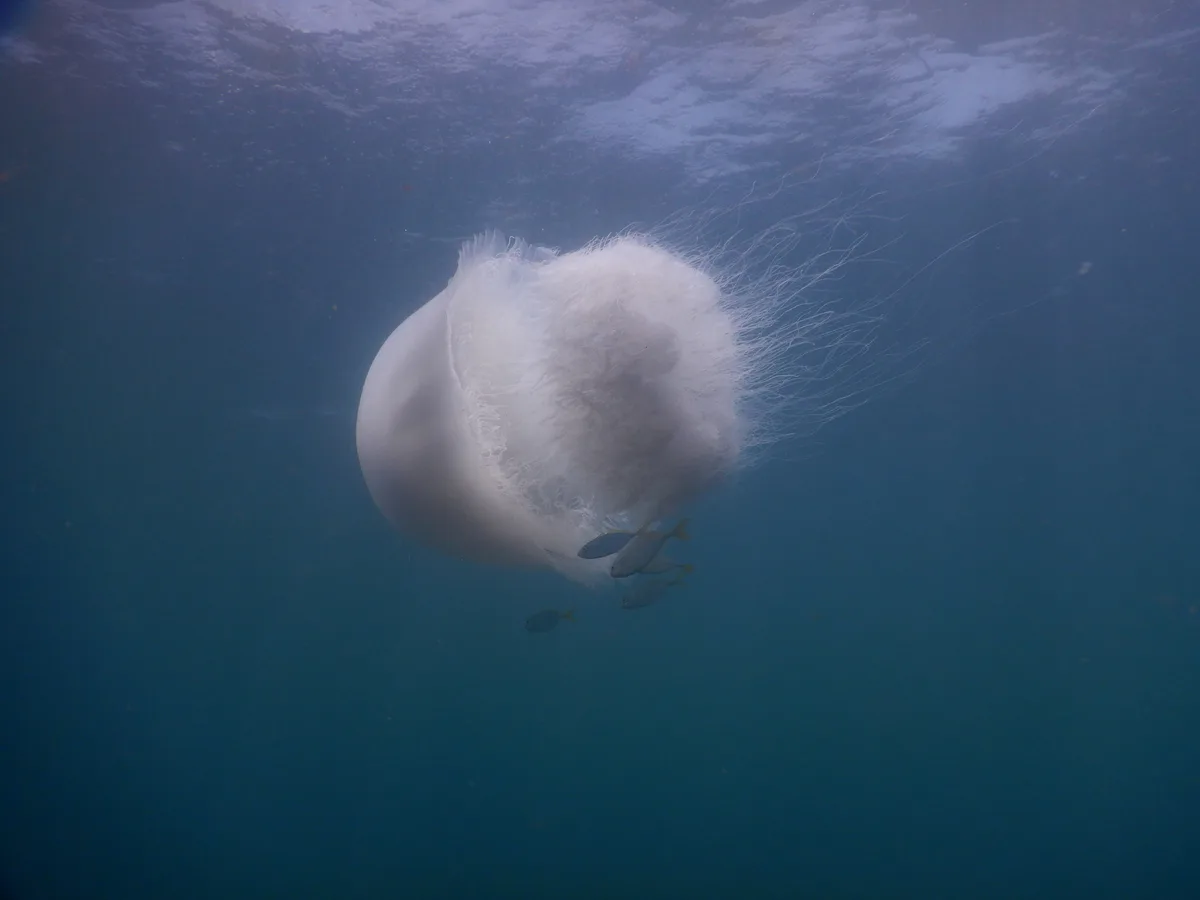
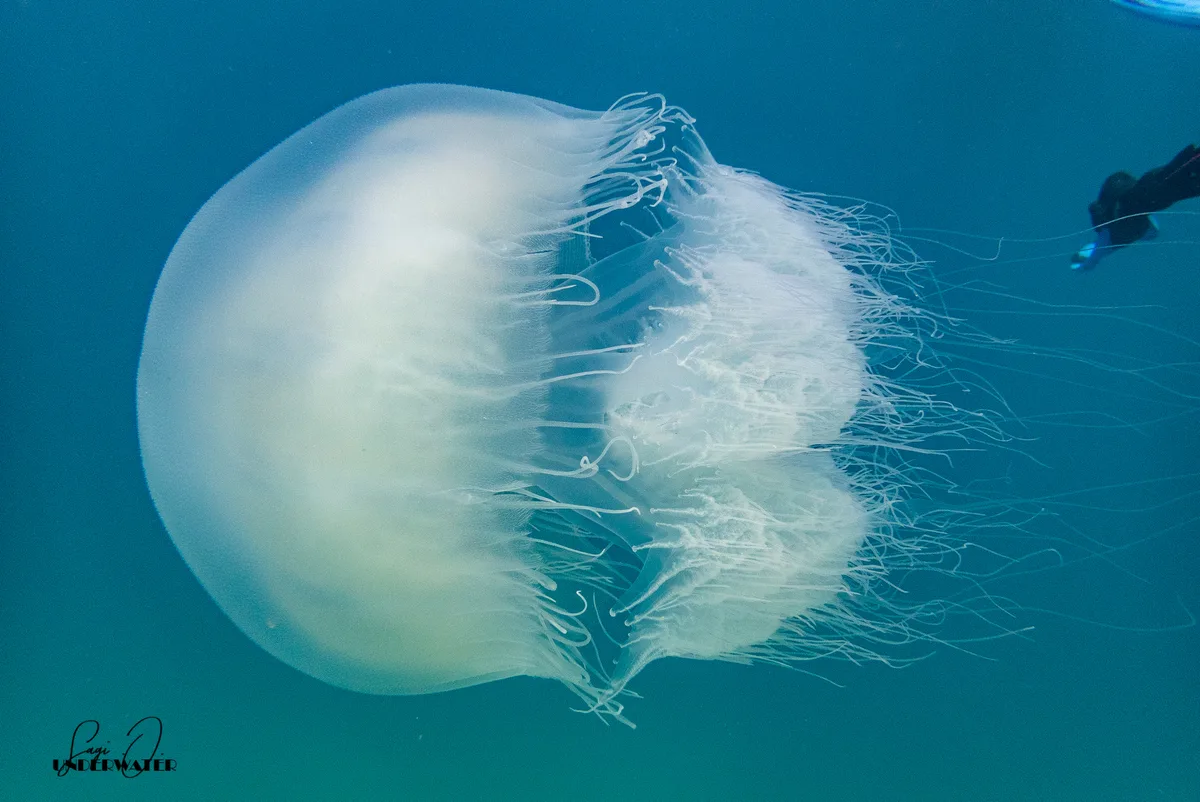
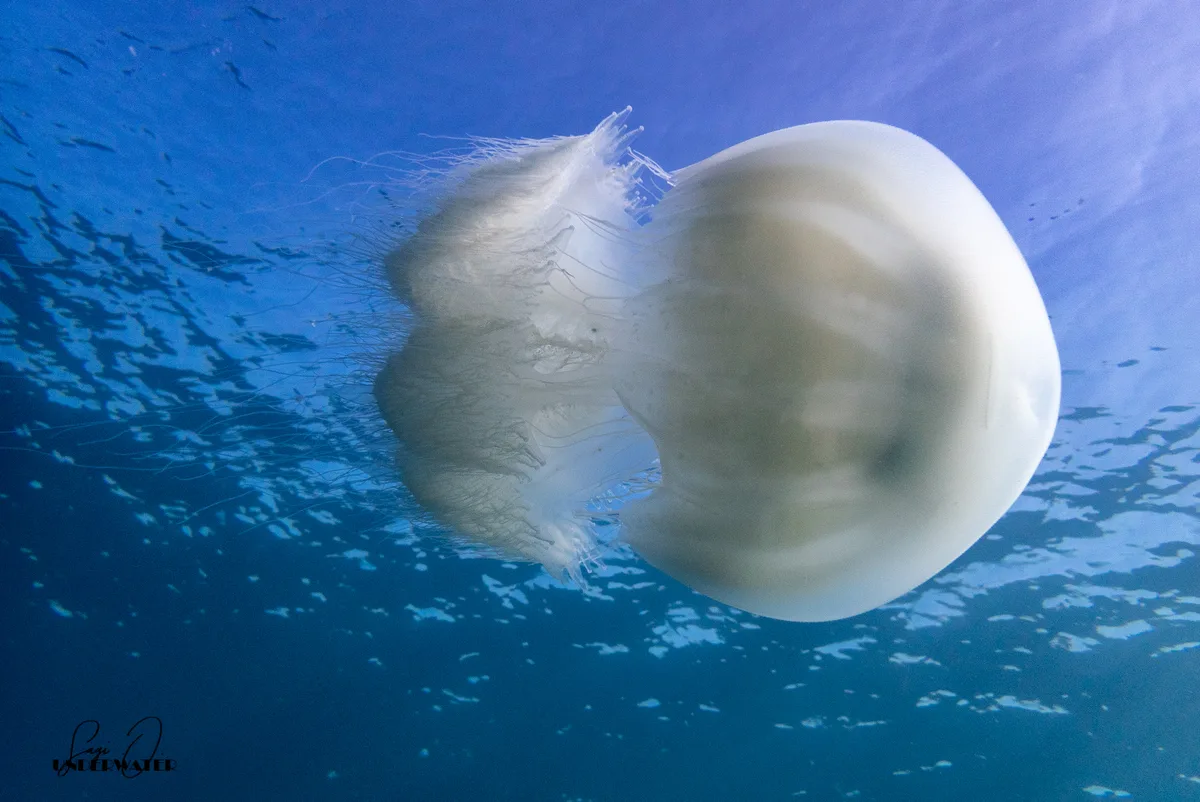
Here it is a heavy whitish dome up to 60 cm (24 in) across, met in summer swarms in open water and coastal bays.
- large whitish dome with no tentacles around the rim at all
- thick frilled arms hanging below the bell, ending in long filaments
- the stinging parts trail behind and below, not out to the sides
- usually met in swarms rather than singly
- bell up to 60 cm across