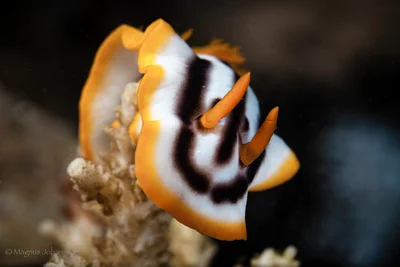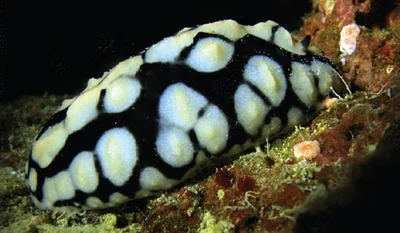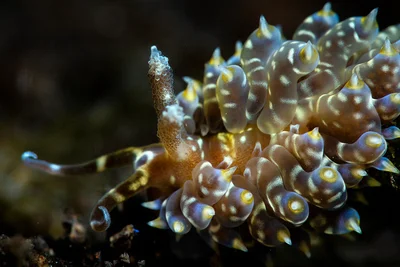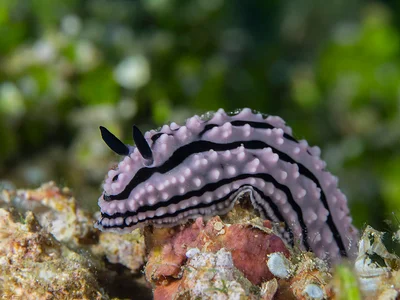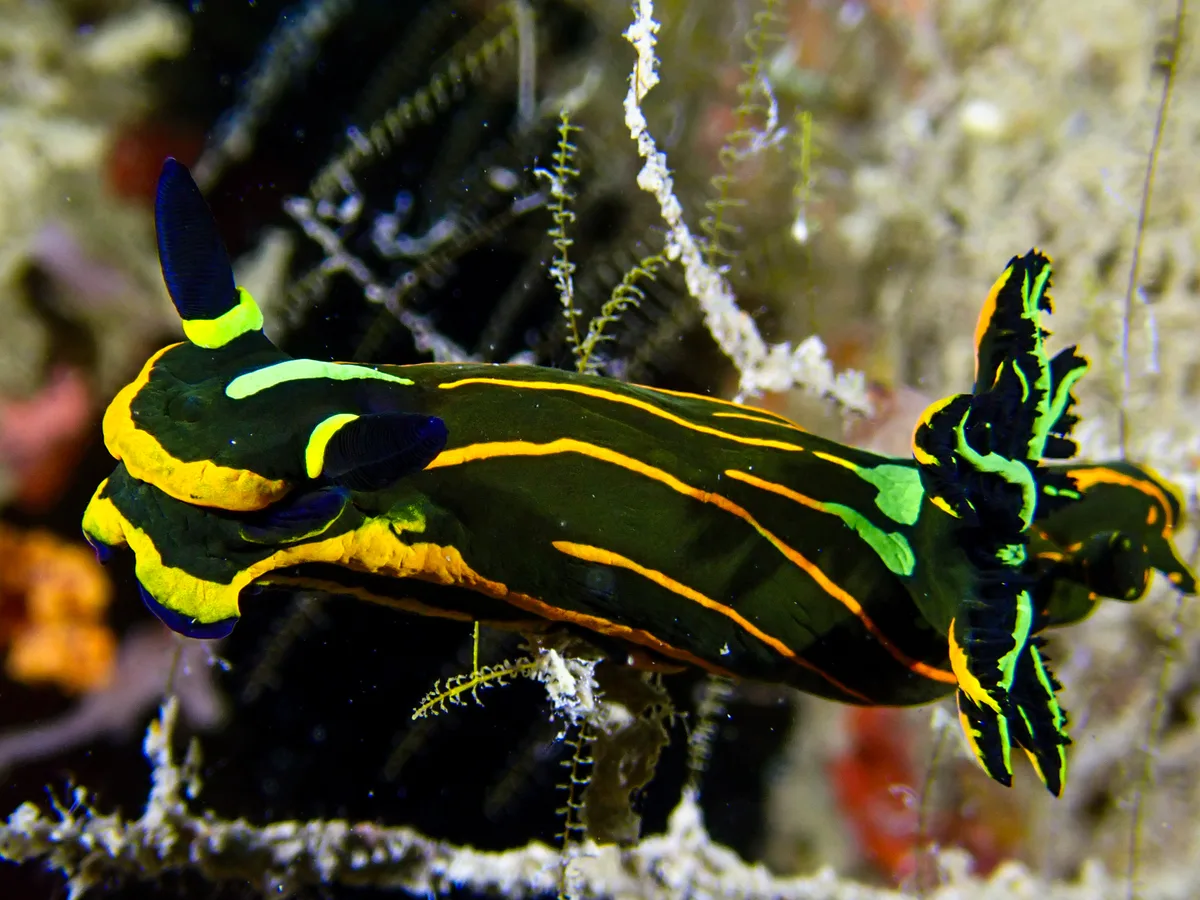
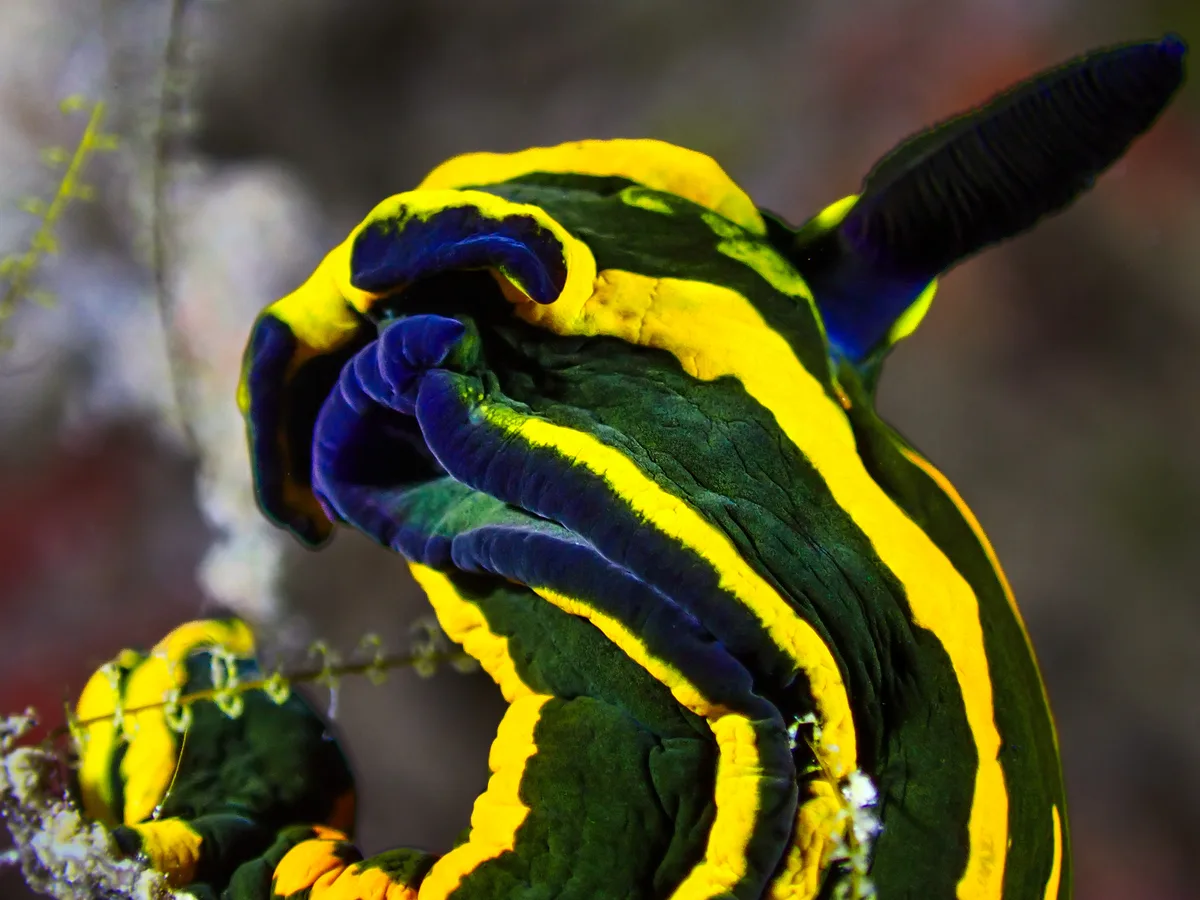
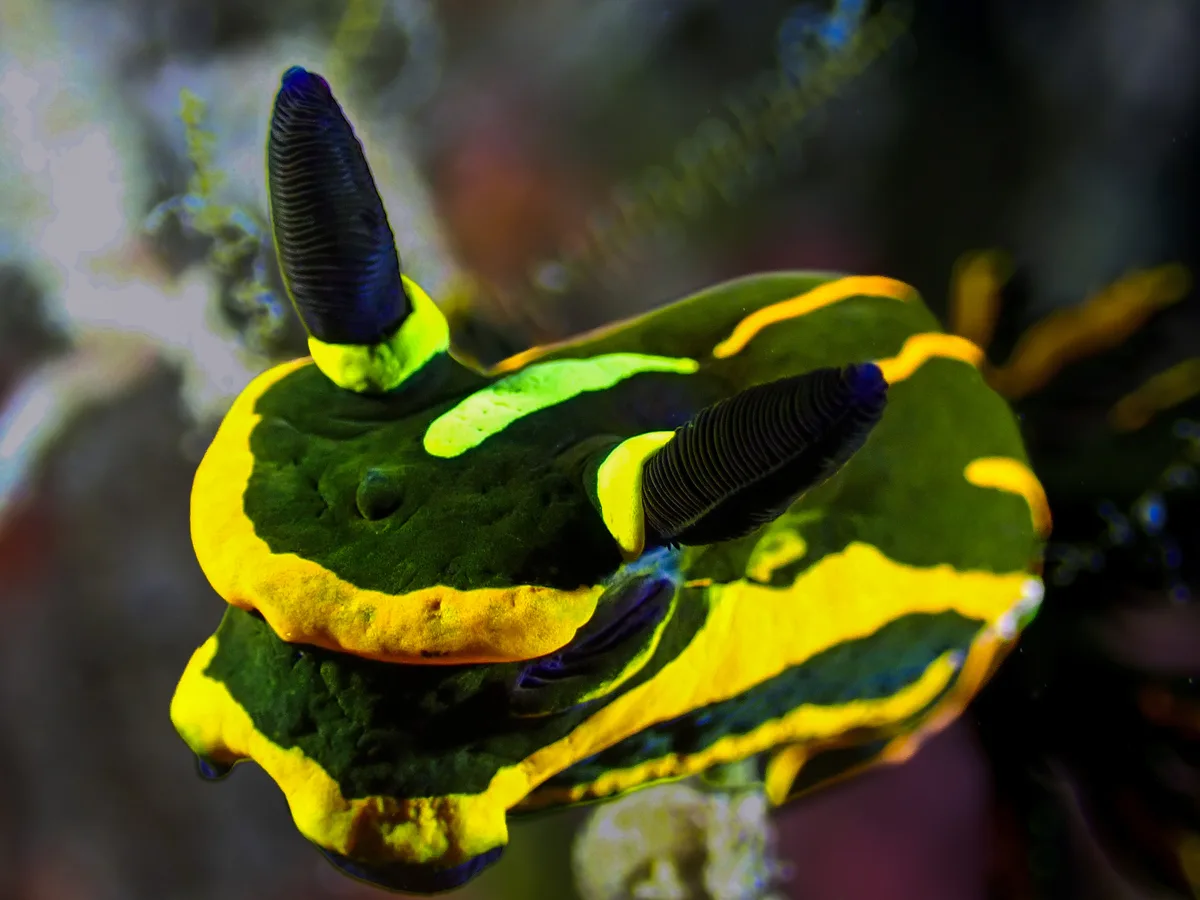
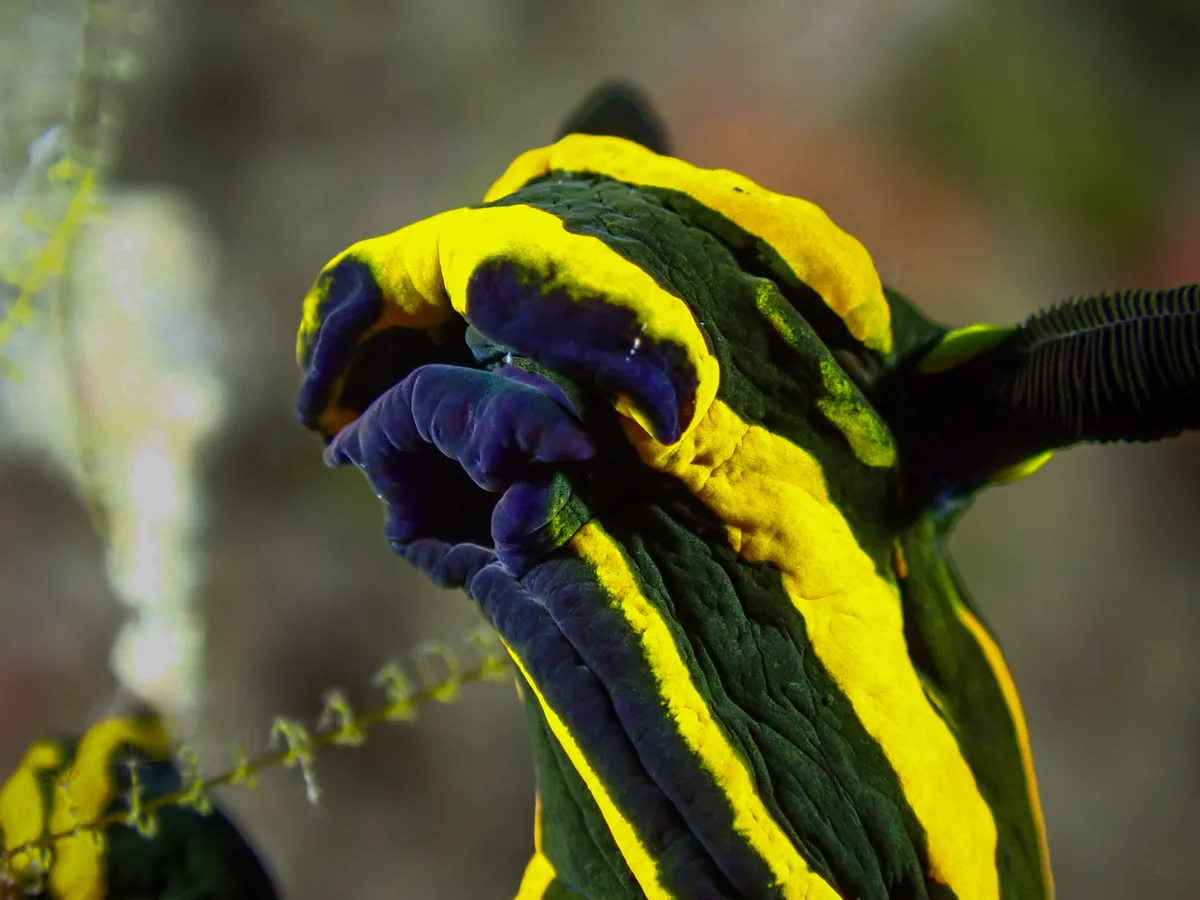
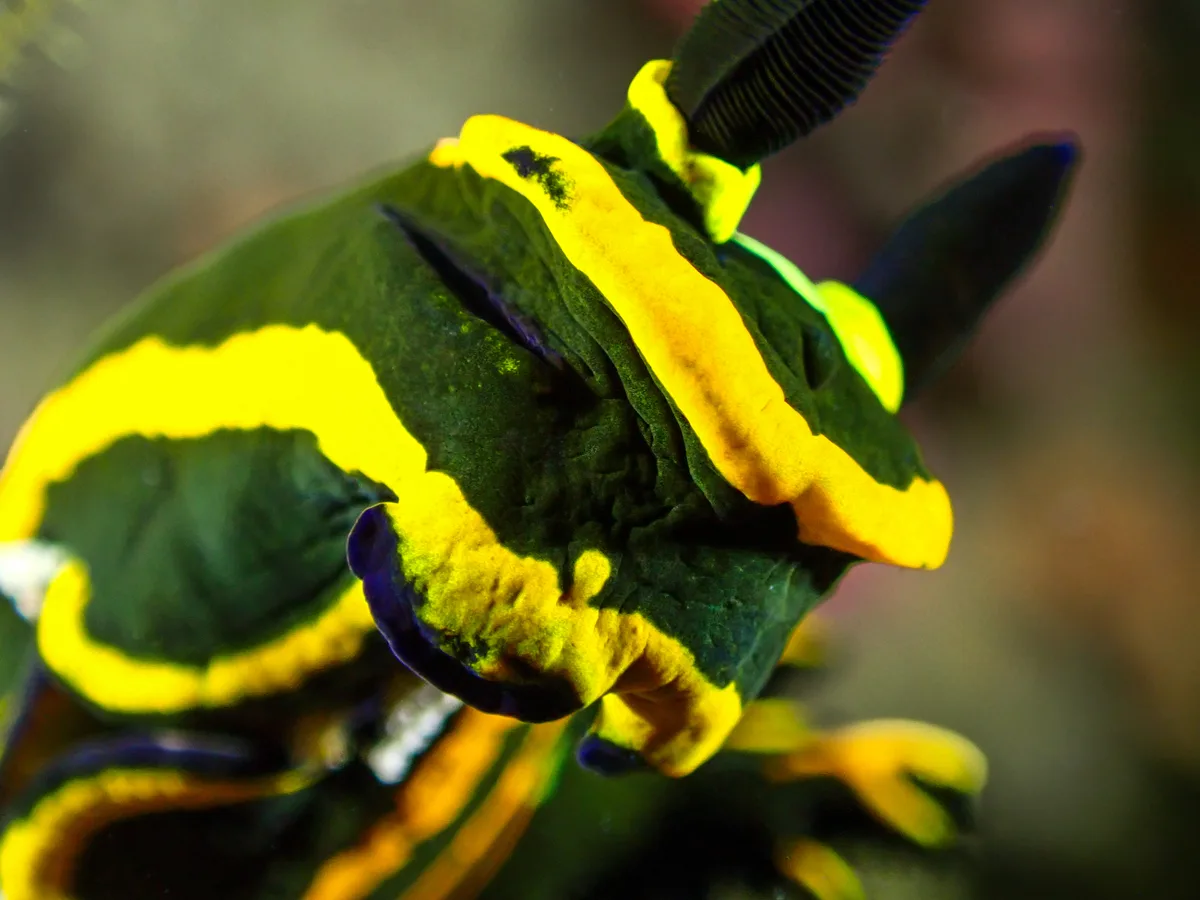
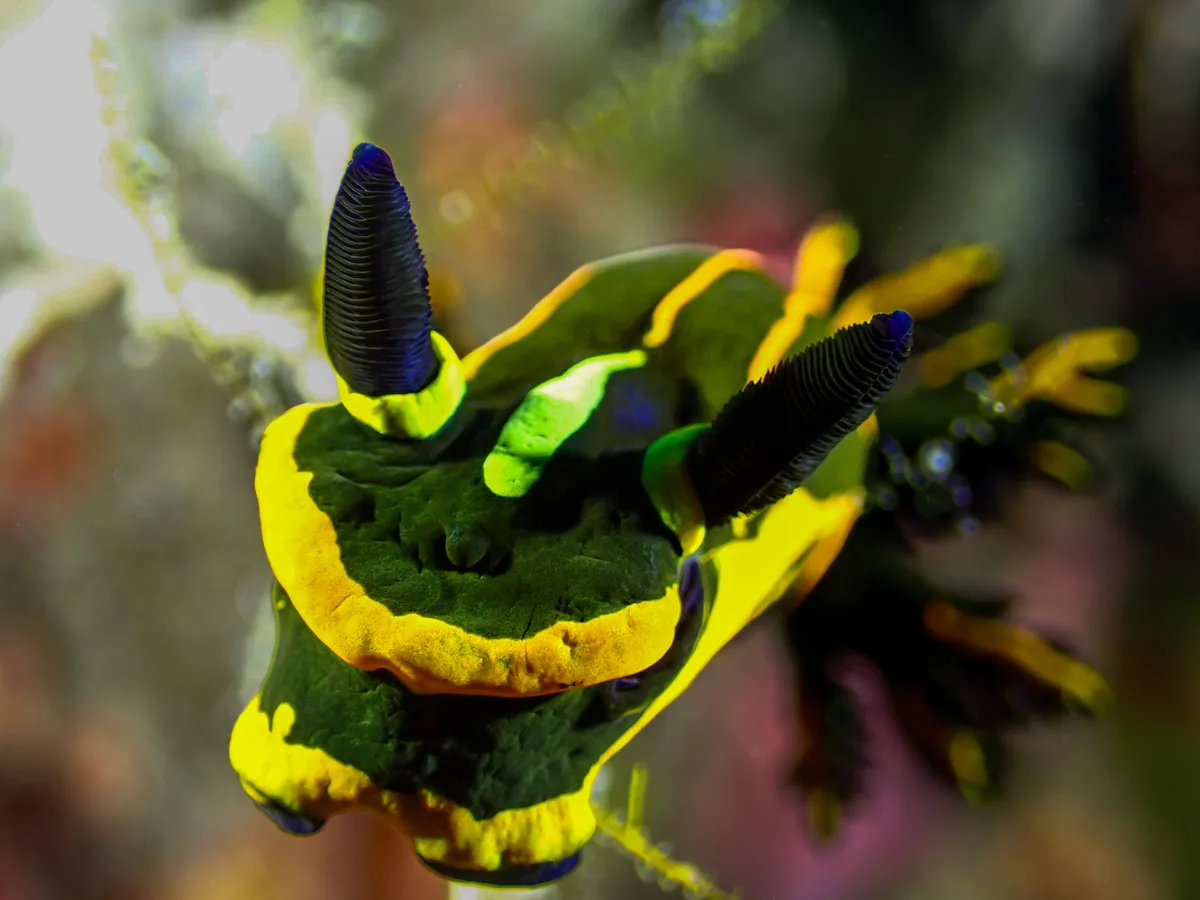
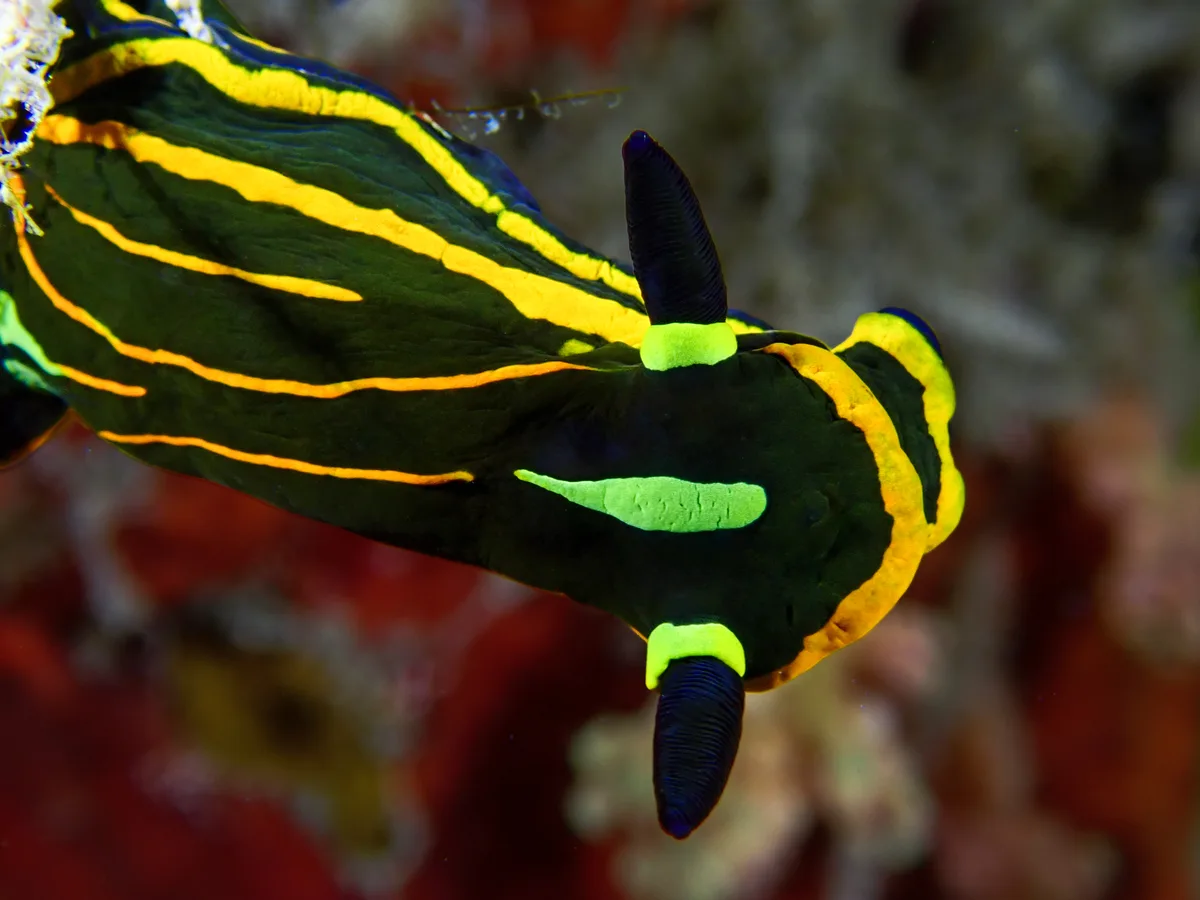
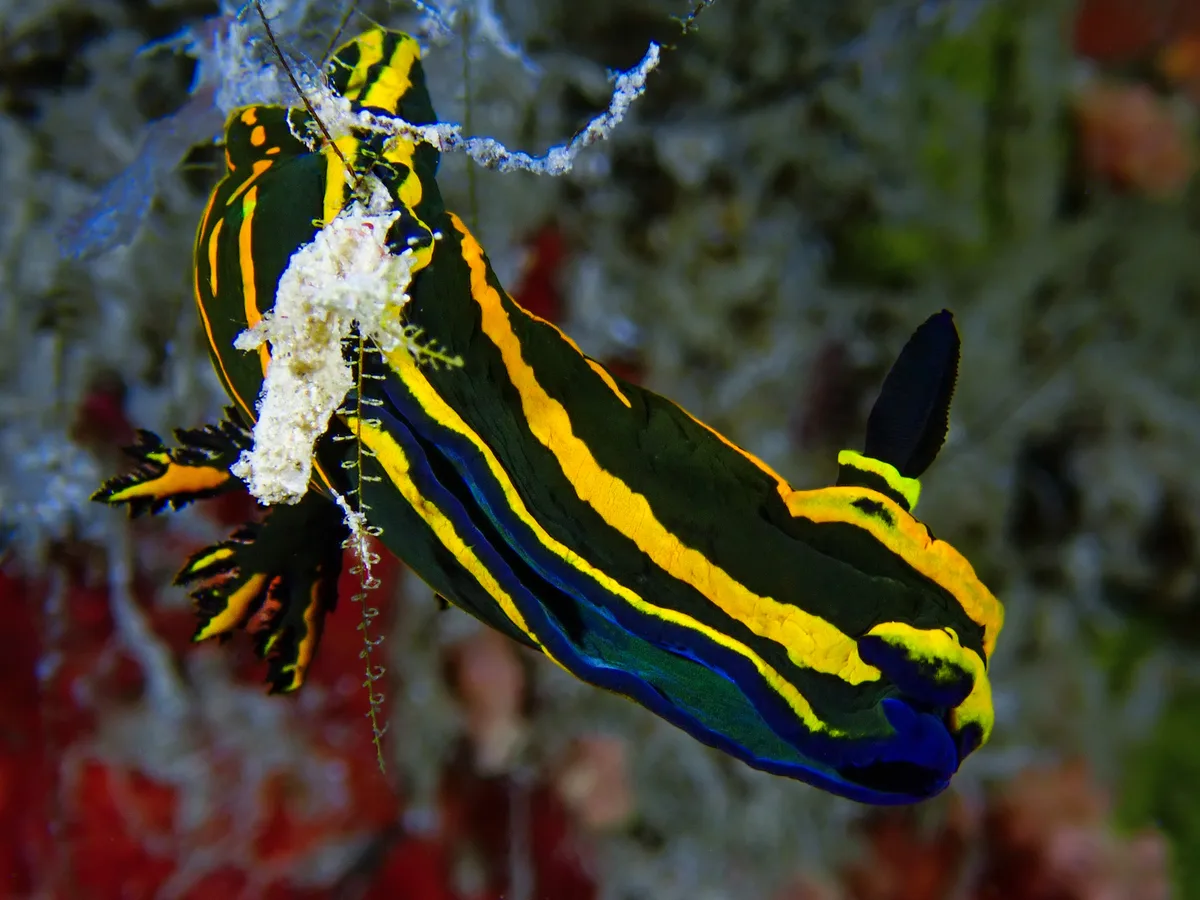
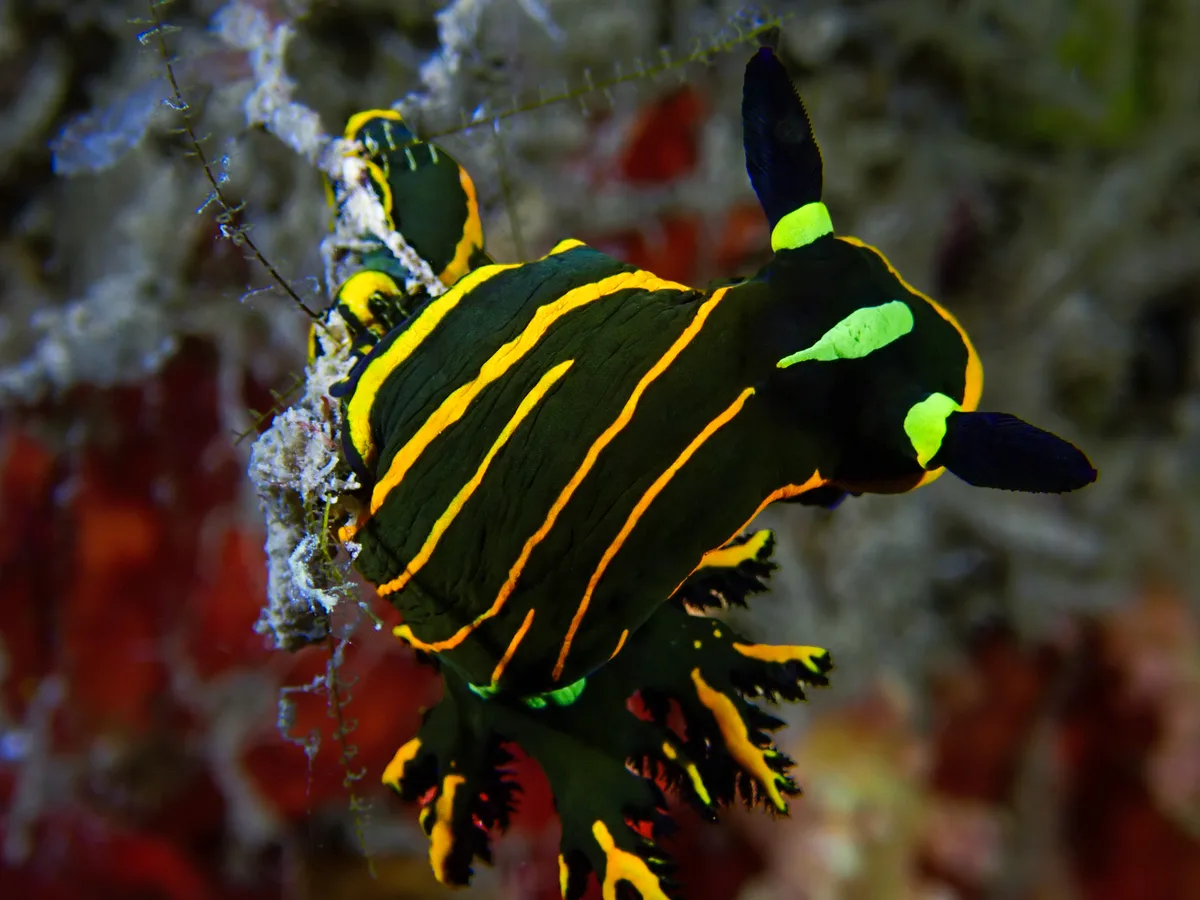
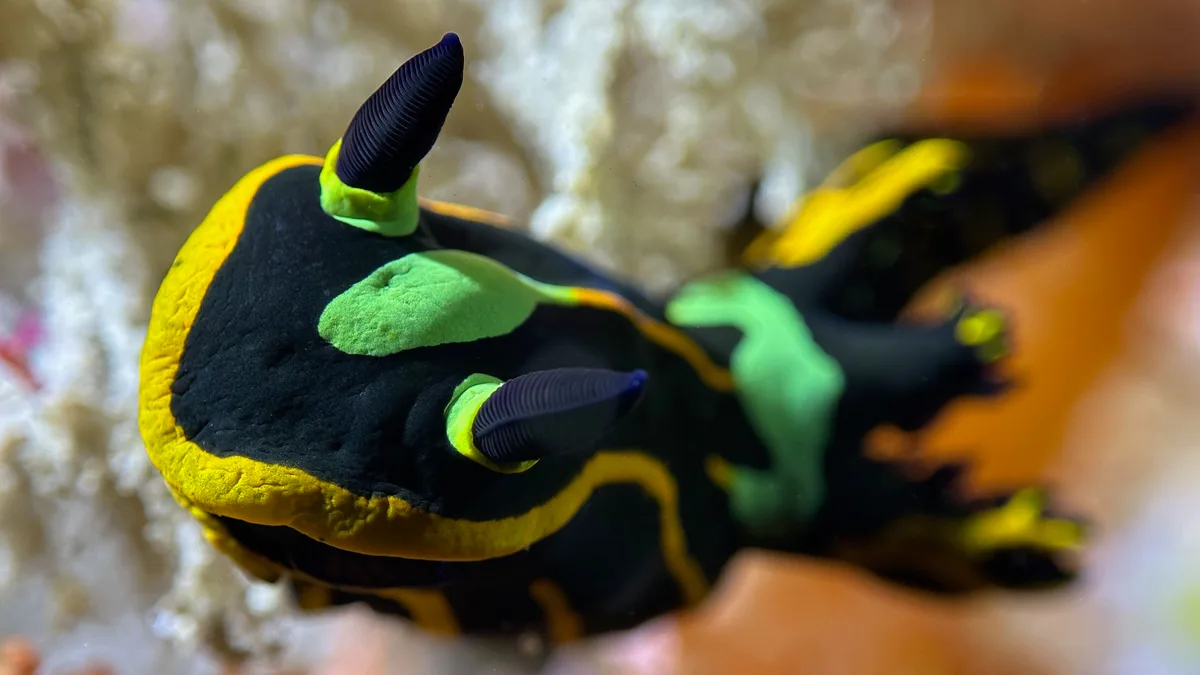
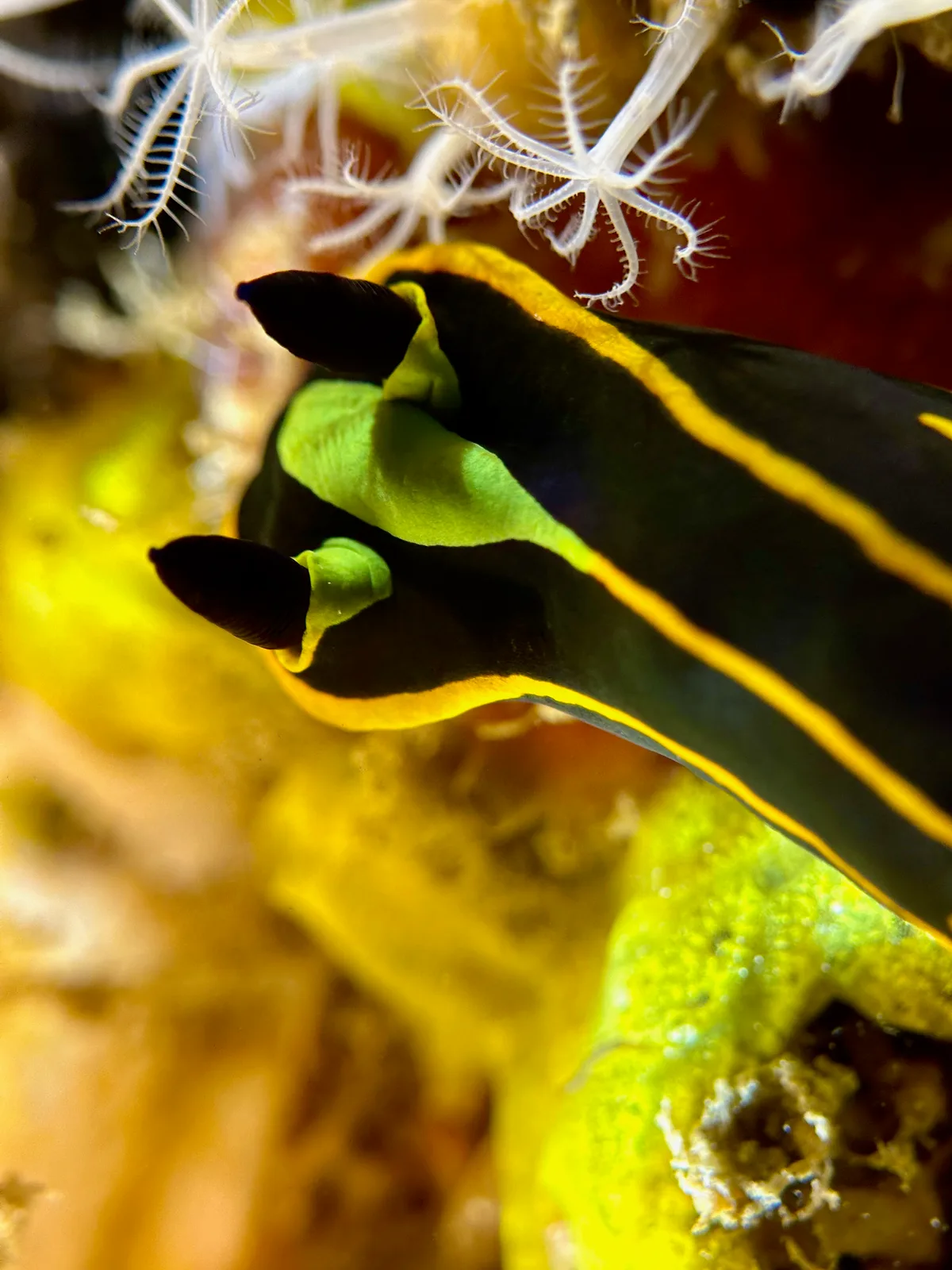
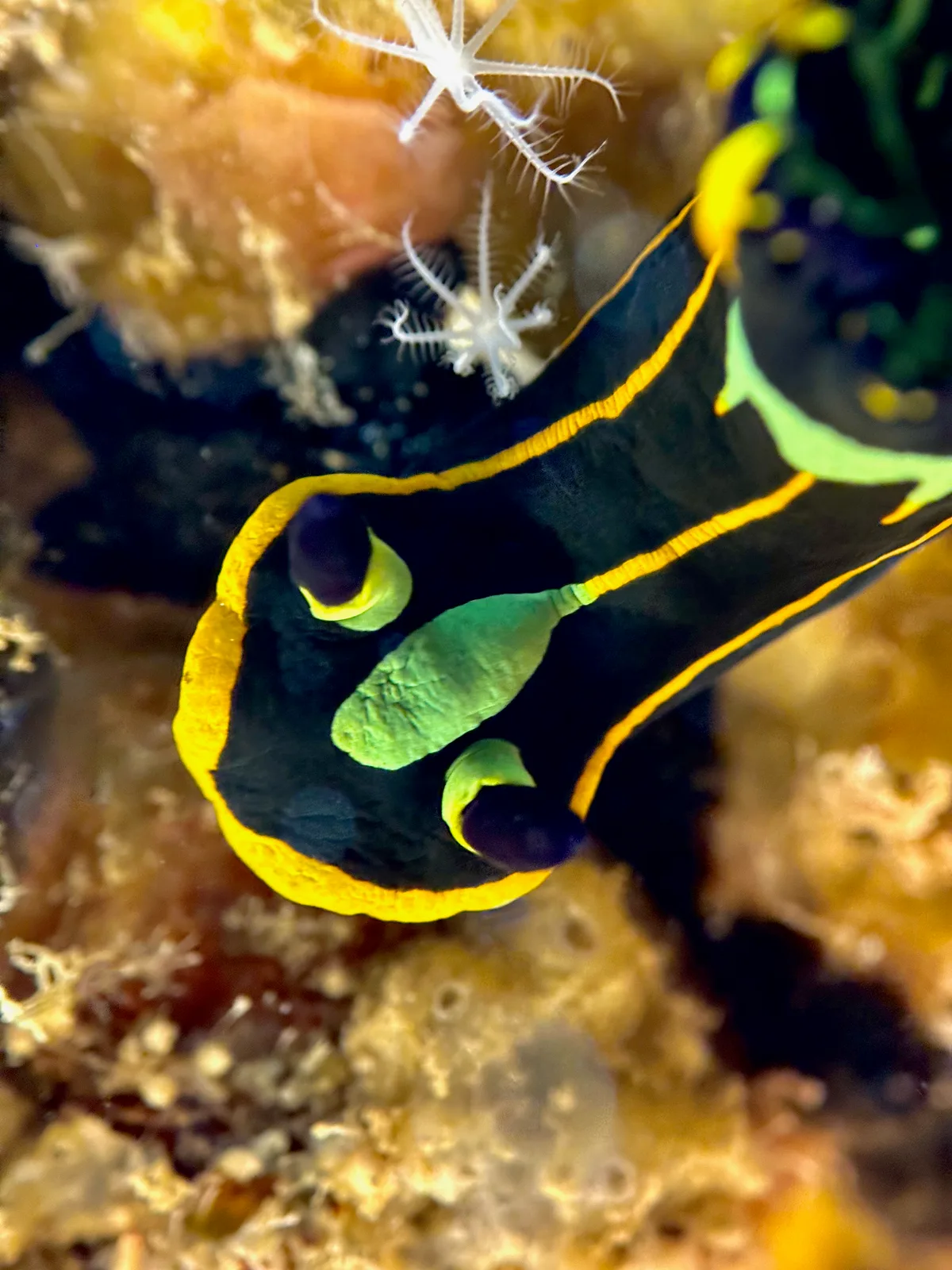
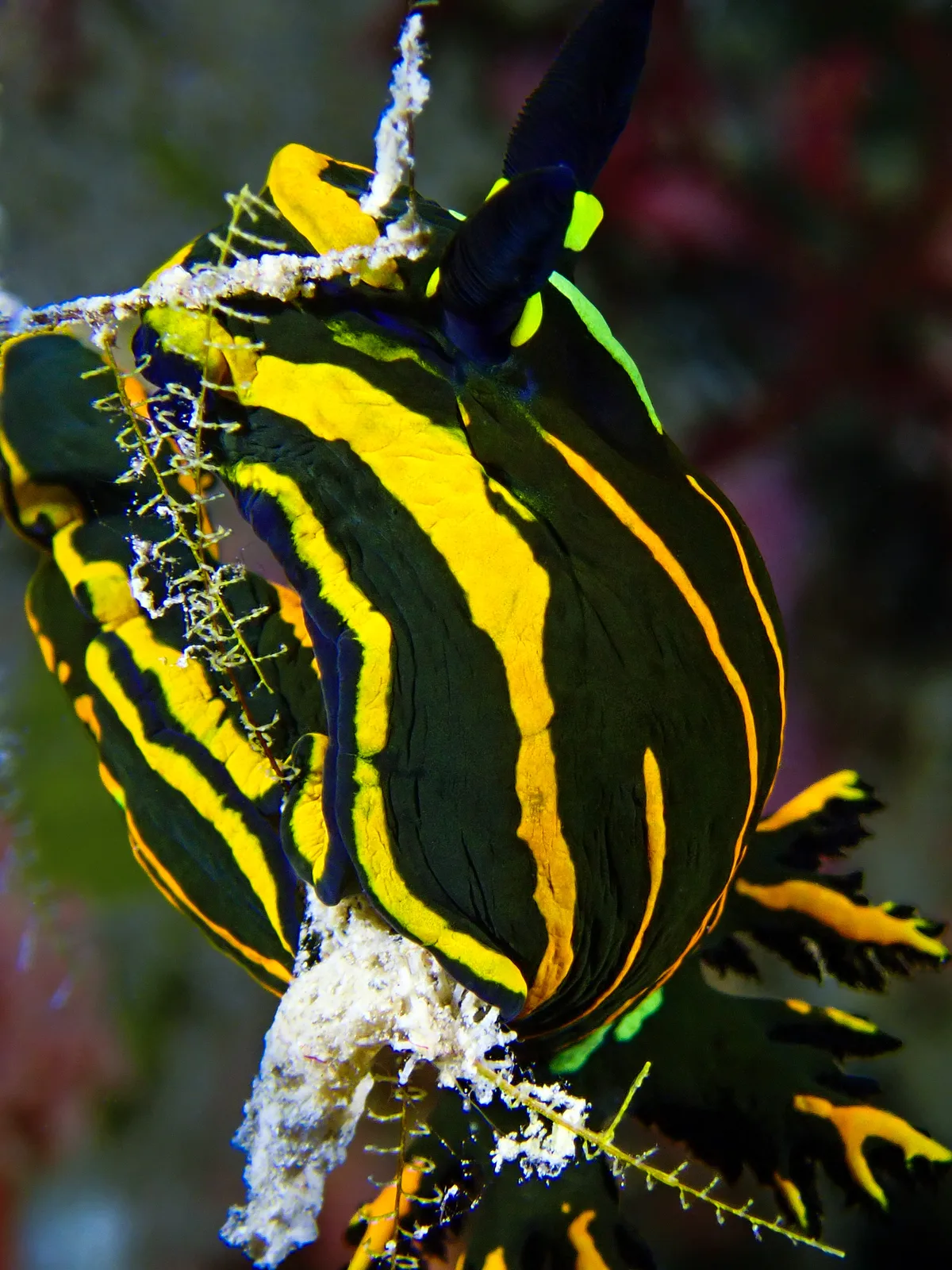
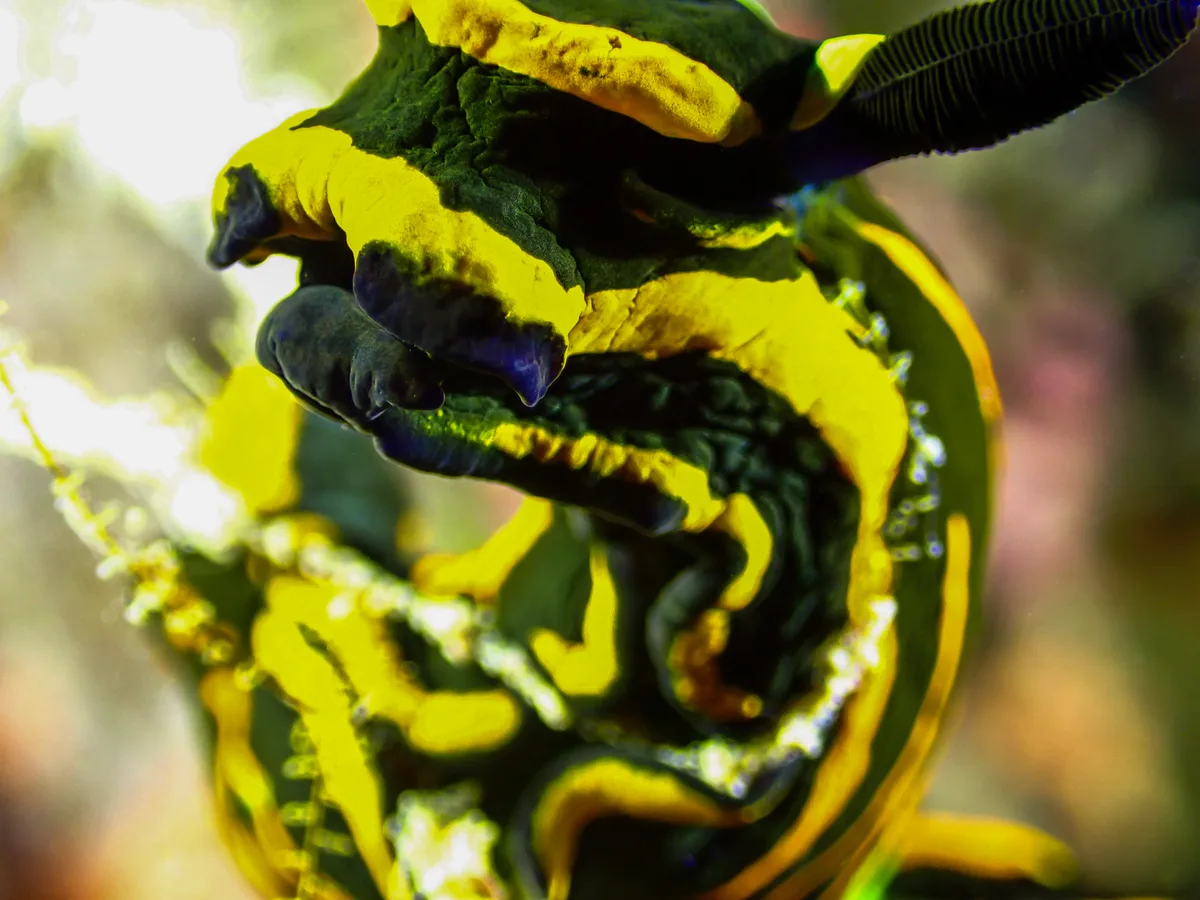
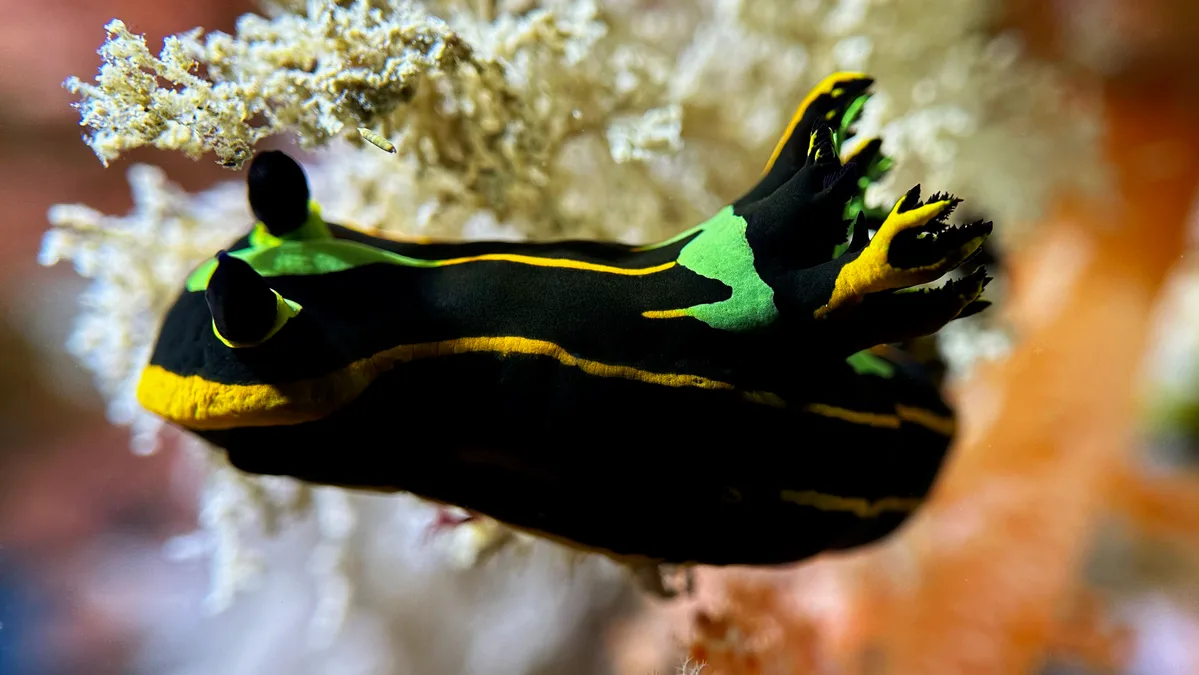
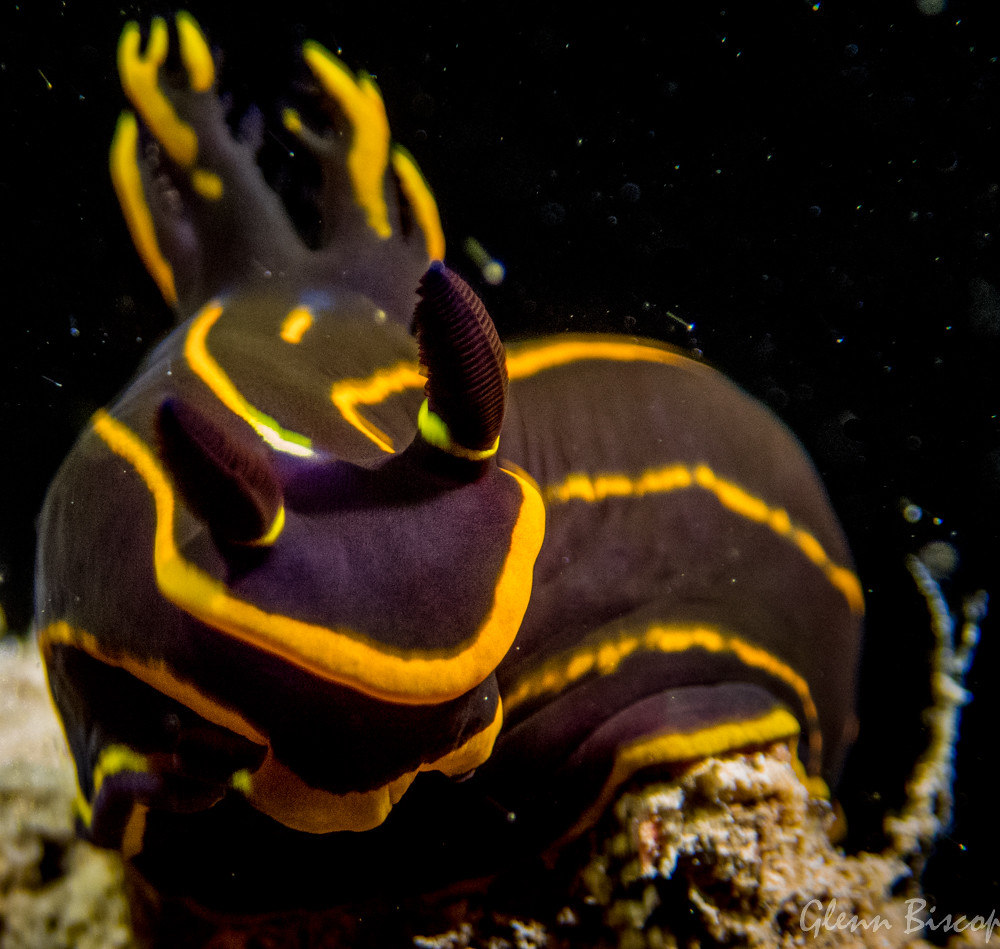
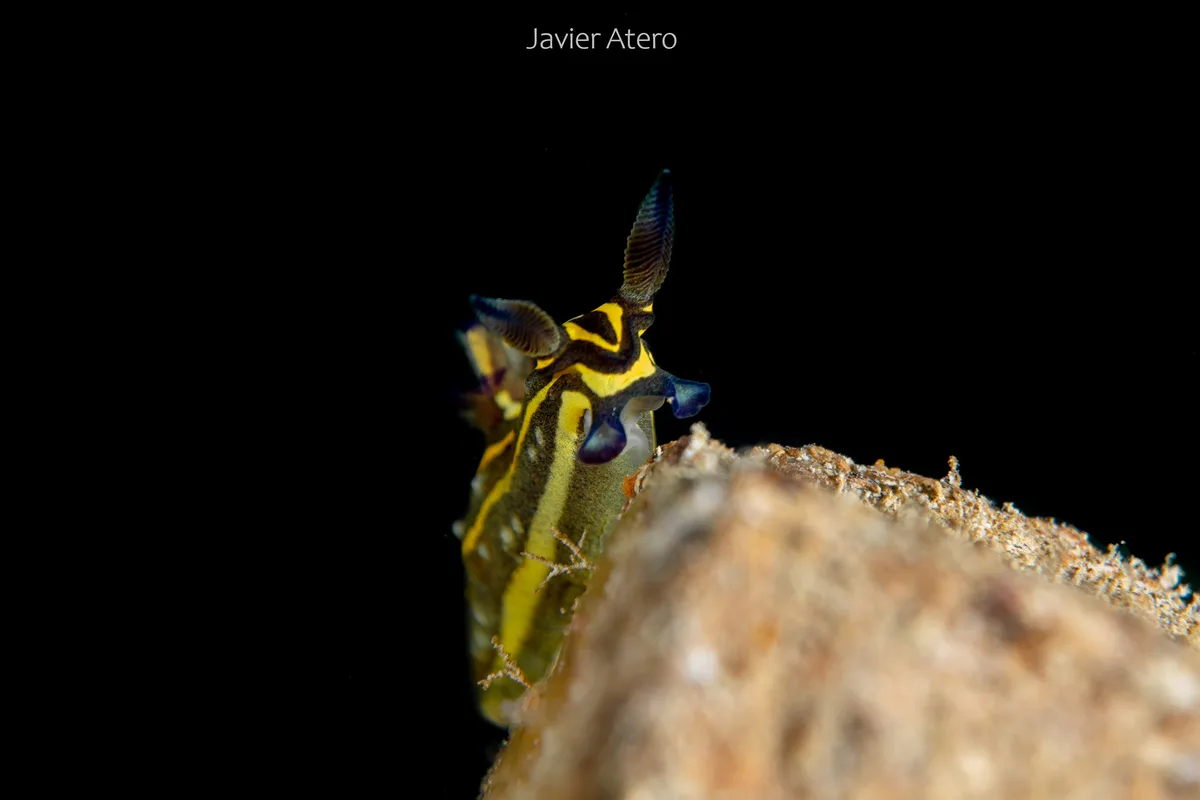
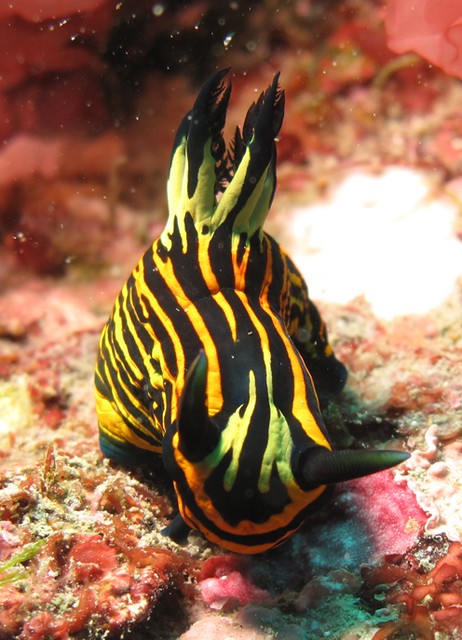
The green is stolen, and so is the yellow.
This slug eats bryozoans, the moss animals that grow as fuzz and low fans across the reef: colonies of thousands of tiny filter feeders, each in its own box, which cannot move and therefore defend themselves chemically. Tambja takes that chemistry and keeps it. The compounds are alkaloids called tambjamines, named after this genus because this is where they were first found, and the slug concentrates them in its skin and in a mucus it releases when something bothers it. A fish that mouths one puts it down again.
Which is why an animal this loud crawls over bare rock in daylight without hurrying. The stripes are not decoration, they are notice.
There is one thing it runs from. Some of the larger slugs in this family hunt other sea slugs, tracking them along their own slime trails, and tambjamines do not trouble them at all. When one arrives, the prey does something sea slugs are not supposed to be able to do: it sprints, at a speed that is genuinely startling in an animal otherwise measured in centimeters per minute.
The gills at the back never fold away either. Most dorids can pull the plume down into a pocket in the body when something touches it; this family has no pocket, so the gills stay out permanently. It is one more thing the animal has decided it does not need to hide.
It was described from Zanzibar and ranges across the 🌊 Indian Ocean, from this sea east to Ningaloo.
- dark green to blue-black body with bright yellow-orange lines running its length
- surface finely wrinkled into lengthwise ridges
- tall black rhinophores, banded yellow at the base
- branched gills at the rear that never fold away
- up to 85 mm