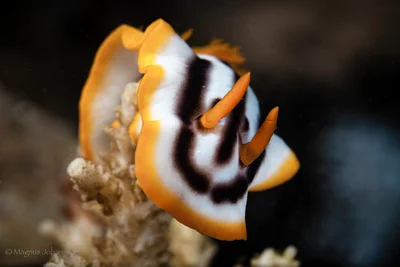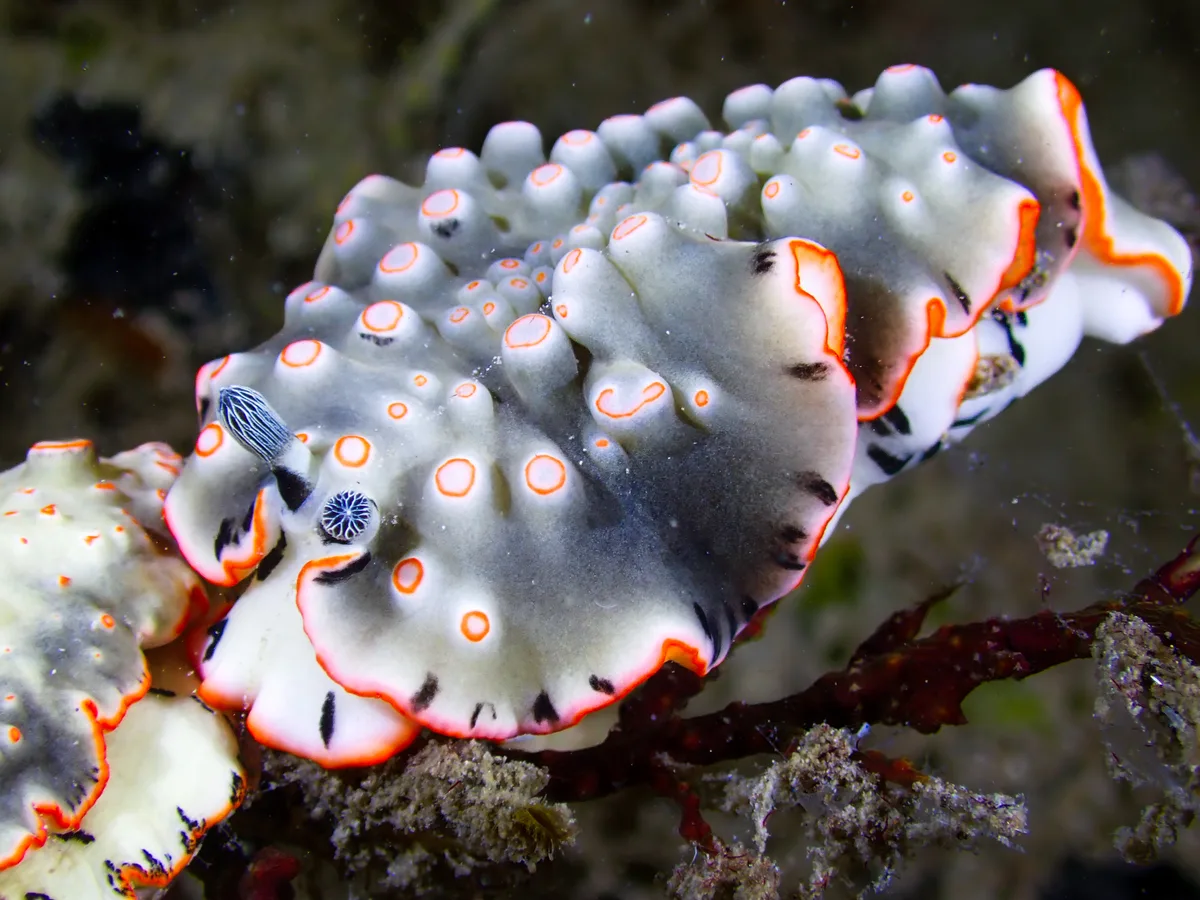
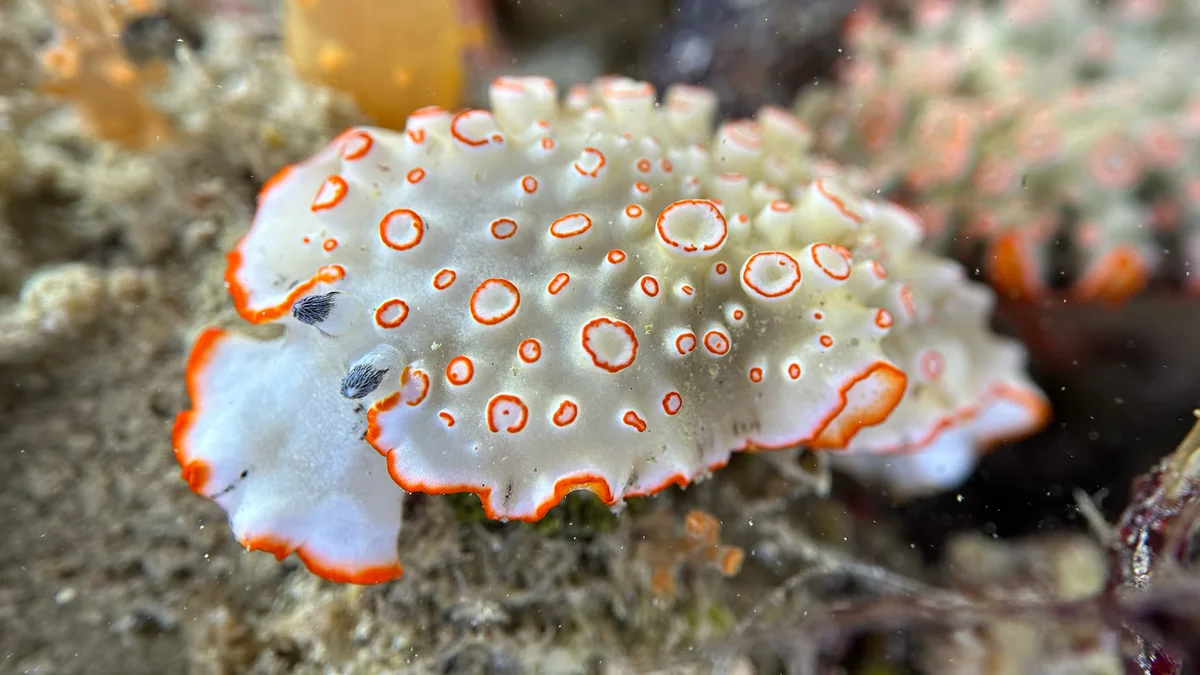
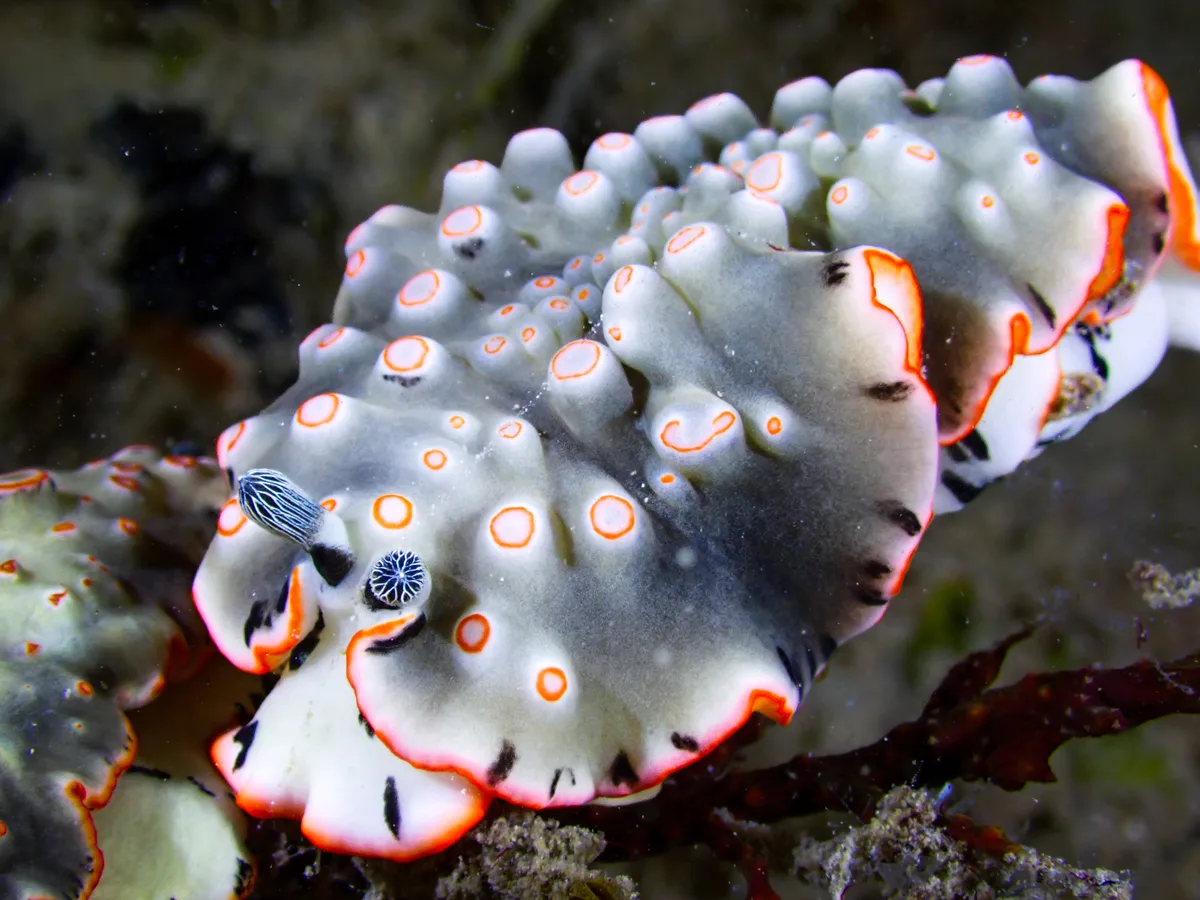
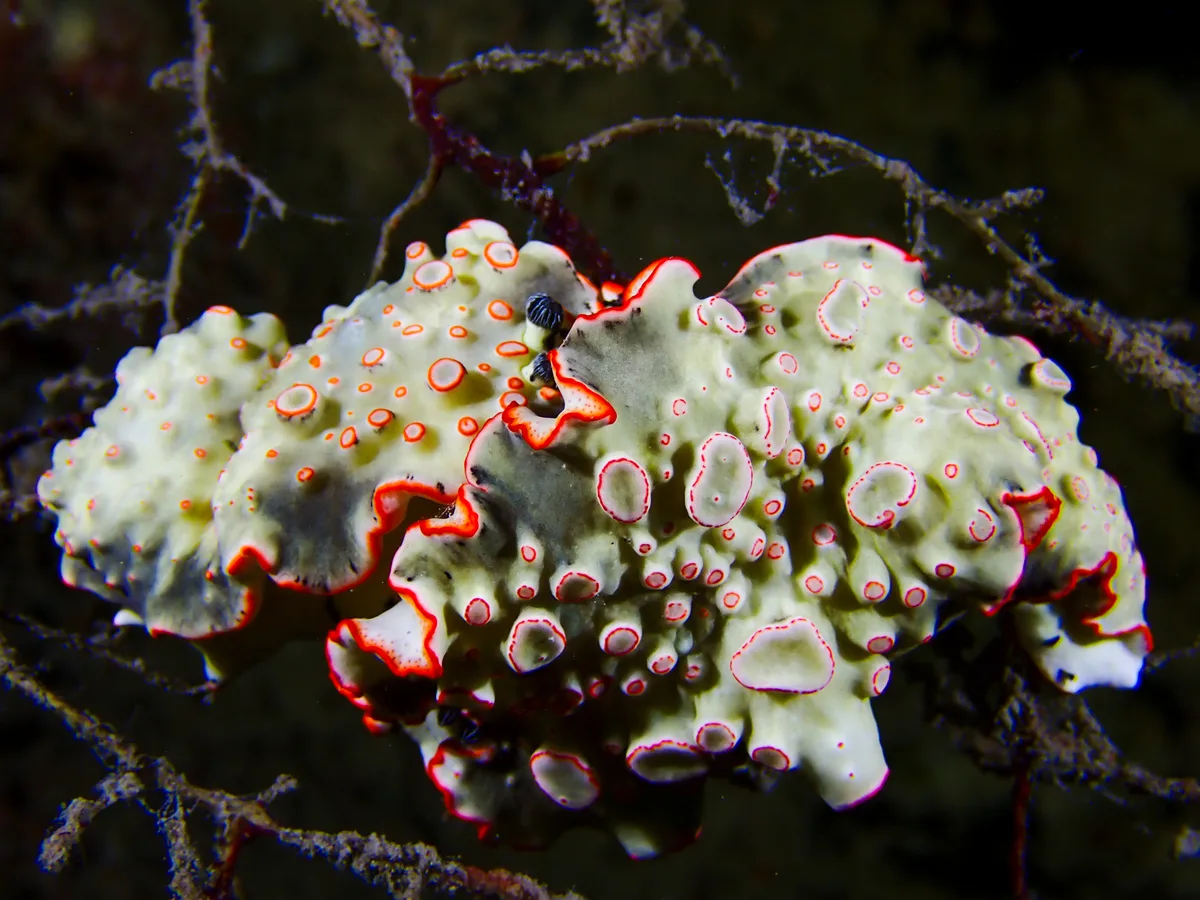
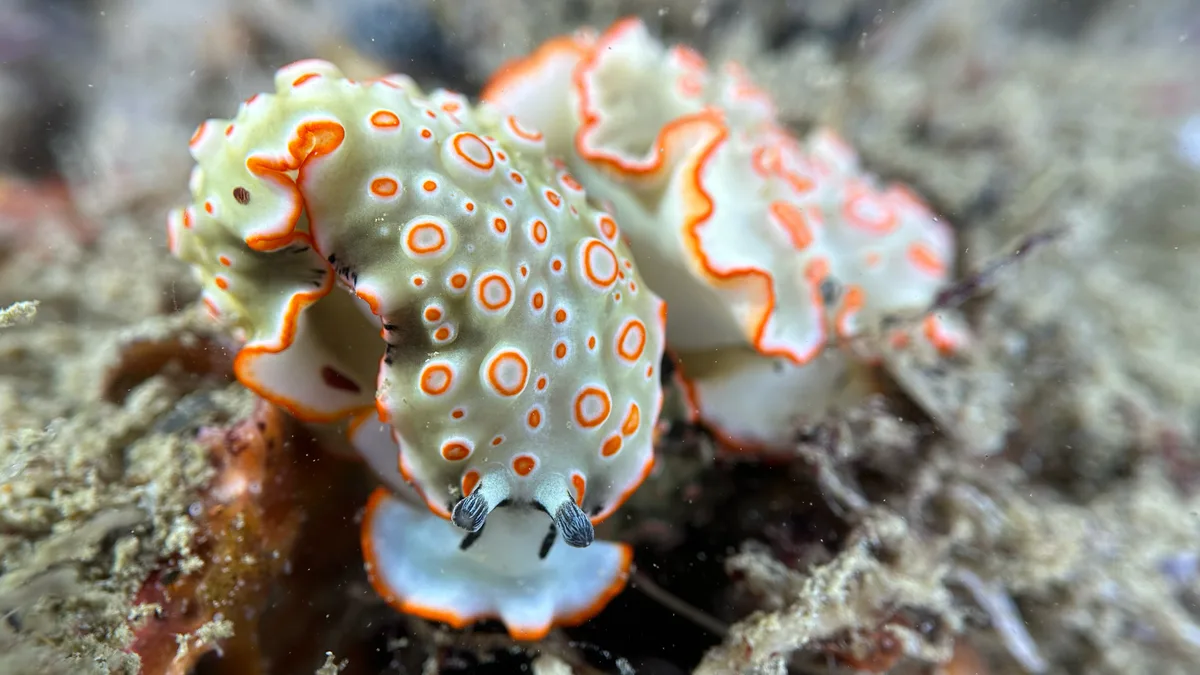
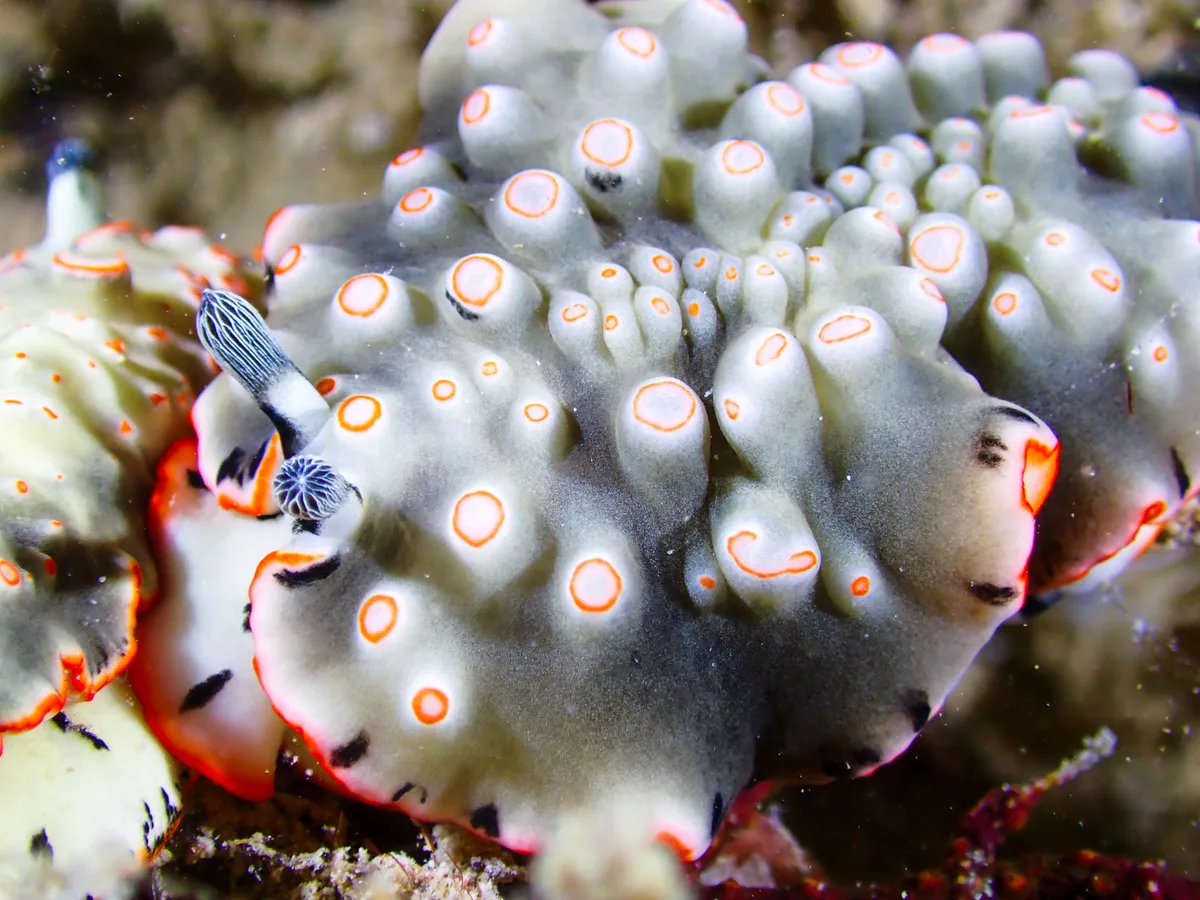
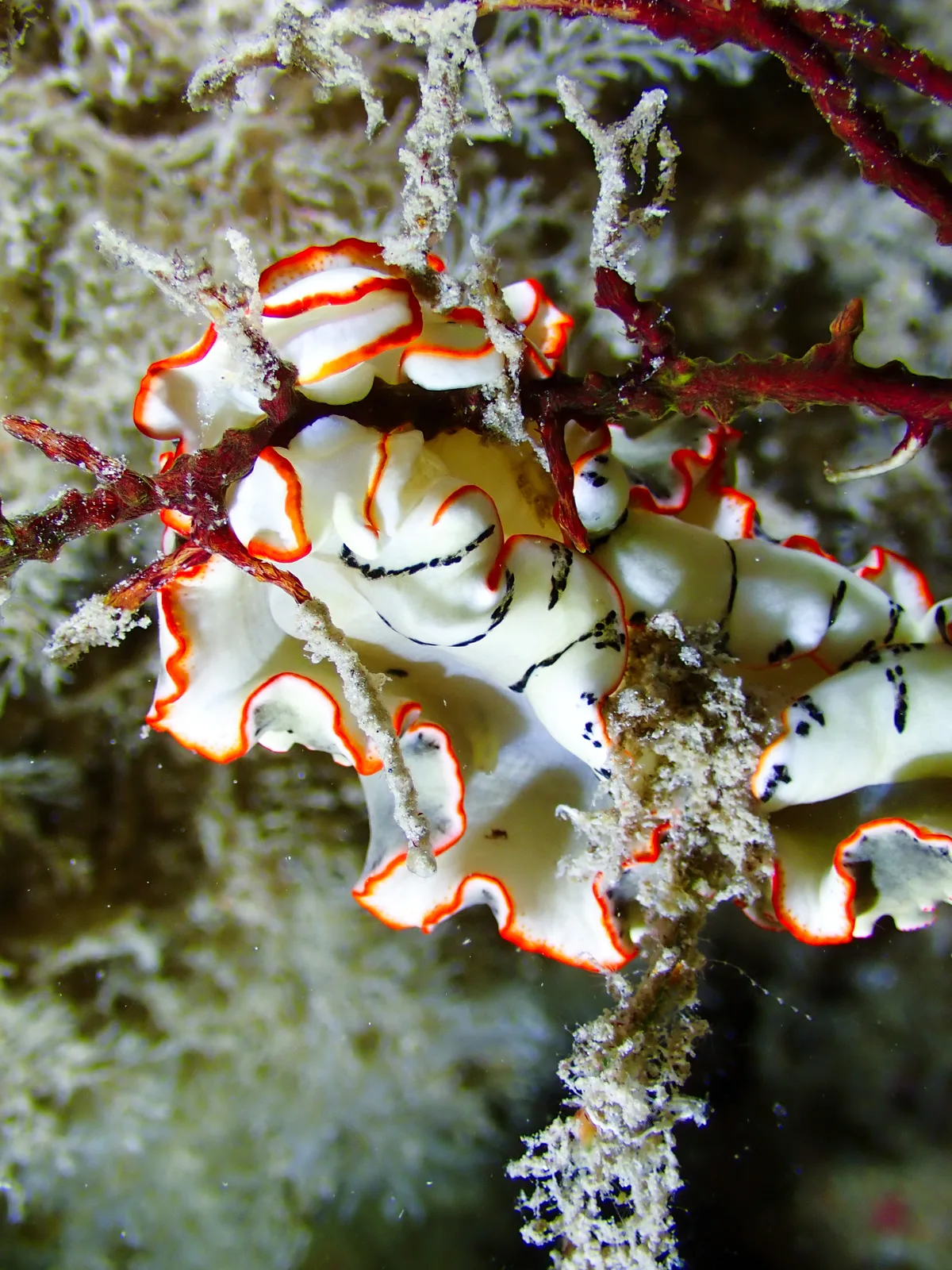
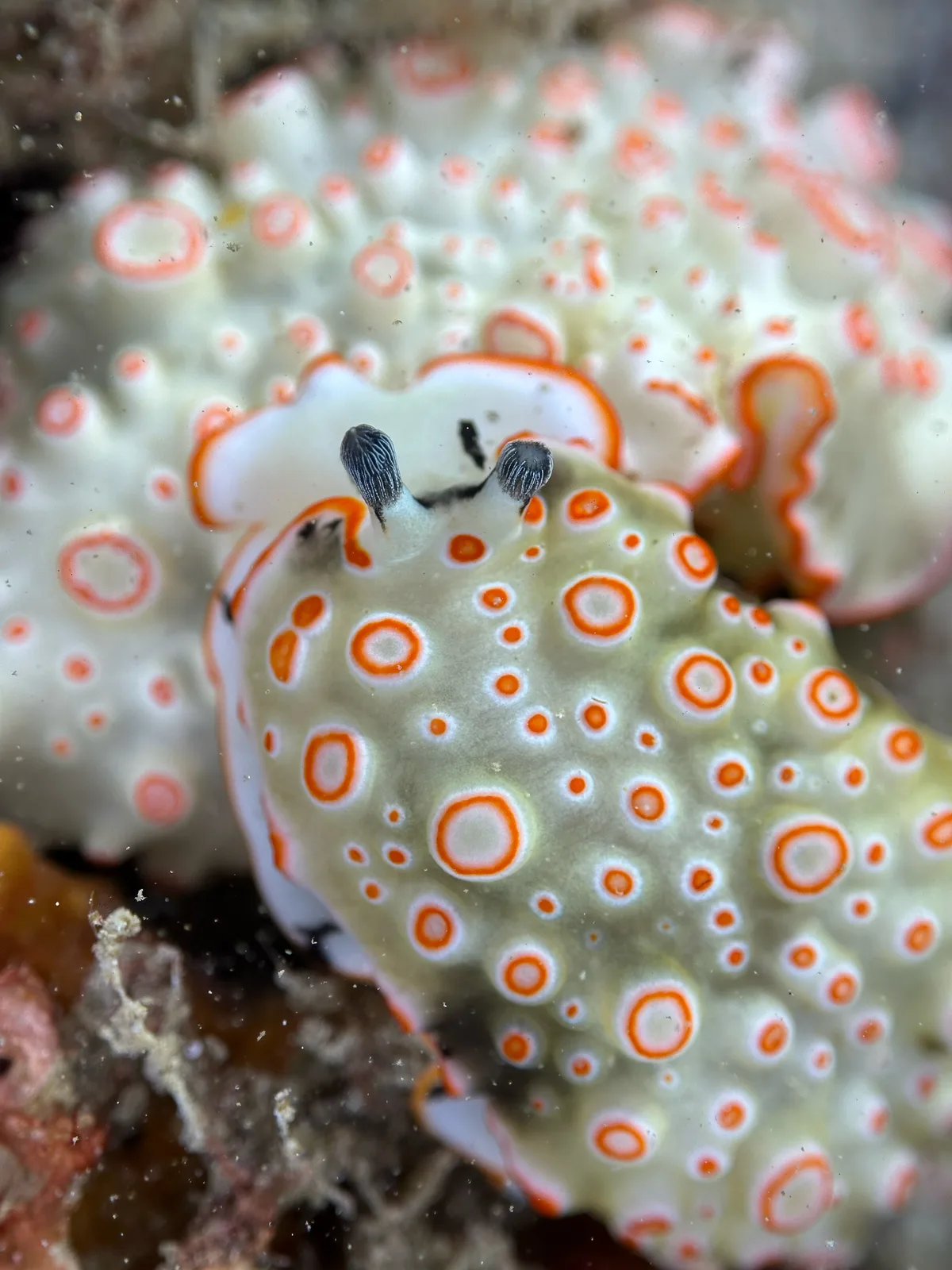
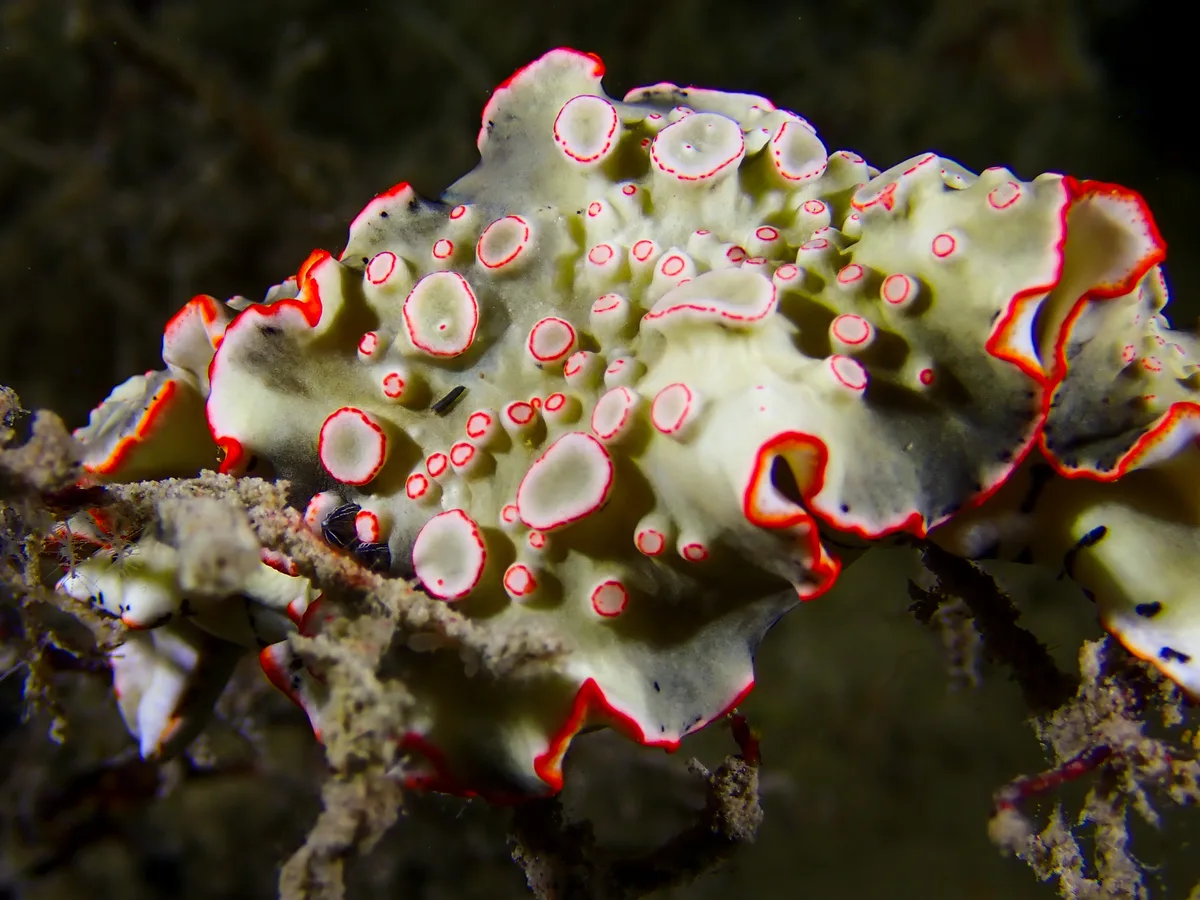
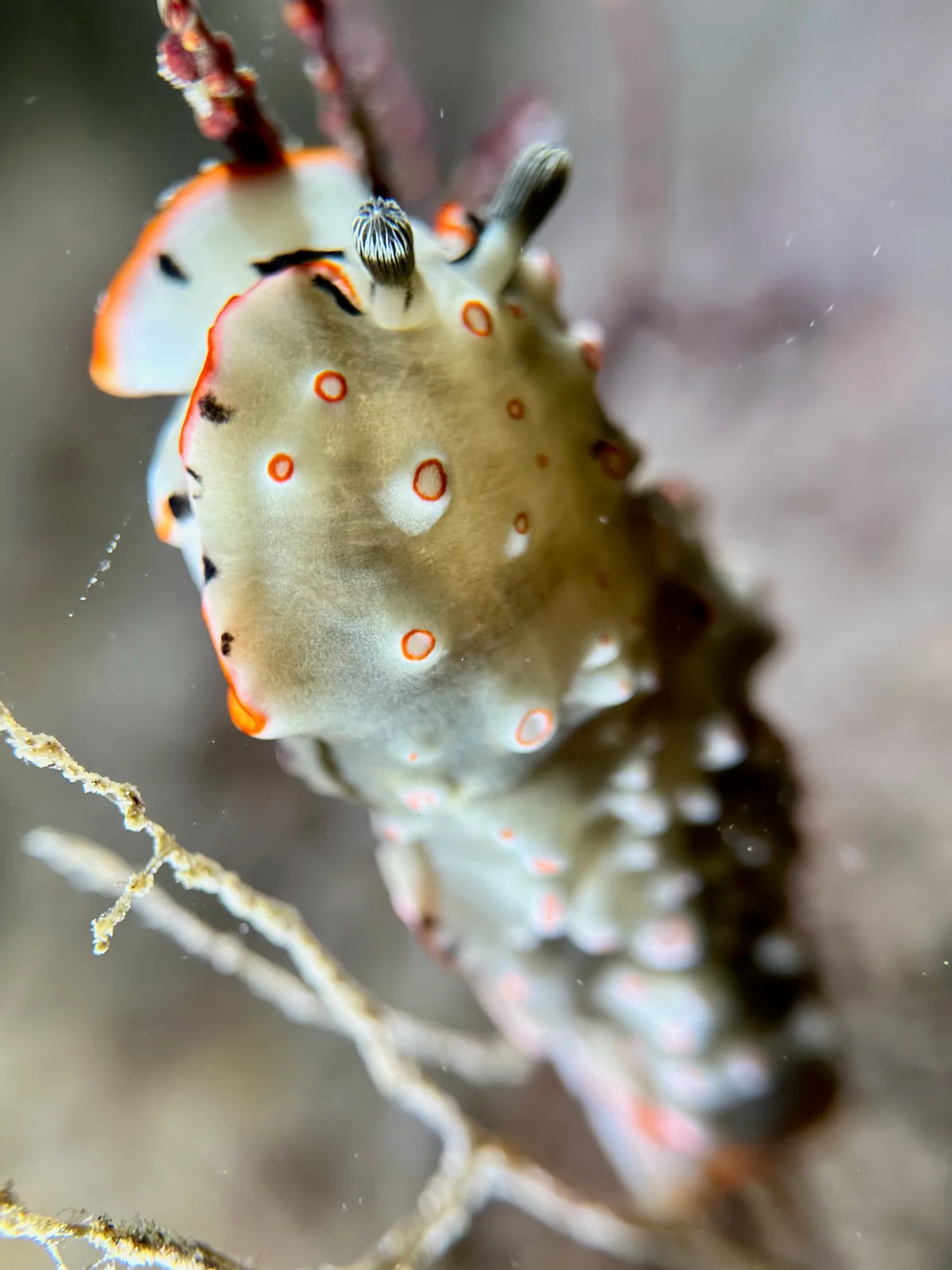
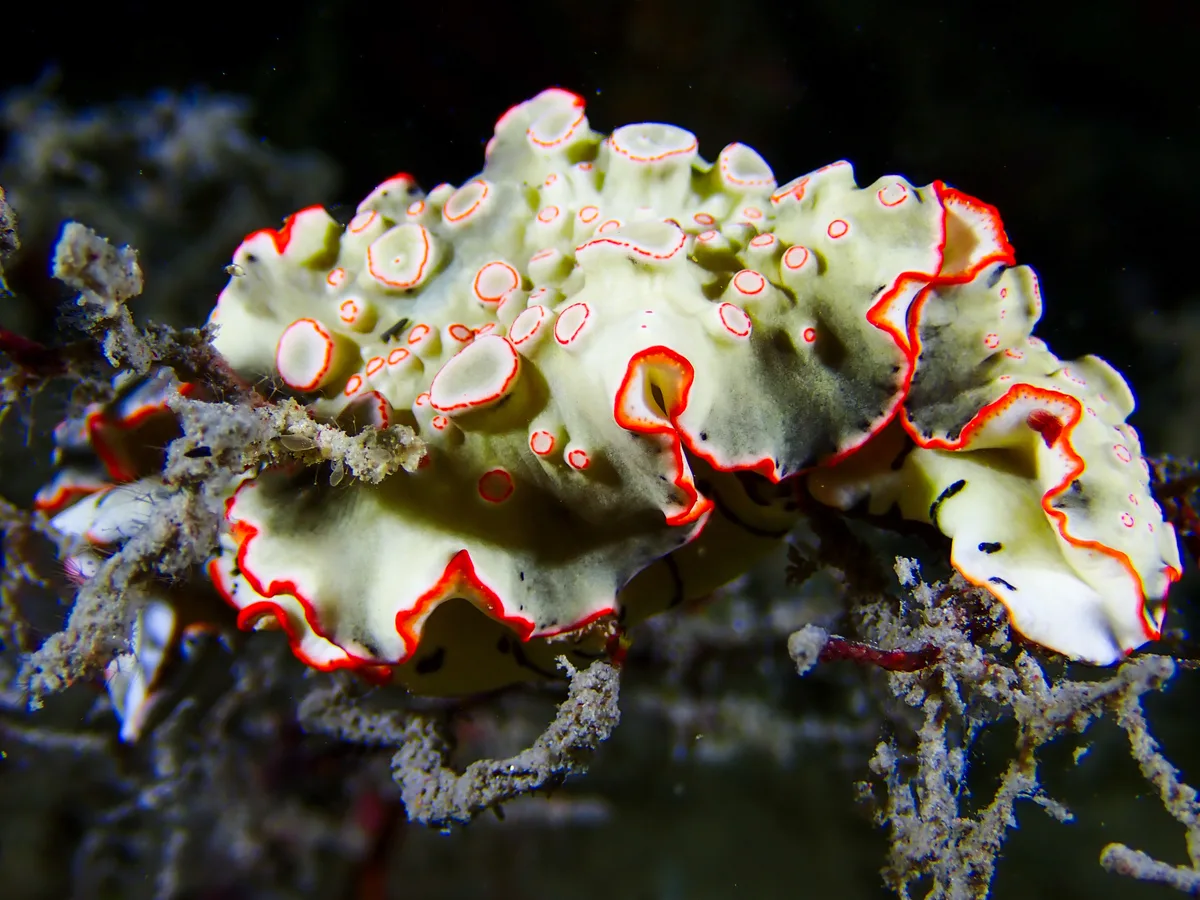
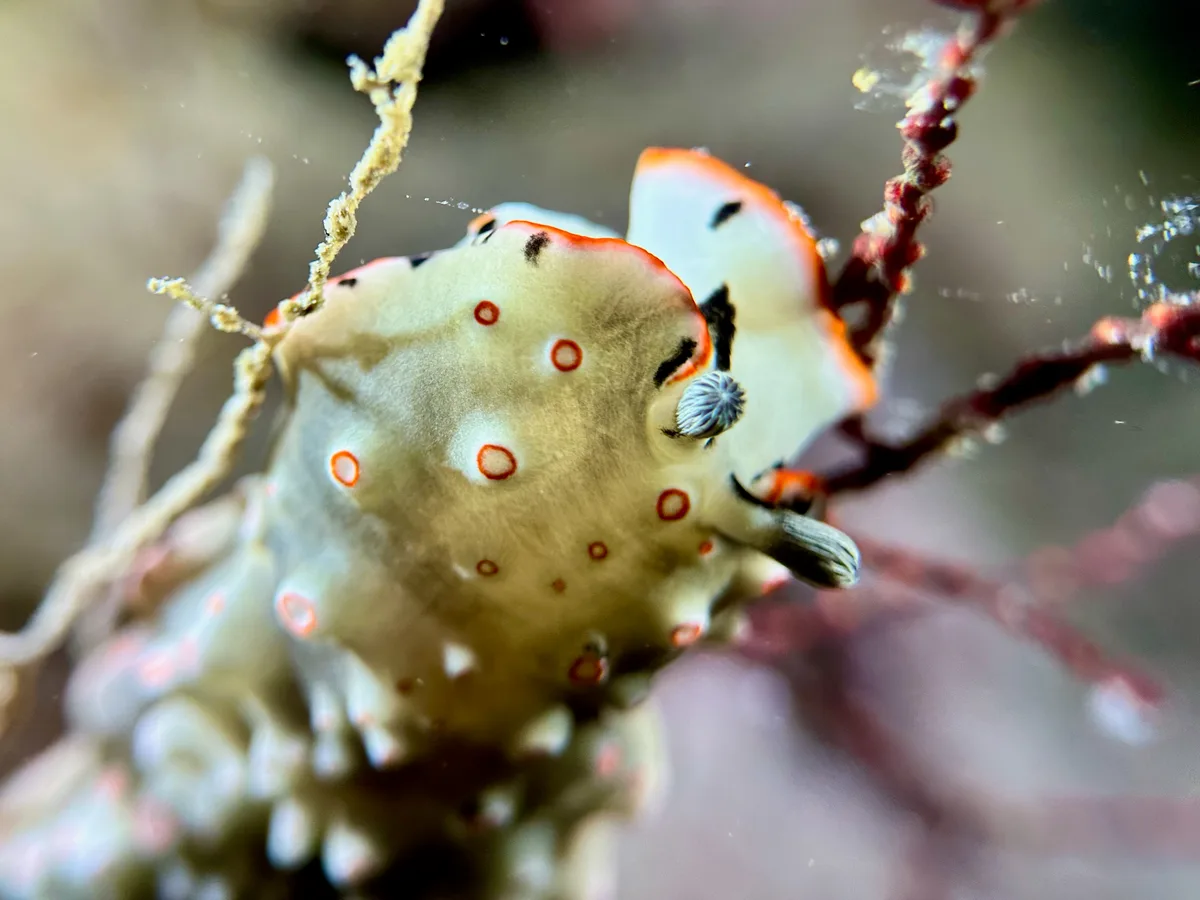
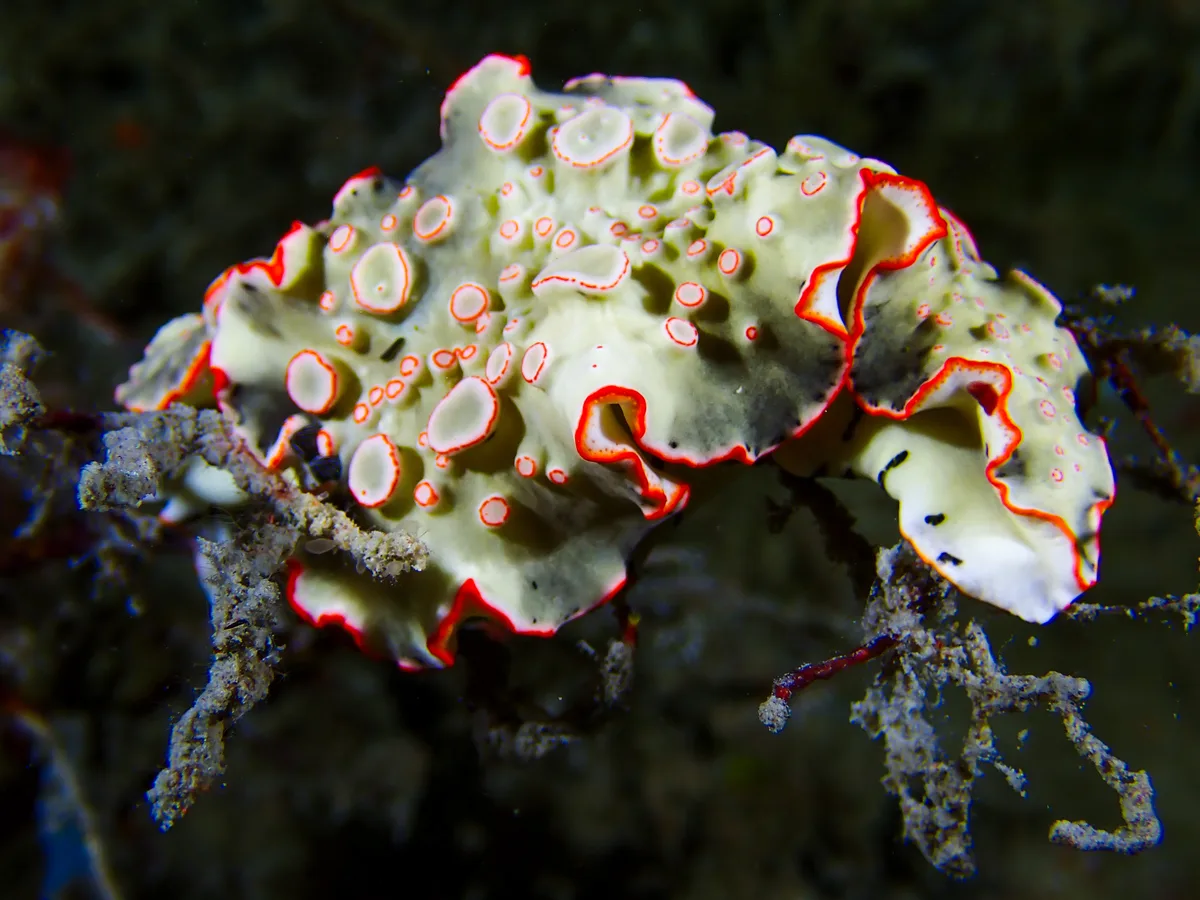
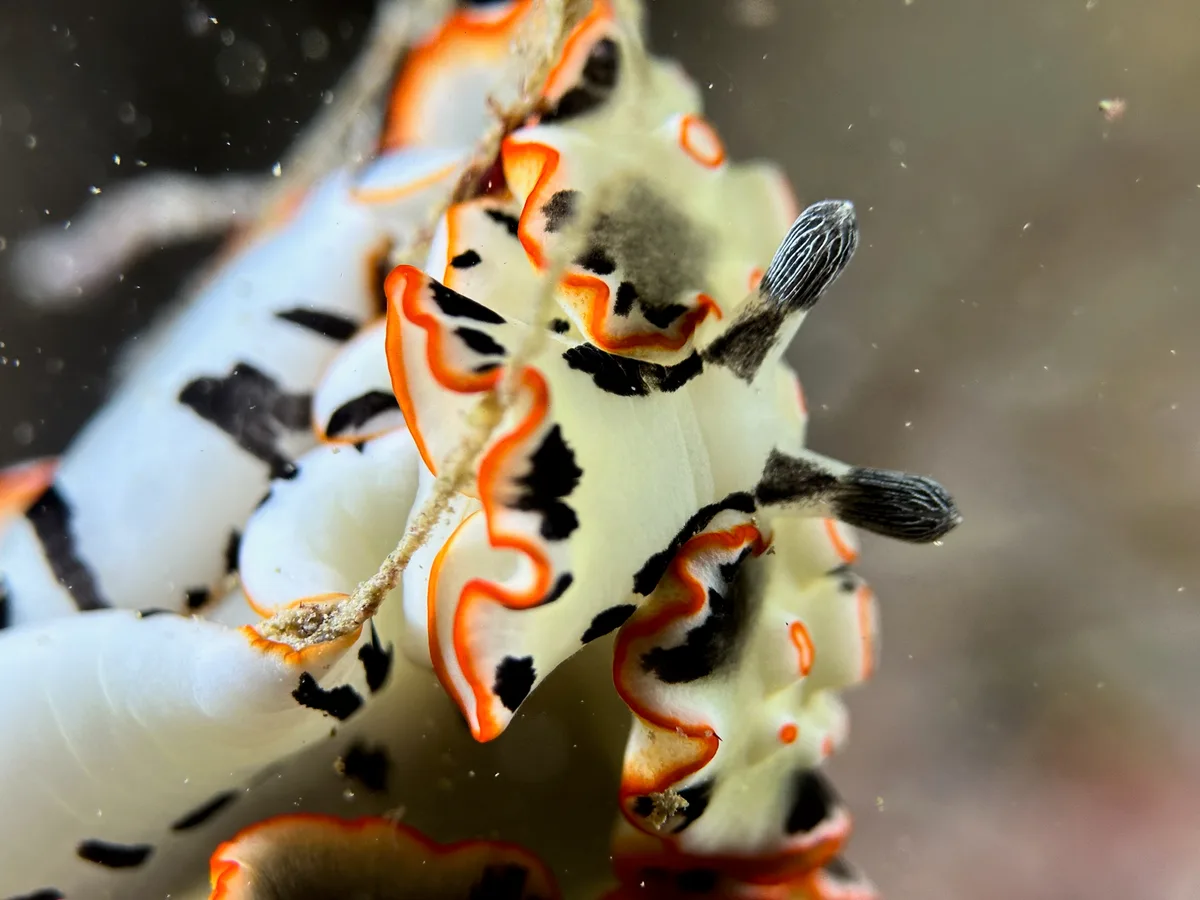
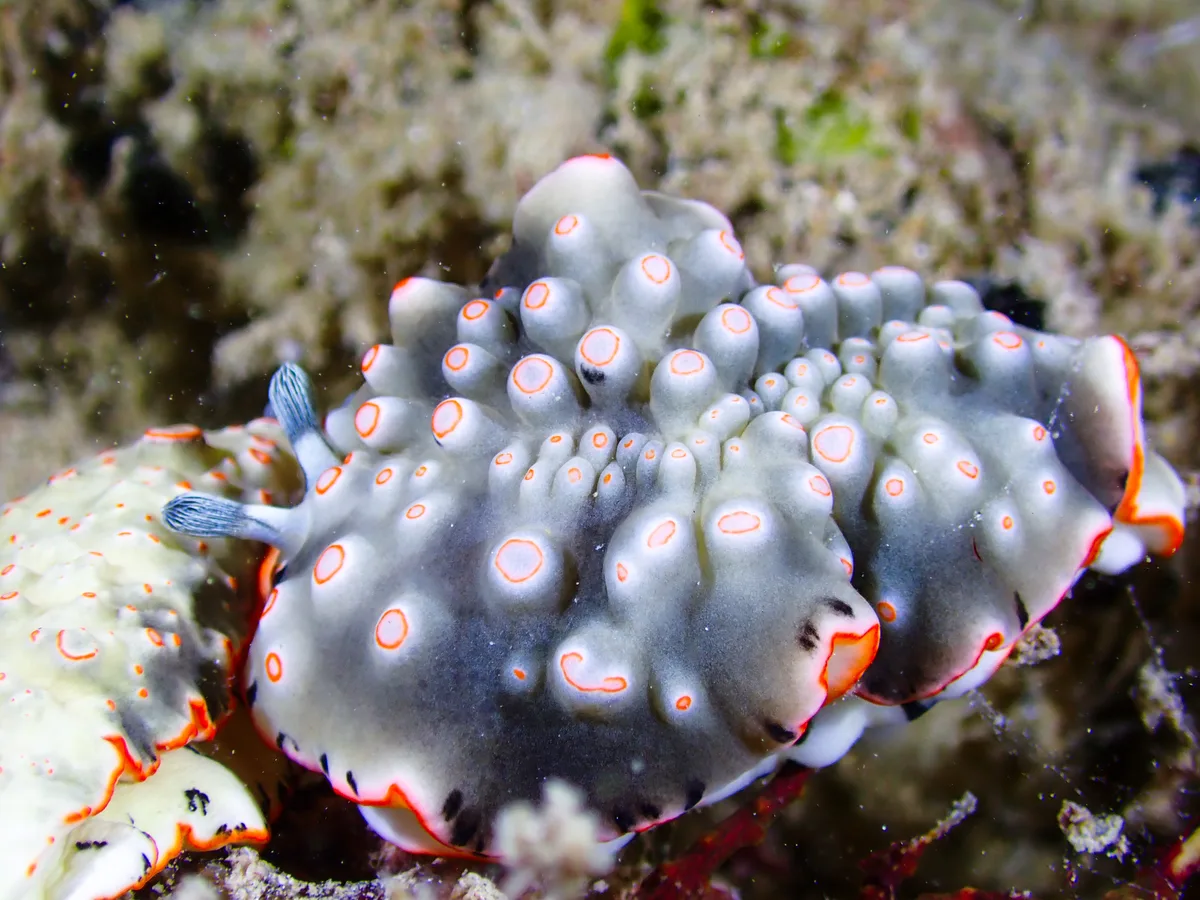
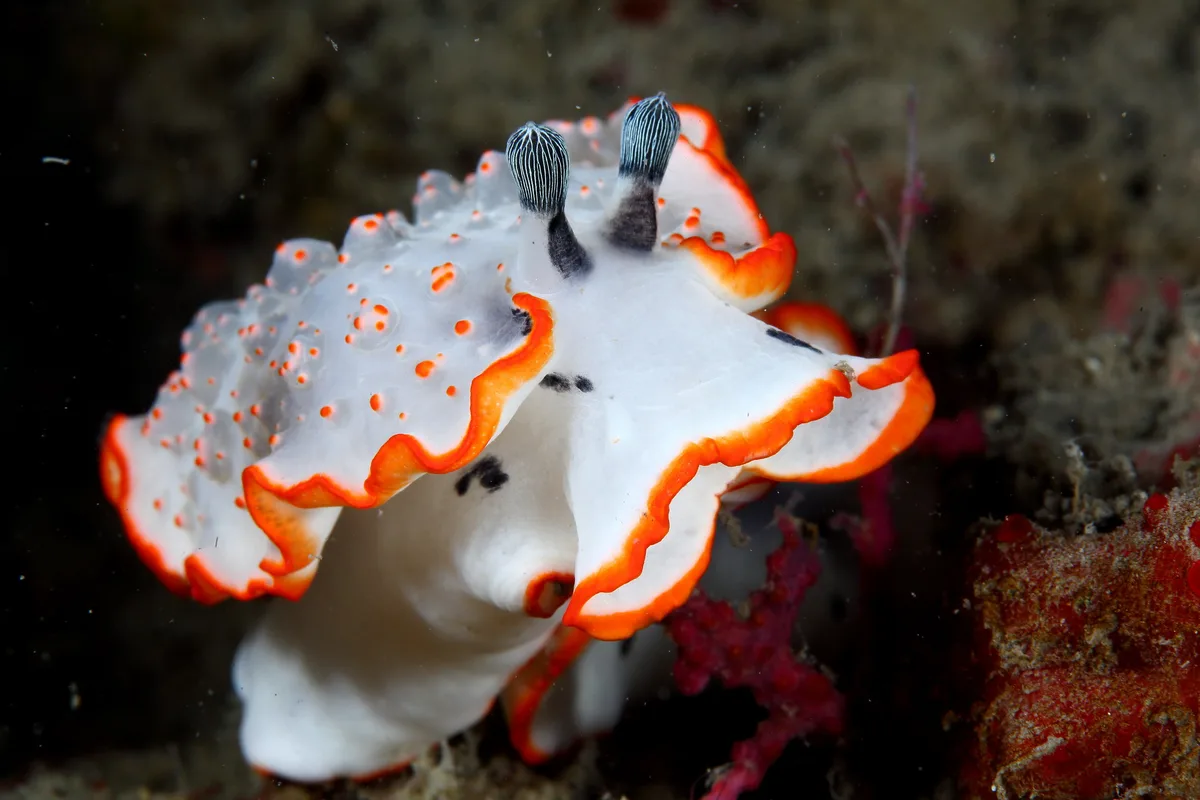
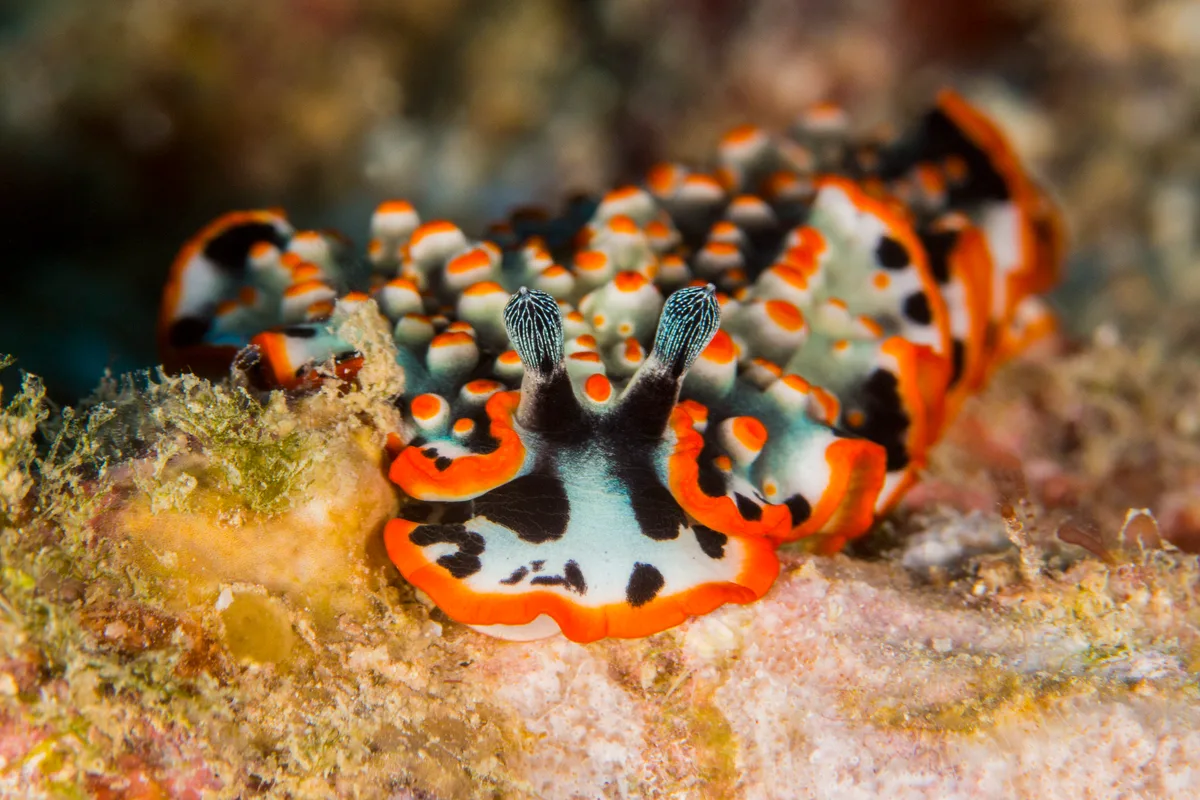
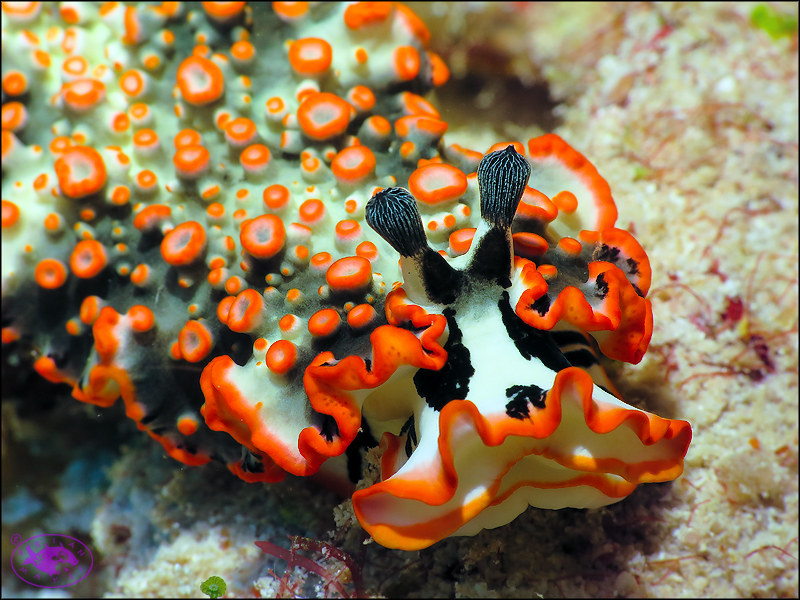
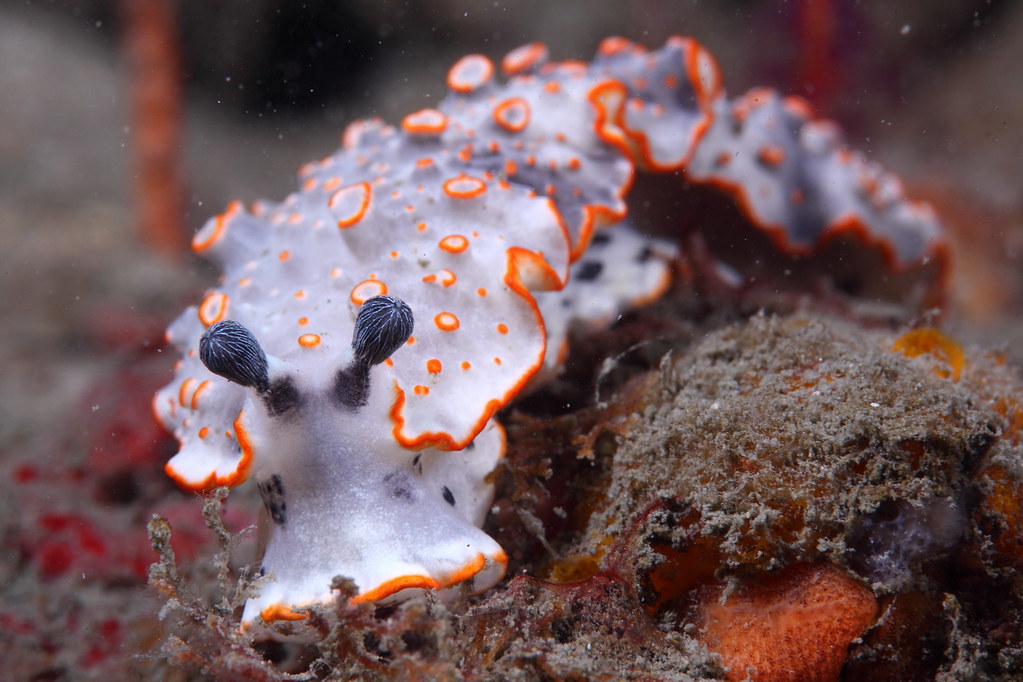
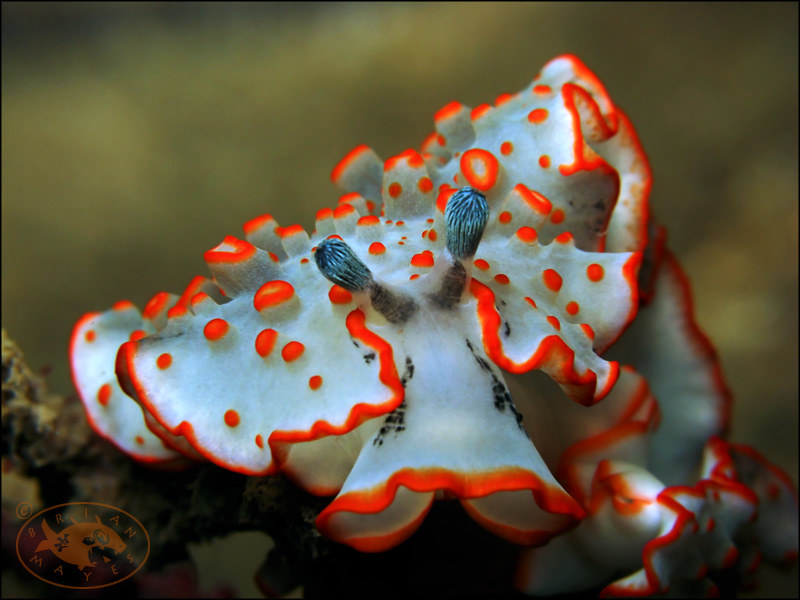
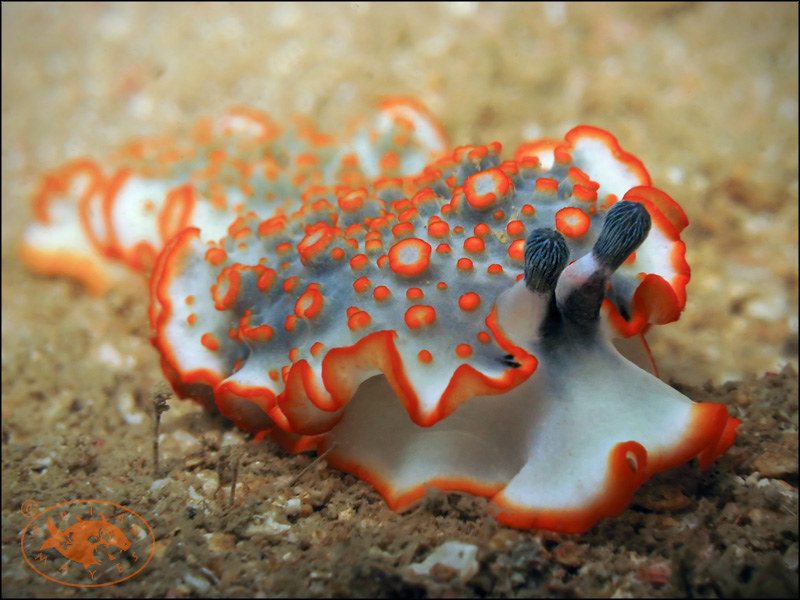
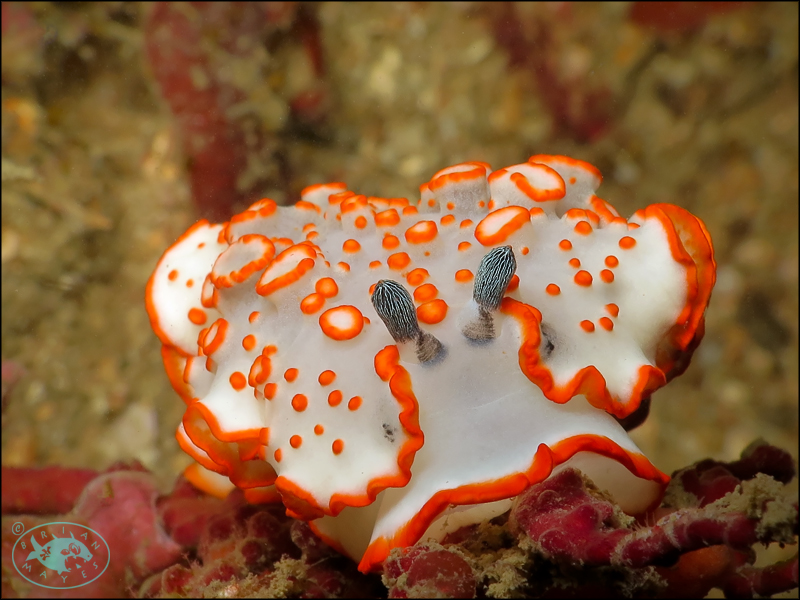
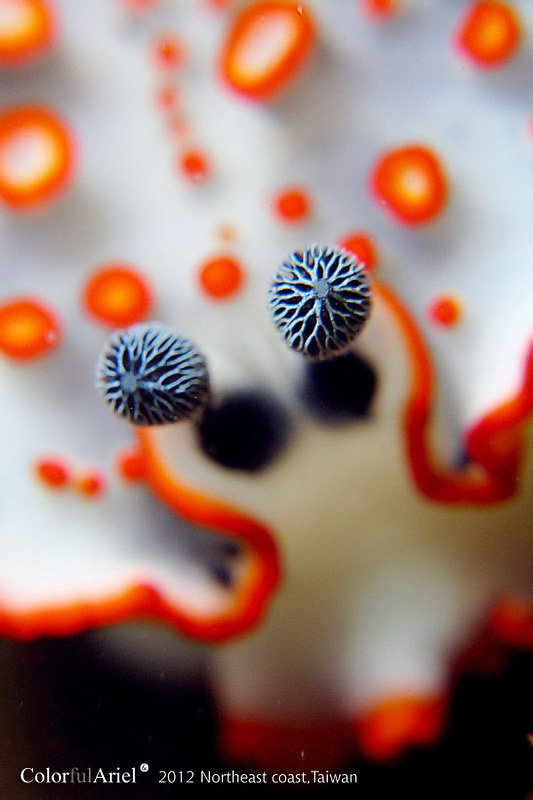
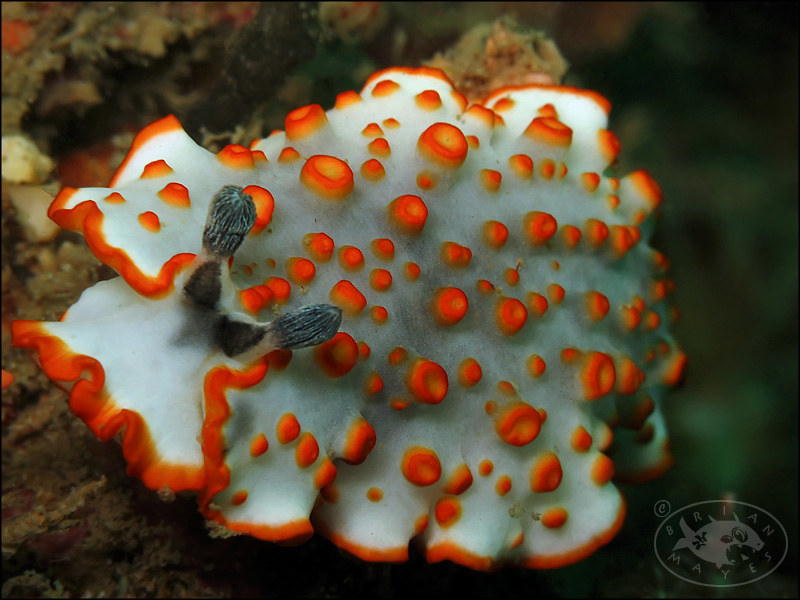
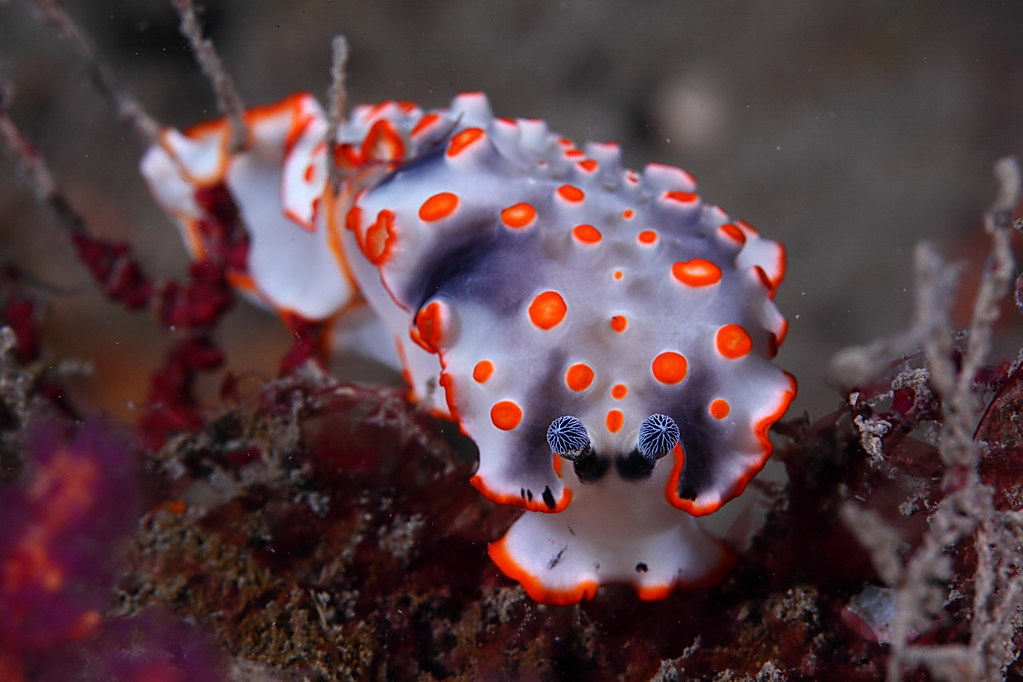
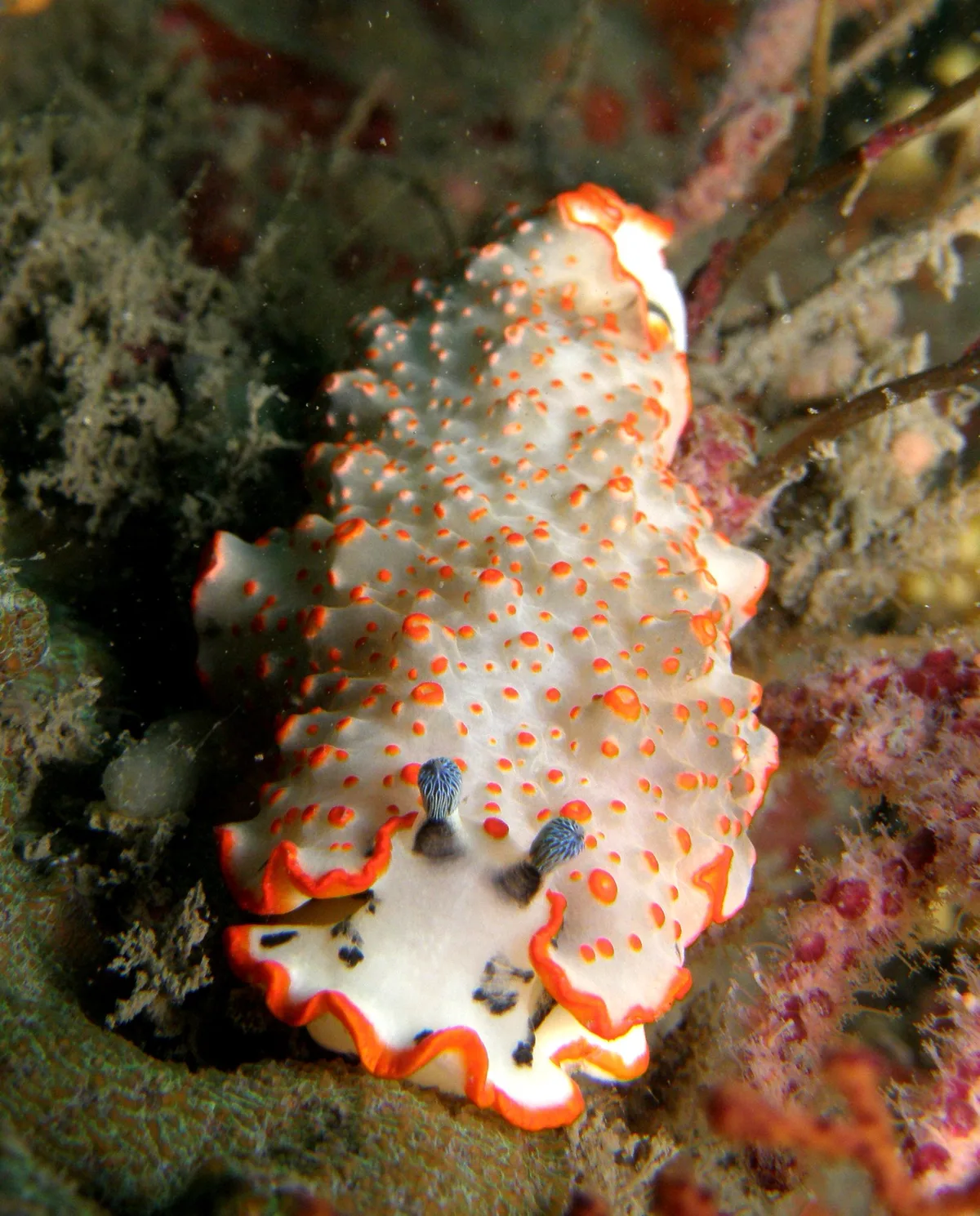
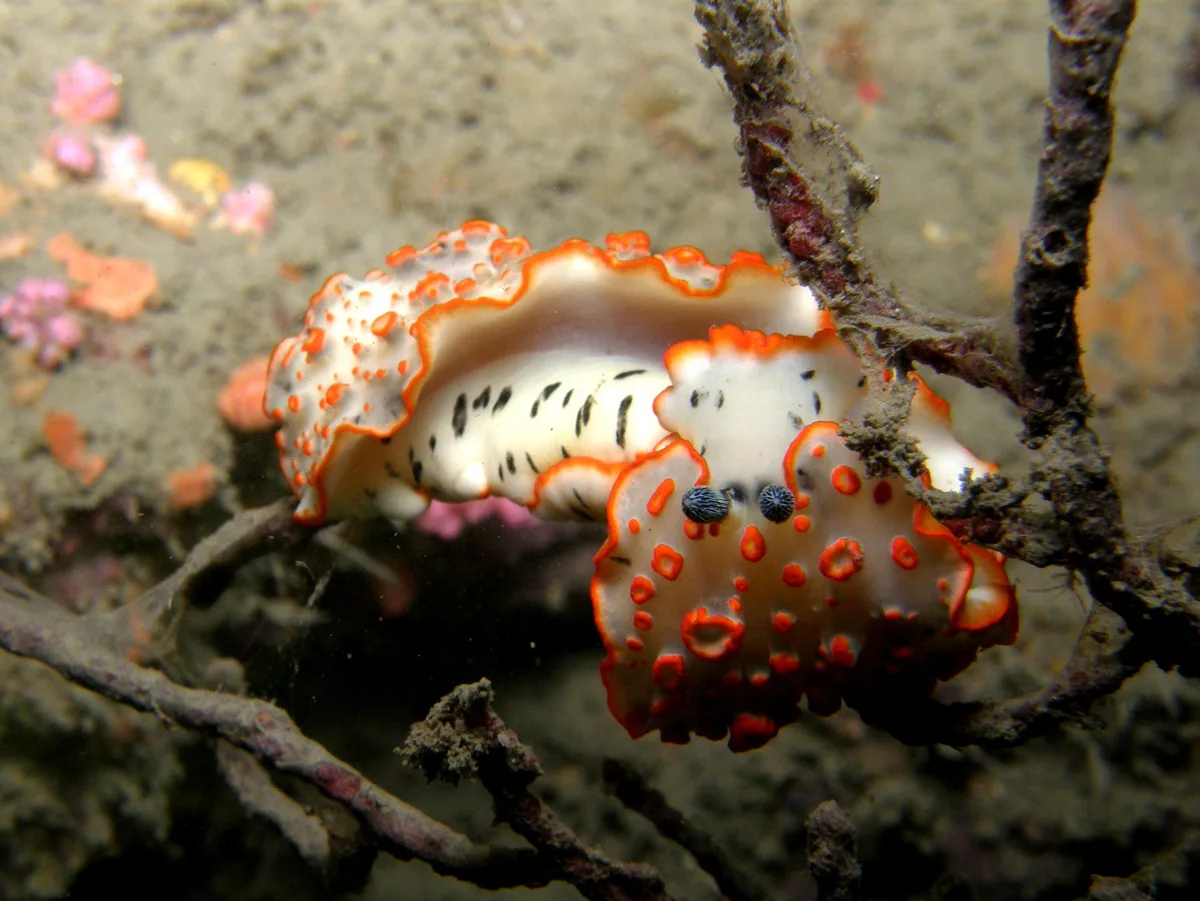
A ribbed white and black slug with an orange edge, working sand and rubble beside soft coral. Eight centimeters (3 in), and a different animal from the chromodorids that dominate this section.
The arminids eat cnidarians rather than sponges - soft corals, sea pens, the colonial animals that other predators leave alone because of their stinging cells and their chemistry. That is a harder living, and it is done by grazing polyp by polyp, usually at night.
The ridges are the family's signature. Instead of a soft frilly back it carries a firm, longitudinally ribbed mantle with the gills hidden underneath the skirt, along the sides - which is why nothing shows on top.
It spends the day buried in sand and comes out after dark, so almost every photograph of one is a night dive photograph. Look at the base of soft corals with a torch and check anything ribbed that is moving very slowly.
- oval body with fine longitudinal ridges running the whole length
- white with black lines along the ridges and an orange margin
- no gills visible on the back - they sit under the mantle skirt
- length up to 8 cm