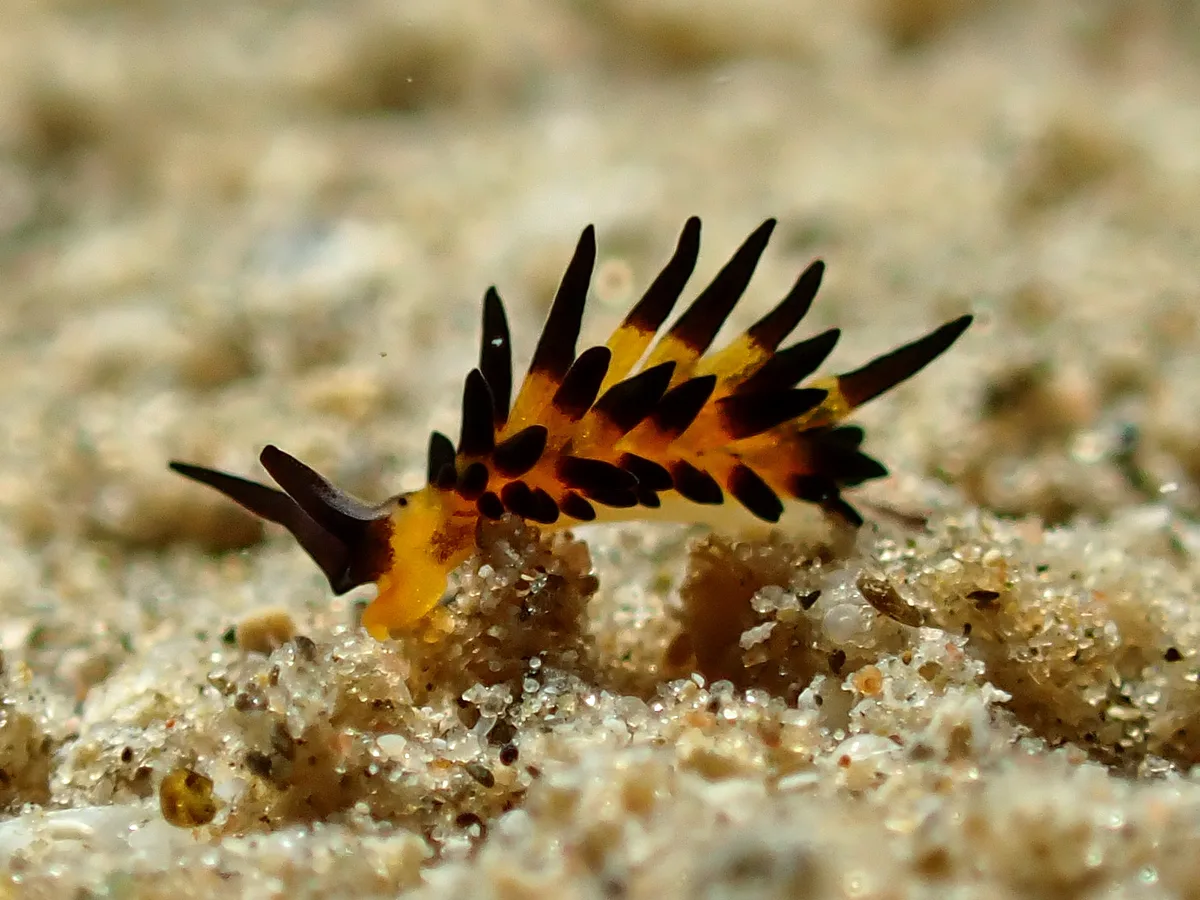
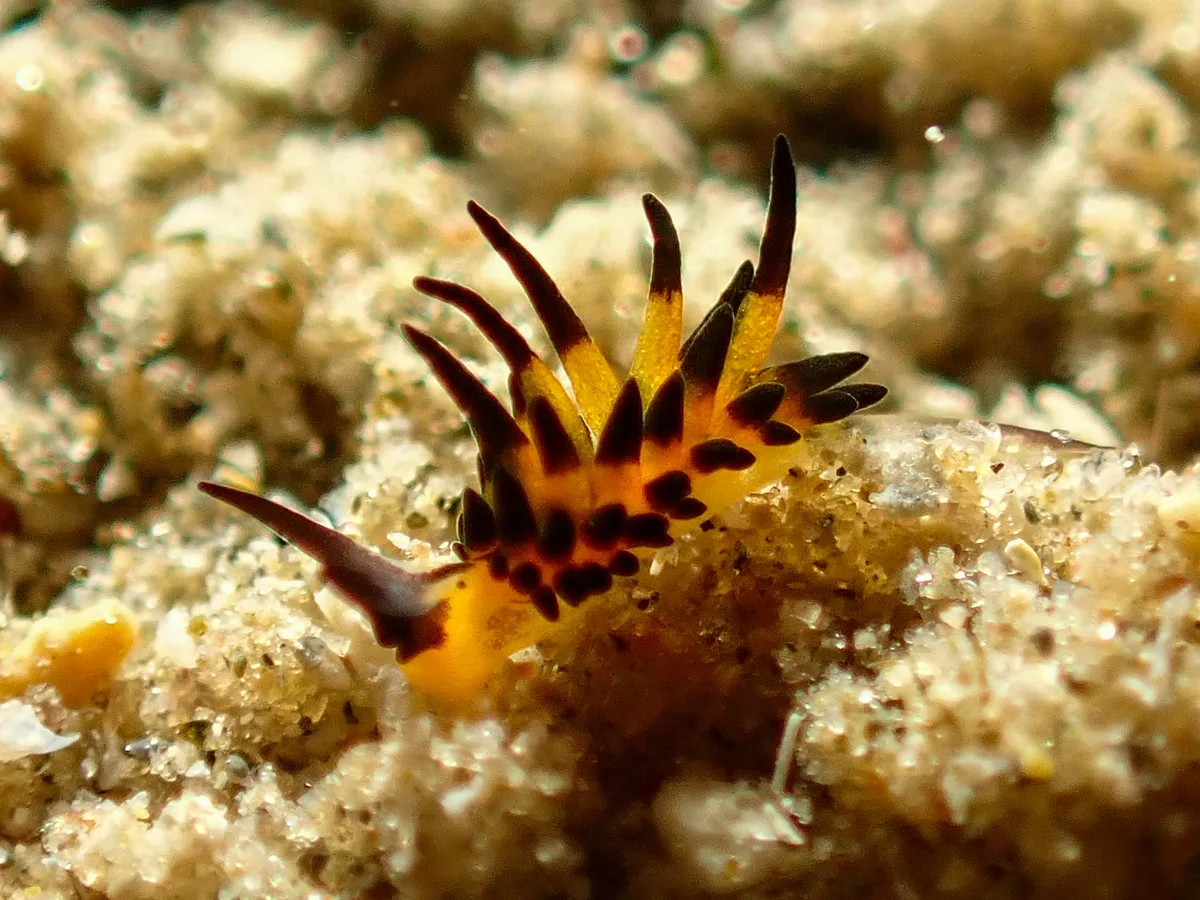
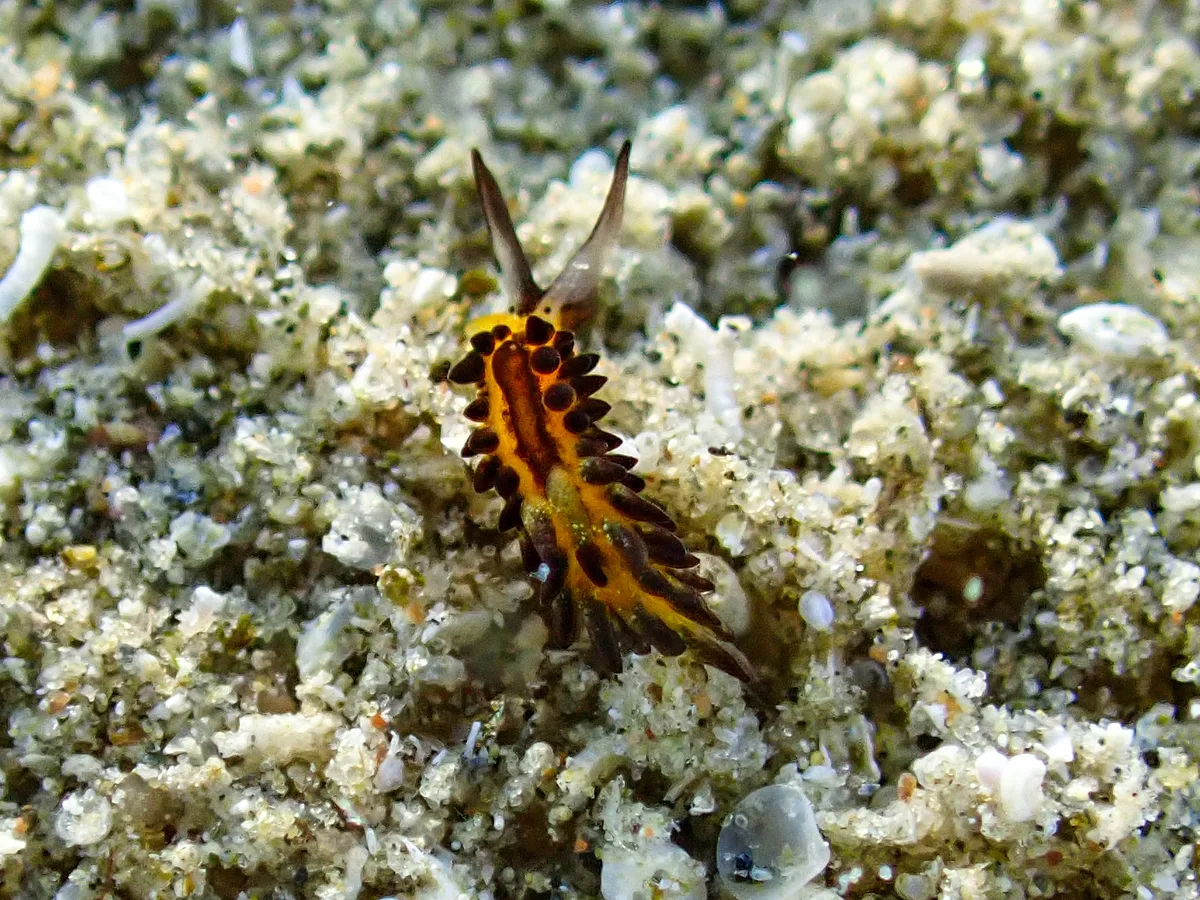
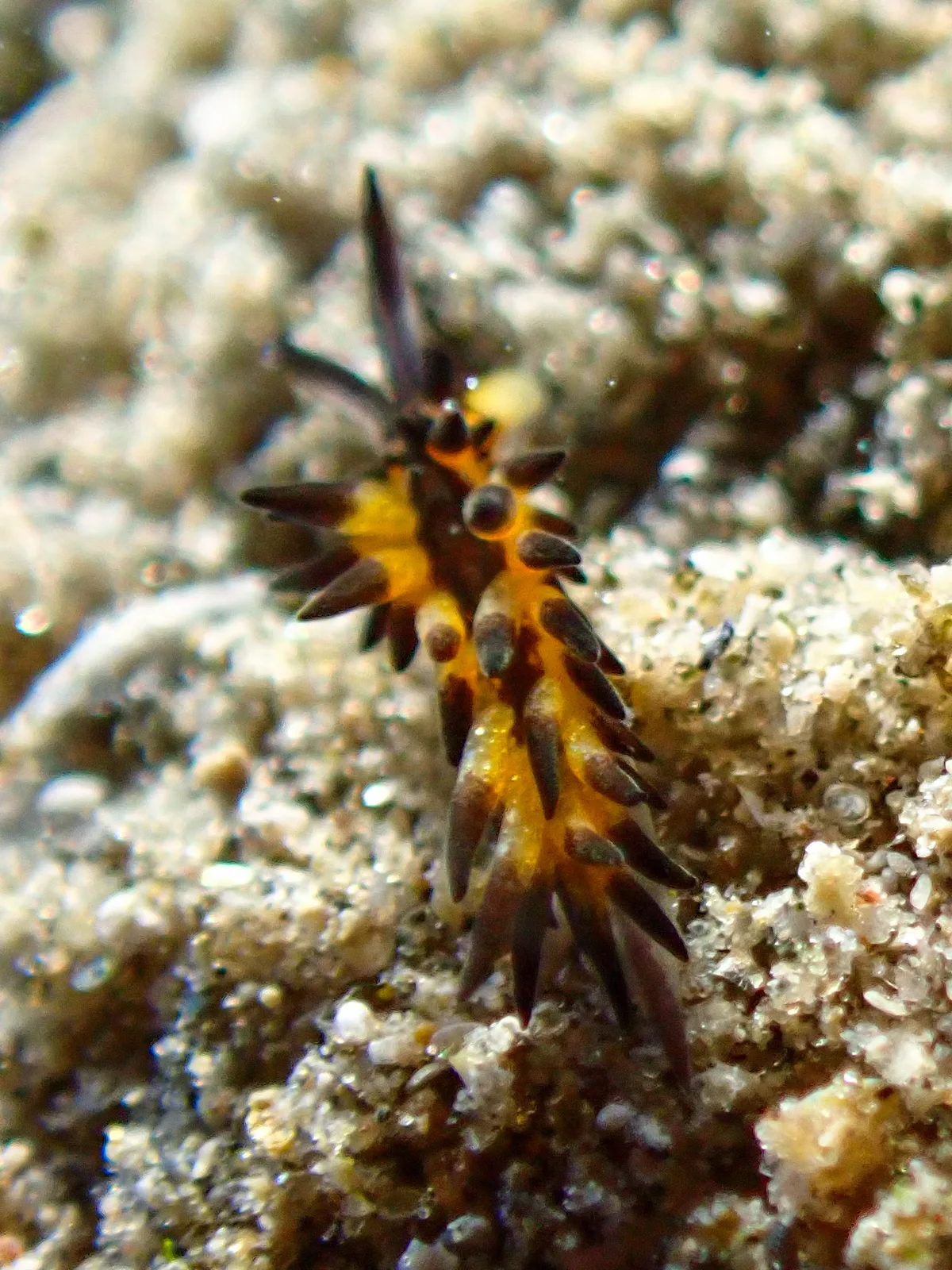
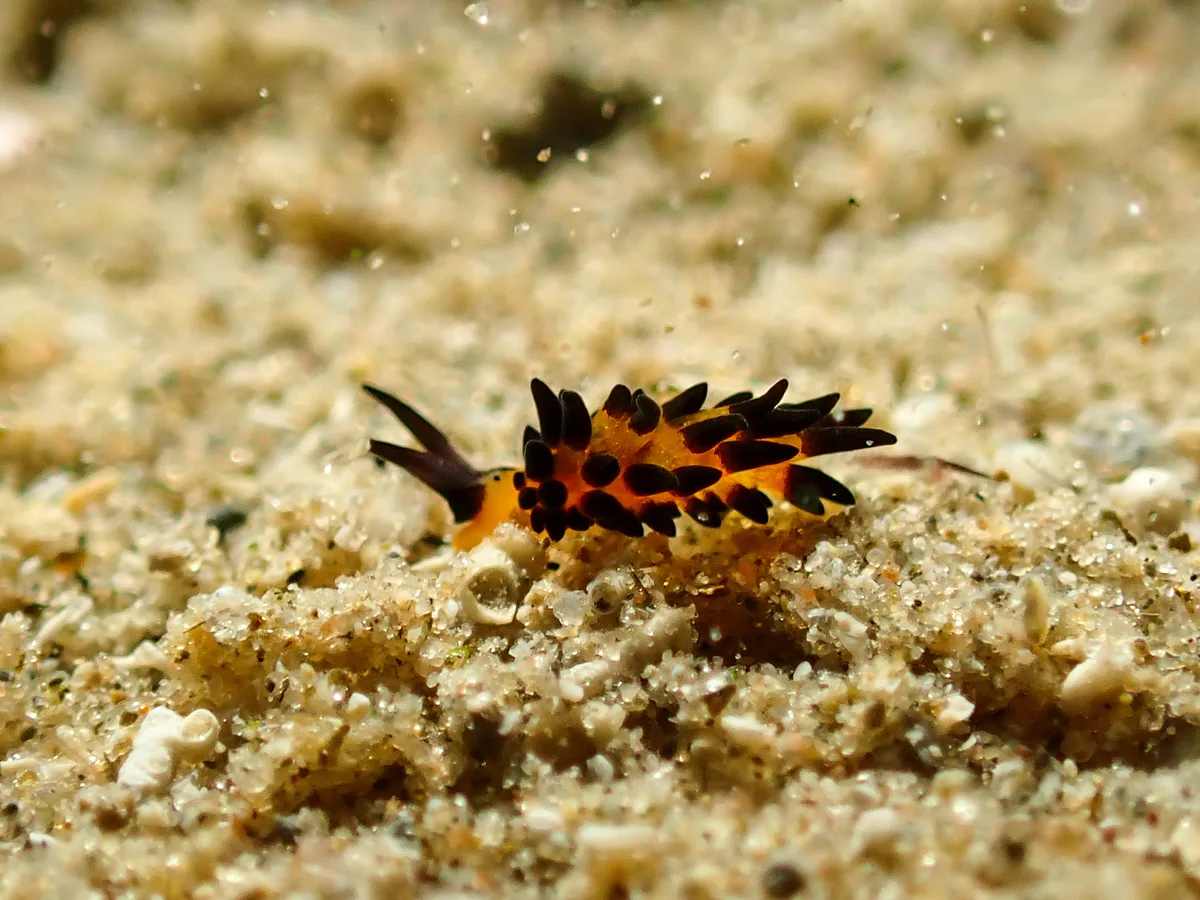
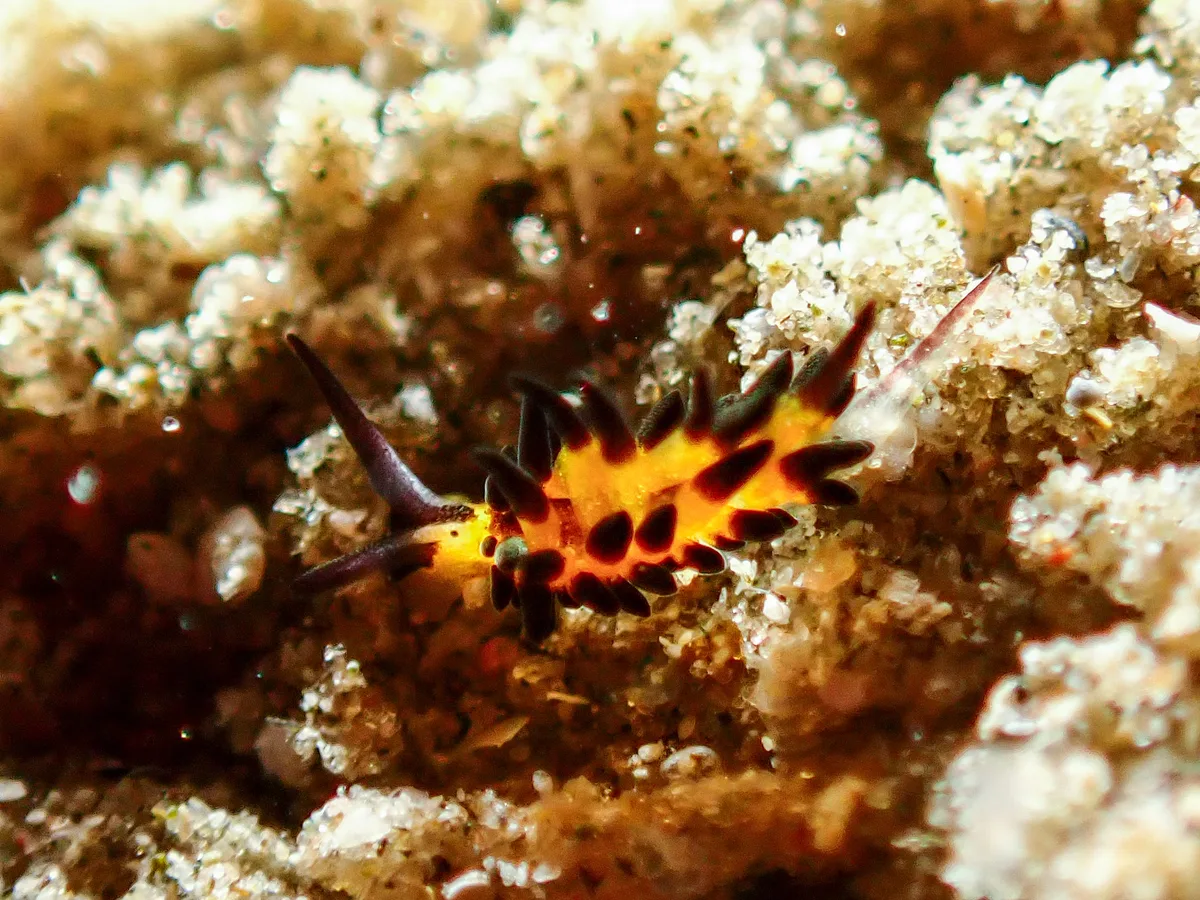
Six millimeters of orange on a tuft of green algae, and one of the few animals on earth that runs on sunlight.
Sap-sucking slugs feed by piercing a single algal cell with a tooth built like a hypodermic needle and drinking the contents. What makes them strange is what happens next: instead of digesting the chloroplasts they swallow, they keep them, alive and working, in the lining of their own gut. The stolen chloroplasts go on photosynthesizing inside an animal, feeding it, for as long as they last. In this genus that is a matter of days rather than the months some of its relatives manage, but the principle is the same and nothing outside this group of slugs does it at all.
The color is probably a warning. The slug's algal food, Derbesia, carries defensive chemistry, and the orange and black is thought to advertise that the slug has taken it on board with everything else.
The short white band at the base of each rhinophore is the one mark that separates it from its near-identical relative, which has white stripes running the whole length instead.
- six millimeters long, orange with fine cream speckles
- velvet black on the rear of the cerata, under the rhinophores and on the sides of the head
- a short white band low on each rhinophore, not a stripe running its full length
- always on filamentous green algae, 1 to 5 m down