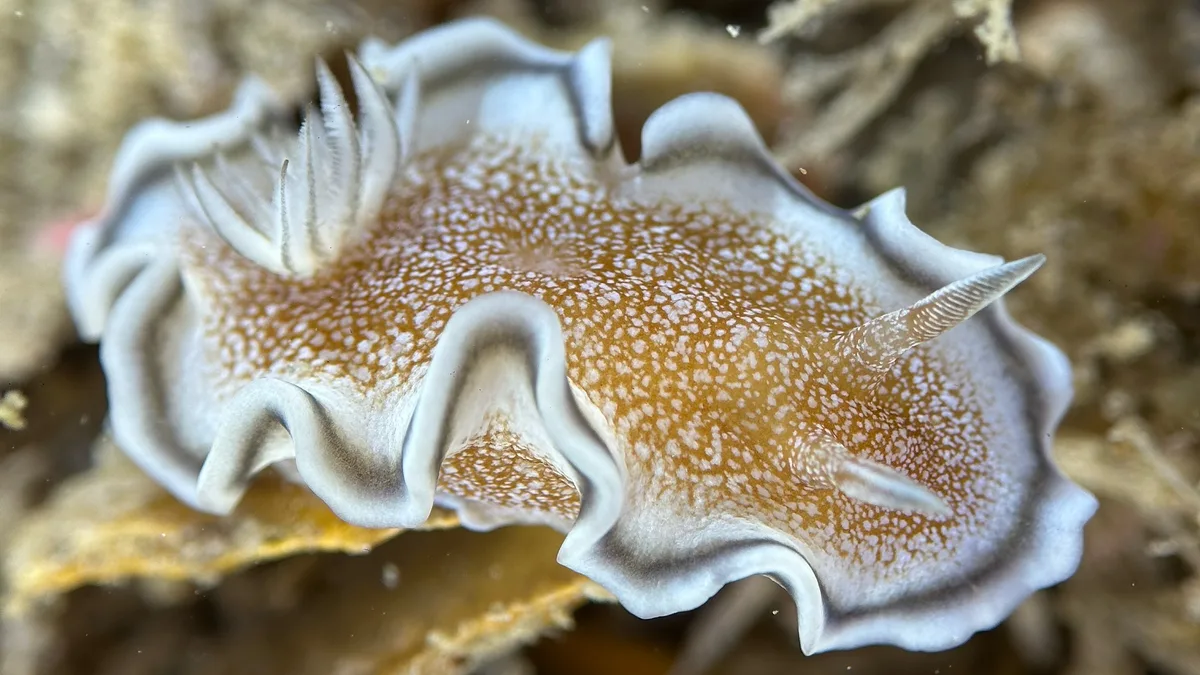
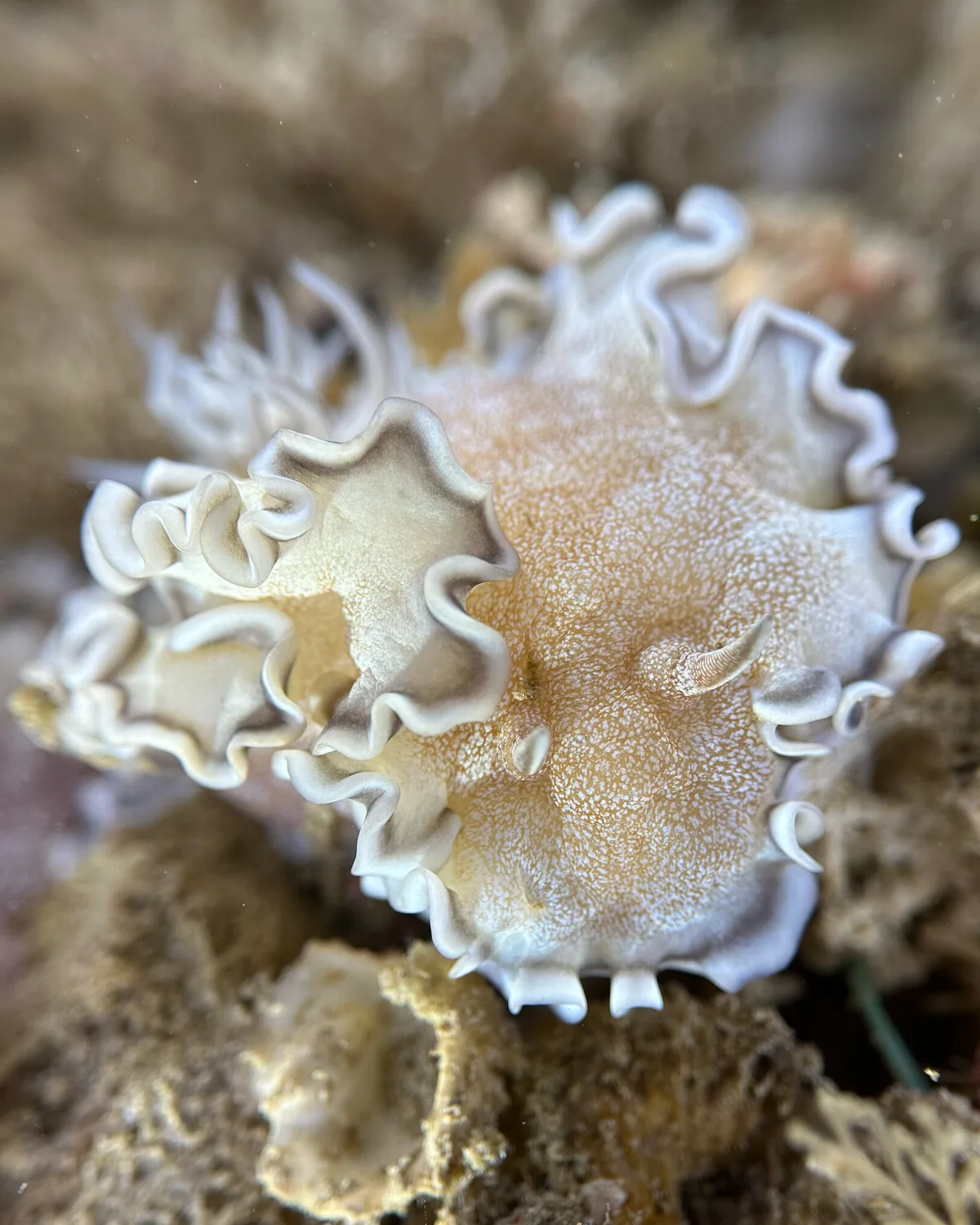
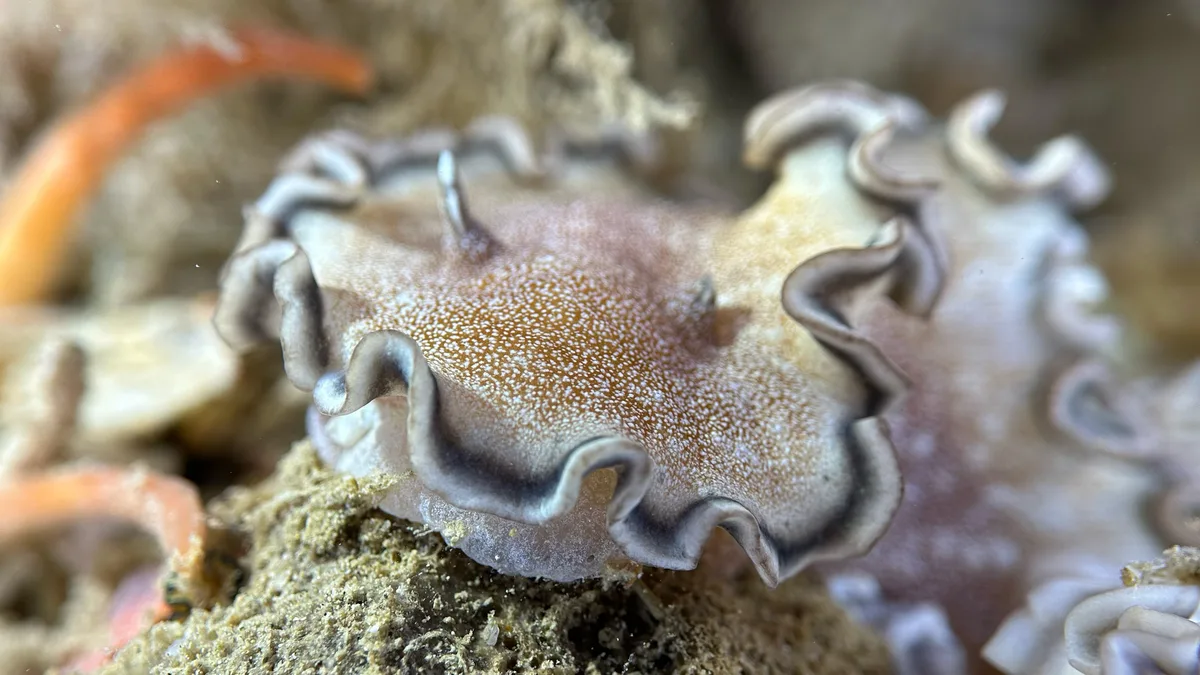
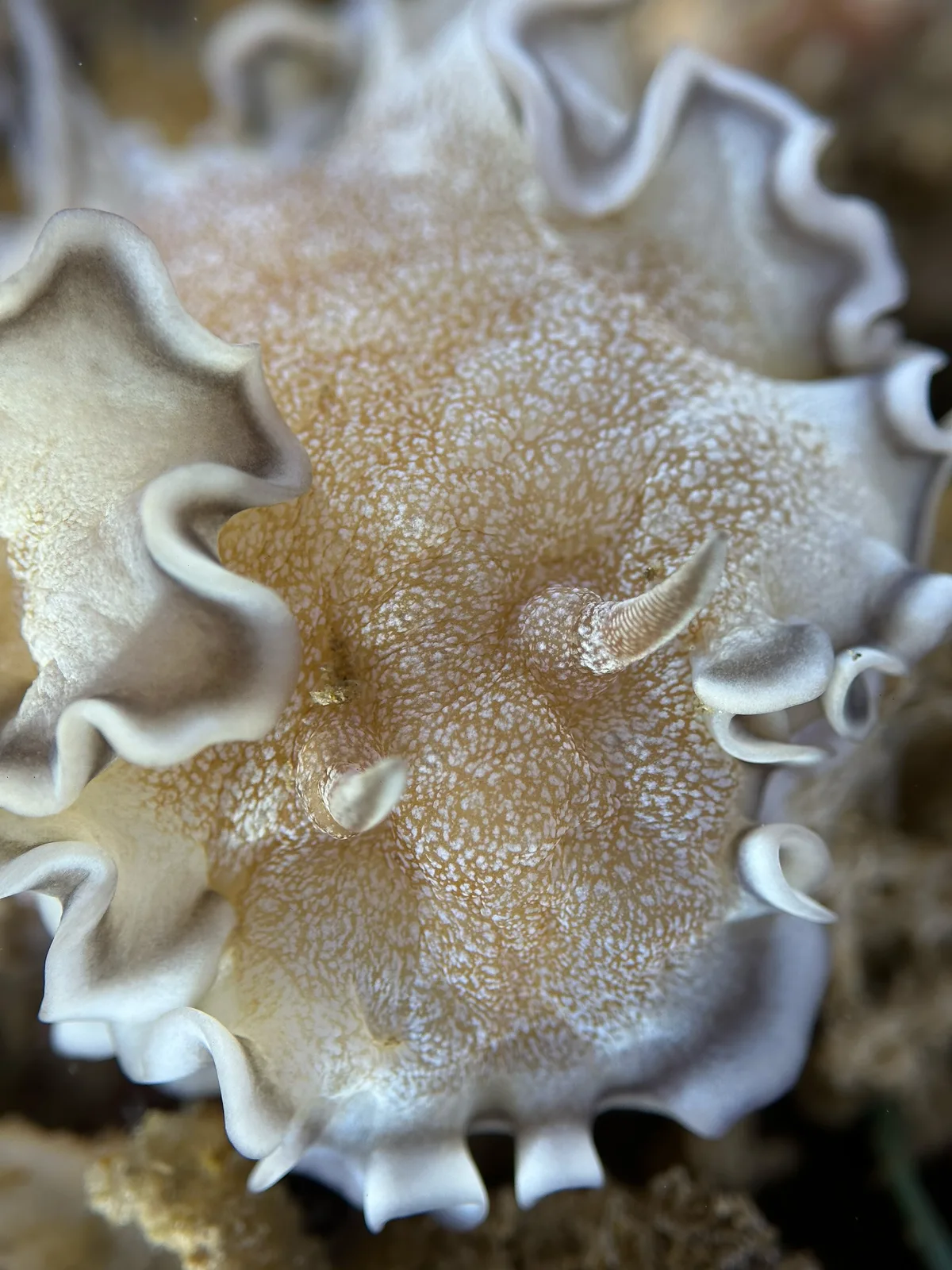
Glossodoris hikuerensis is a dorid nudibranch reaching up to 30 mm (1.2 in) in length. Its mantle edge is highly ruffled, displaying a distinctive multi-banded pattern: an outermost white border, followed by a stark greyish-black submarginal line, and then a paler brownish-white band. The central dorsum has a tan or light brown base, densely packed with tiny, opaque white speckles that create an almost textured, sandy appearance. Its translucent rhinophores feature a solid white vertical line along their anterior and posterior midlines. The relatively simple branchial plume at the rear is also translucent, with faint brownish-grey edges. This contrasting black and white banding around the mantle serves as an aposematic warning to potential predators.
This species inhabits coral reefs and rocky substrates at depths from 0 to 25 meters (0-82 ft). Like other members of its genus, Glossodoris hikuerensis is a highly specialized sponge feeder. It uses a radula, a tongue-like structure covered in microscopic teeth, to scrape away at specific toxic sponges on the reef. Lacking a protective shell, the nudibranch sequesters toxic metabolites from its sponge diet, storing these chemical defenses in specialized glands located within the heavily ruffled mantle edge. This strategy renders the animal highly unpalatable.
- ruffled mantle edge with white, greyish-black, brownish-white bands
- dorsum with dense opaque white speckles
- rhinophores with solid white vertical line