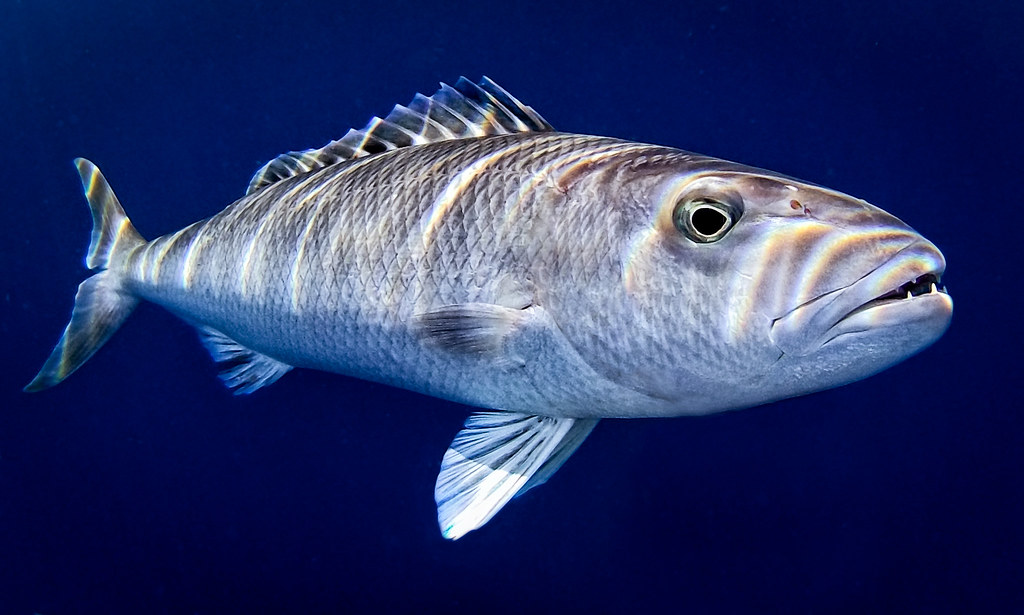
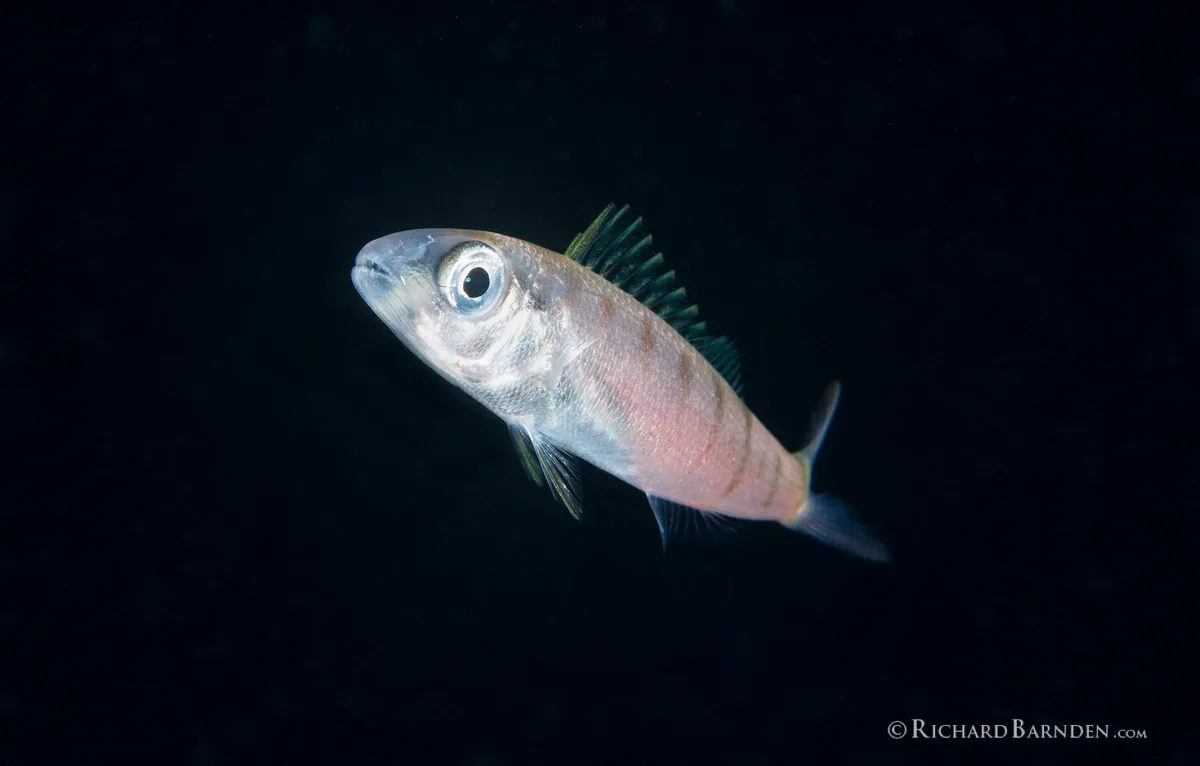
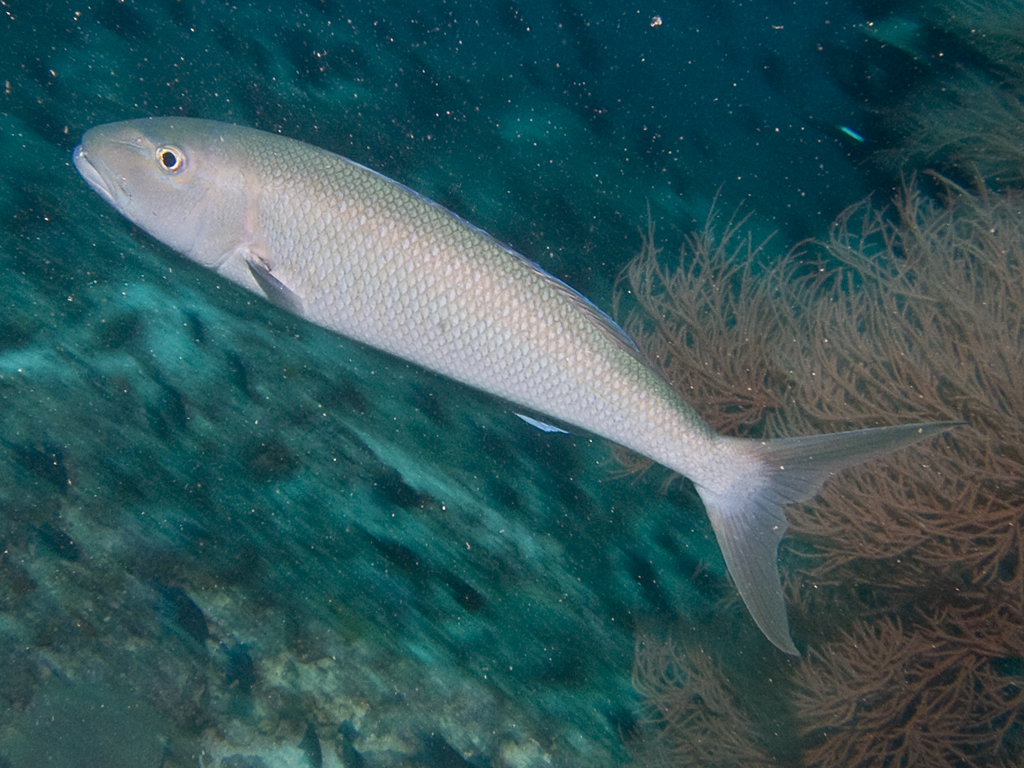
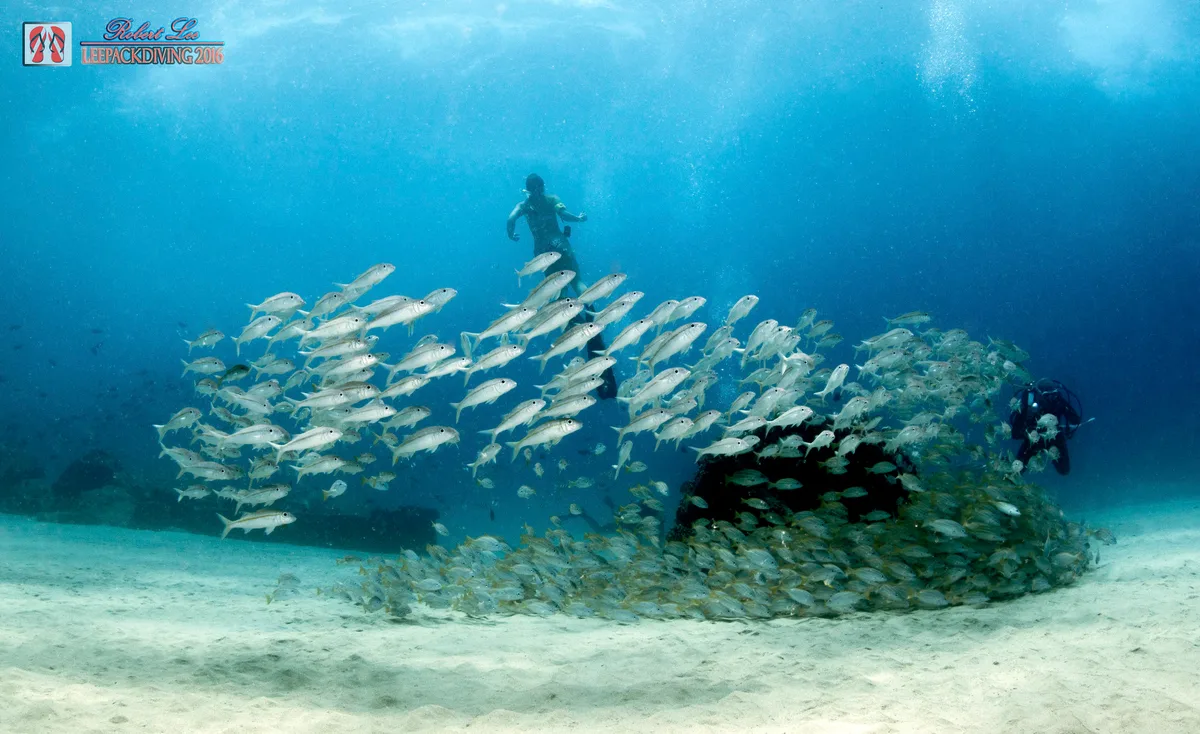
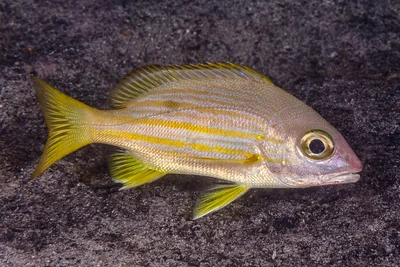
A large, long-bodied snapper in dark green to blue-gray, reaching 120 cm (47 in) and built like a torpedo rather than like the deep-bodied snappers of the reef. A groove running forward from the eye is the character that settles the identification when the color looks ambiguous, which it often does in blue water.
It patrols in open water over slopes and along walls, usually alone and usually at a steady unhurried pace that turns into a very fast one when it decides to hunt. The diet is fish, taken in open water, with squid and crustaceans as well. Big individuals are wary and rarely allow a close approach; smaller ones sometimes follow divers, apparently using them as beaters. As a food fish it is prized across the Indo-Pacific, and where it is targeted heavily the large animals disappear first.
This species is caught mainly with trolled lures, handlines, bottom longlines, and bottom trawls (Allen 1985). It is considered one of the main species in the Hawaiian offshore handline fishery (Anderson and Allen 2001). They may be significant in some subsistence fisheries. Though no major threats have been identified for specific areas, this species may be heavily fished in some areas. At present, it has been recorded to be fished only by subsistence and artisinal fisheries.
It is managed as part of the bottomfish management unit species complex in the Main Hawaiian Islands (Brodziak et al. 2014) and American Saomoa, Guam, and the Commonwealth of the Northern Mariana Islands, where it is characteristic of the shallow-water fishery (Brodziak et al. 2012).
Threat classification from the IUCN Red List.
Comments
Please, sign in to leave a comment
Continue with a social account - yours will be created automatically.