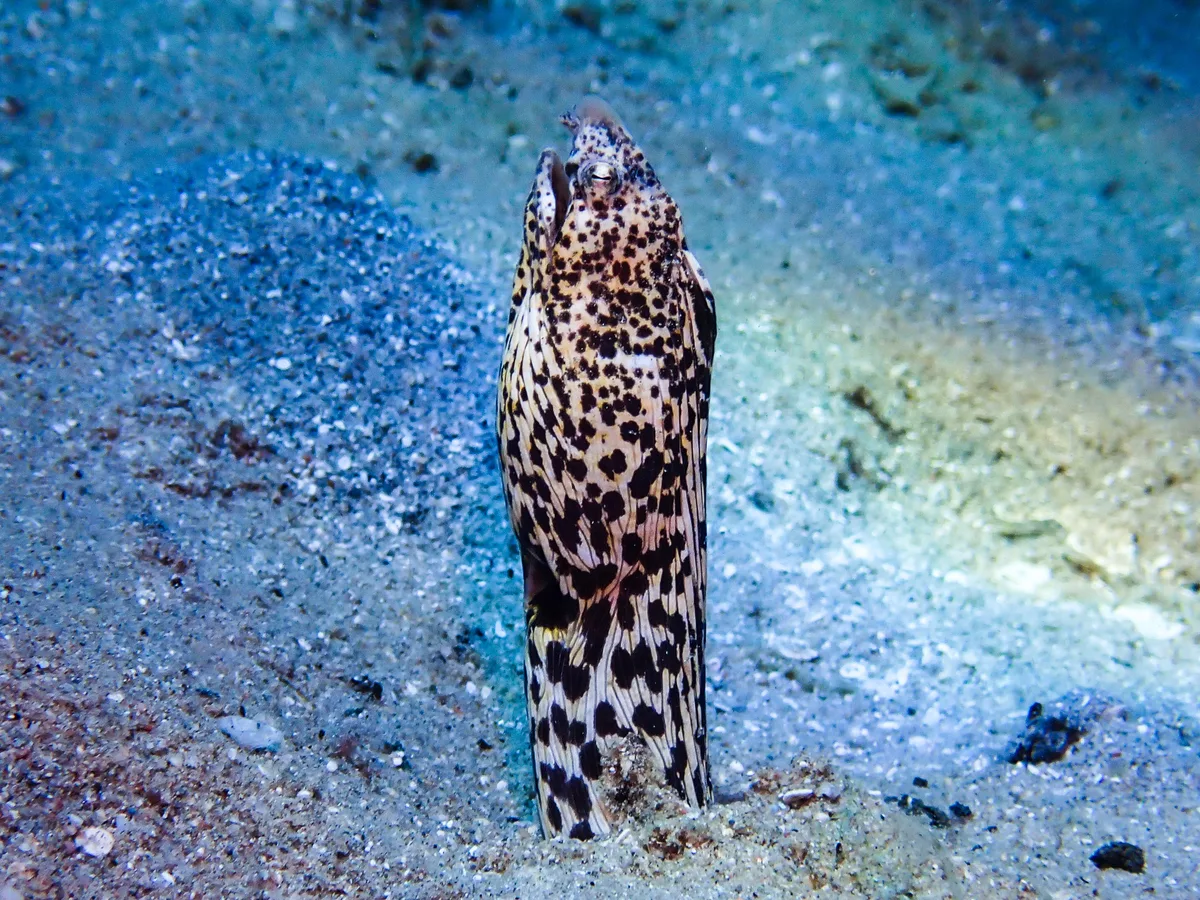
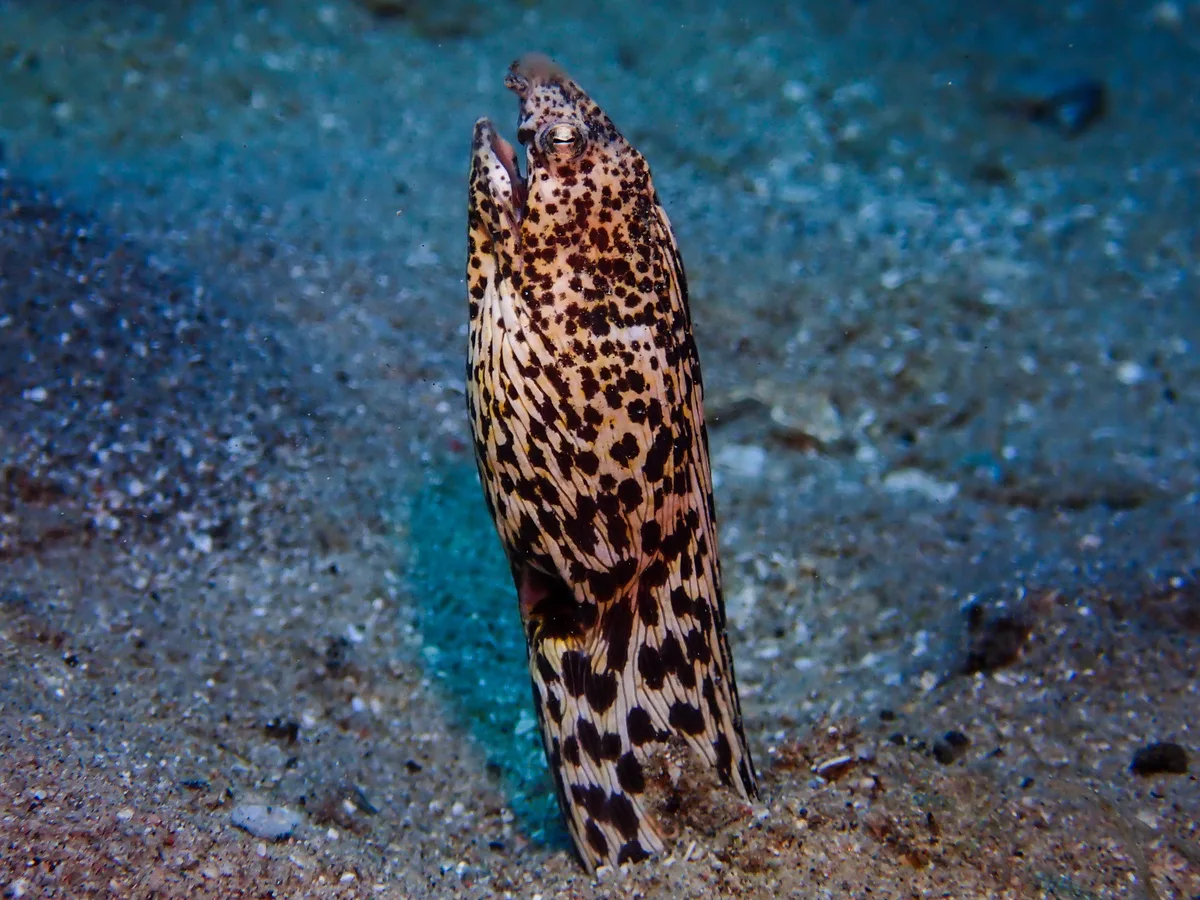
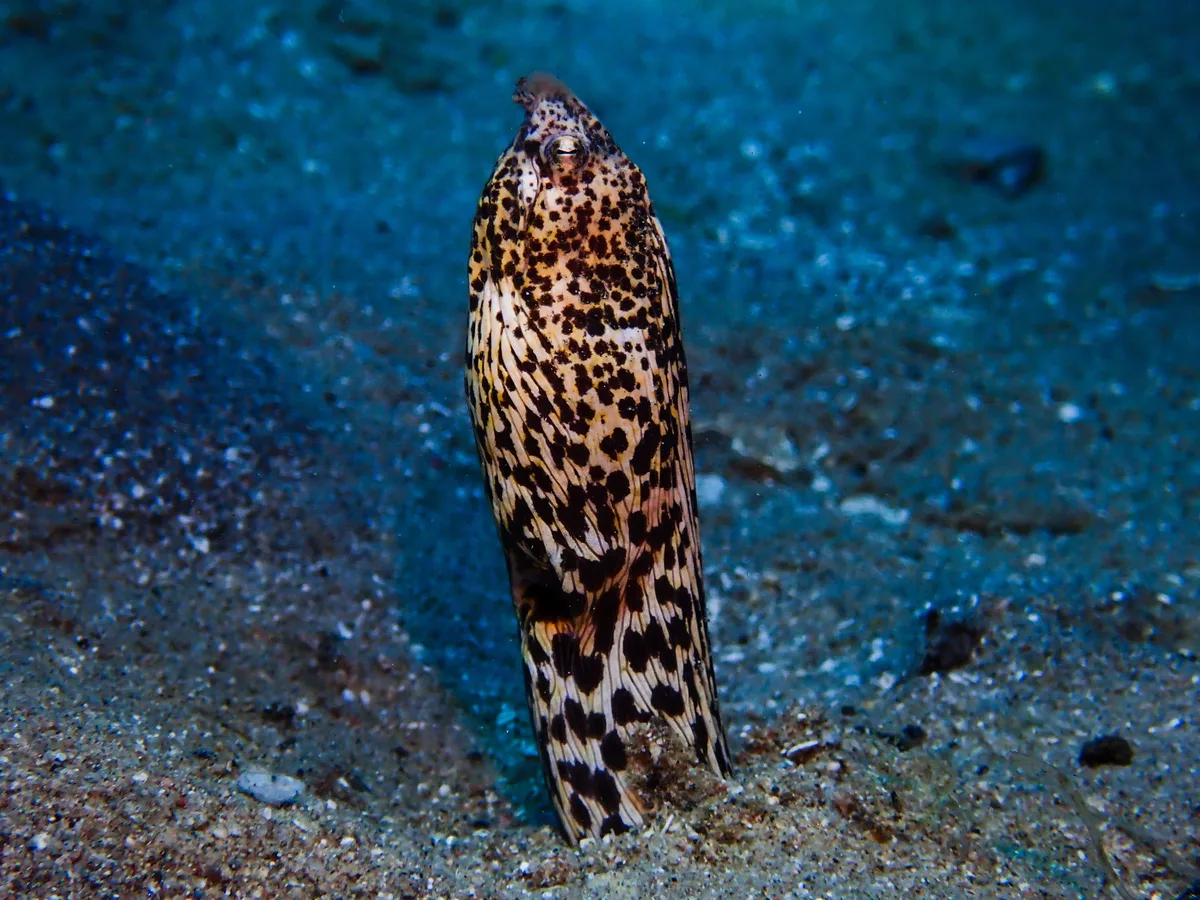
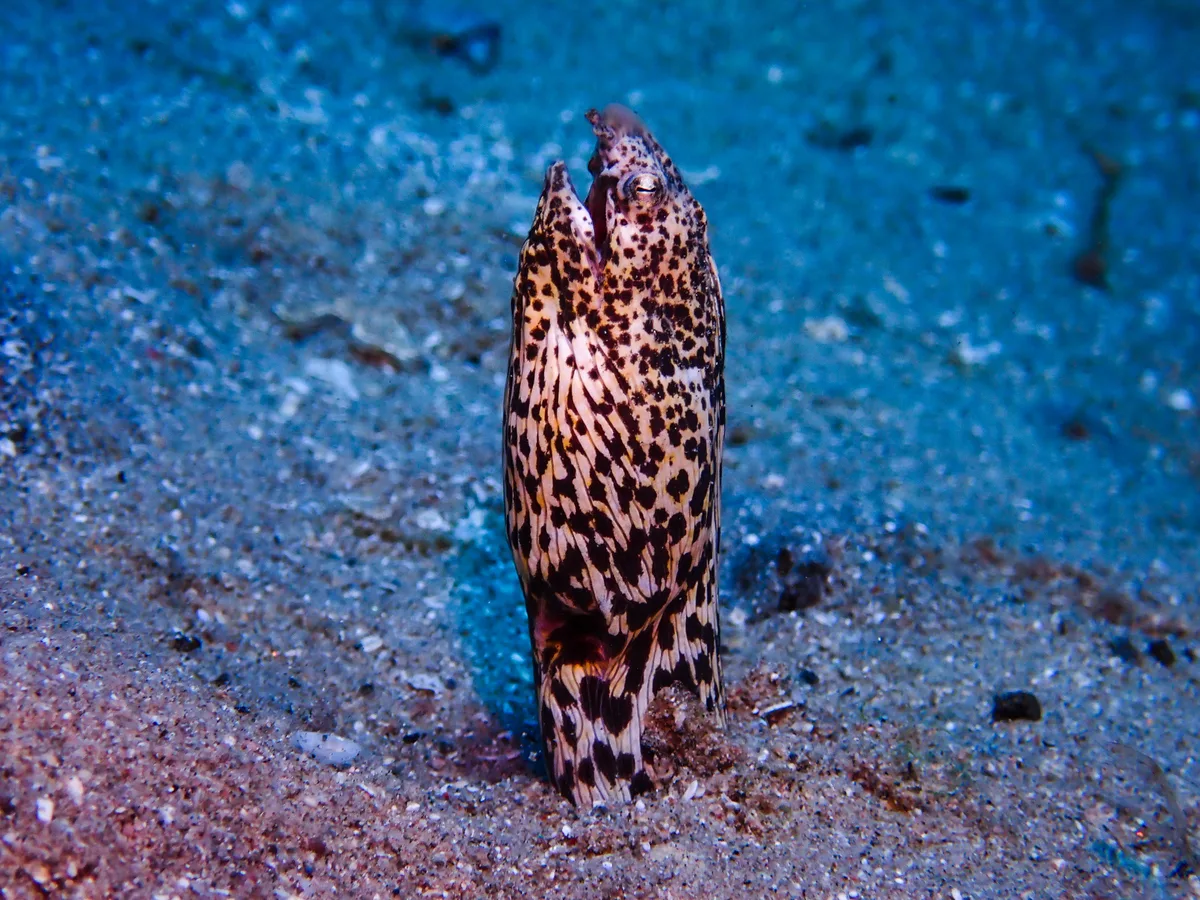
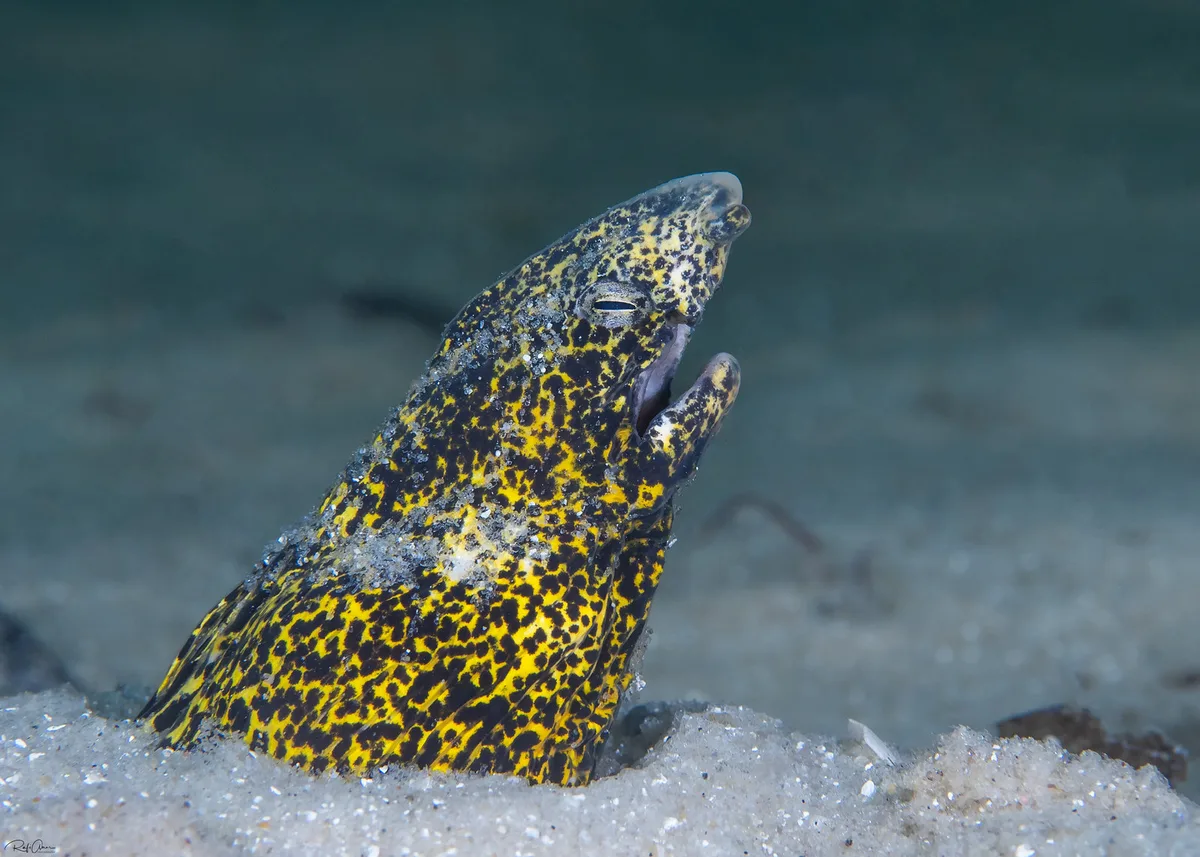
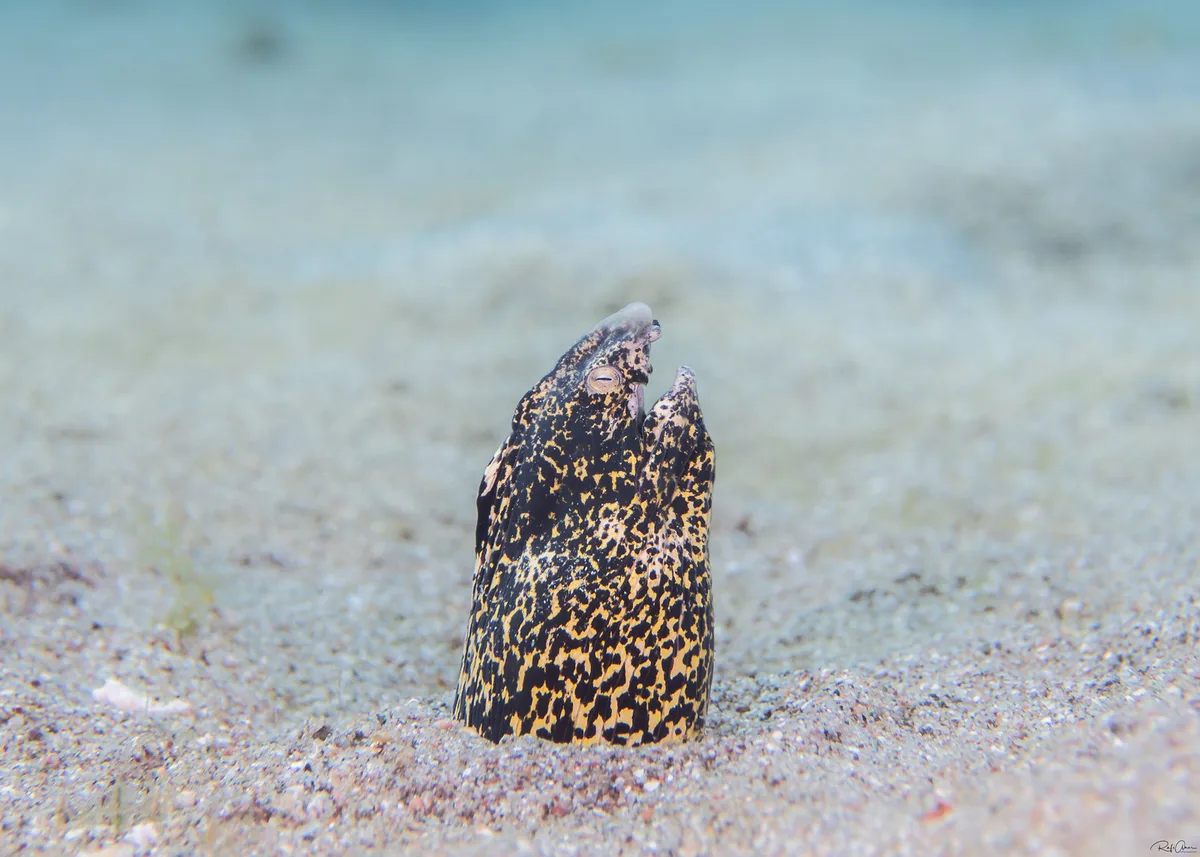
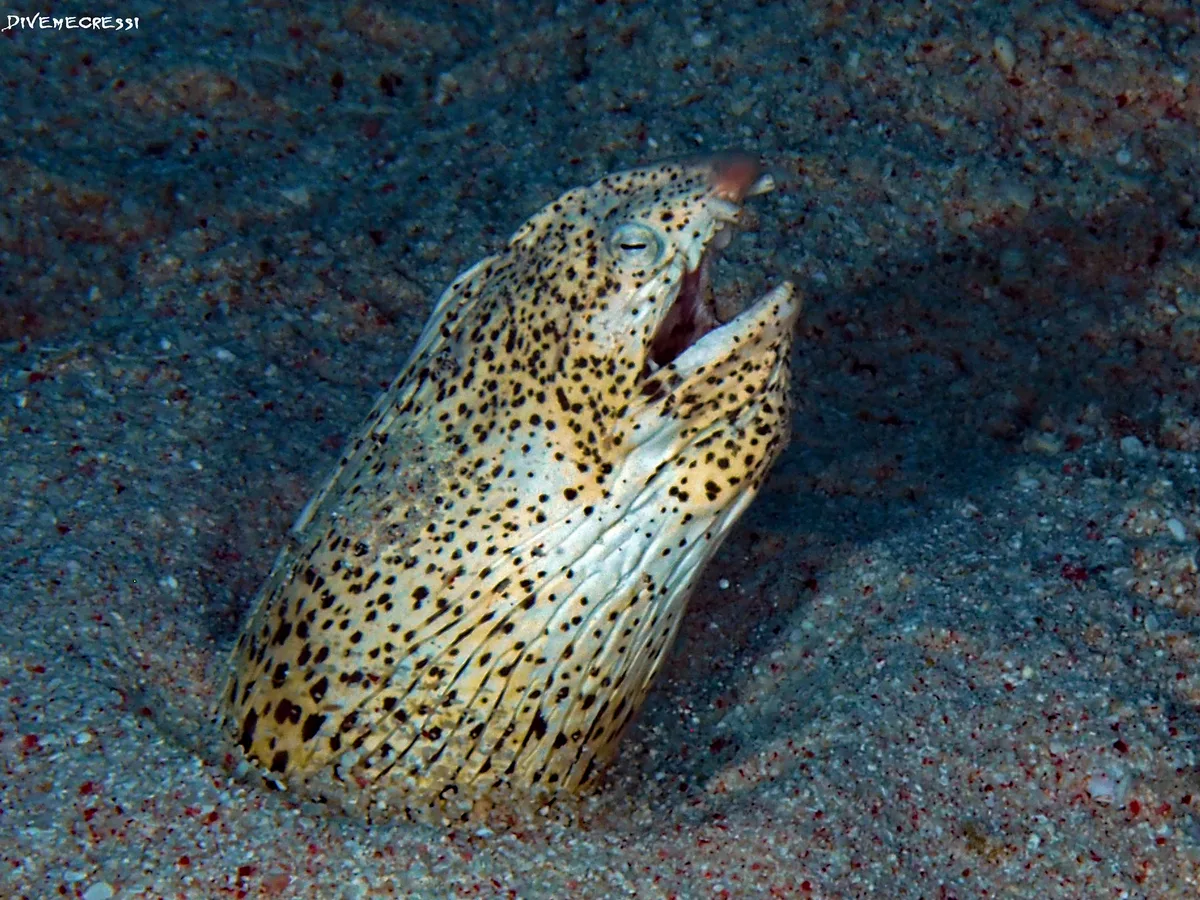
Usually all you see is a spotted head sticking out of the sand, mouth opening and closing, and nothing else. The rest of the animal is buried, and it got there tail-first.
The tail is a tool. It ends in a hard sharp point with no fin on it, and the eel drills backwards into sand with rapid corkscrewing motions until only the head remains above the surface. From there it waits for small fish and crustaceans to come within reach at night, and it can withdraw completely in a second.
That digging habit is also why handling one is a bad idea, though not for the reason people assume: snake eels are not venomous and are not sea snakes. The confusion runs the other way - several harmless snake eels are patterned like banded sea snakes, and it is the eels doing the imitating.
A fish, then, not a reptile: gills, no scales, no need to surface. Nearly a meter of it under a patch of sand that looks entirely empty.
The genus. Callechelys Kaup 1856 - kállos (beauty) + énchelys (eel). ETYFish
- cream body covered in dense dark spots and blotches
- hard pointed tail tip, no tail fin at all
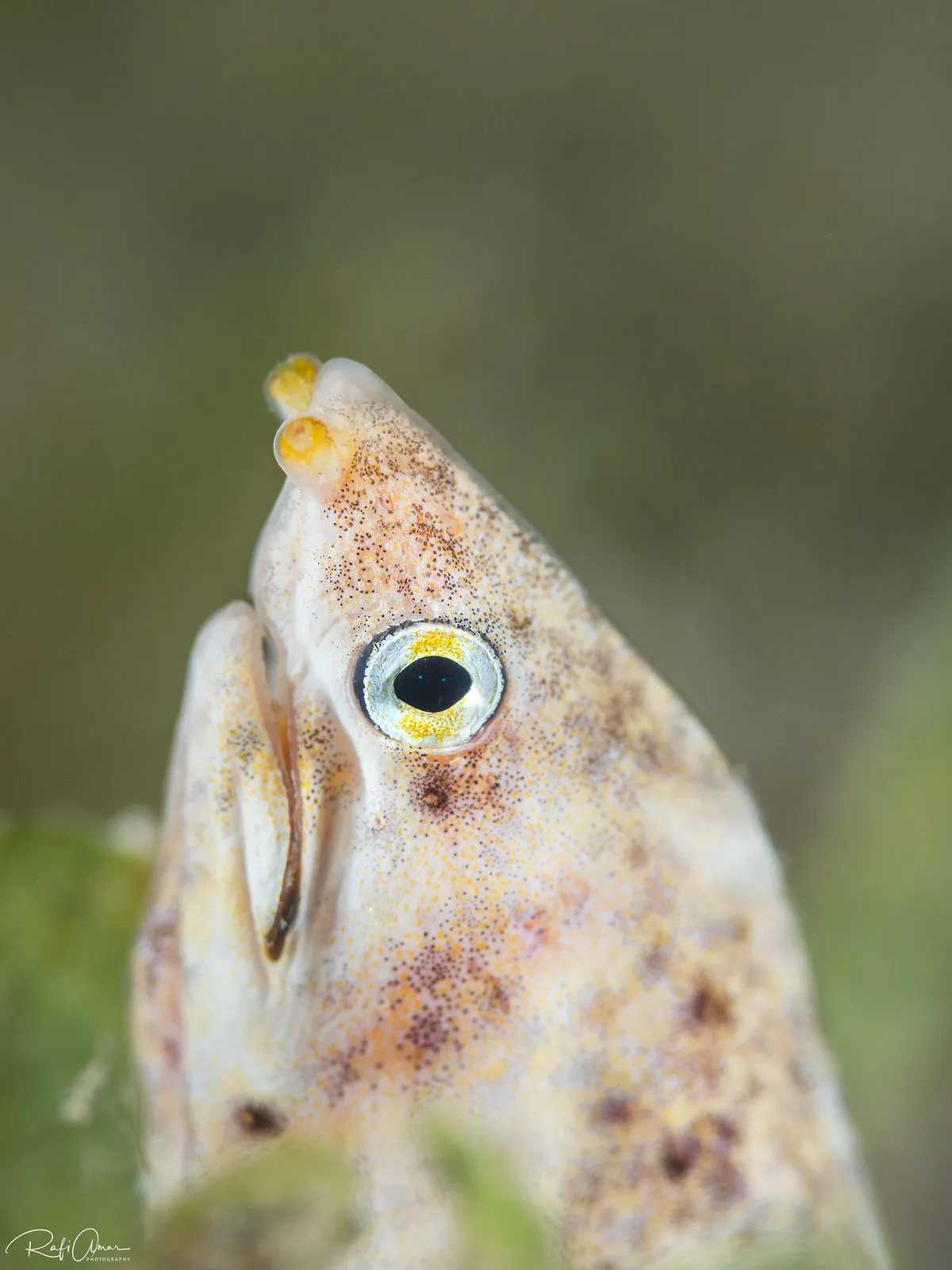
- tube-shaped nostrils and small eyes near the tip of the snout
- usually just a head sticking out of sand
- length up to 87 cm
Why it's threatened
There are no known major threats.
Threat classification from the IUCN Red List.


