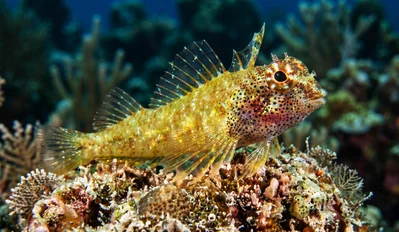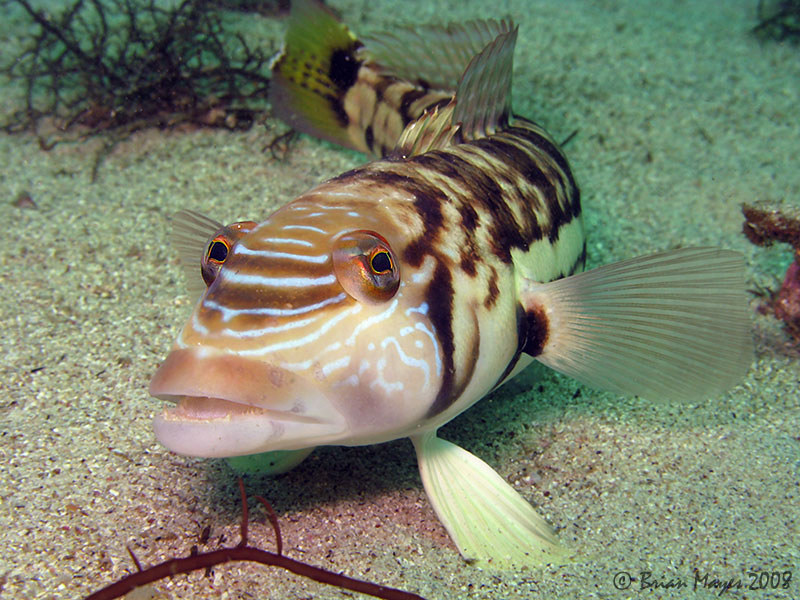
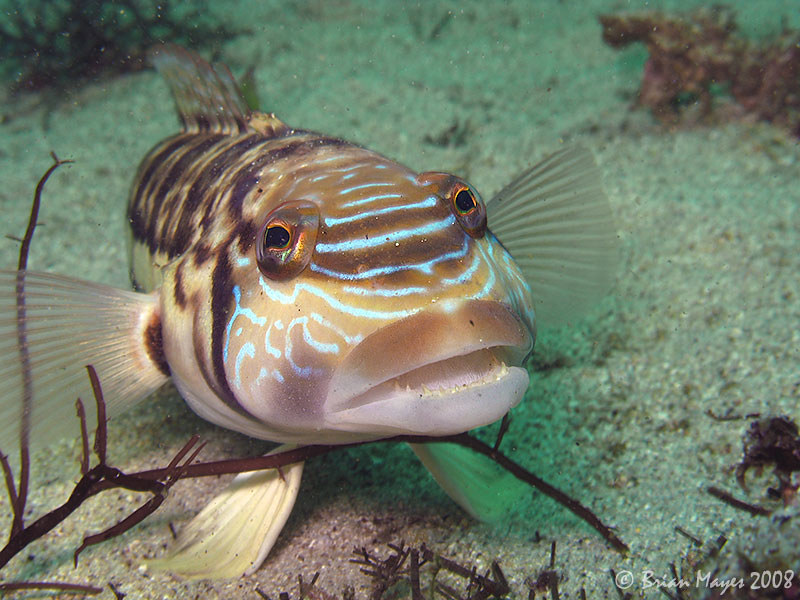
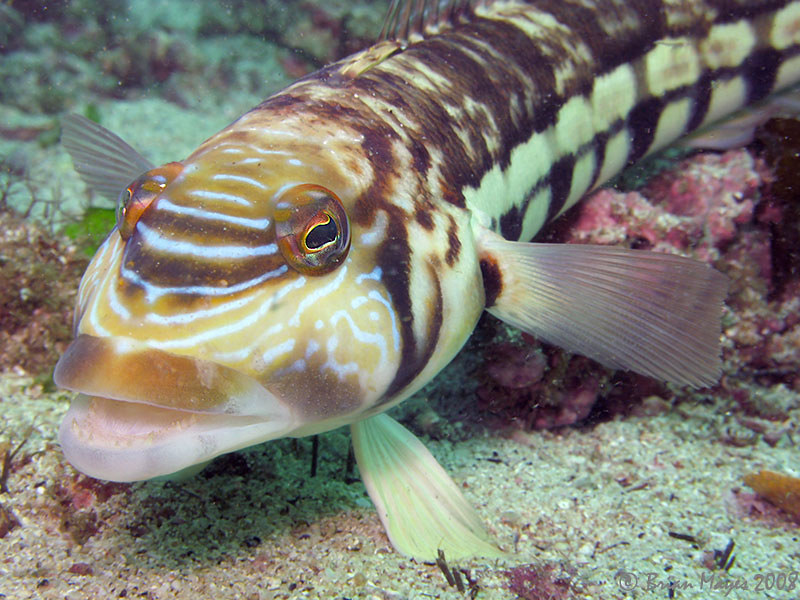
A sand-patch predator that props itself on stiff pelvic fins like a dog on its front legs, body raised, eyes set high on a flattened head so it can watch the water above without moving. A row of dark blotches runs along the side, and the fish shifts position in short darts rather than swimming.
It hunts small fish, shrimps and worms with the ambush-and-lunge method the family shares, and it is territorial enough that the same individual can be found on the same patch of rubble across a season. Divers meet it constantly on sandy stretches between coral heads and rarely give it a second look, which is a pity, because it is one of the few reef fishes that will hold position and watch a photographer back.
Like many sandperches it begins life female and can change to male later, so the largest fish on a patch is usually the male of a small harem. That switch is the ordinary arrangement in this family rather than an oddity.
The genus. Parapercis Bleeker 1863 - para- (near). ETYFish
- props itself on stiff pelvic fins, body raised off the sand
- row of dark blotches along the side
- eyes set high on a flattened head, watching upward
- length up to 20 cm