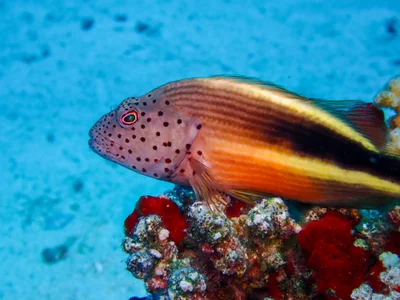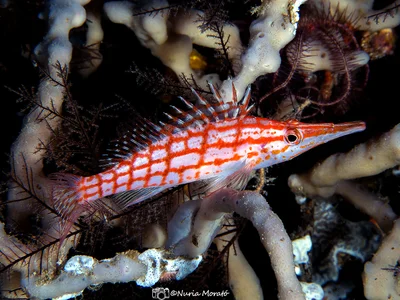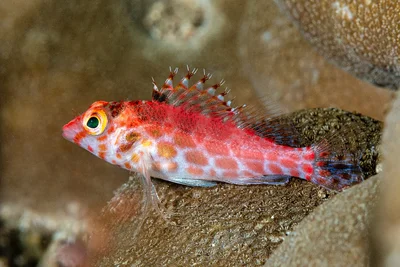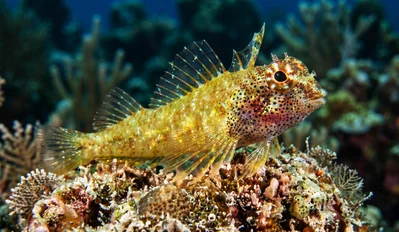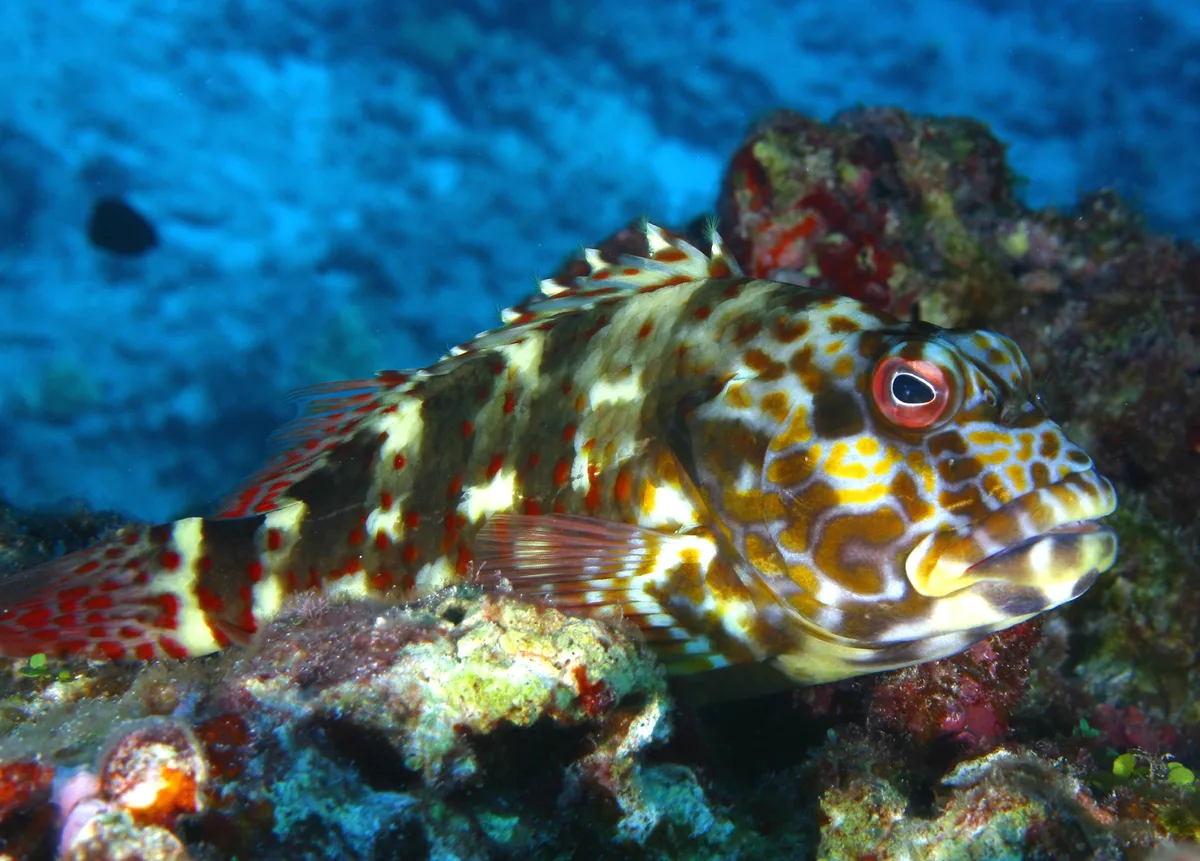
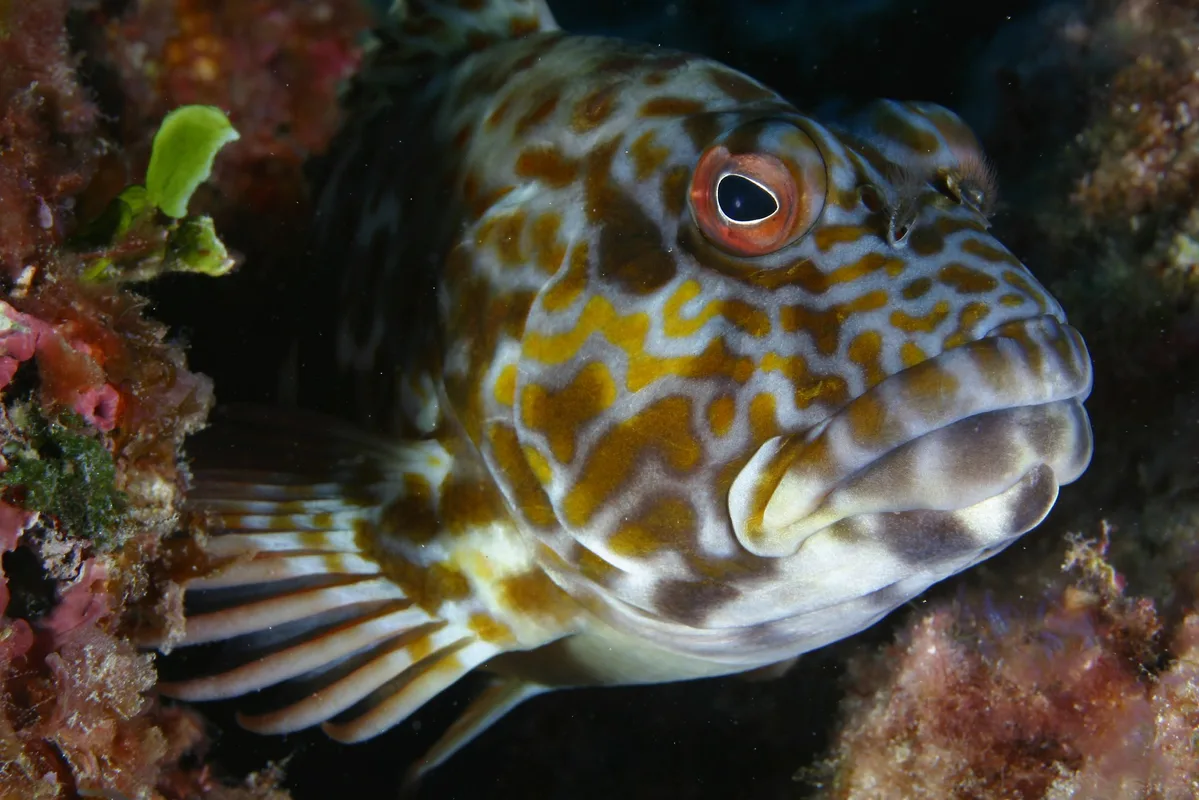
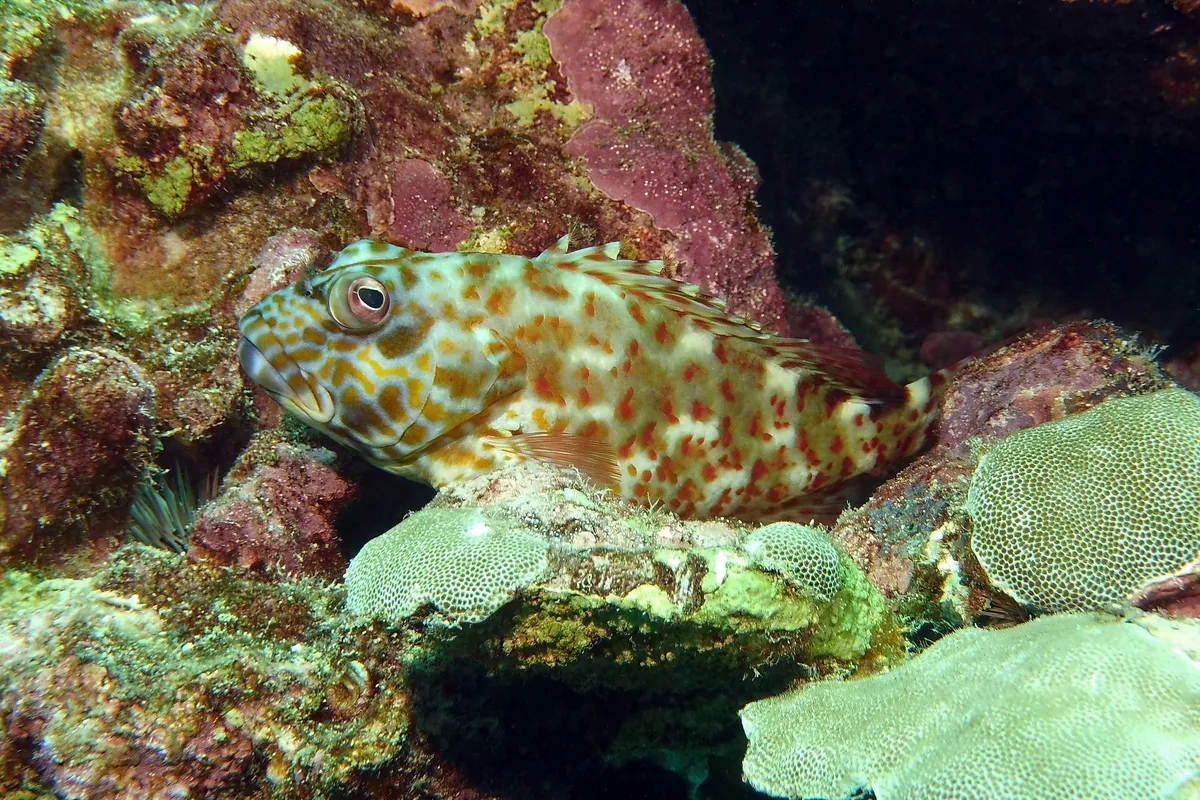
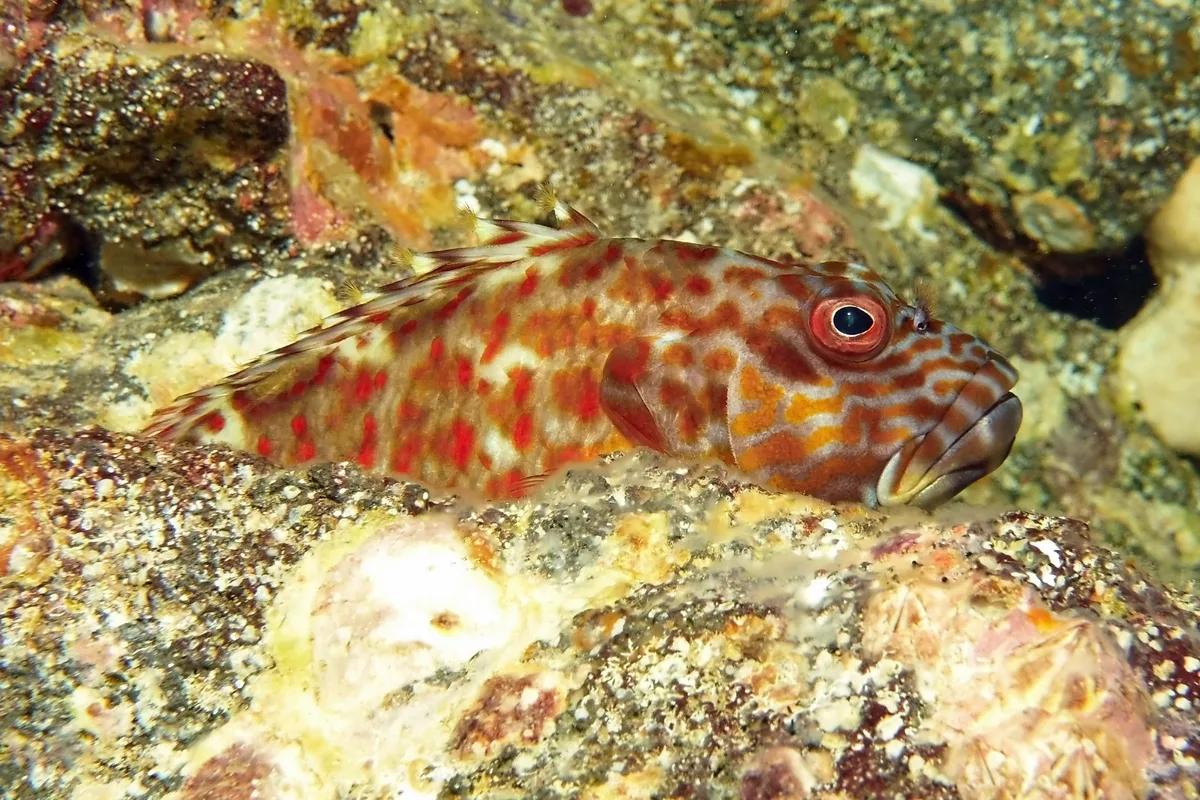
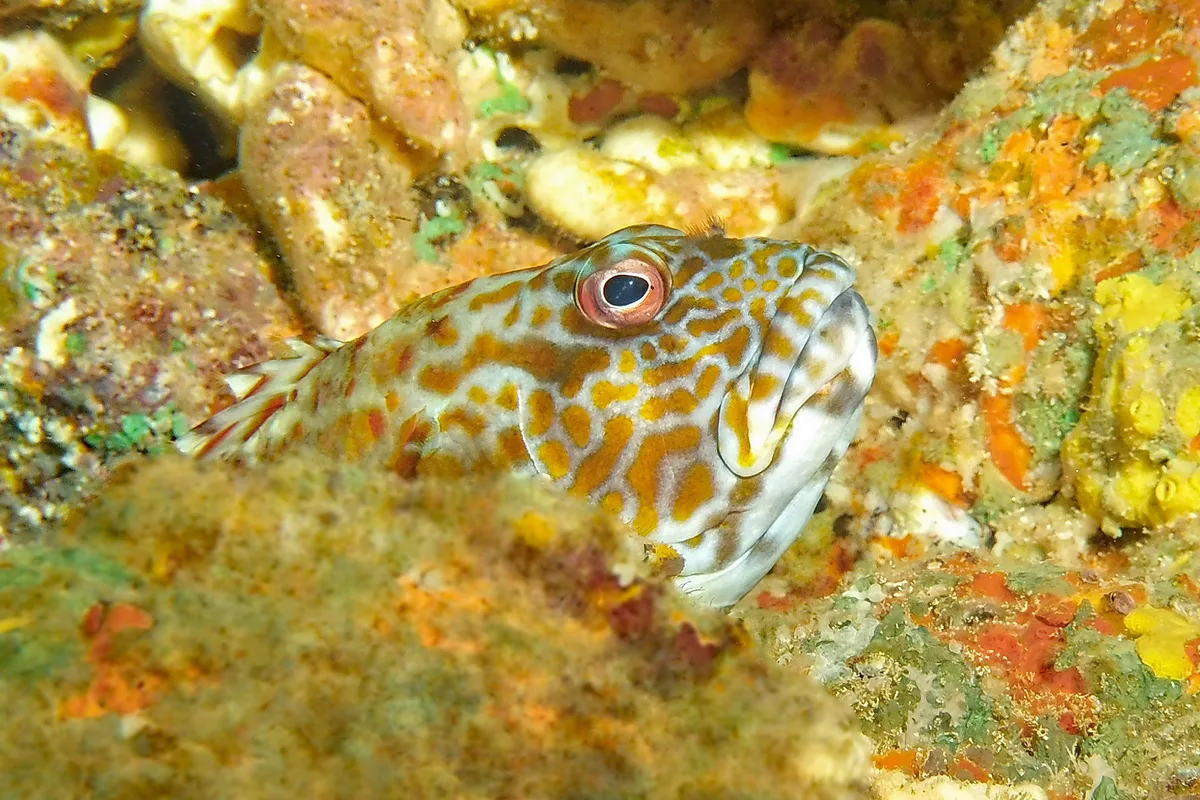
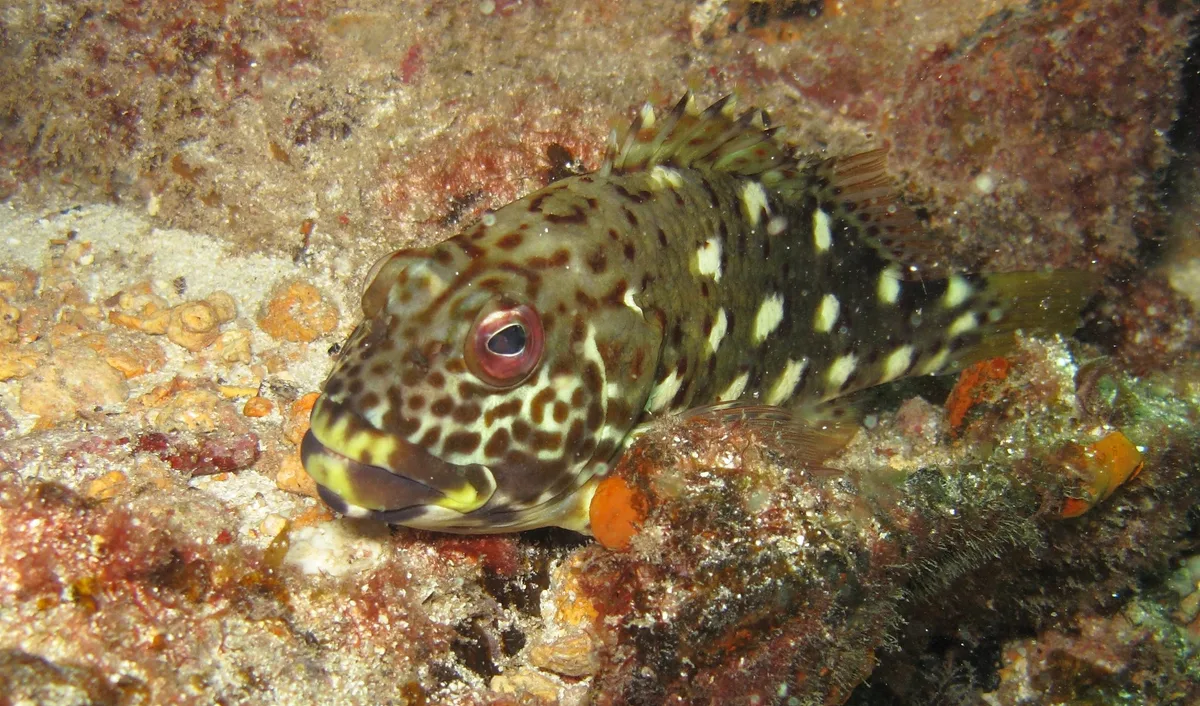
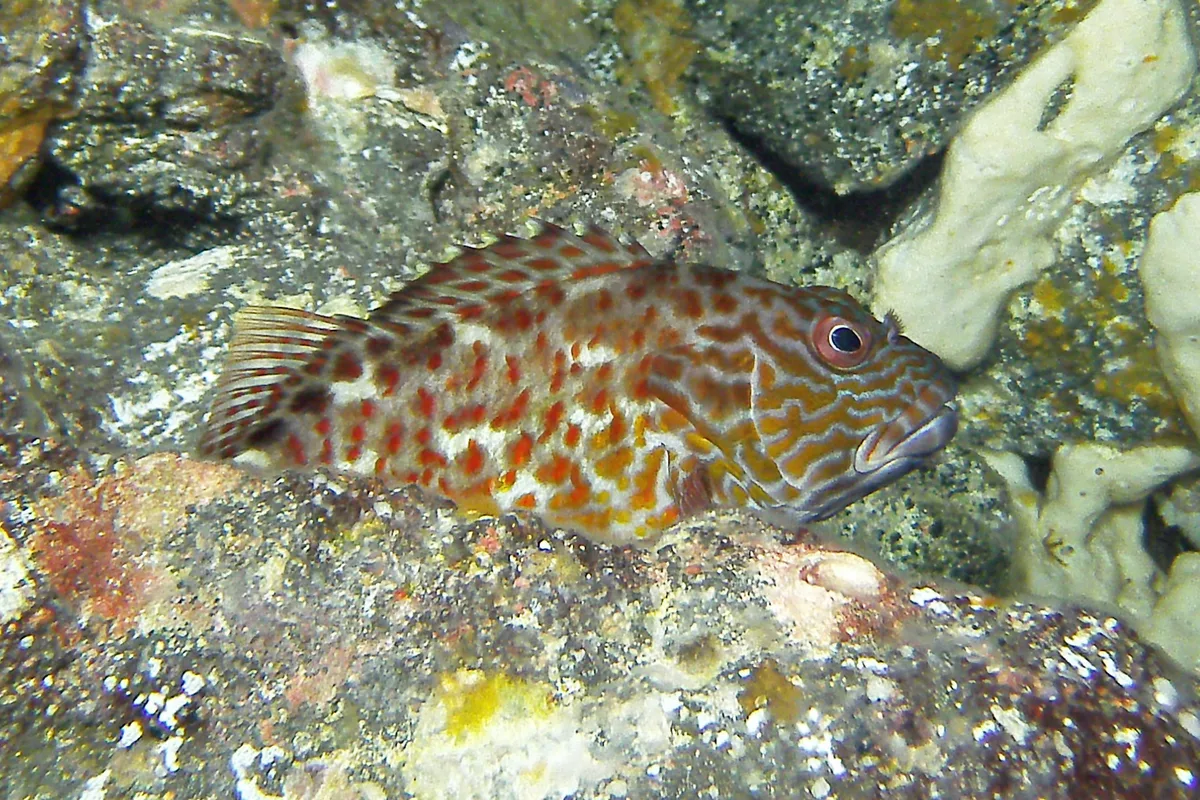
A blotched, heavy-headed fish sitting on top of a boulder in the surge zone, propped up on its own fins and not moving. The largest hawkfish here, thirty centimeters (12 in), and the one that lives where the water is roughest.
Hawkfish have no swim bladder. Instead the lower rays of the pectoral fins are thickened and stiffened into props, and the fish perches on them like a bird on a branch - which is where the family name comes from. Being heavier than water is an advantage in surge: it stays put while everything around it is being thrown about.
From that perch it watches, and drops onto crabs, shrimps and small fish that pass below. The strike is short and downward, which is exactly what a fish sitting above the bottom is built for.
The fine tufts on the dorsal spine tips are the family's signature and are easiest to see in a photograph. Like many reef fish it starts female and can become male, and a large perching fish on a shallow reef top is usually a male holding a group of females.
The genus. Cirrhitus Lacepède 1803 - cirrhus (lock of hair or barbel). ETYFish
- heavy blunt-headed fish with brown and white blotches
- tufts of fine filaments on the tips of the dorsal spines
- perches on a rock propped up on thickened pectoral fin rays
- length up to 30 cm