Goldsaddle Goatfish
Goldsaddle Goatfish
Goldsaddle Goatfish
Fishes · Bony fishes · Goatfishes

Goldsaddle Goatfish

Parupeneus cyclostomus (Lacepède, 1801)
syn. Mullus chryserydros, Mullus cyclostomus, Mullus microps, Mullus radiatus, Parapeneus luteus, Parupenaeus cyclostomus +14 more
50 cm1-95 mLeast Concern
734

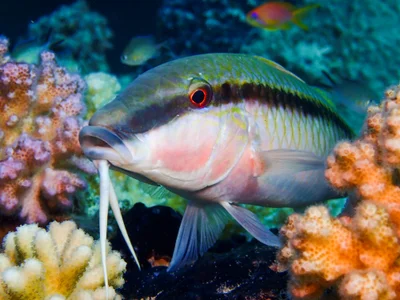
Parupeneus cyclostomus, commonly referred to as the gold-saddle goatfish, blue goatfish, or yellowsaddle goatfish, is a species of goatfish native to the Indo-Pacific region. This species holds commercial significance and is also targeted for recreational fishing. However, it is important to note that it has been reported to carry the ciguatera toxin. Additionally, Parupeneus cyclostomus is available within the aquarium trade.

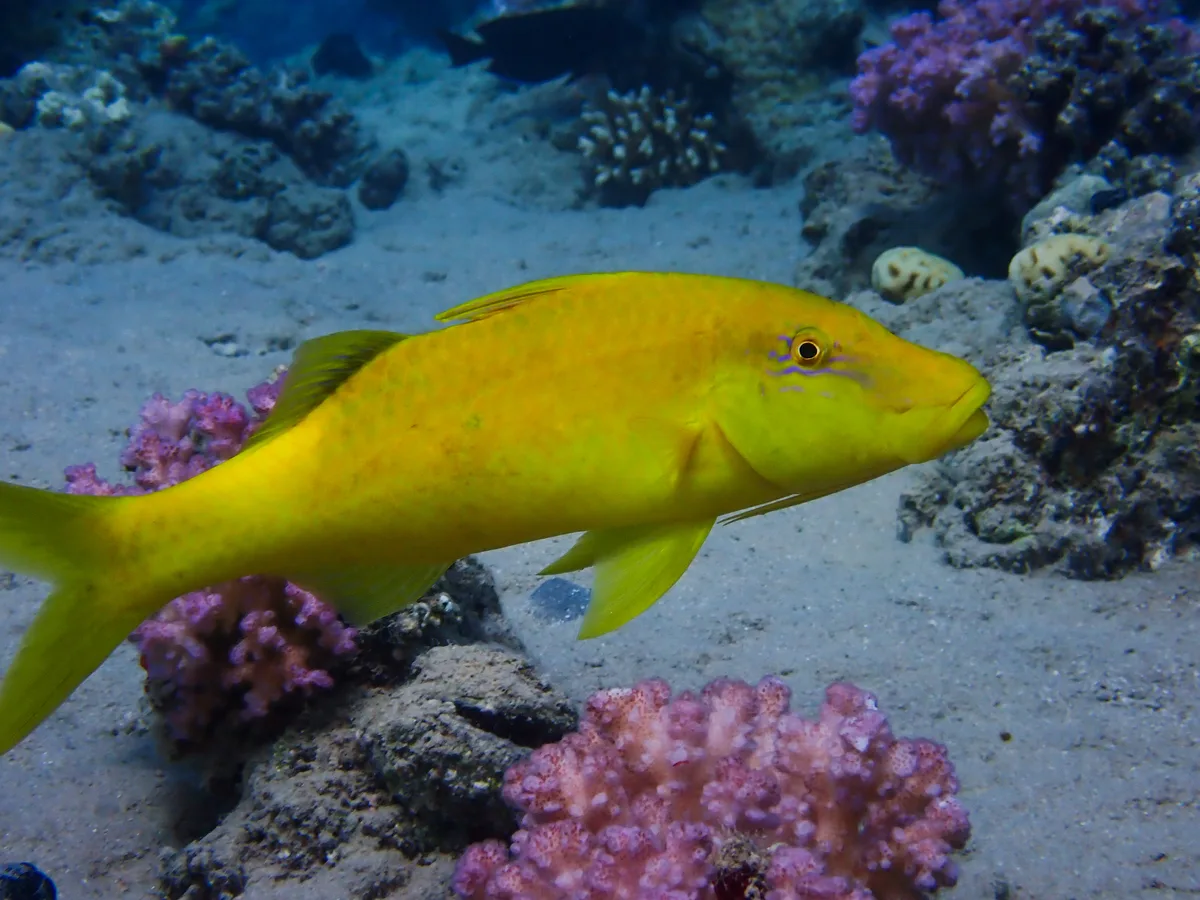
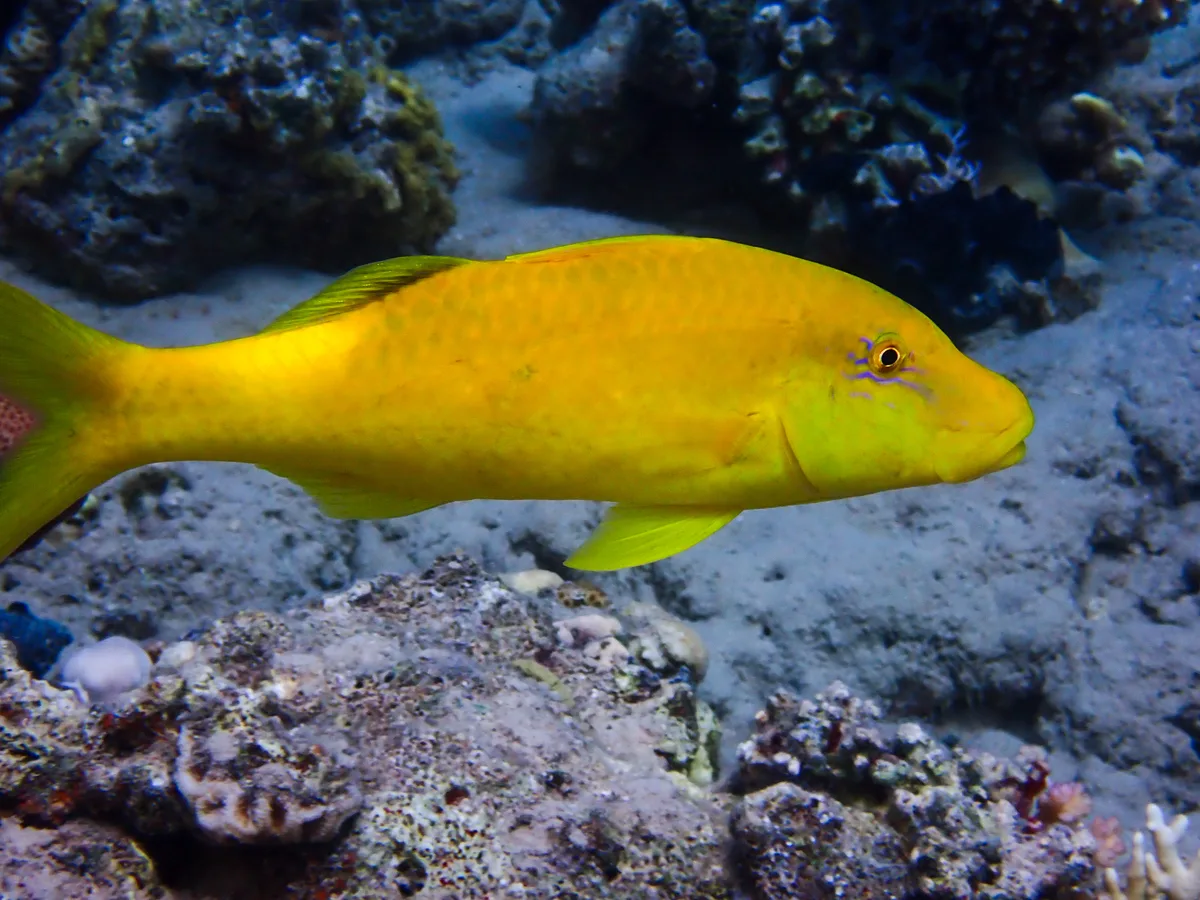
Typically, this species exhibits a coloration of yellow with a bluish sheen on the dorsal side, though a golden yellow variant exists. It can attain a total length of up to 50 cm (20 inches), although the majority of individuals do not exceed 35 cm (14 inches).

Parupeneus cyclostomus is commonly found either solitarily or in groups across all areas of coral reefs and detrital bottom zones, ranging from depths of 1 to 95 meters. Utilizing its barbels, the species probes holes and extracts prey. Geographically, it inhabits a wide range extending from the 🌊 Red Sea to 🇿🇦 South Africa, the Hawaiian Islands, and the Ryukyu Islands (🇯🇵 Japan).

Why it's threatened

There have been no confirmed population declines in P. cyclostomus. However, because of its affinity with coral reefs, we suspect that P. cyclostomus may be experiencing population declines due to habitat loss in parts of its range.

As of 2008, fifteen percent of the world’s coral reefs were considered under imminent threat of being “Effectively Lost” (with 90% of the corals lost and unlikely to recover soon), with regions in East Africa, South and South-east Asia, and the wider Caribbean being the most highly threatened (Wilkinson 2008). Of 704 zooxanthellate reef-building coral species which were assessed by using the International Union for Conservation of Nature Red List Criteria, 32.8% are in categories with elevated risk of extinction (Carpenter et al. 2008).

Threat classification from the IUCN Red List.

Comments

Please, sign in to leave a comment

Continue with a social account — yours will be created automatically.

No comments yet — be the first.

Last Update: June 28, 2026