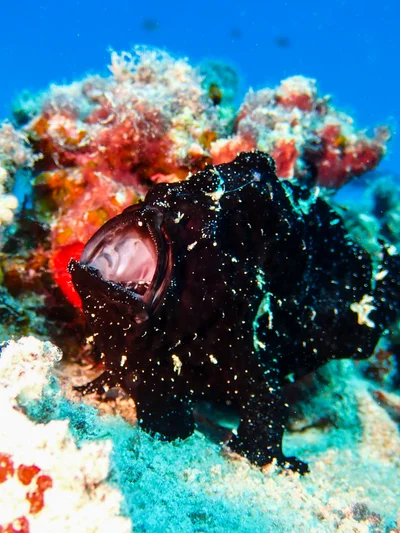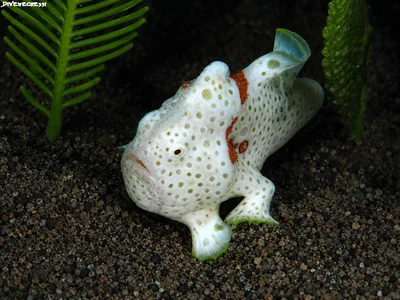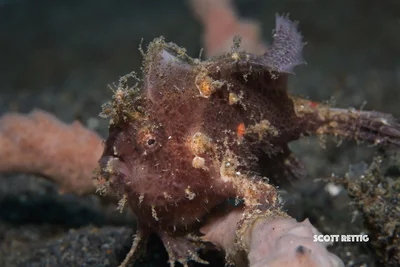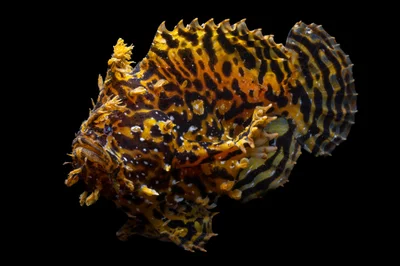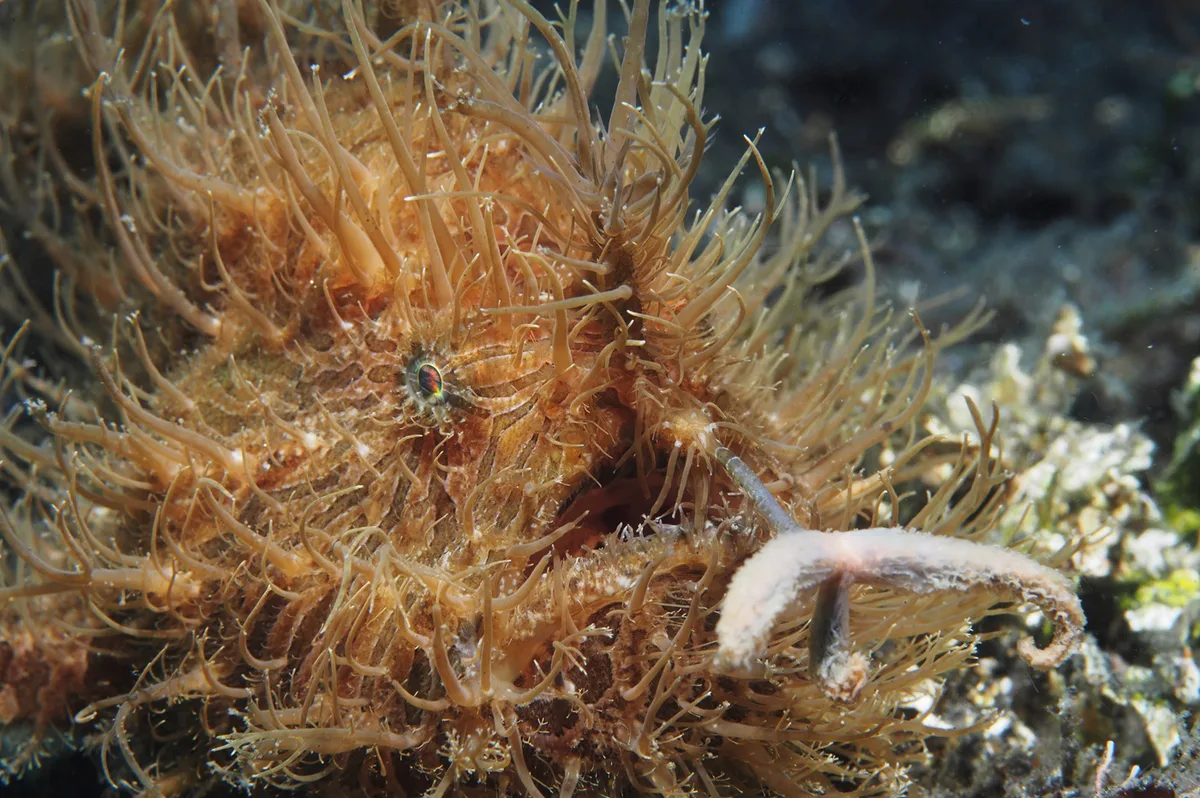
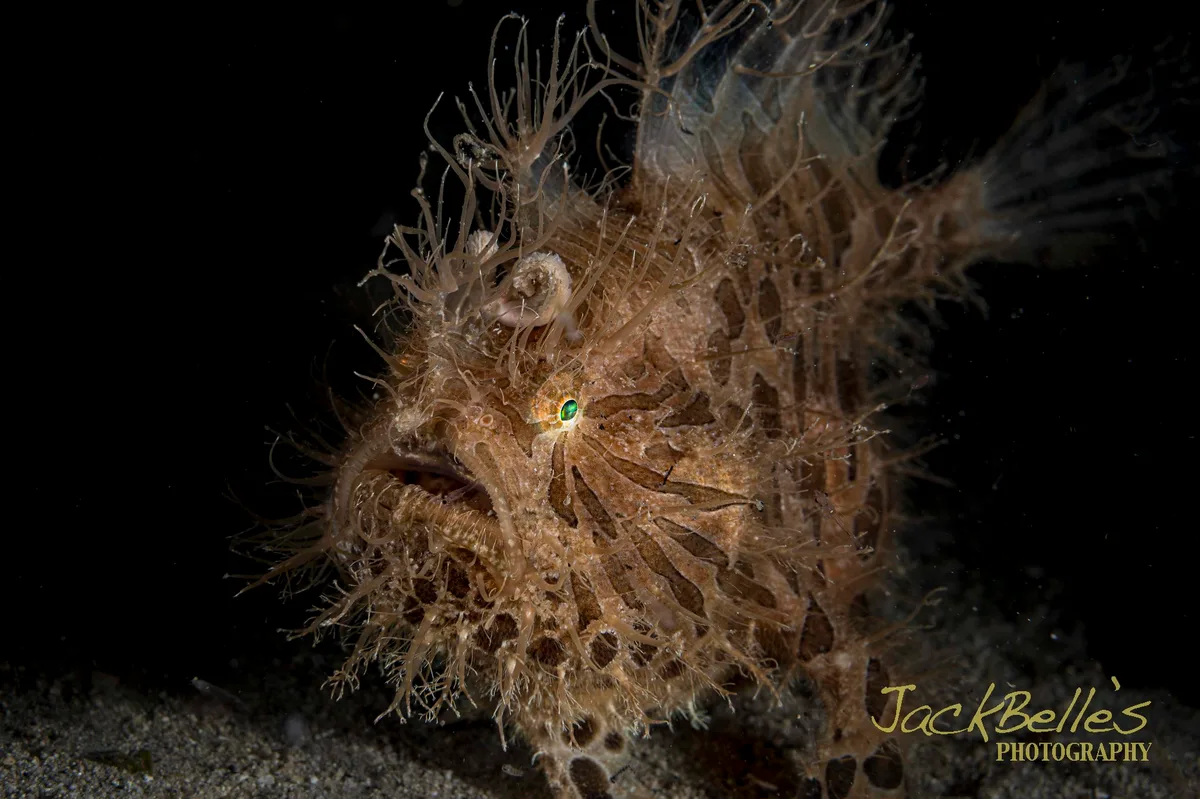
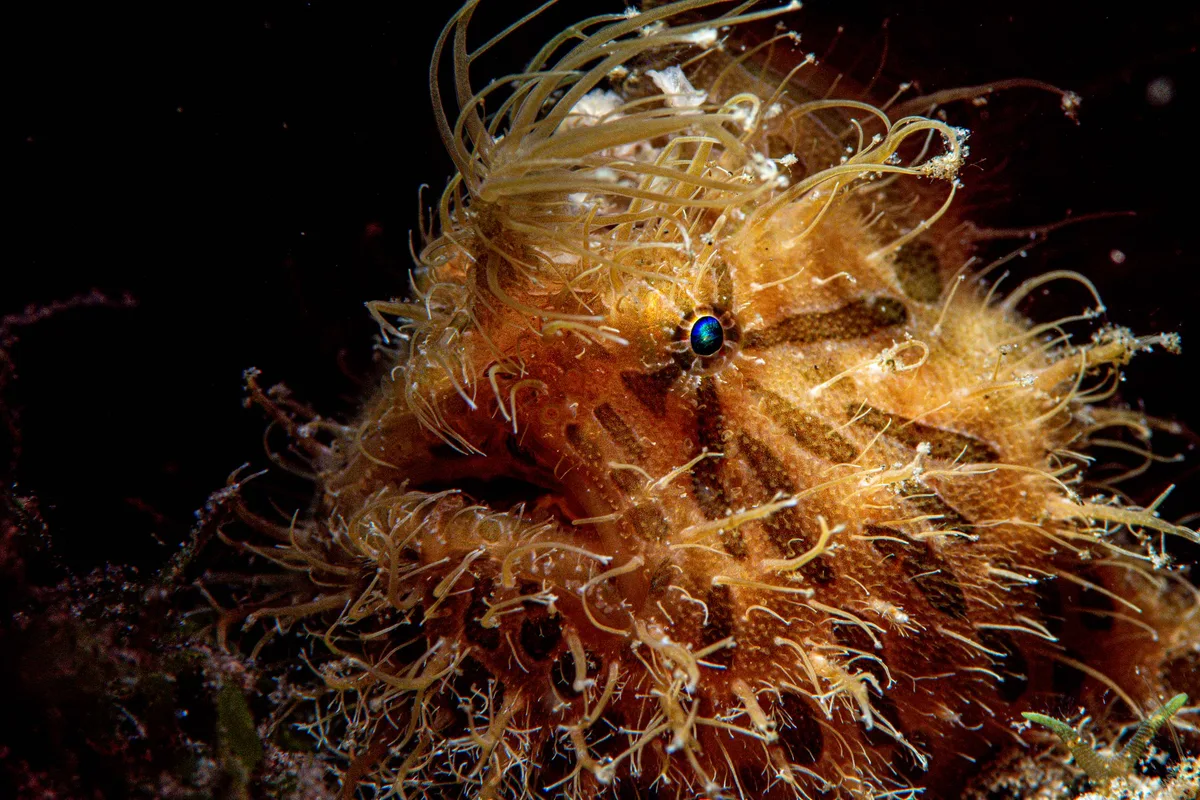
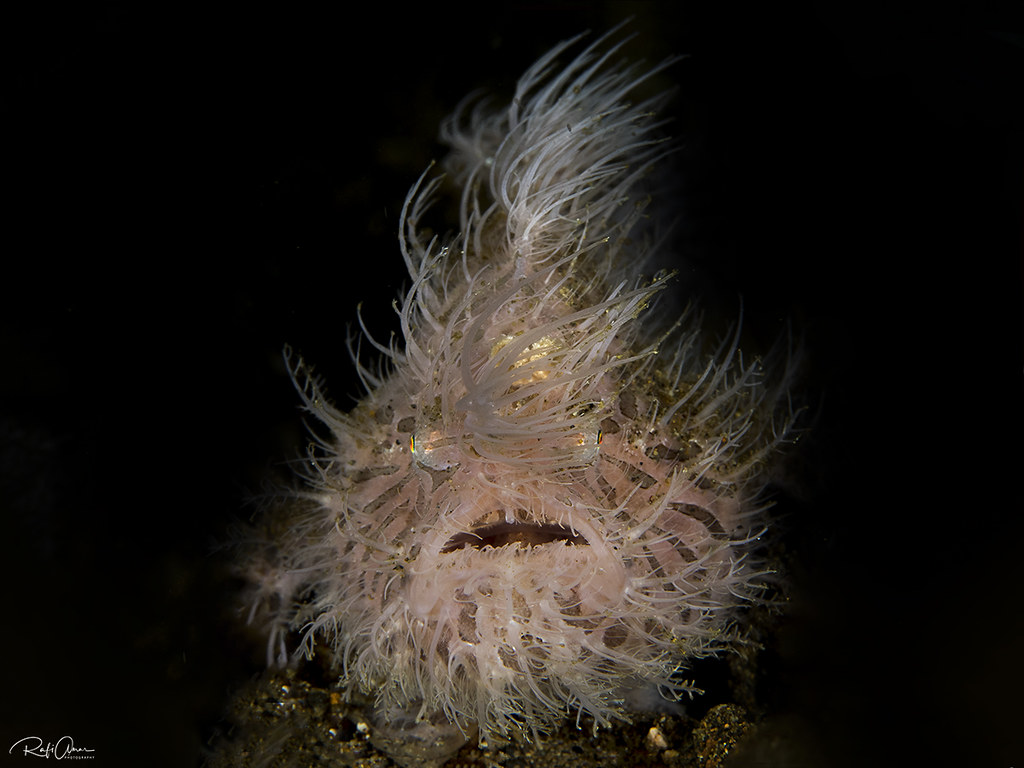
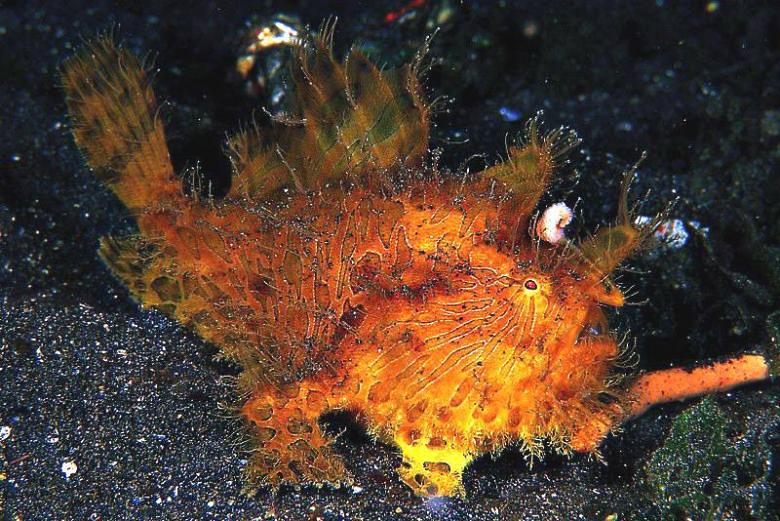
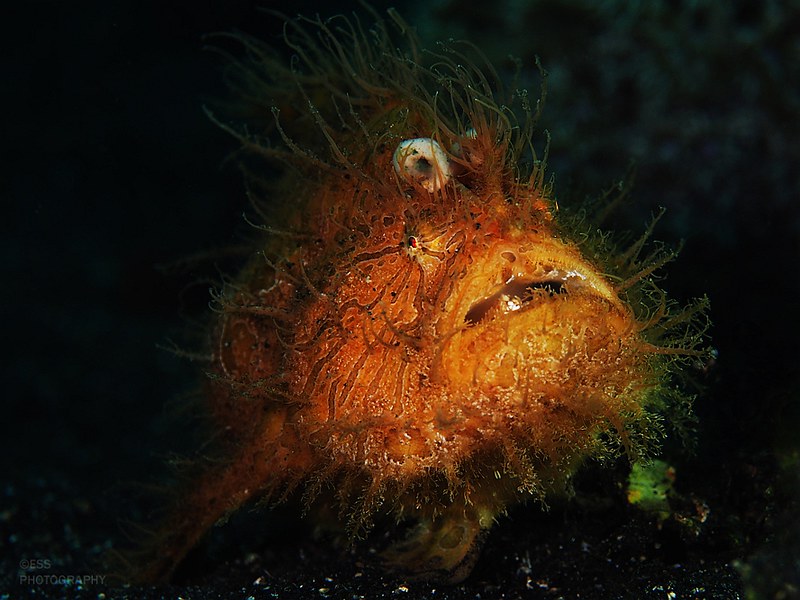
A shaggy lump of a fish covered in skin filaments, striped and streaked, sitting in weed and debris on soft bottom. Color runs from black through brown to bright yellow, and an individual can change it over weeks to match wherever it has settled. Divers here call it the hairy frogfish, which is the name the regional guides use too.
The fishing rod is the best in the family. The first dorsal spine carries a lure shaped like a segmented worm, sometimes with several branches, and the fish waves it in a slow curl in front of its own mouth. Frogfish lures are species-specific imitations, worm or shrimp or small fish, and this one does worms.
What the females do is stranger. The eggs are released not as a cloud but as a single object: a buoyant ribbon of jelly holding tens of thousands of eggs in an ordered lattice, several times the length of the fish that produced it, which drifts away at the surface and disperses the young across open water. It is called an egg raft, it is unique to this family and a couple of their relatives, and it is the one part of a frogfish's life that is not slow.
Then the adult settles back onto the bottom and resumes doing nothing, which is what it is best at.
The genus. Antennarius Daudin 1816 - -ius (pertaining to antenna). ETYFish
The species. Antennarius striatus (Shaw 1794) - striped or streaked. ETYFish
- shaggy body covered in skin filaments, in yellow, black, brown or orange
- dark stripes and streaks radiating over the body, often broken
- lure at the end of the rod is a worm-shaped tuft, sometimes branched
- length up to 25 cm