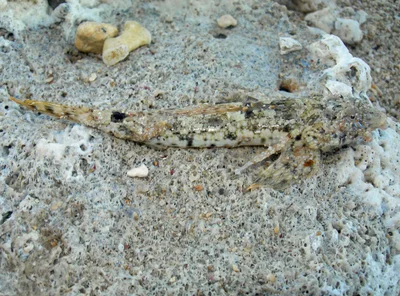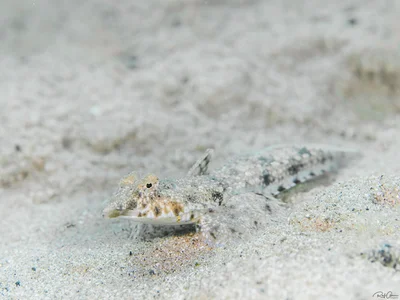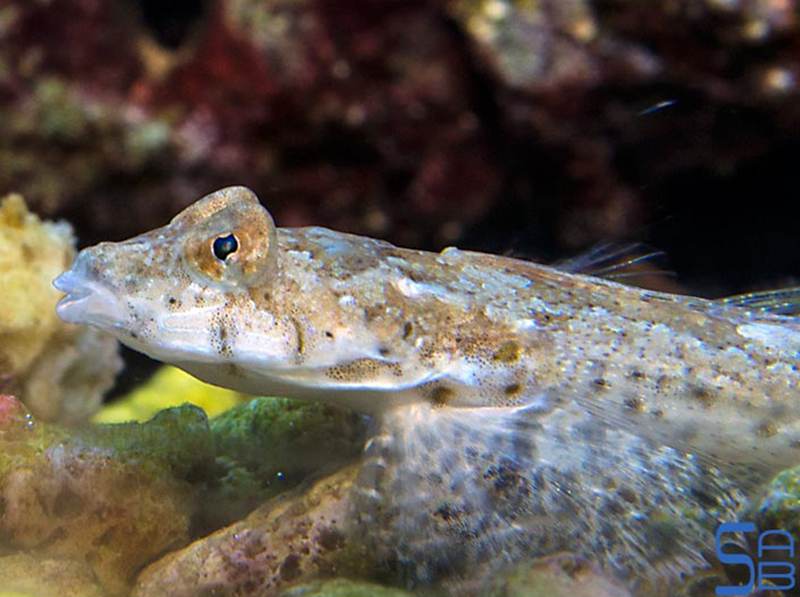
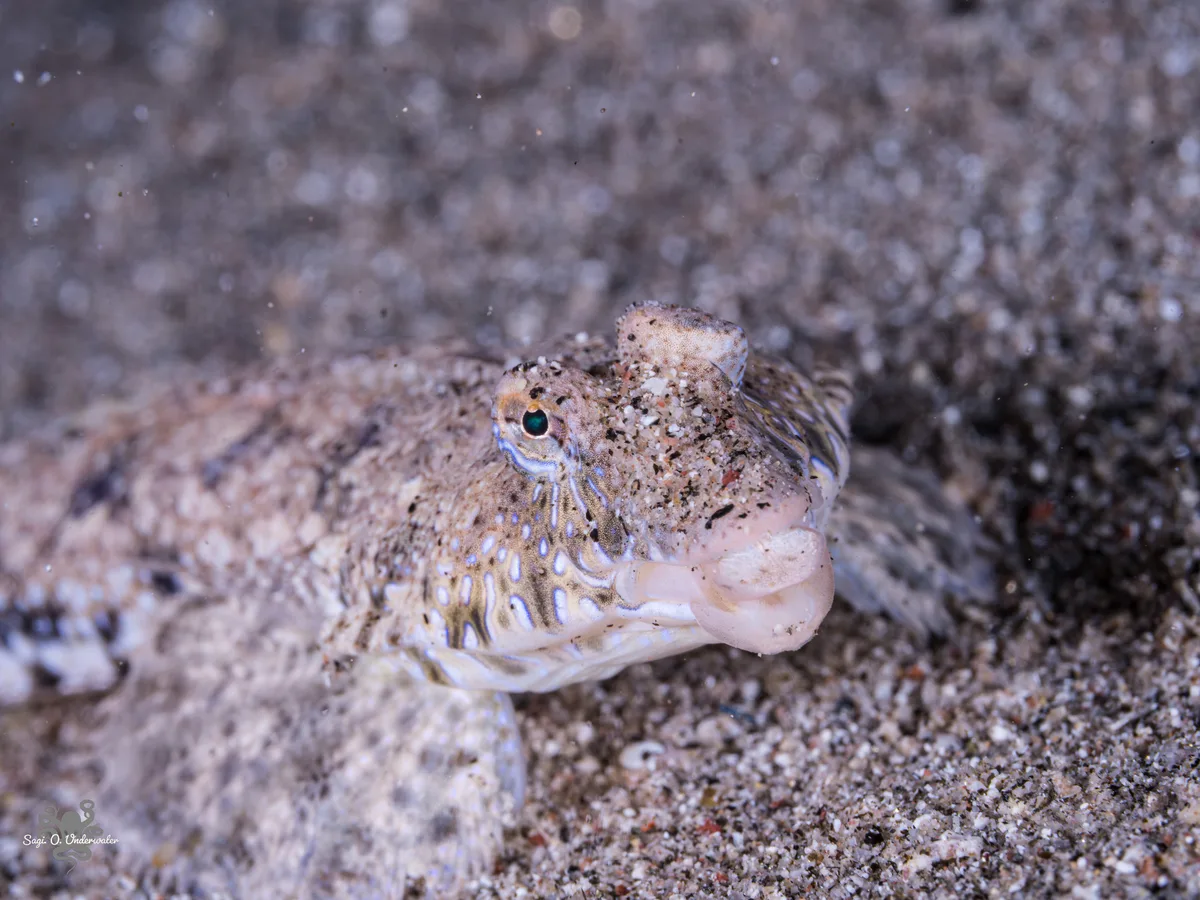
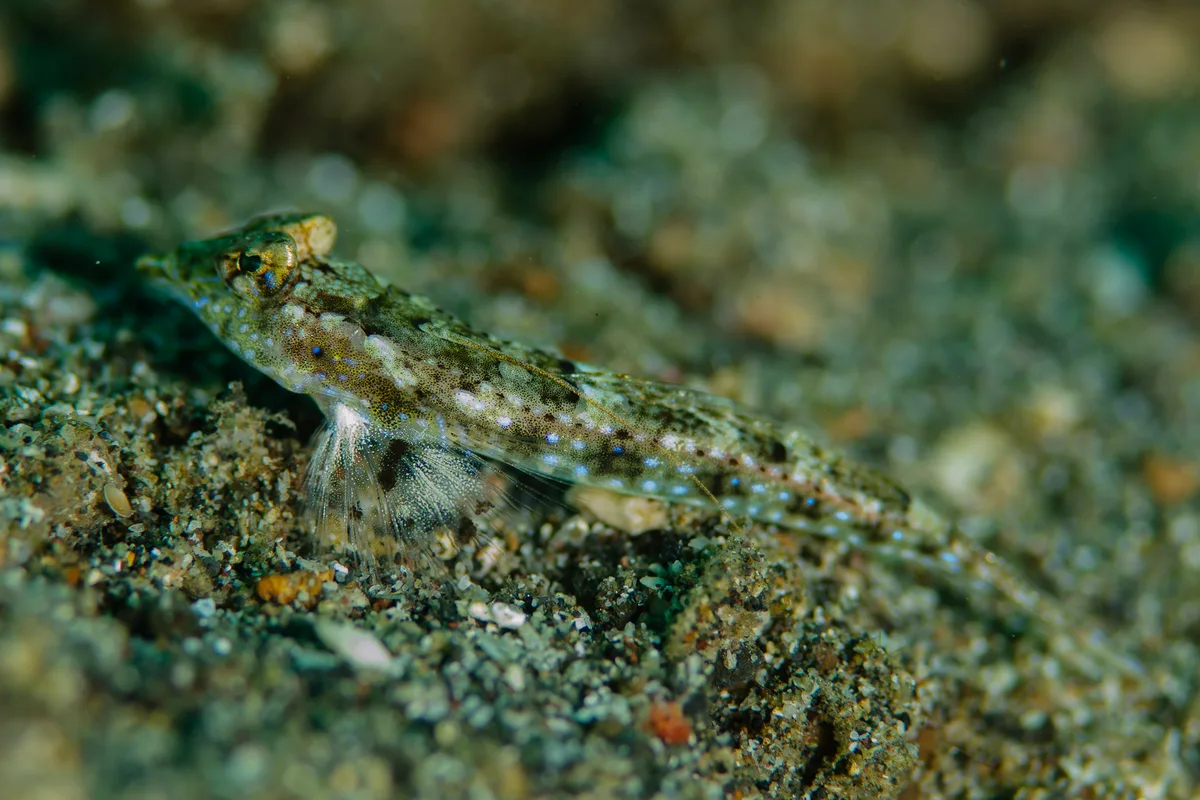
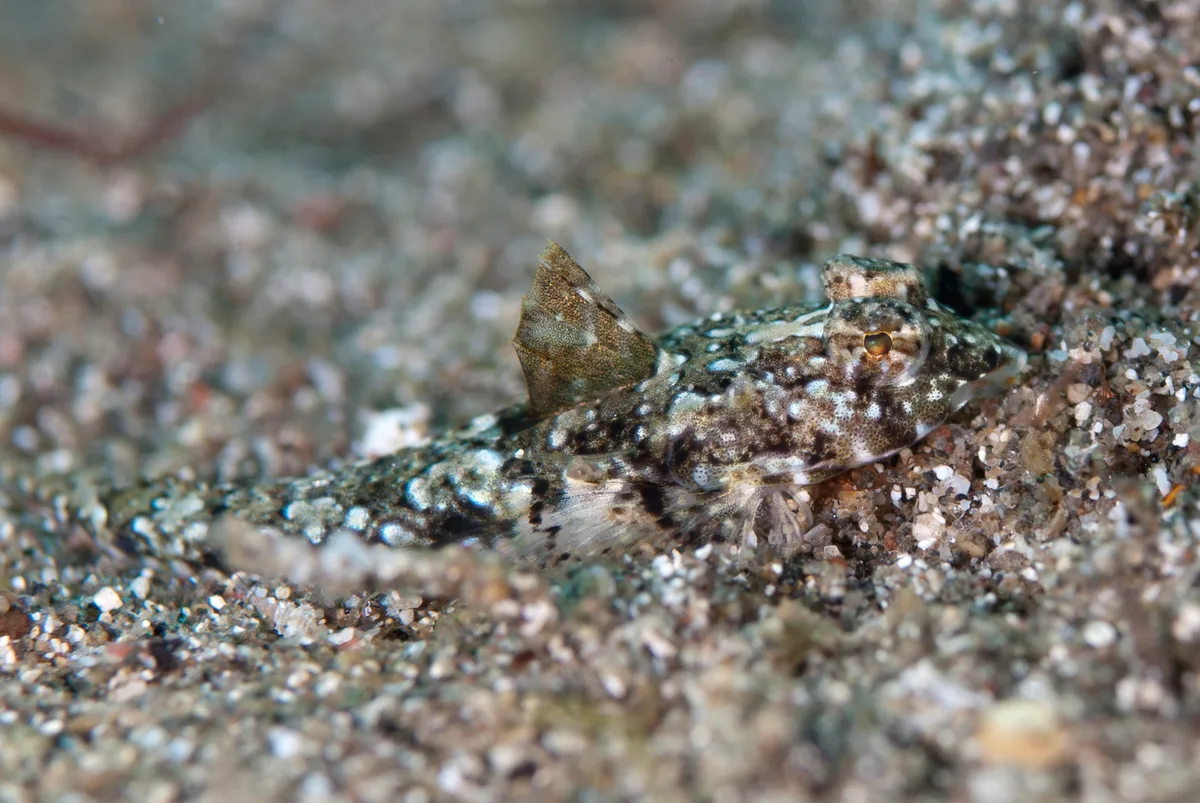
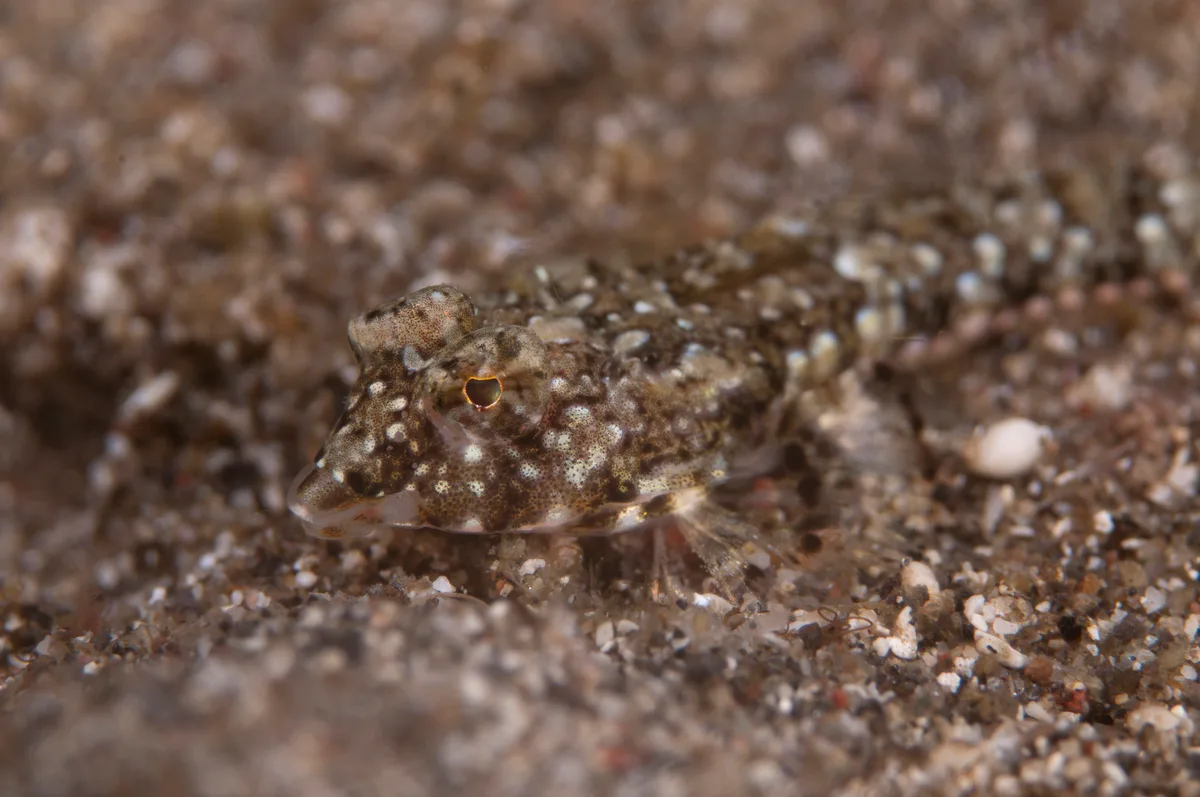
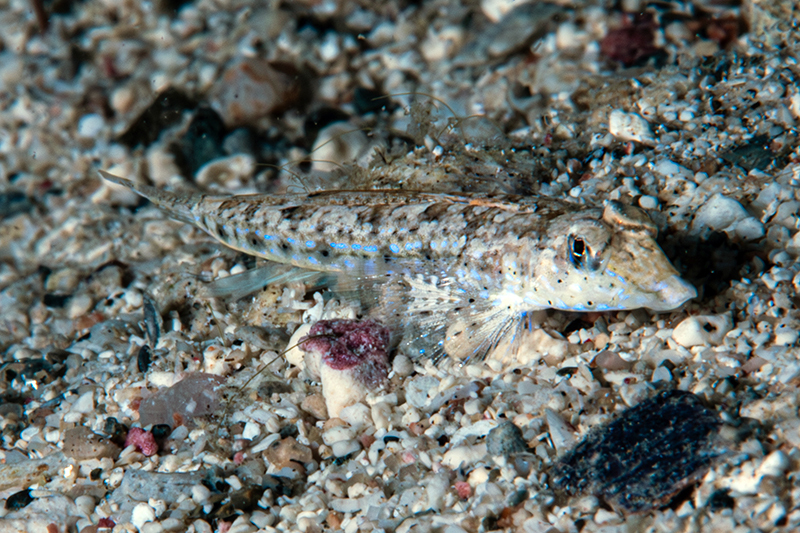
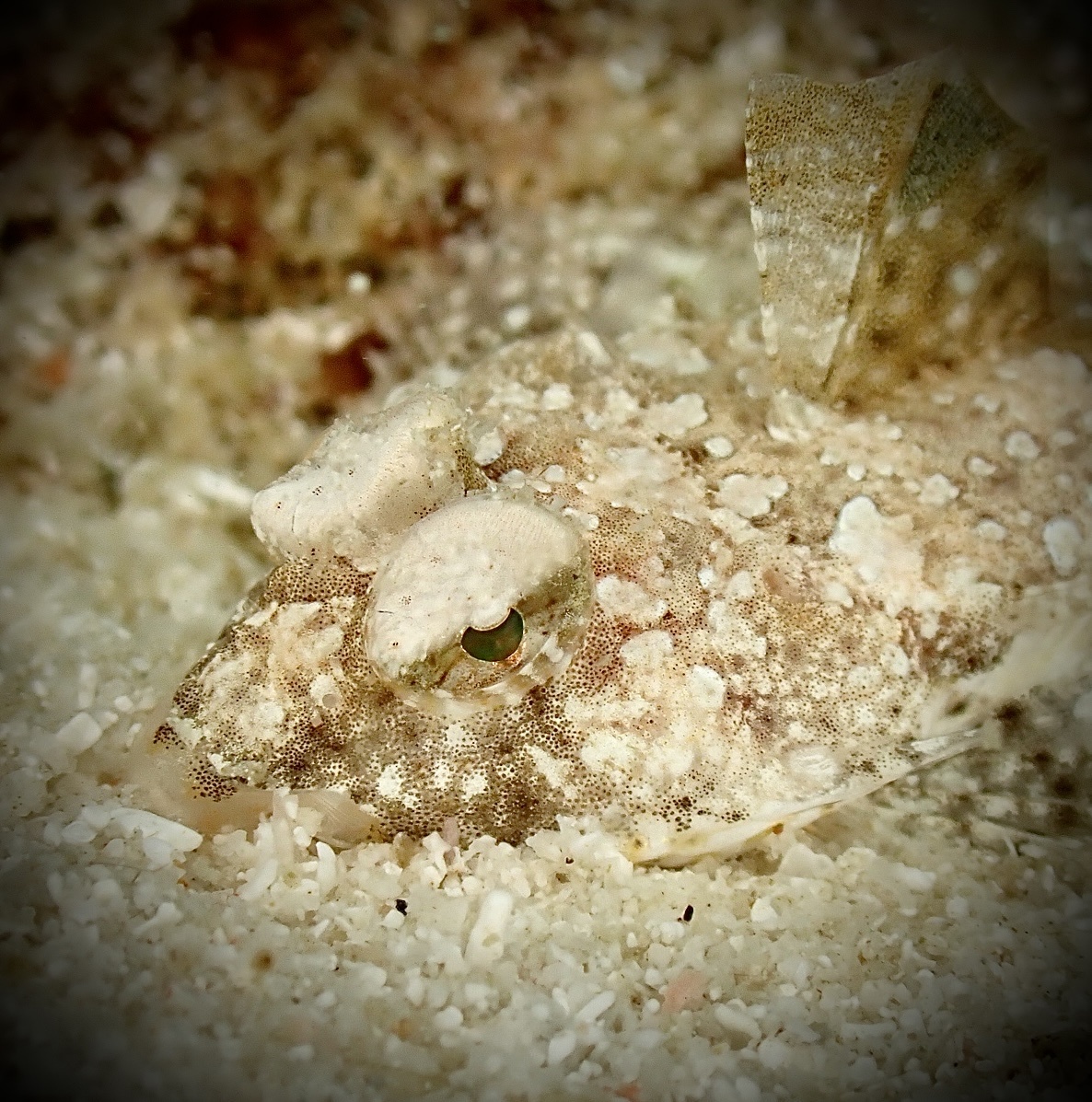
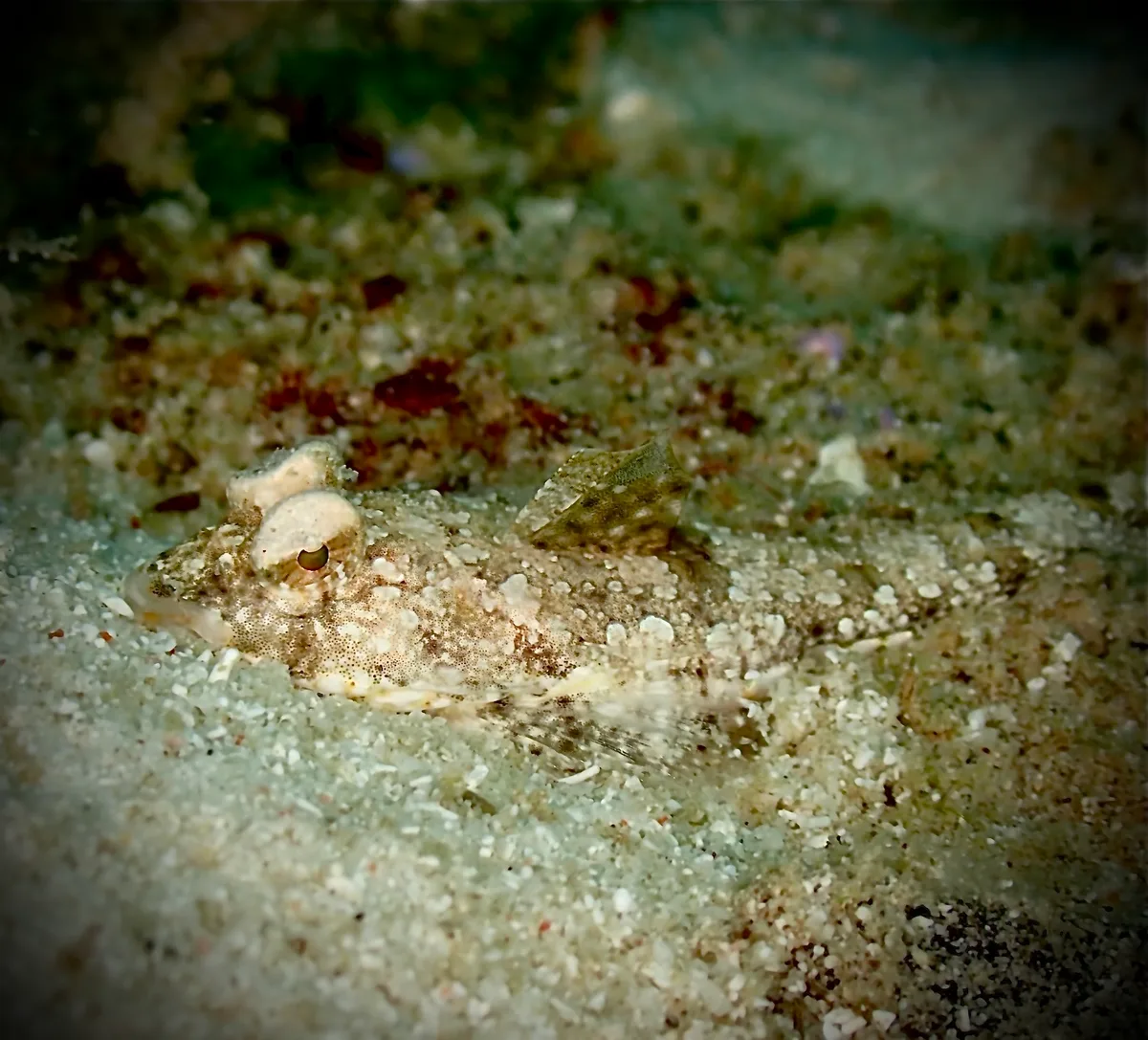
Everything about this fish is the sand it lies on. The speckling matches the grain, the body is flattened against the bottom, and it holds still while divers swim over it. What gives it away is a line of small marks down the middle of its side.
That row is the identification, and it belongs to the male. Each mark sits in a patch of darker brown, and in a live fish the dots themselves come up pale blue rather than black. Females are plain and carry no line at all. The first dorsal fin is small and holds four spines, the second holds eight soft rays, the anal fin has seven rays and no spines, and the tail is drawn out into a long point.
Like every dragonet it is scaleless. Bare skin over the whole body, and over the skin a thick bitter mucus that makes it foul to swallow, is what it has instead of armor. The single hard defense is a barbed spine on the rear edge of the gill cover, the character the family is built around.
It does not really swim. The pelvic fins are thick and set forward like short legs, and the fish walks on them across open sand from 1 m down to about 28 m, stopping to take small crustaceans and worms out of the sediment.
Almost nobody logs it. Fewer than a dozen sightings of the species sit in the public observation databases for the whole stretch from the 🌊 Red Sea to 🇮🇩 Indonesia, and that is not because it is deep or fragile. It is 7 cm long and it lives on bare sand, away from anything worth pointing a camera at.
Toward dusk a male displays at a female with his fin raised, and if she takes him the two press together, rise off the sand into open water, release eggs and milt at the top of the climb, and drop back down. That is the only time either fish leaves the bottom.
- row of small pale blue marks down the middle of the male's side, each set in a patch of darker brown
- females plain, without the line
- tail drawn out into a long point
- speckling that matches coarse sand grain by grain
- sits on open sand and walks on thick pelvic fins
- up to 7 cm
Why it's threatened
There are no known major threats.
Threat classification from the IUCN Red List.