
DartfishesPtereleotrinae
Everything in the goby lineage is built to hold onto the bottom. Dartfishes let go.
Their close relatives fuse the pelvic fins into a suction cup and stick to the reef; a dartfish keeps the fins separate and hangs in open water, a hand's width to a meter above the sand, facing into the current. The reason is food. Plankton drifting past a reef is a richer and far more reliable supply than anything a small fish can pick off rubble, but collecting it means standing clear of cover in front of everything that hunts by sight.
So the whole subfamily is a single compromise, and the compromise is vertical. A dartfish does not swim to shelter when something comes at it. It drops. The burrow is directly beneath the fish at all times, a hole in the rubble it dug or inherited, and the height it hovers at is set by nothing except how fast it can get back down that hole. Watch one for a while and you can see it adjusting the figure, rising as the water empties and sinking as something crosses the sand.
The variations are all on that theme. Most hover in pairs and share one entrance. The firefishes hold lowest and hardest to the bottom, flagging with a long first dorsal spine. The wormfishes gave the hovering up altogether: shaped like a piece of string, they work along just over the sand and go into it head first.
Nine species are listed here, and any count made by a moving diver is wrong. These are the fish that are gone before you arrive and back thirty seconds after you stop, so the only way to see one properly is to stop.
- elongated, slender body outline
- deeply forked or crescent-shaped tail fin
- relatively large eyes
- hovers motionless a short distance above sandy or rubble substrate
- darts headfirst into a burrow when threatened
9 species in Dartfishes
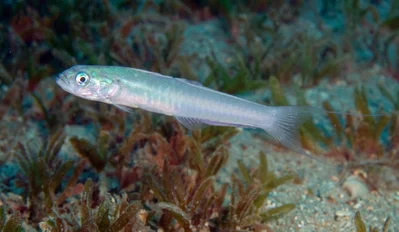


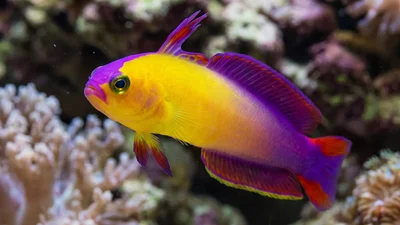

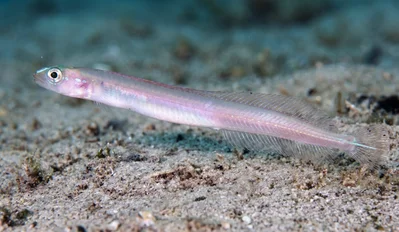


Other elongated groups
Similar silhouette underwater - worth a look if this was not your animal.


Last Update: August 23, 2026