Its family holds the depth record for fish.
The cusk-eels include Abyssobrotula galatheae, collected from the Puerto Rico Trench at eight thousand three hundred and seventy meters, which is the deepest fish ever recorded. That is not a fluke of one species: the family as a whole is one of the dominant groups of the deep sea floor, present from the tide line to the bottom of the trenches, and it is far better known from the abyss than from reefs.
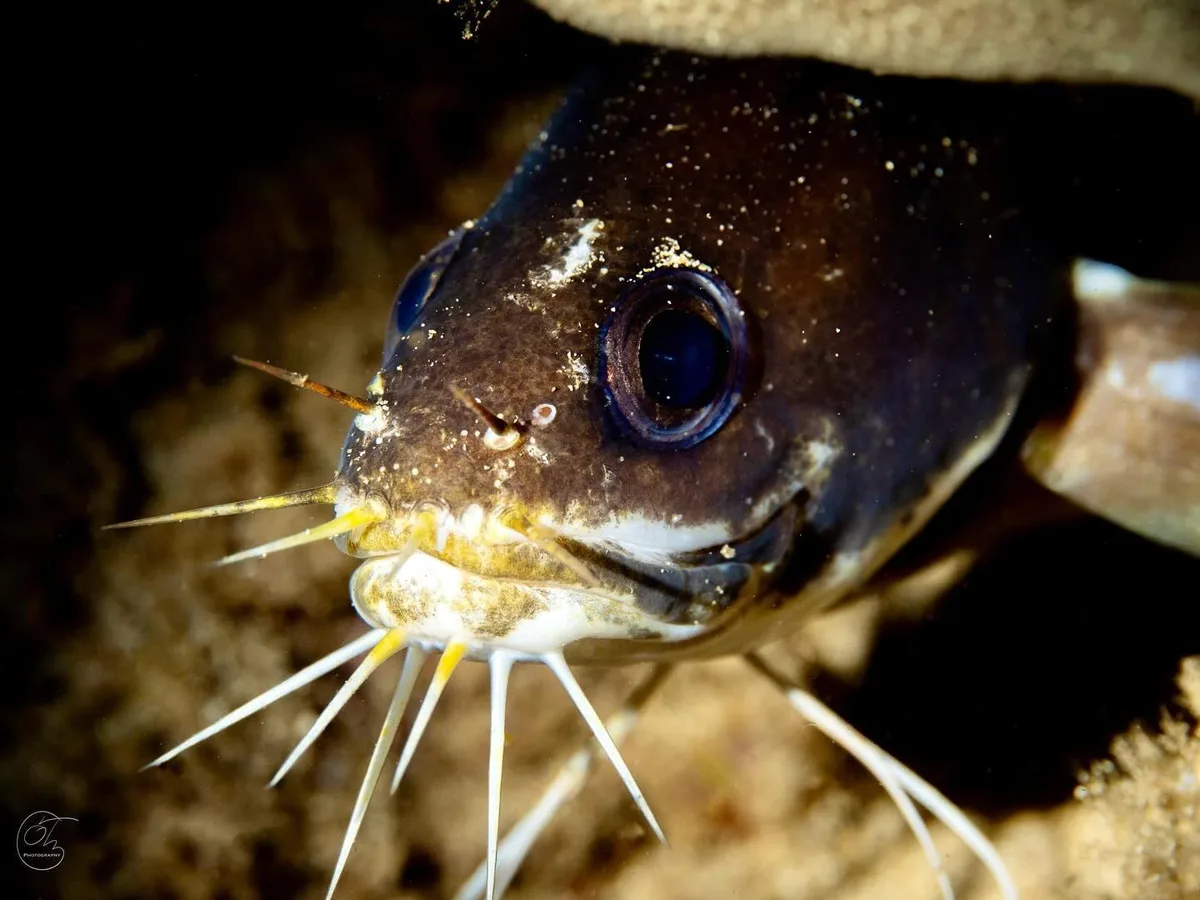
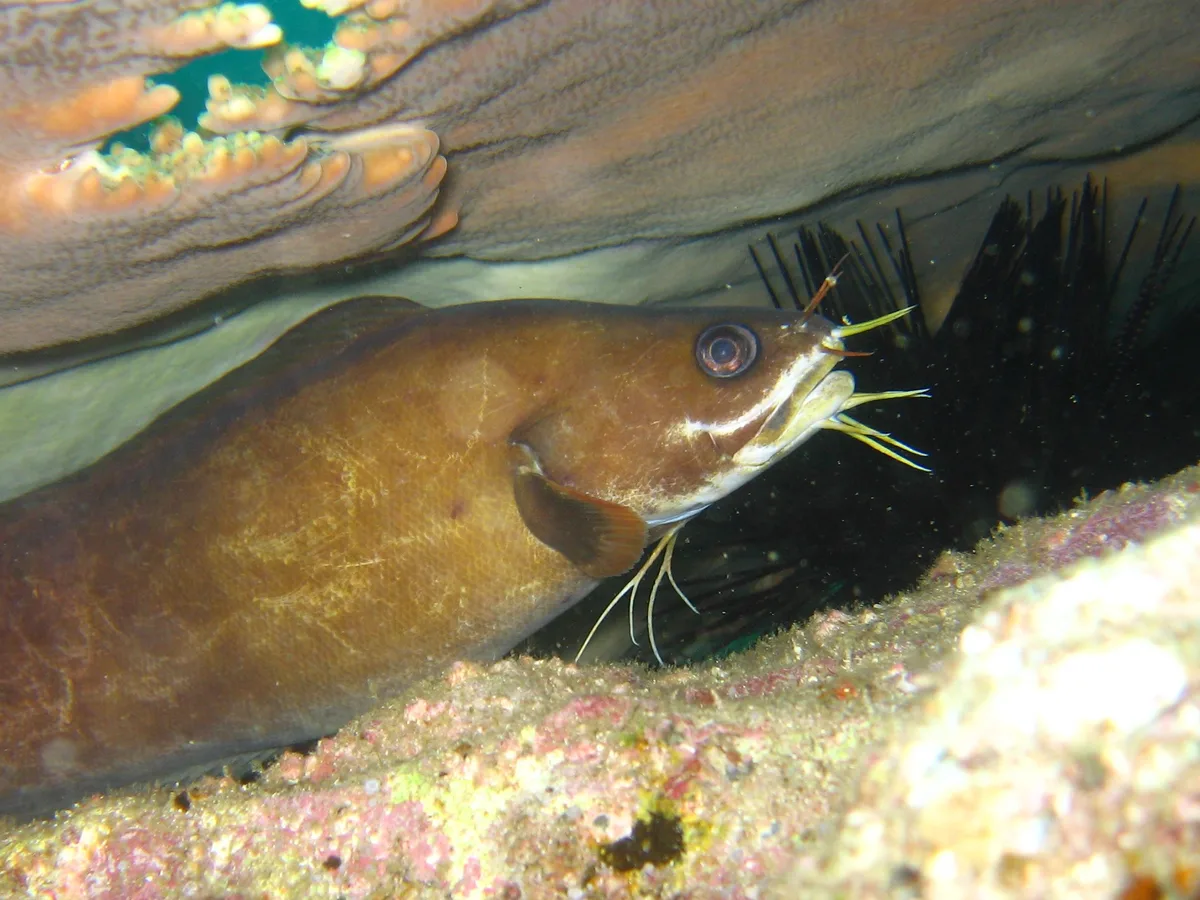
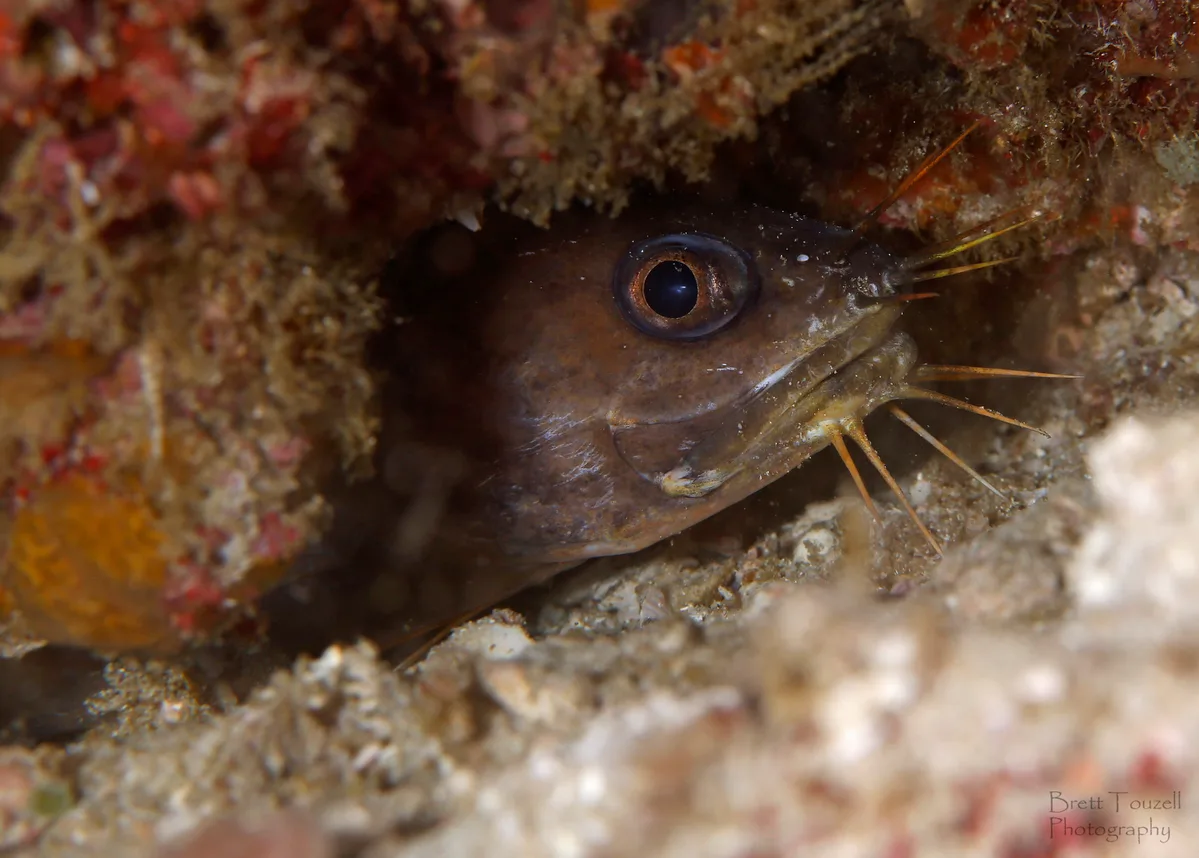
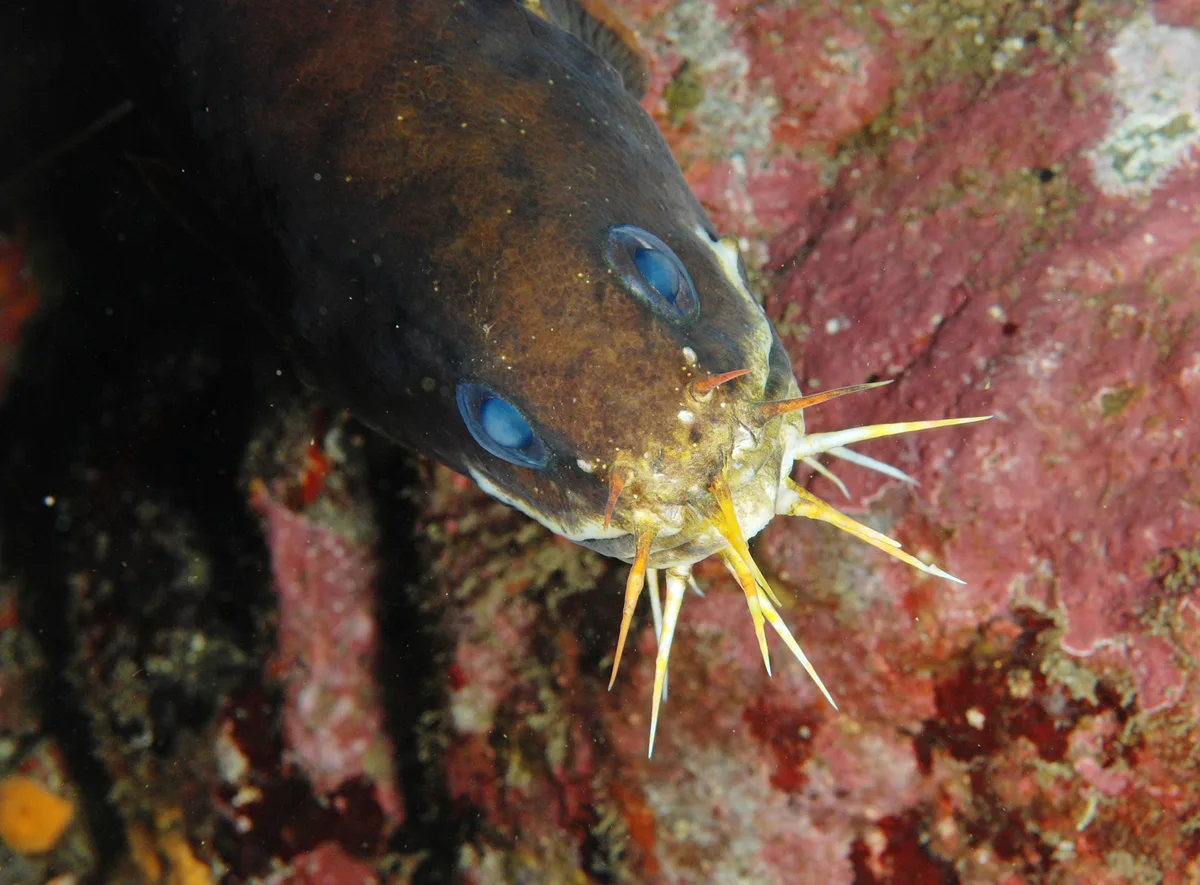
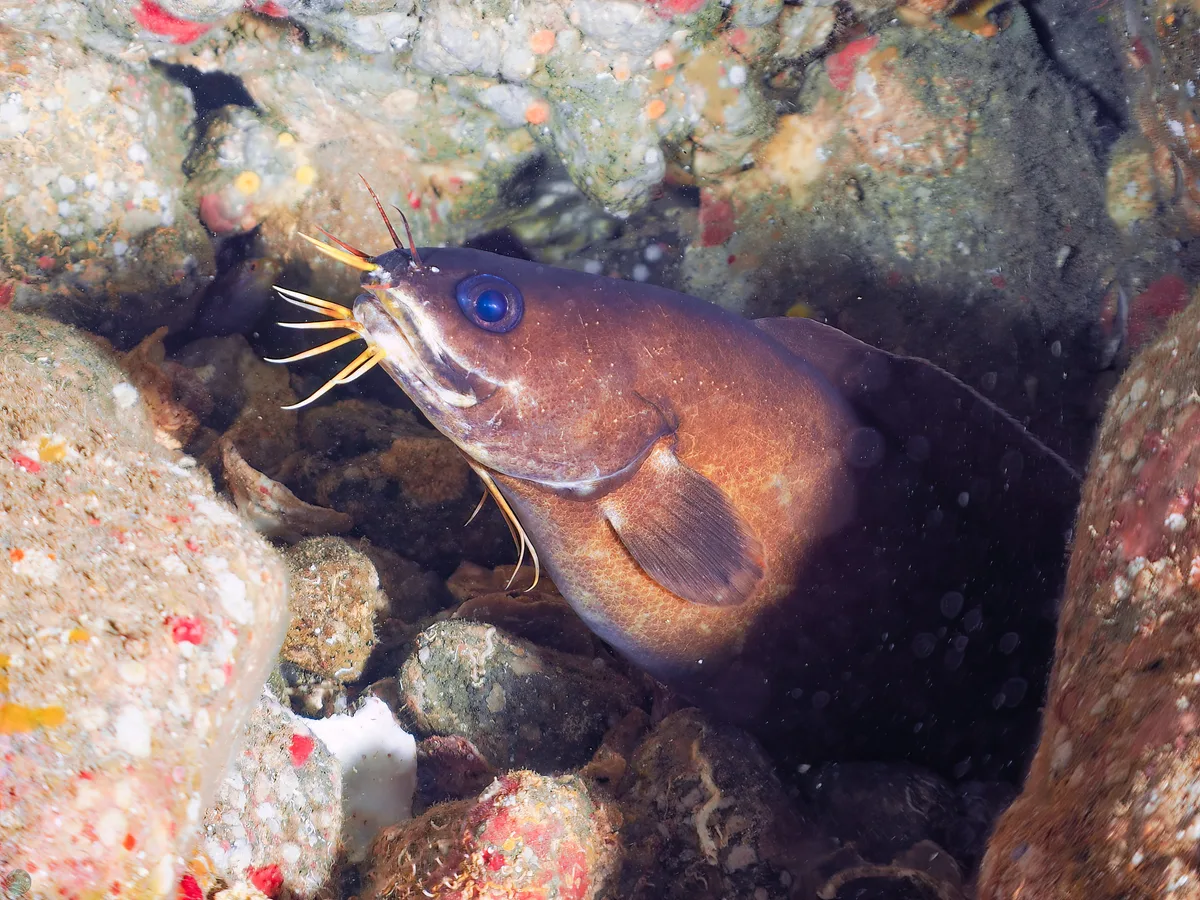
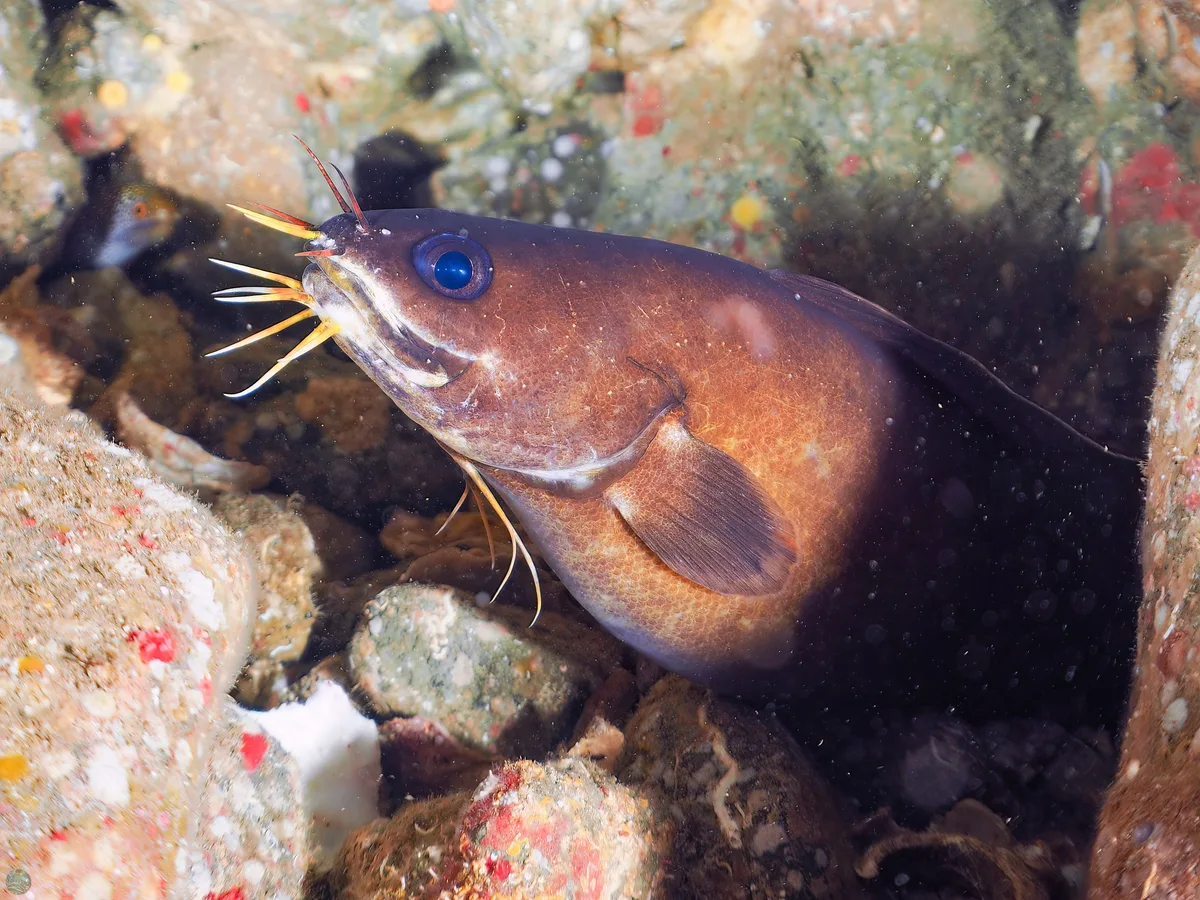
This one lives at the shallow end of that range, though it also goes down past six hundred meters. It spends the day jammed into a crevice or the back of a cave and comes out after dark to hunt crabs and small fish over open bottom, feeling its way with several pairs of fleshy barbels around the snout and chin.
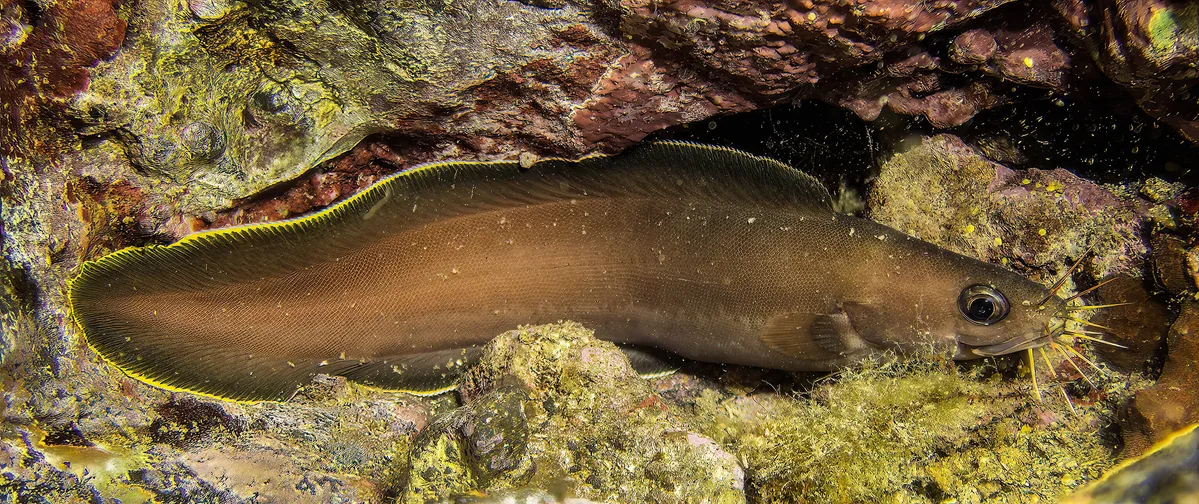
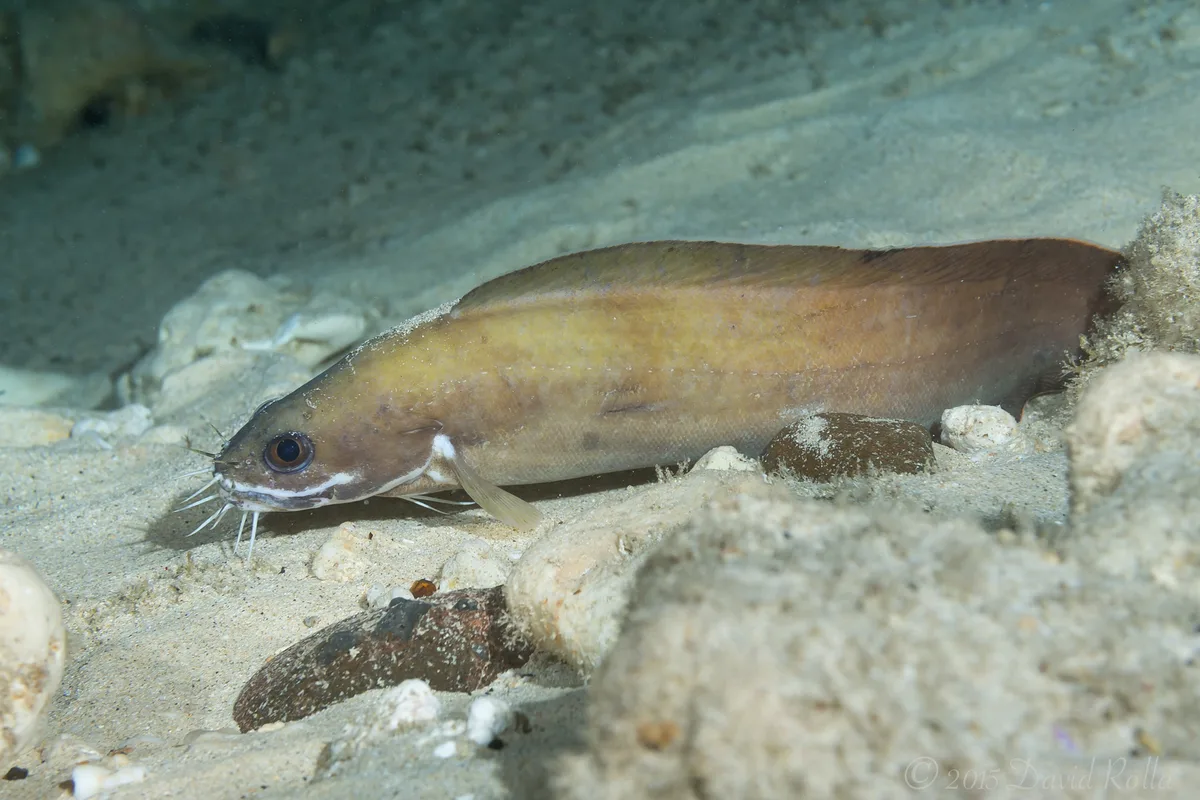
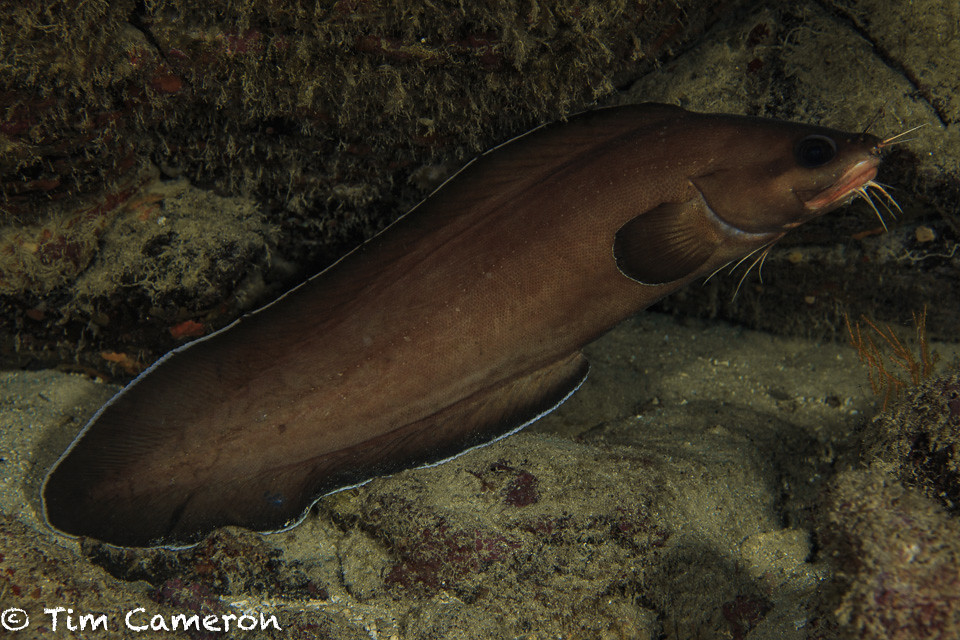
The shape is the family's: eel-like, tapering to a point, with the dorsal and anal fins running back and merging around where a tail would be. It is not related to eels at all, and the resemblance is the usual answer to living in cracks.
A meter long, brown, big-eyed, and almost never seen by daylight.
The species. Brotula multibarbata Temminck & Schlegel 1846 - multi- (many) + barbata (bearded). ETYFish
- eel-like body tapering to a point, with dorsal and anal fins merged around the tail
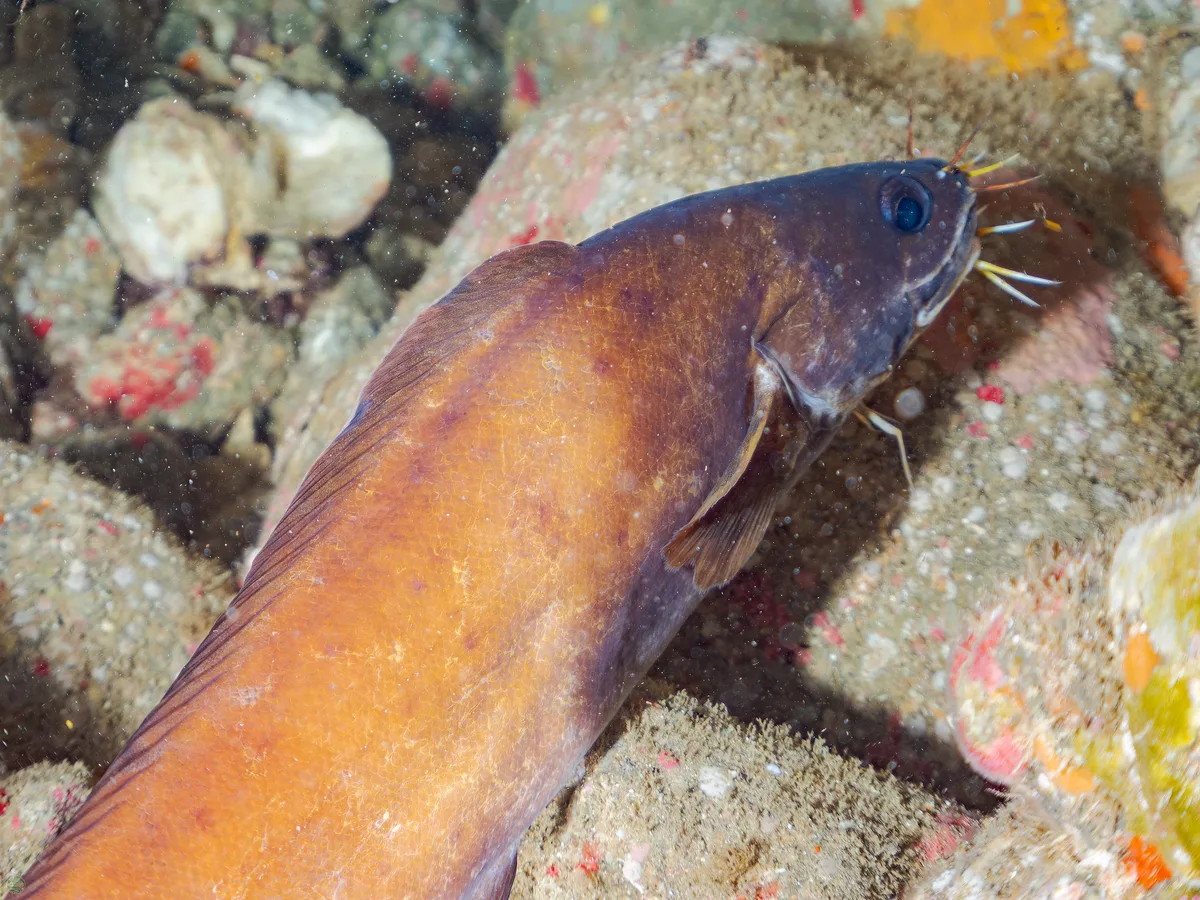
- several pairs of fleshy barbels around the snout and chin
- large eye, brown body, out only after dark
- up to 1 m