Verrucotoxin (VTX)
The stonefish venom protein: it attacks the heart and bursts red blood cells, and the pain it causes is considered among the worst in nature.
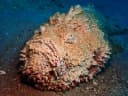
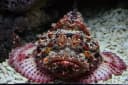
Verrucotoxin is the main active component in the venom of the Reef Stonefish (Synanceia verrucosa), the best-camouflaged and most dangerous fish in this sea. The venom sits in glands along thirteen dorsal spines and is driven in by the victim's own weight: standing on one compresses the gland and injects it.
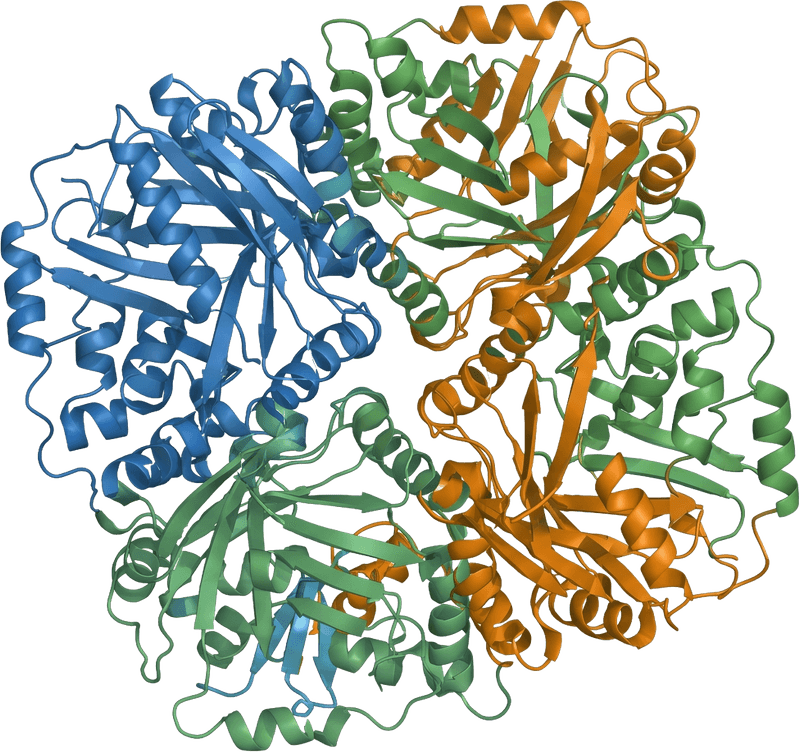
Unlike the small stable molecules elsewhere in this glossary, verrucotoxin is a large protein - a glycoprotein of about 322 kDa, built from four subunits. That size is why heat helps: the protein comes apart at temperatures around 45 °C, which is the reasoning behind immersing the wound in water as hot as the victim can stand, still the standard first aid alongside getting them to a hospital.
Its effects run on three tracks at once:
- Cardiovascular. It disrupts calcium handling in heart muscle, producing irregular rhythm, weakened contraction and, in severe stings, heart failure.
- Cytolytic. It ruptures red blood cells directly, and the damage shows up as swelling and tissue death around the wound.
- Pain. It triggers a cascade of inflammatory mediators, and the resulting pain is described in the medical literature as among the most severe caused by any animal - severe enough to cause fainting and delirium on its own.
An antivenom exists and works. Untreated serious stings can kill, so a stonefish sting is an emergency, not an injury to sit out. As with other potent venoms, its components are studied as leads for painkillers and cardiac drugs.
First aid
- Get the limb into water as hot as the person can bear without scalding, about 45 C (113 F), within minutes, and keep it there for 30 to 90 minutes. The toxin is a protein and heat breaks it apart. Test the water on yourself first - the sting numbs the area and people scald themselves.
- No ice, no tourniquet, no cutting.
- Remove any obvious spine fragment, wash the wound out, and keep the limb still and lower than the heart.
- Hospital regardless of how it looks. Antivenom exists, pieces of spine sheath are often left inside, and the pain usually needs more than hot water.
Watch the breathing and the pulse on the way. Serious stings affect the heart, and the person may faint.