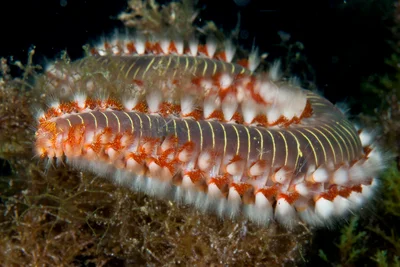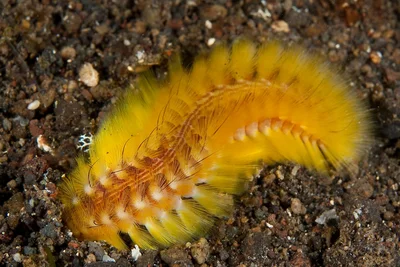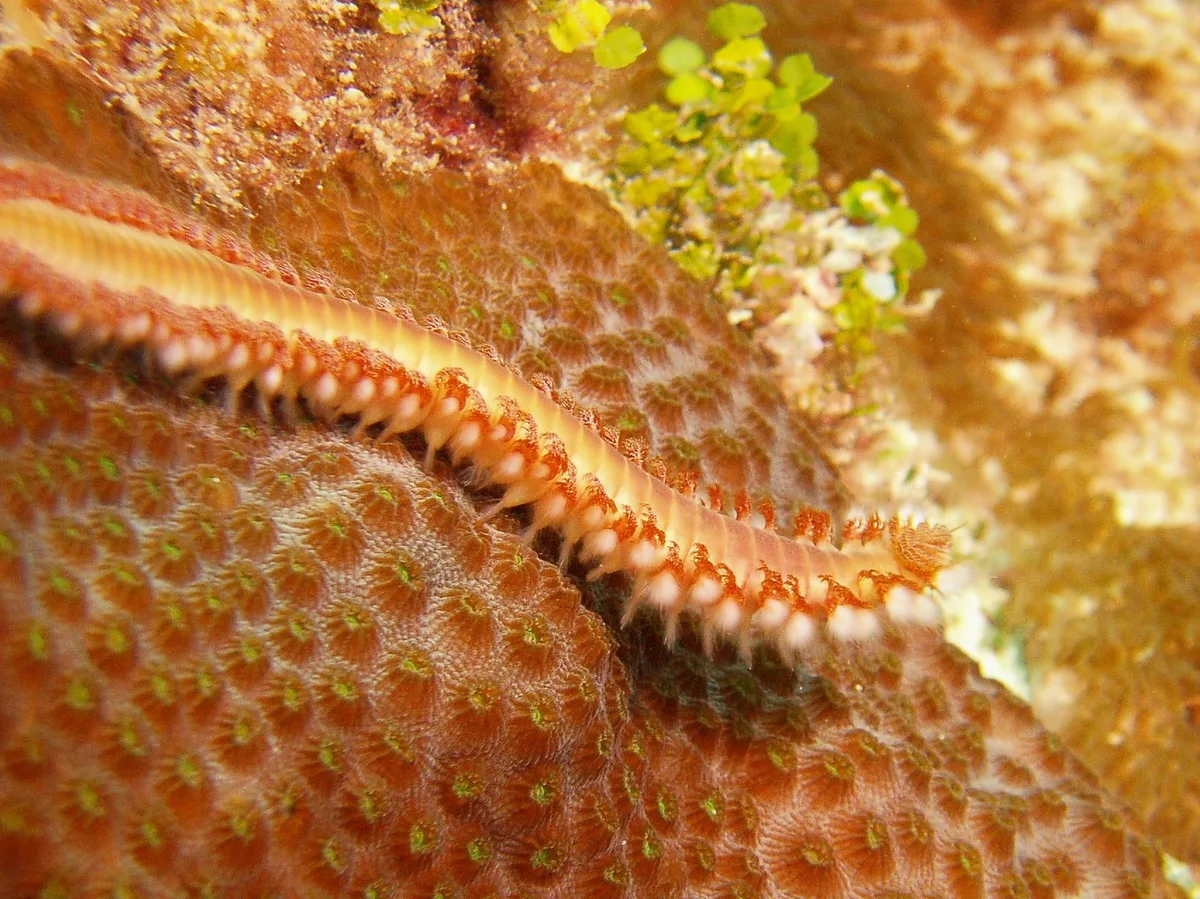
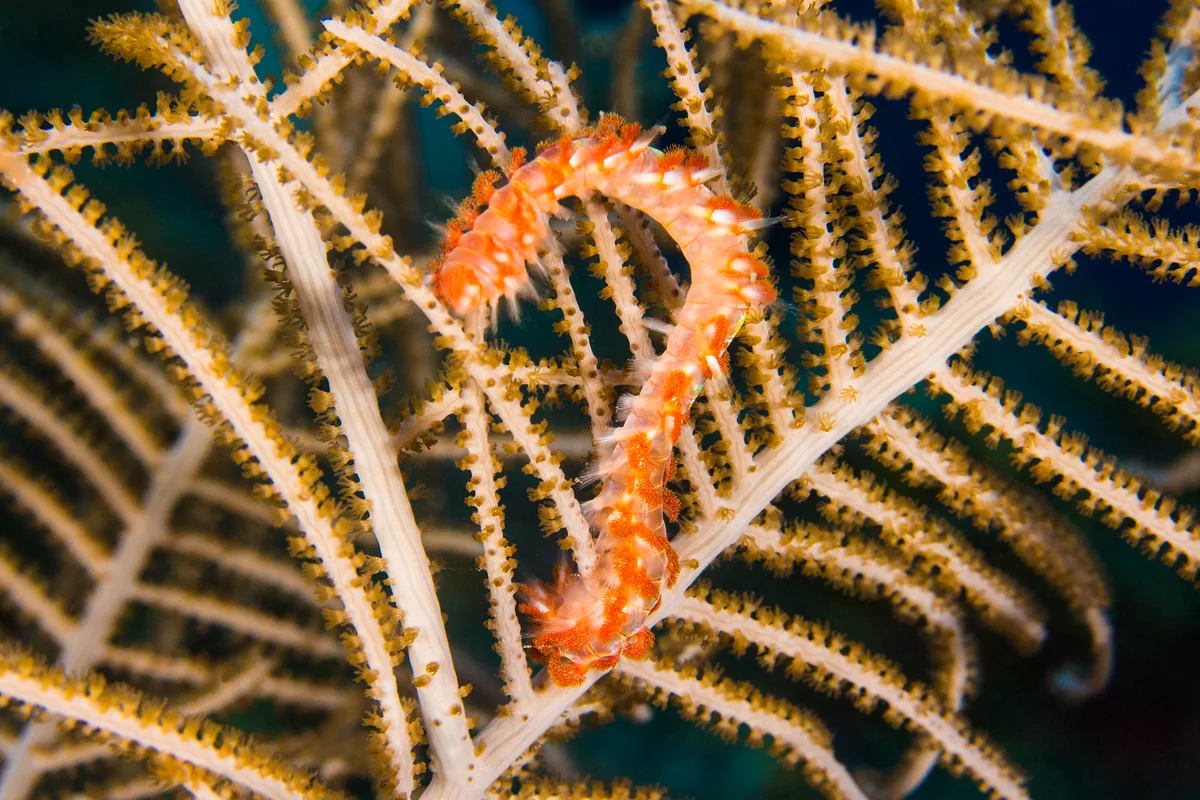
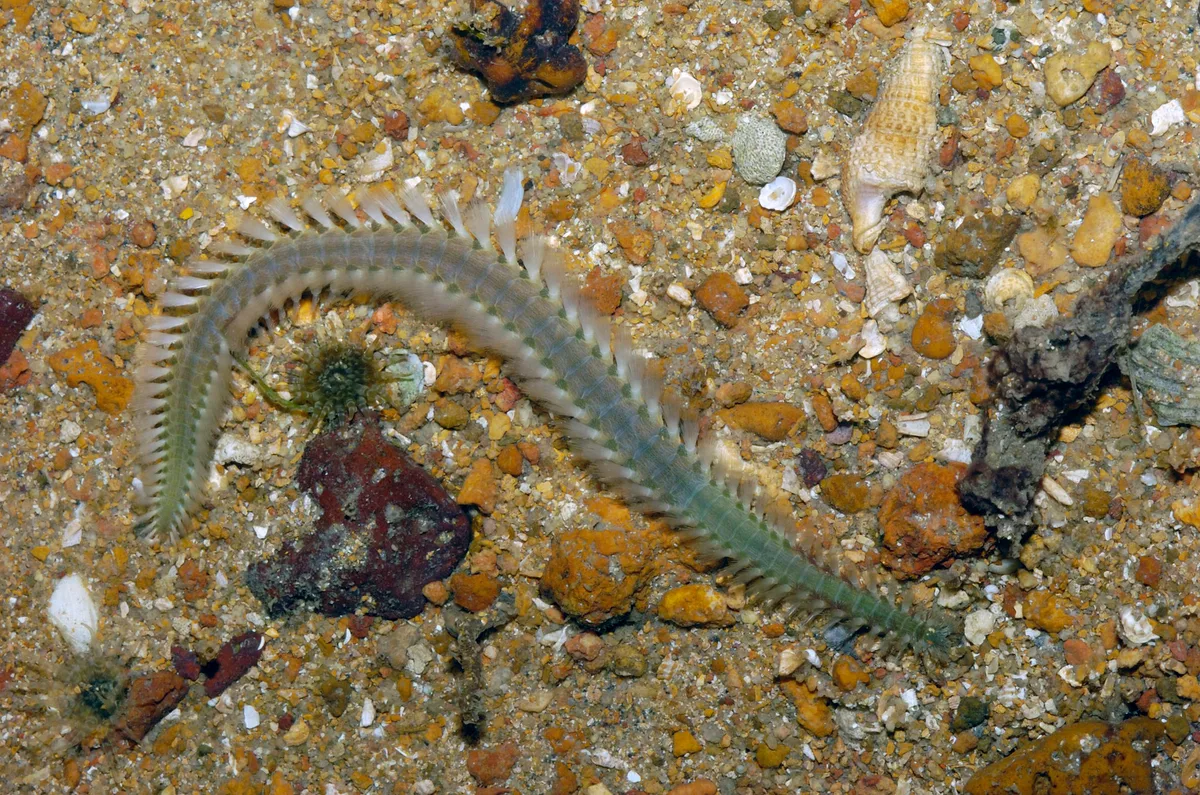
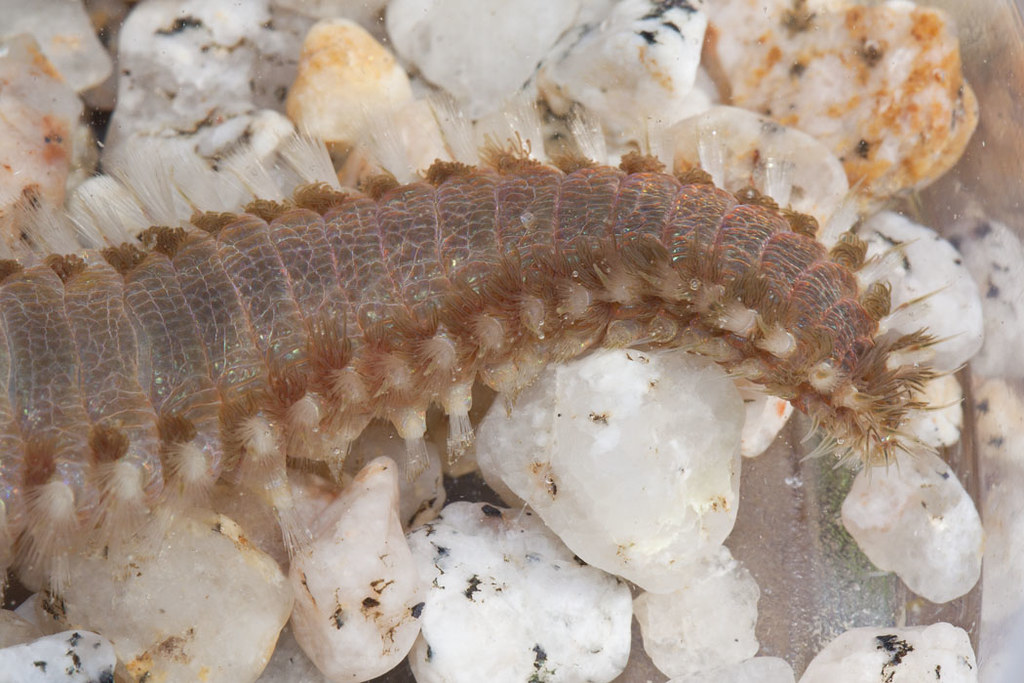
A long, pale, flattened worm reaching about 24 cm (9 in), with dense white bristles down both flanks and none of the red gill tufts that mark its bearded relative. It is the fireworm most people actually meet, because it lives under stones in the shallows exactly where hands go.
The bristles work the same way: brittle, hollow, and loaded with a compound that produces burning and swelling for hours after the worm itself is gone. Divers get stung turning rocks, waders get stung standing on them. The species is a scavenger rather than a coral eater, arriving in numbers wherever something has died, and it is one of the reliable animals of any night dive over rubble. Like the rest of the family it regenerates readily - a fragment of a few segments can rebuild a whole worm.
- long pale segmented body, flatter and paler than the bearded fireworm
- dense white bristles along both flanks, no red gill tufts
- found under stones by day, on open rubble at night
- length up to 24 cm