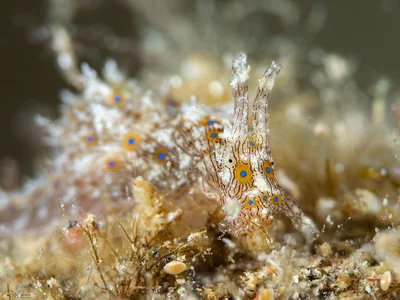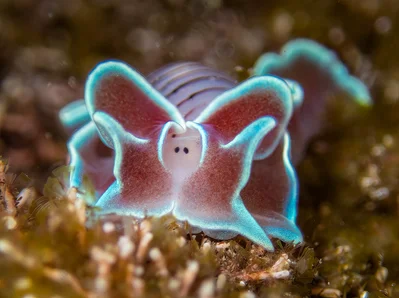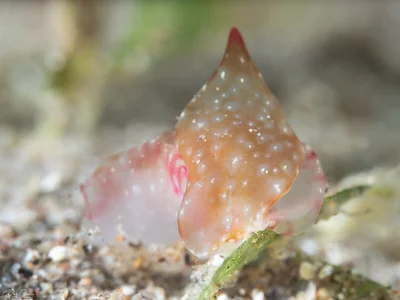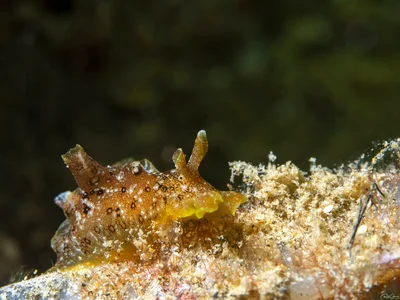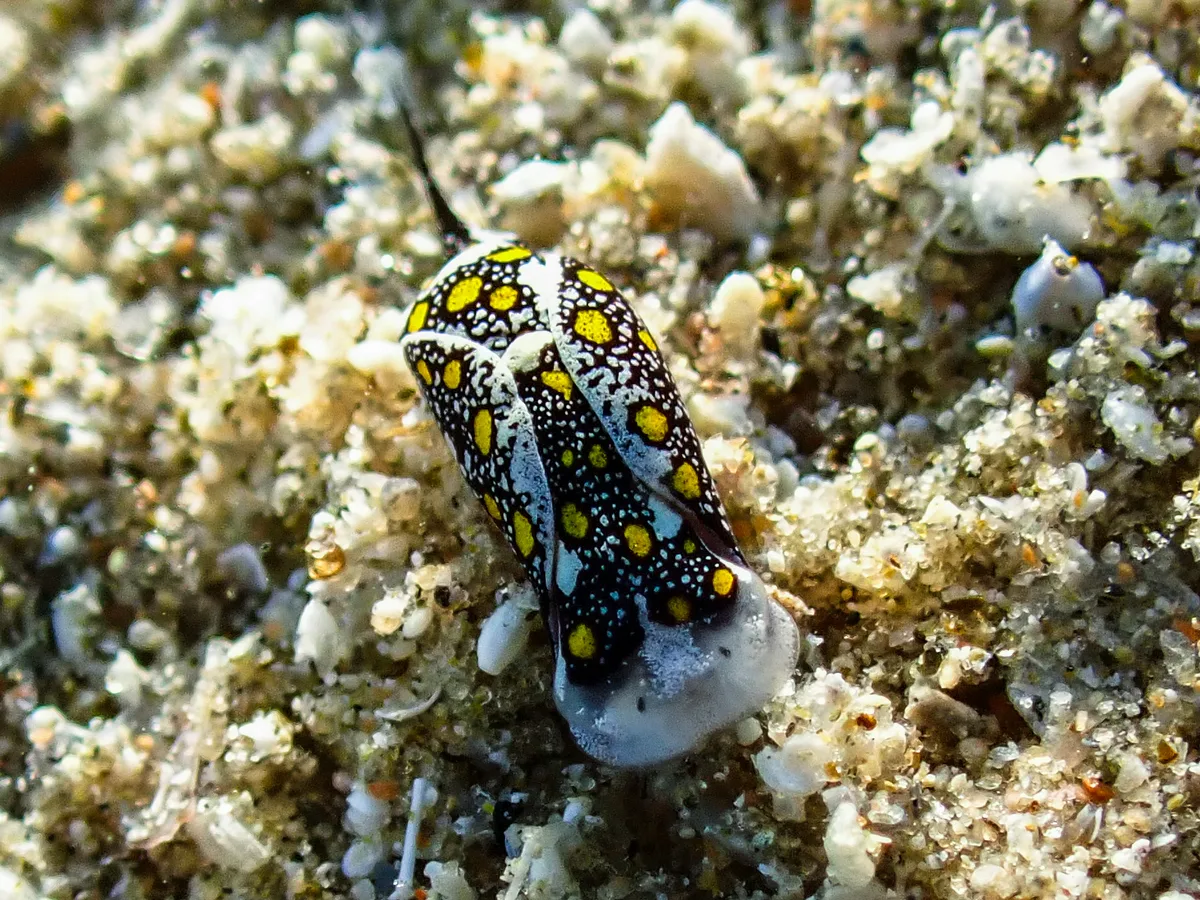
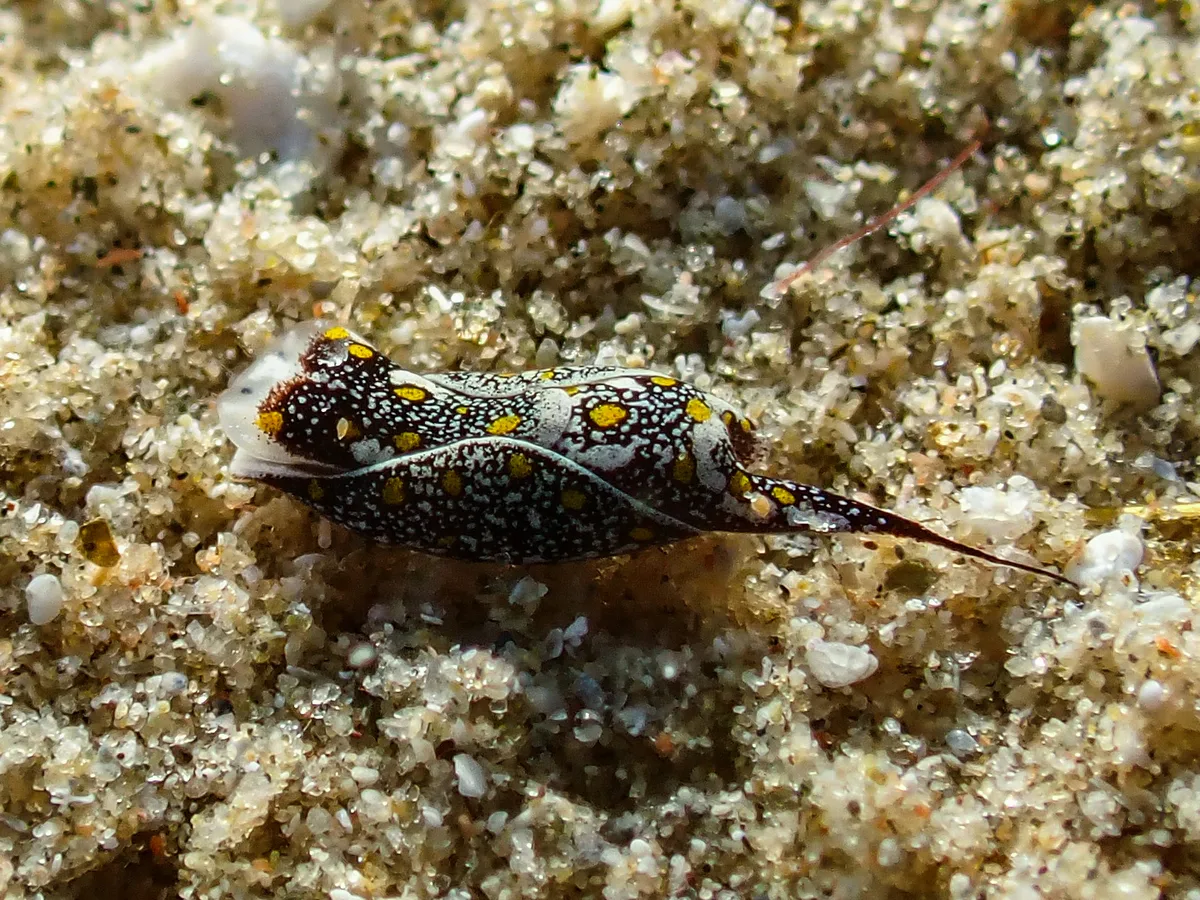
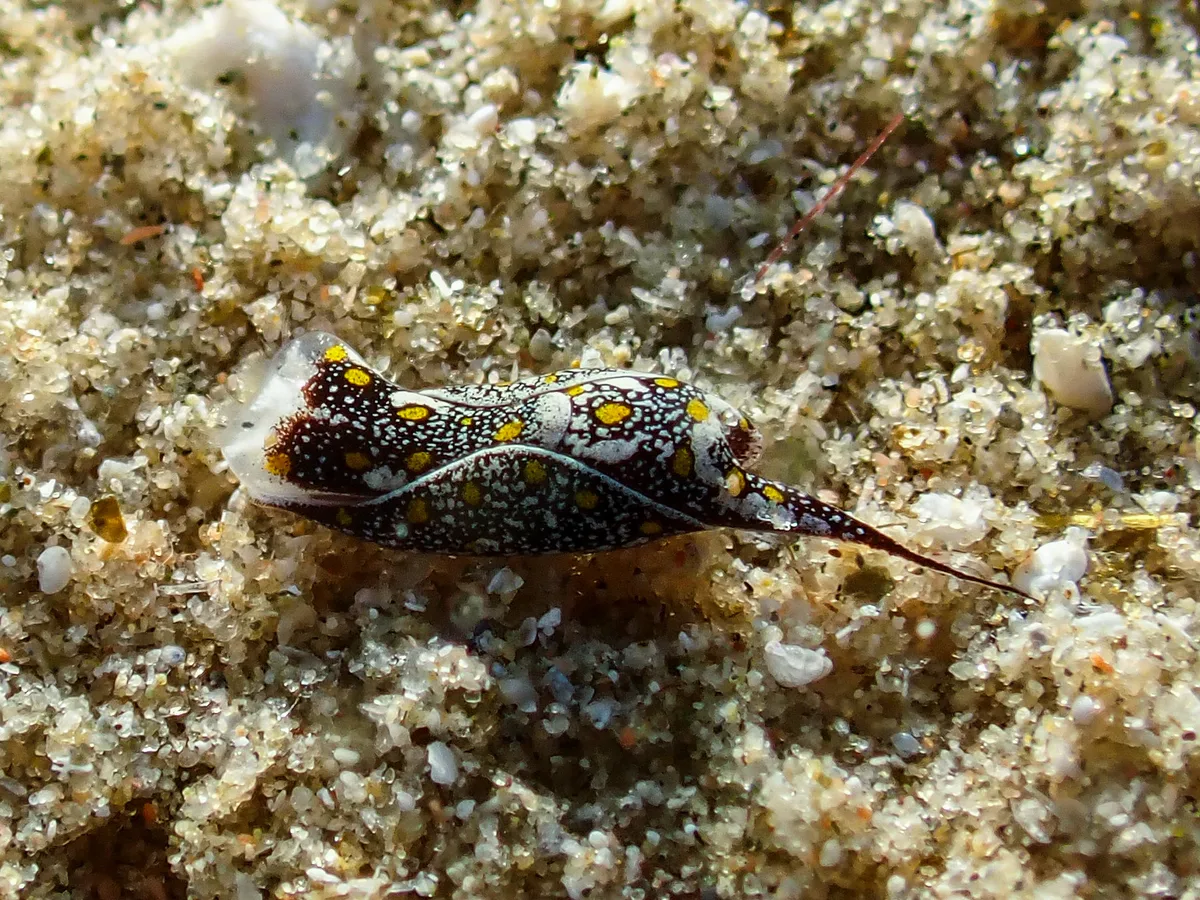
Mariaglaja tsurugensis is a small marine sea slug belonging to the family Aglajidae, a group commonly known as headshield slugs. The name refers to the broad, shield-like flap over the front of the body, which the animal uses like a plough to burrow through soft sediment as it hunts. Rather than the delicate, feathery gills seen in many other sea slugs, these headshield slugs are smooth-bodied, streamlined creatures well suited to a life of gliding just beneath the surface of sand and mud.
This species ranges widely across the tropical Indo-Pacific, from the coast of Tanzania in the west all the way to 🇦🇺 Australia in the east. Within this range it inhabits the warm, shallow waters of the 🌊 Red Sea, where divers with a keen eye may spot it moving over sandy and muddy bottoms in search of prey. Like its relatives, it is an active predator rather than a grazer, using its plough-shaped headshield to detect and engulf small invertebrates hidden in the sediment.
One of the more intriguing aspects of this slug lies in its reproduction. Mariaglaja tsurugensis is a simultaneous hermaphrodite, meaning each individual carries both male and female reproductive organs at the same time and can play either sexual role during mating. In a notable study, Sprenger and colleagues (2011) found that its mating rate stayed remarkably steady regardless of how many potential partners were available - a result that runs counter to long-standing theory. Because these mating rates sat close to the optimum for female reproductive success, the findings challenged the common assumption that mating in such hermaphrodites is chiefly driven by the male role, and pointed to the need for further research into how mating affects fitness through the male side of the equation. The work was published under the name Chelidonura sandrana, which is what this animal was called at the time - useful to know when looking the research up.
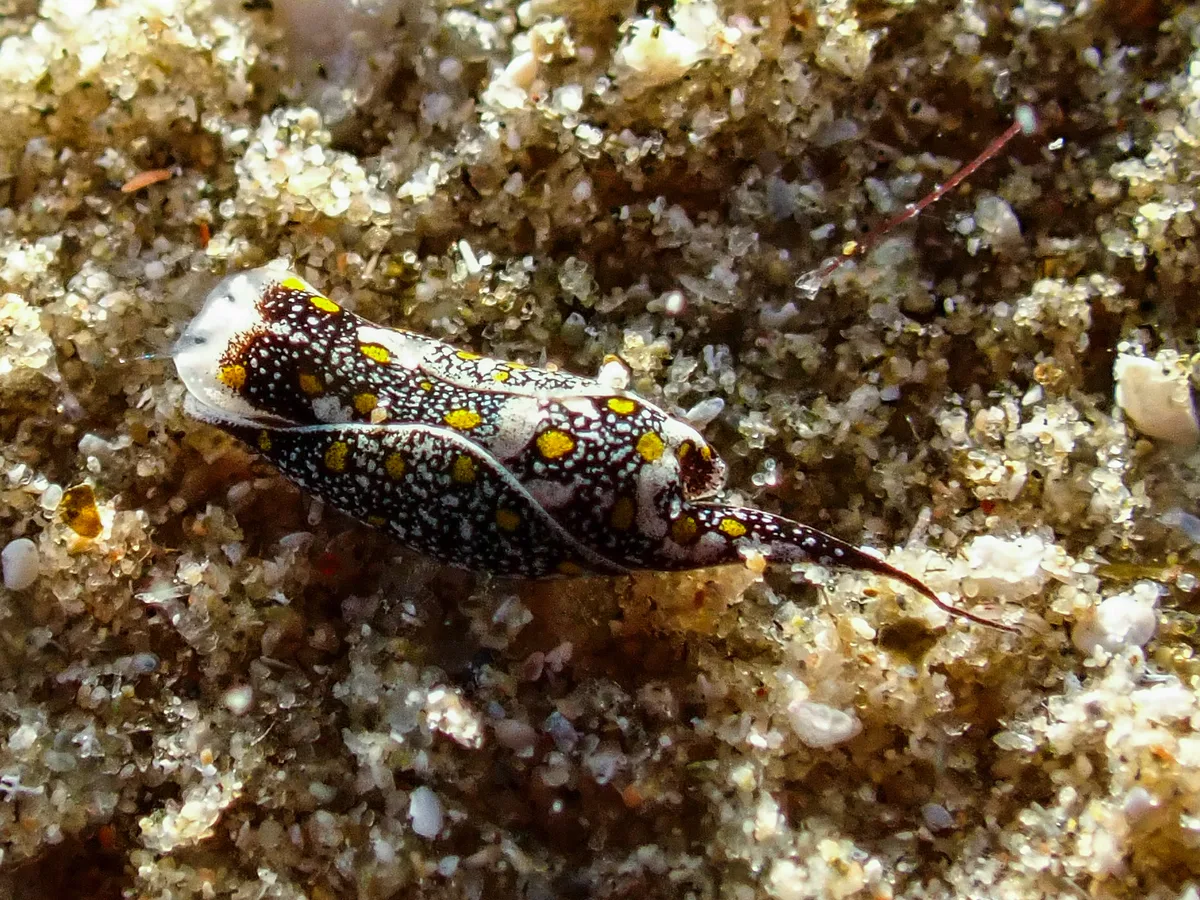
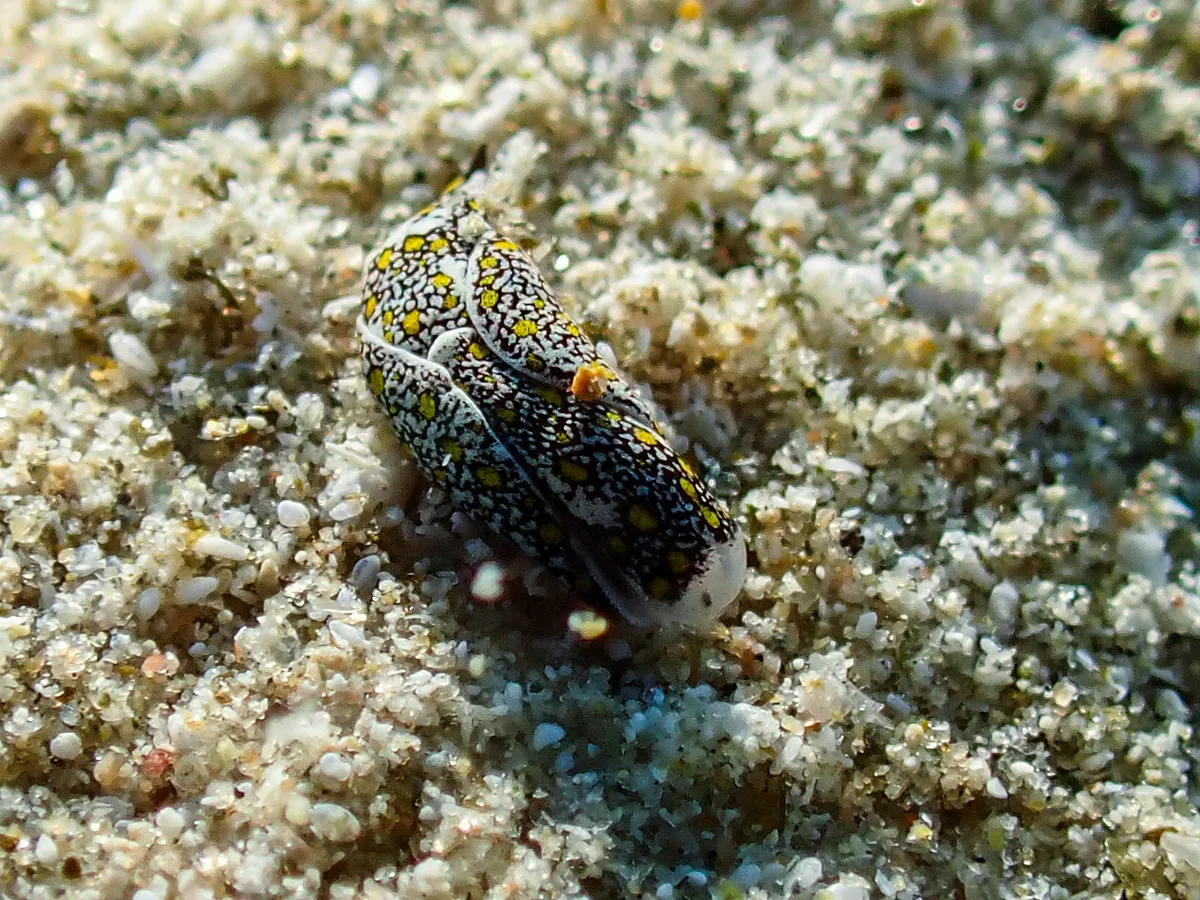
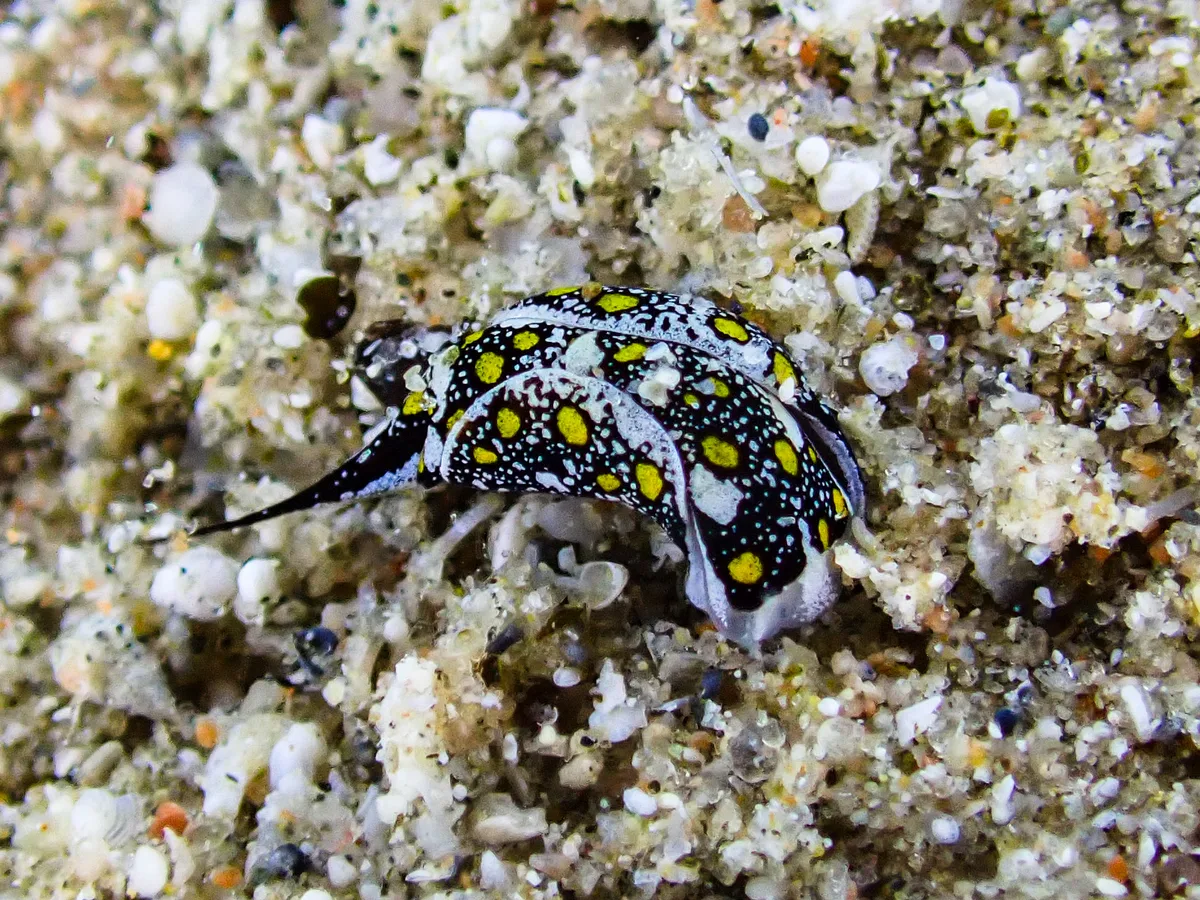
- black body dusted with fine pale blue and white specks
- bold round yellow spots scattered over the back
- white headshield in front and white margins along the sides
- one tail lobe drawn out into a long trailing filament