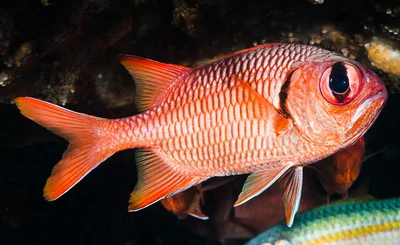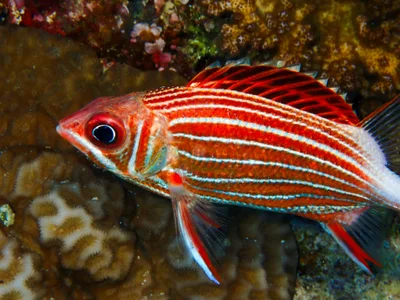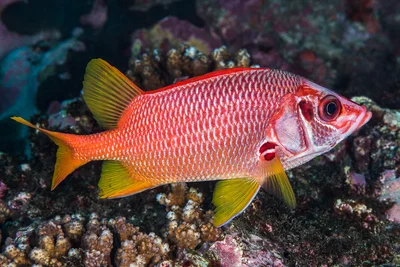
Before it looked like this, it looked like nothing else in the sea.
Squirrelfish larvae pass through a stage so strange that it was originally described as a separate genus of fish. The larva carries a long spike of a snout projecting forward from the head, a set of enormous spines on the gill covers, and a transparent body, and it drifts in open water for weeks looking like a tiny glass lance. Only when specimens were reared through the change did anyone establish that this animal and the red fish in the cave are the same species at two points in its life.
That pelagic stage is why the family is spread across whole oceans while the adults never leave their patch of rock. Weeks of drifting moves the young thousands of kilometers; the adult then settles, finds a hole and effectively stops traveling for the rest of its life. Dispersal and residency are handled by two different animals wearing the same genome.
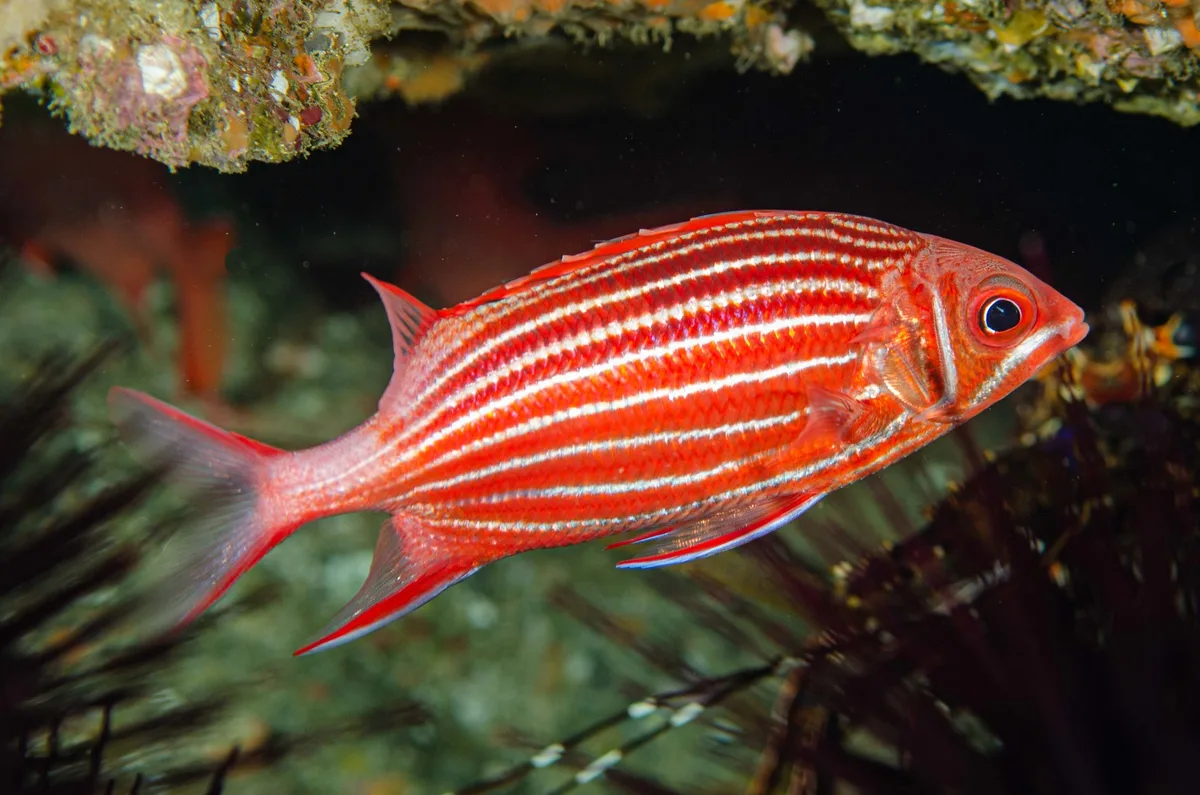
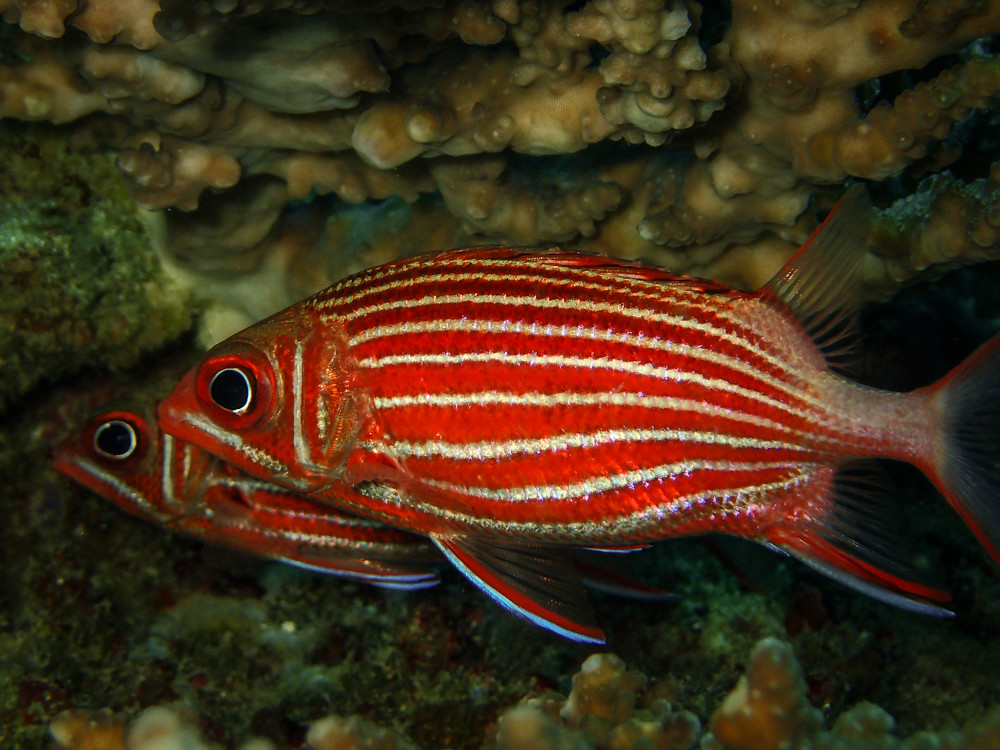
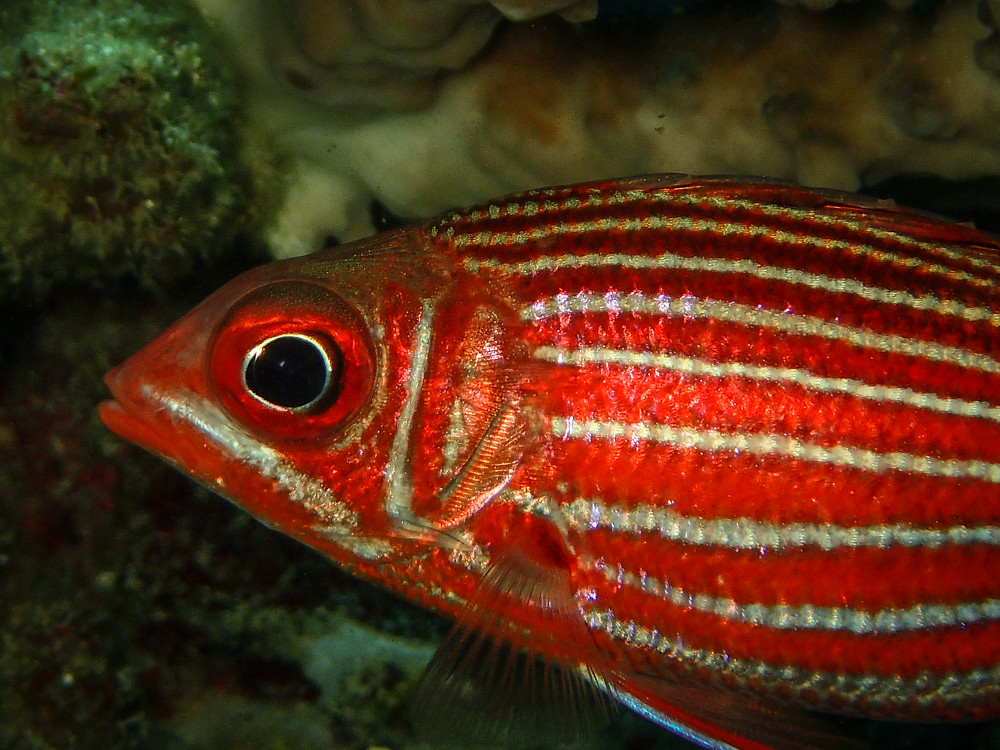
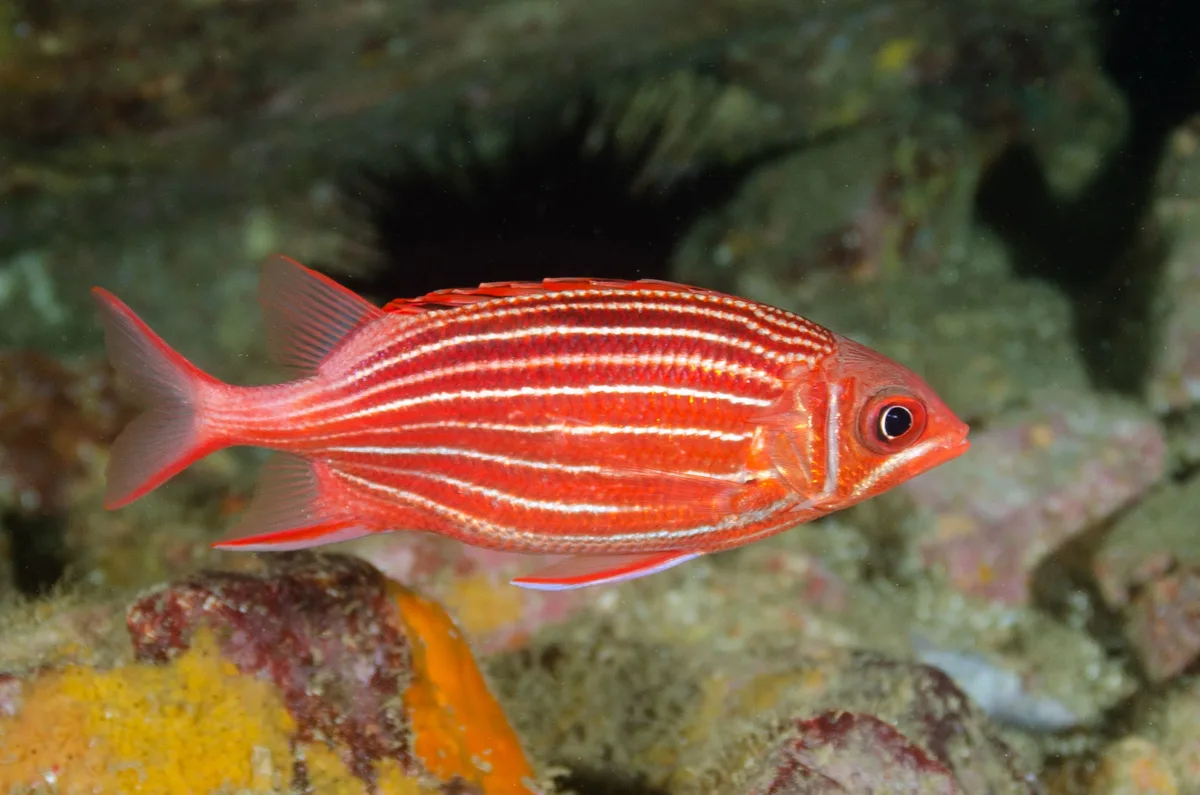
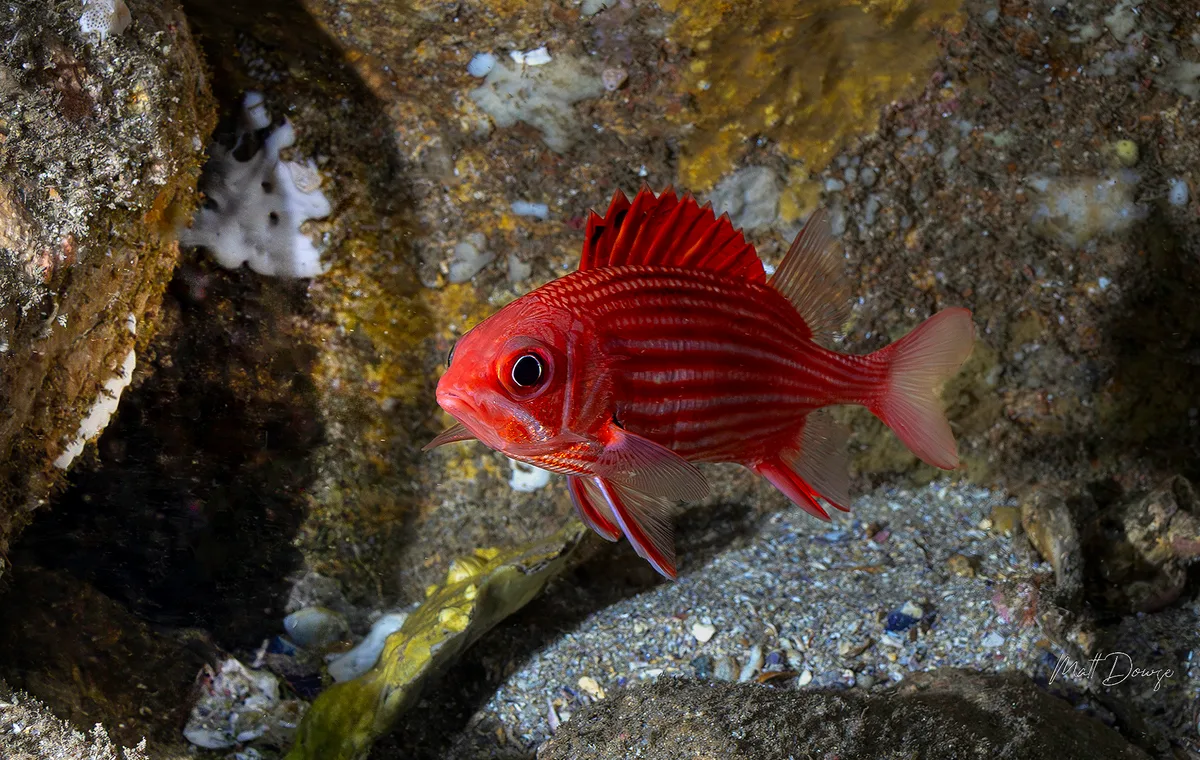
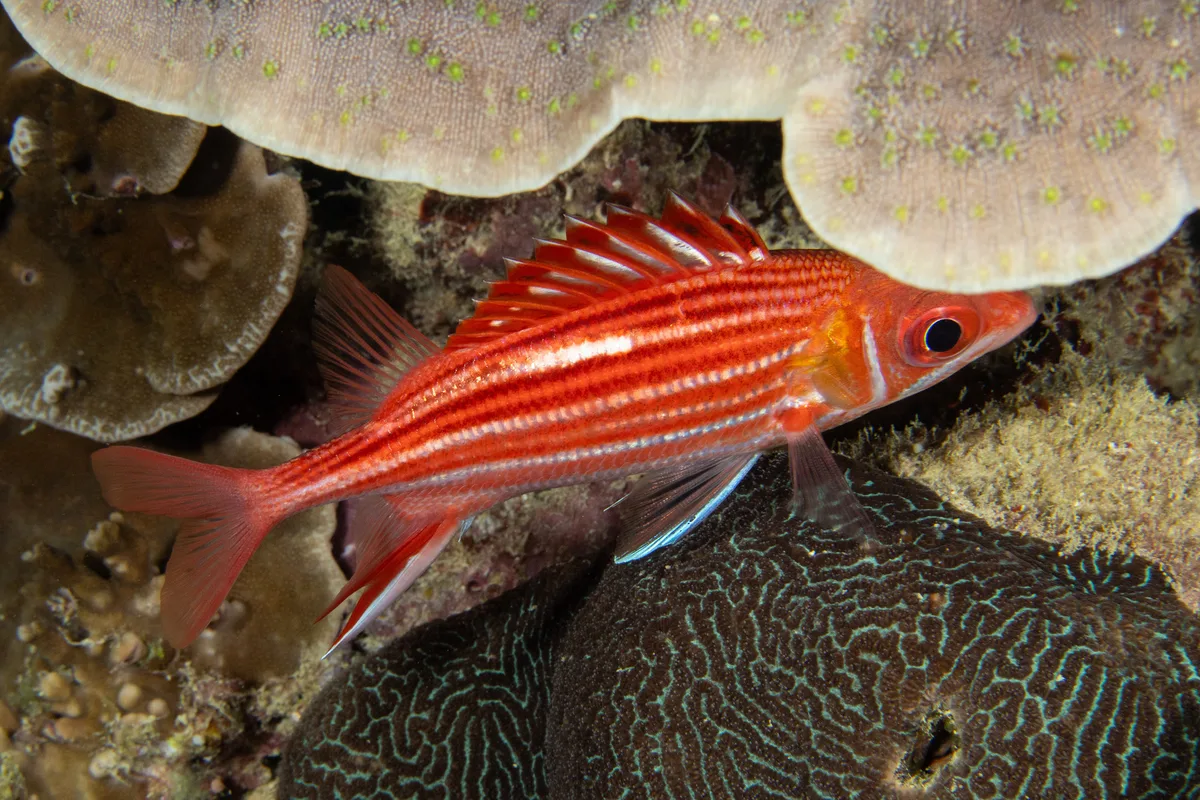
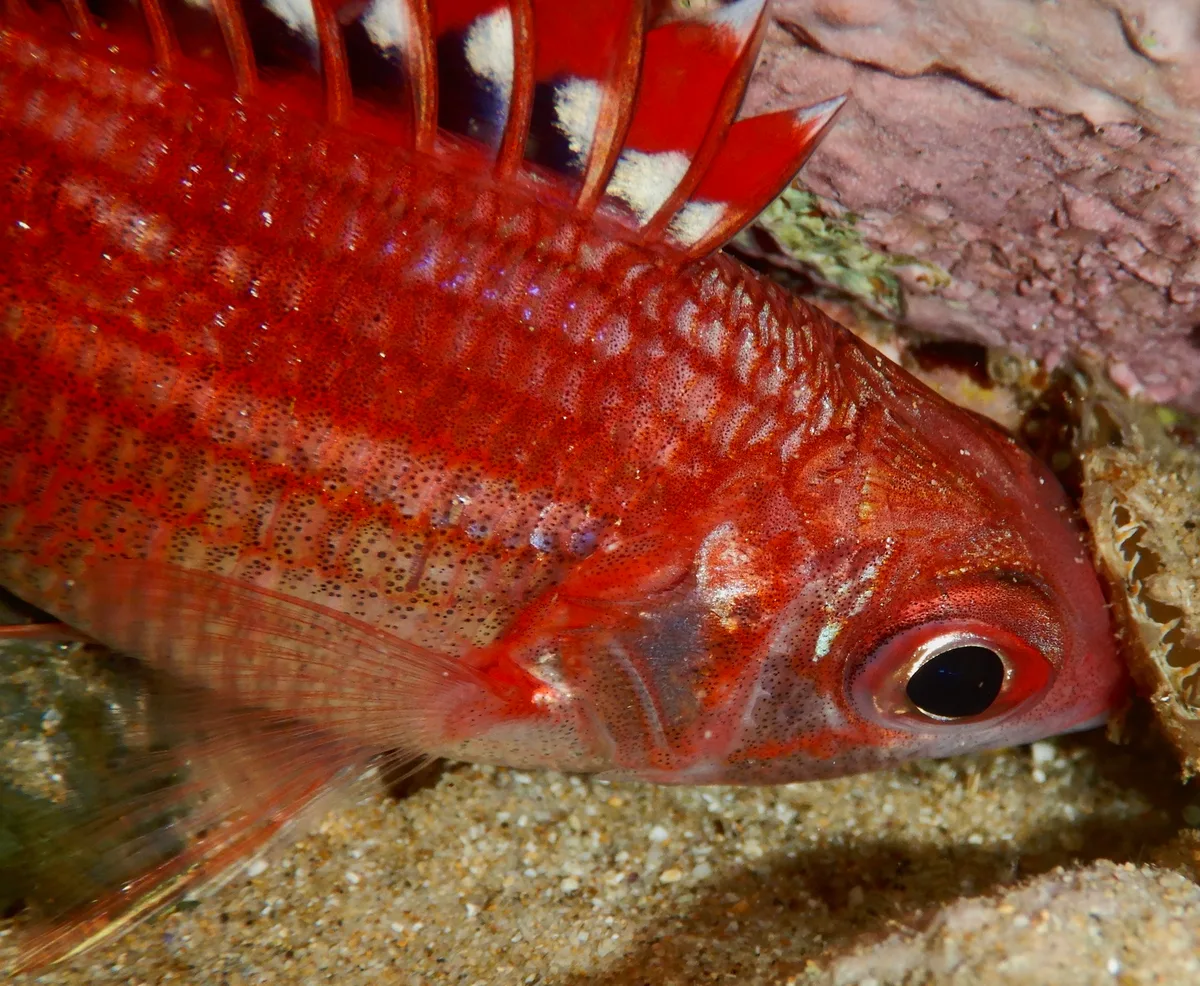
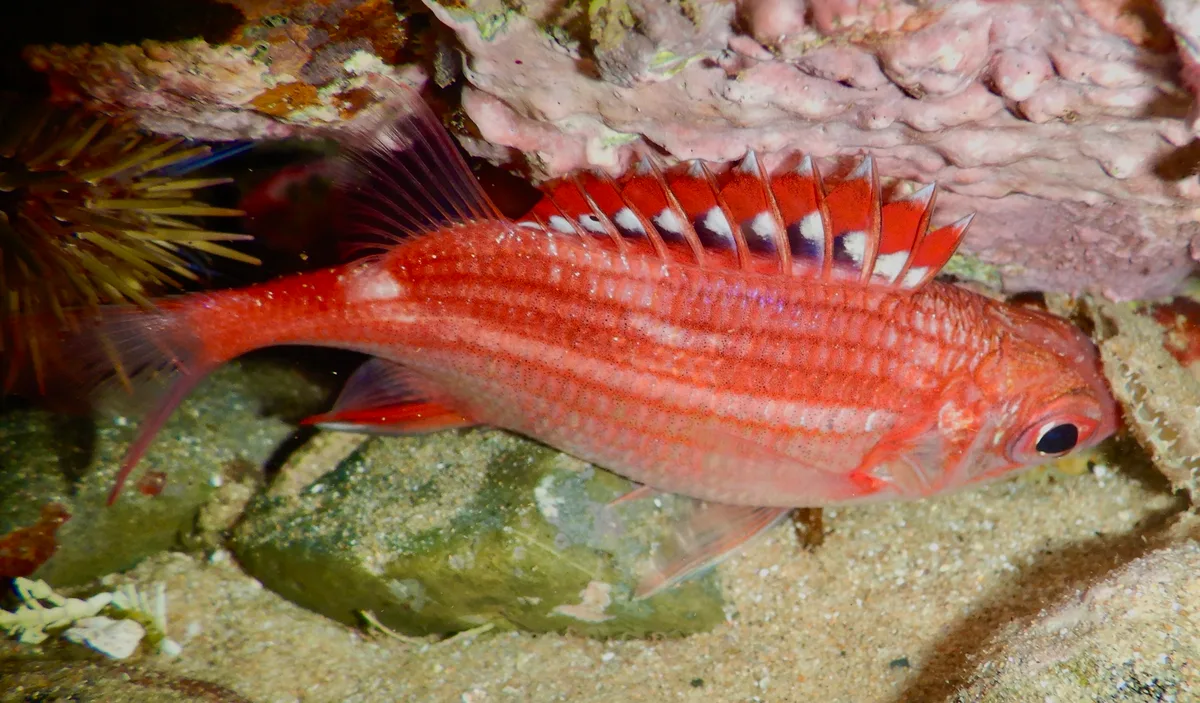
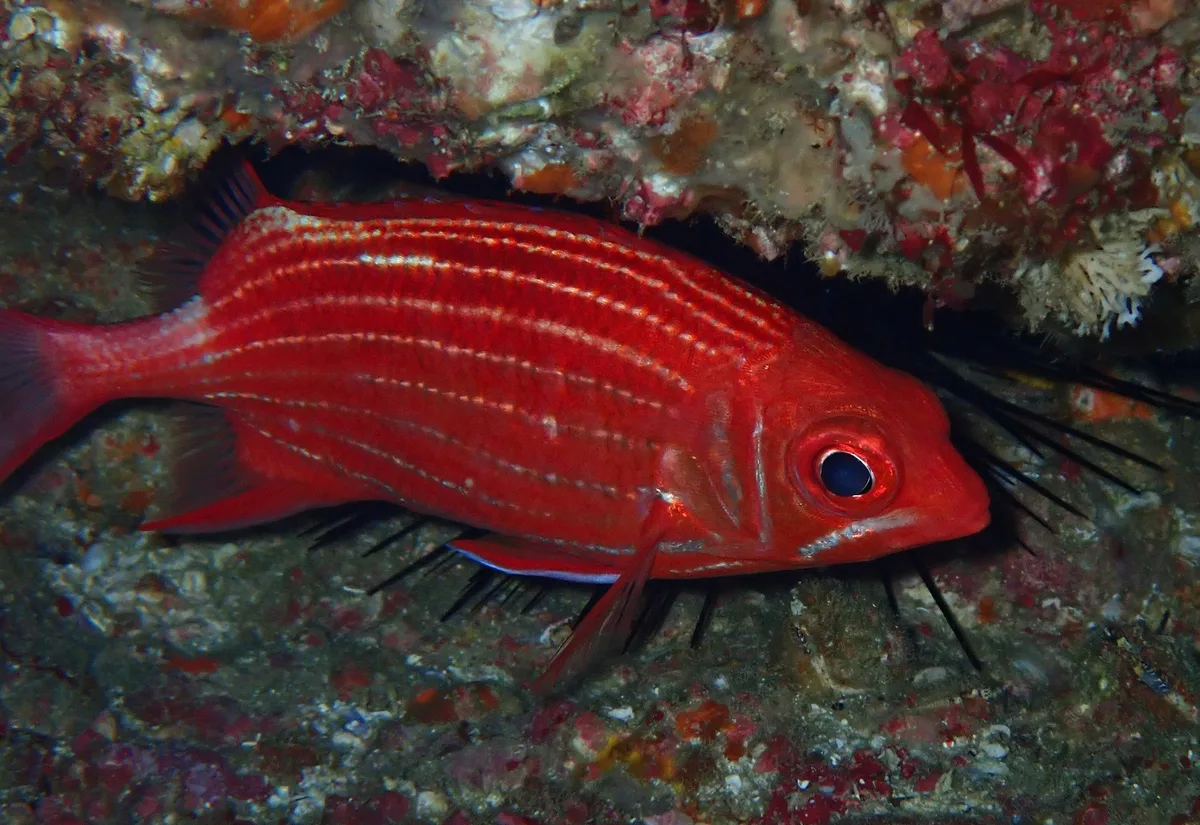
The adult here is the whitish one with fine red lines running along every row of scales, out to a hundred and ninety meters, and it carries the family's venomous cheek spine.
The genus. Sargocentron Fowler 1904 - sargós (Greek) + centron (any sharp point). ETYFish
The species. Sargocentron ittodai (Jordan & Fowler 1902) - Japanese name for this fish. ETYFish
- whitish body with fine red lines following each row of scales
- large eye, red fins
- venomous spine at the rear corner of the cheek
- up to 20 cm