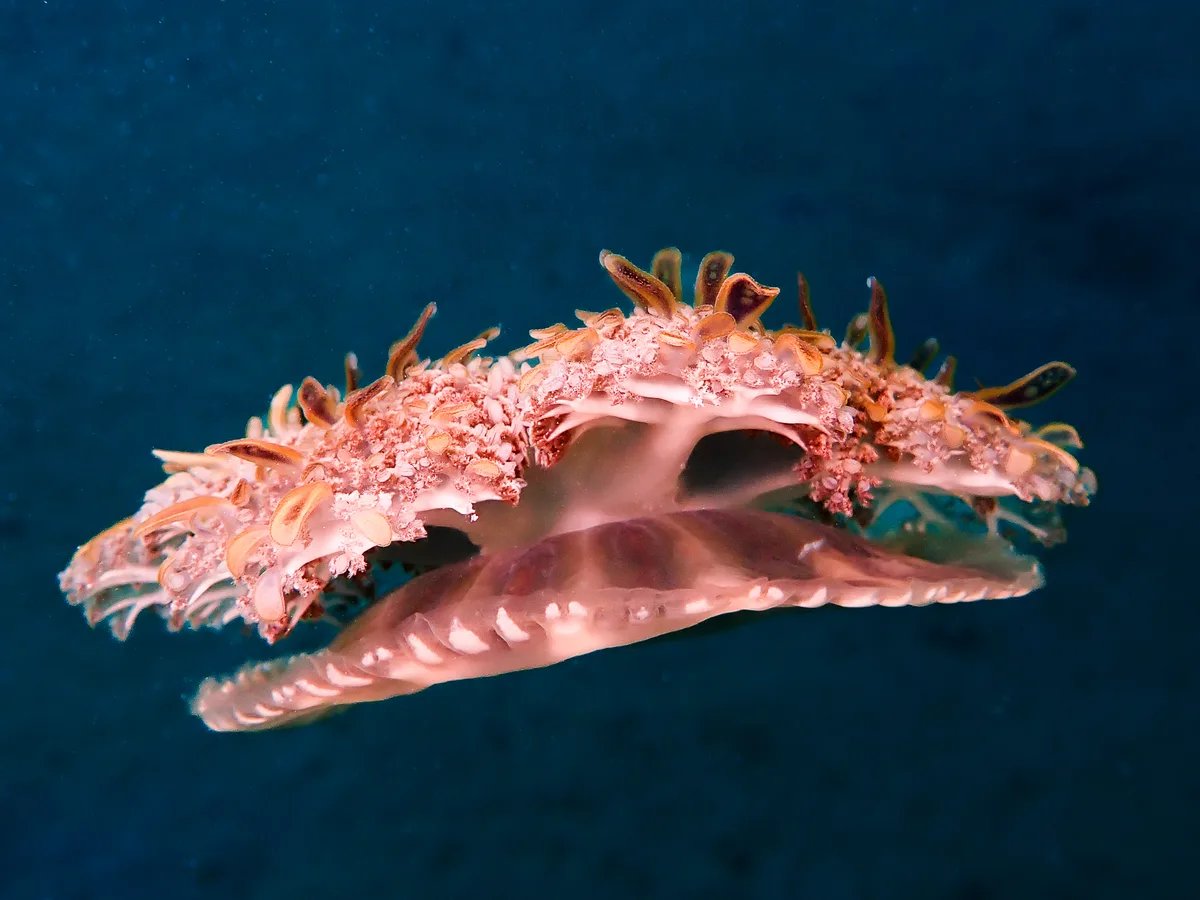
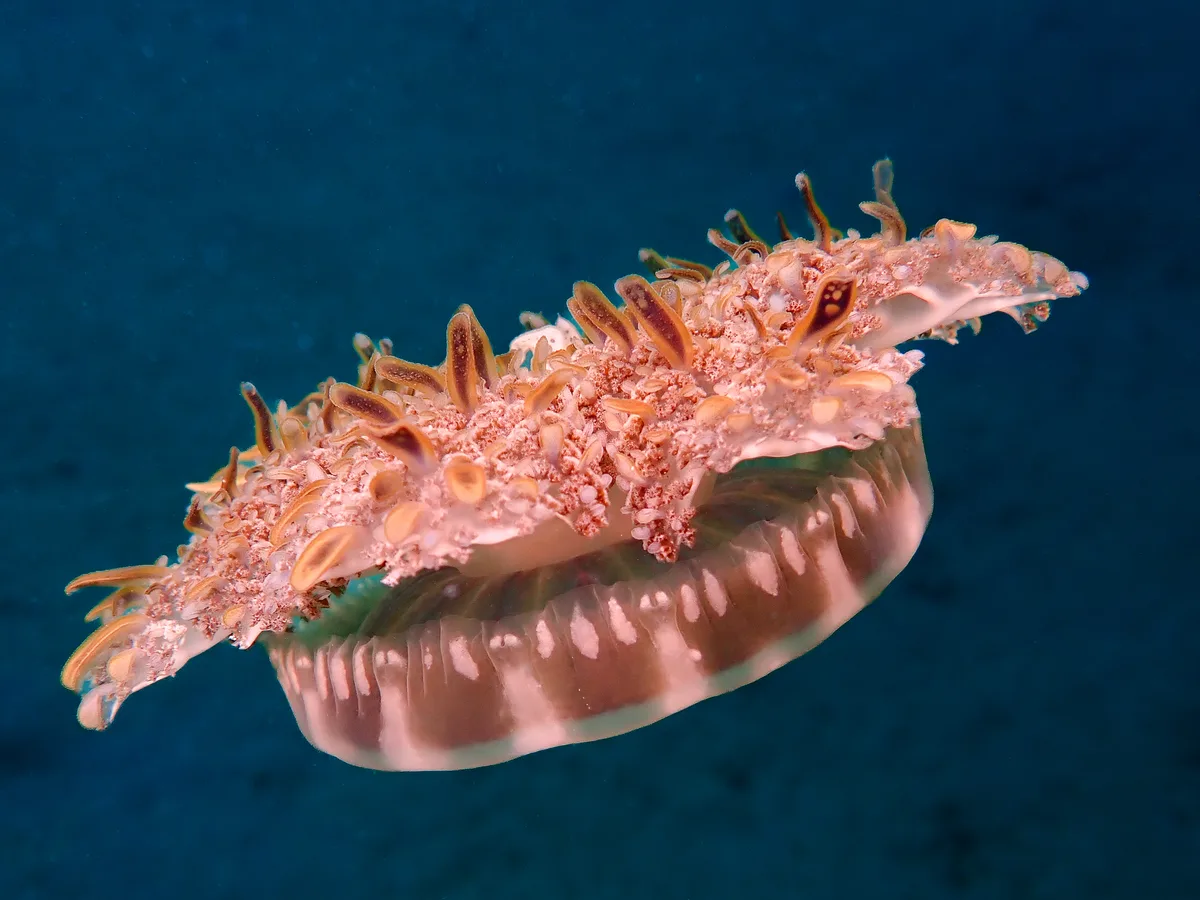
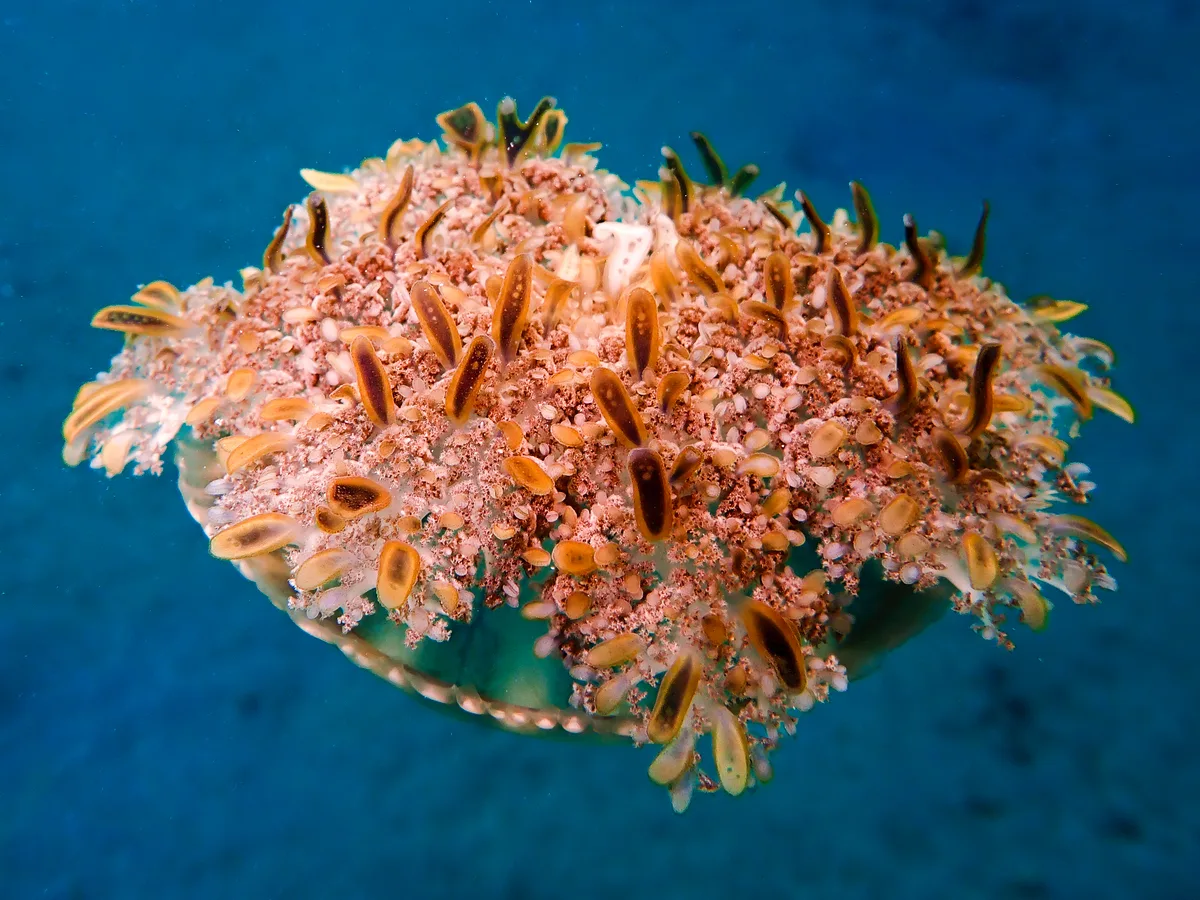
A jellyfish that lies on its back on the bottom of a shallow bay, bell down, frilly arms pointing at the sky, pulsing gently and going nowhere. Fields of them in ankle-deep water look like a bed of olive flowers.
The posture is agriculture. The tissue is packed with symbiotic algae, and the animal lies inverted to hold them in the sunlight for as long as the day lasts, living largely on the sugar they produce and topping it up with plankton caught in mucus. Where the water is clear and shallow, that is a better business than swimming.
It stings without touching. Swimmers over a bed of these report burning skin without contact, and the reason was only worked out in 2020: the animal releases little balls of stinging cells wrapped in mucus, self-propelled by tiny beating hairs, which drift through the water for up to ten days. The phenomenon has a name, stinging water, and this is the animal responsible.
Beds spread by budding as well as spawning, which is why a bay either has hundreds or none, and why they colonize new lagoons and marina basins so readily.
- lies on the bottom bell-down with the arms pointing up, like a flower
- branched frilly arms, blue-gray to olive with pale spots
- pulses gently in place rather than swimming anywhere
- bell up to 30 cm across