
The diagonal shrimpgoby, scientifically known as Amblyeleotris diagonalis, is a fascinating species of goby found in the warm waters of the 🌊 Indian Ocean and the western 🌊 Pacific Ocean. Widely distributed across regions from the 🌊 Red Sea to the Great Barrier Reef, this tropical fish is commonly situated on reefs at depths ranging from 6 to 40 meters (20 to 131 feet).
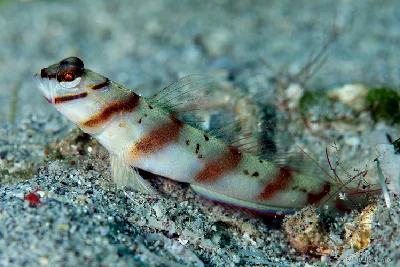
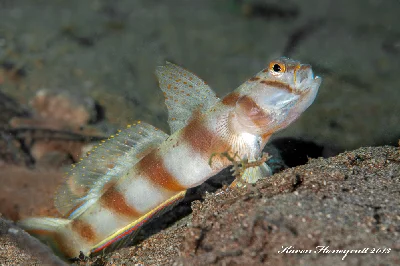
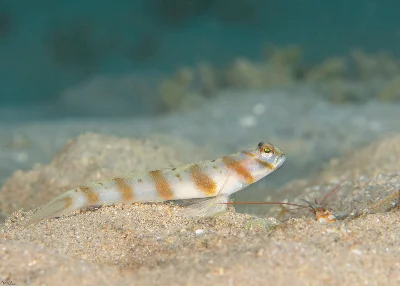
Measuring up to 11 centimeters (4.3 inches) in length, Amblyeleotris diagonalis is notable for its distinct appearance. Its body is primarily whitish, adorned with two thin, slanting dark brown bands across its snout and cheek, and five wider brown bands along its sides, interspersed with some brown spots. The anal fin features a striking yellow color with a blue margin. The goby has specific fin structures, with seven dorsal spines and 13 dorsal soft rays, alongside one anal spine and 13 anal soft rays.
The diagonal shrimpgoby engages in a commensal relationship with alpheid shrimps, sharing burrows crafted and maintained by these shrimps in sandy or rubble-covered areas. This partnership provides the goby with shelter on the coastal to outer reef sand slopes.
The name "Amblyeleotris" comes from Greek, where "amblys" means darkness and "eleotris" is a name for a Nile fish, referencing ancient texts. The species name "diagonalis" is derived from Latin, highlighting the oblique bands on the goby’s body.
Why it's threatened
Threat classification from the IUCN Red List.


