
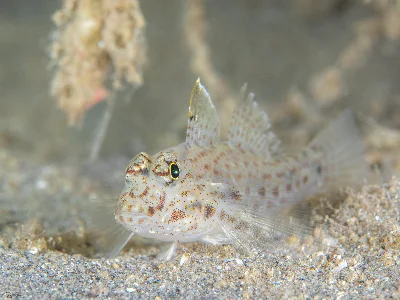
The Common Sandgoby, scientifically known as Fusigobius neophytus and also referred to as the Neophyte Goby or Sand Goby, is a small marine fish found in shallow waters, typically at depths ranging from 1 to 10 meters (approximately 3 to 33 feet). This fish reaches a maximum size of about 7 centimeters (2.8 inches) in length. It is commonly found in reef-associated environments, particularly areas with sand and rubble.
The Common Sandgoby has a distinctive translucent greyish appearance, with small white and brown spots adorning its head and body. It features short, dark bands slanting along its back and has a small black spot at the front of its dorsal fin, as well as on the tail base. These markings help it blend in with its sandy and rocky surroundings.
Why it's threatened
This species is rarely if ever used for aquaculture or in the aquarium trade. There are no known major threats.
Threat classification from the IUCN Red List.


