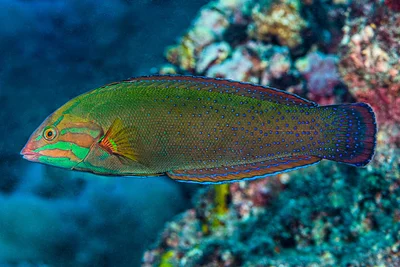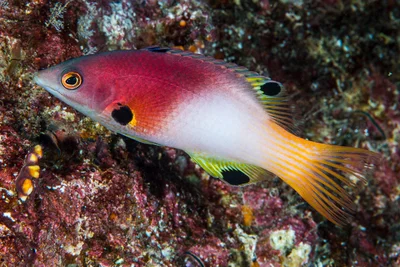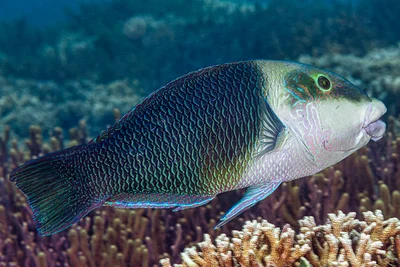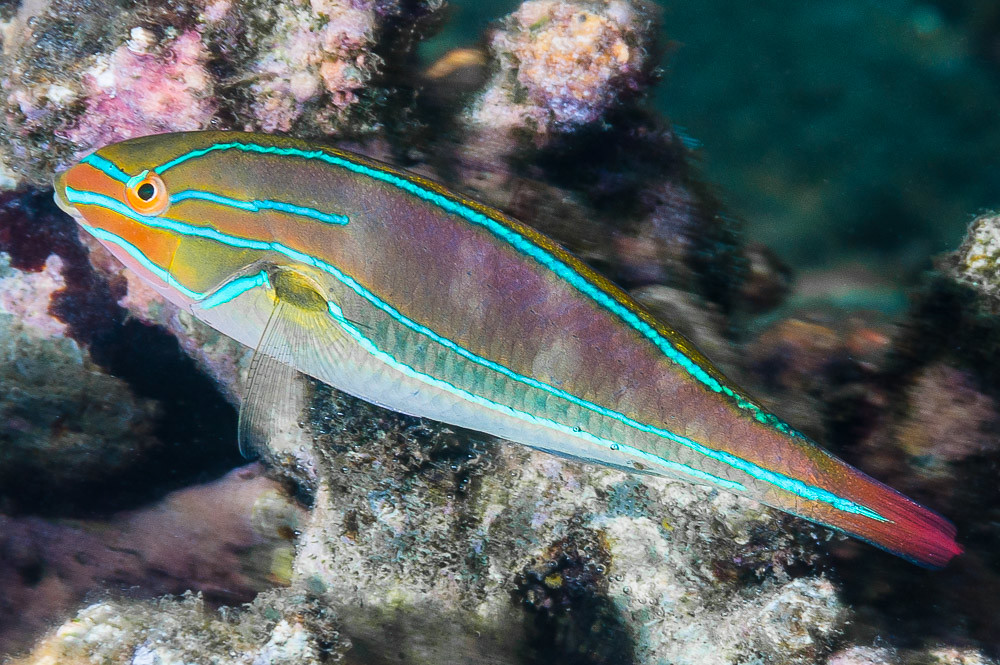
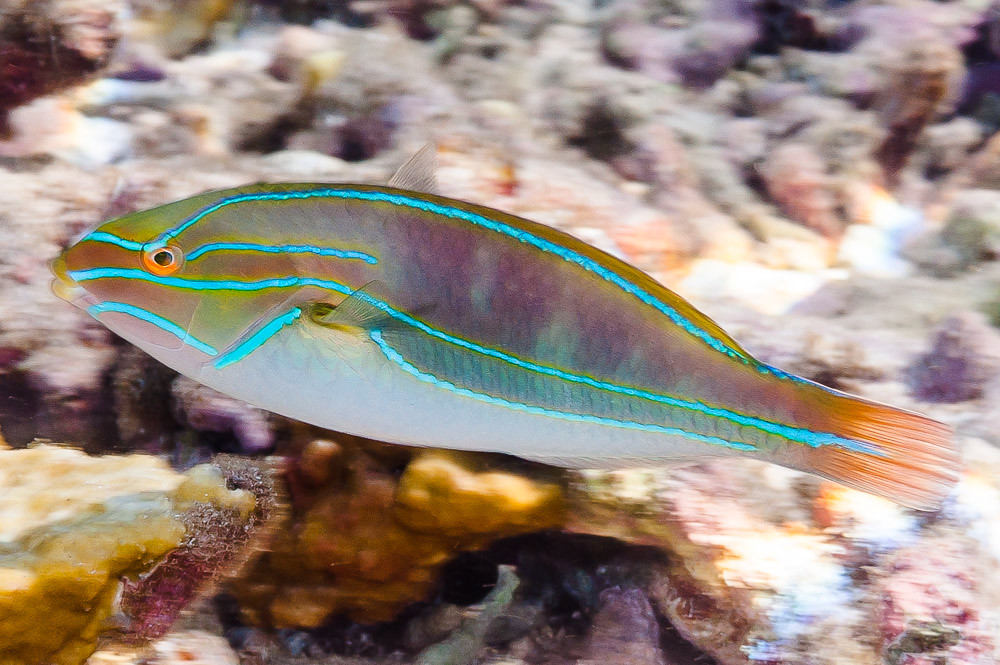
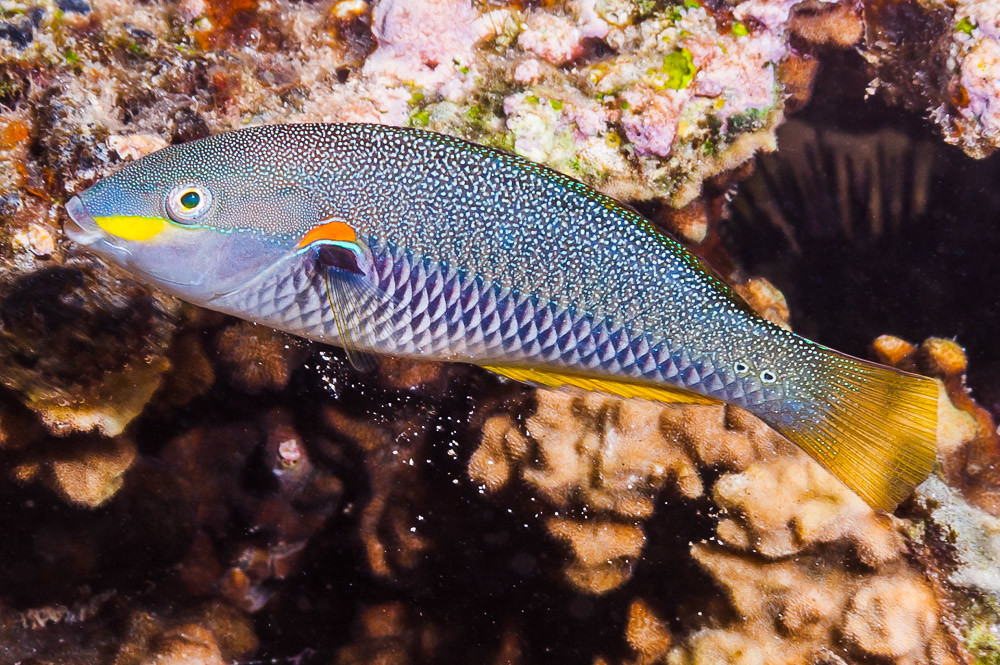
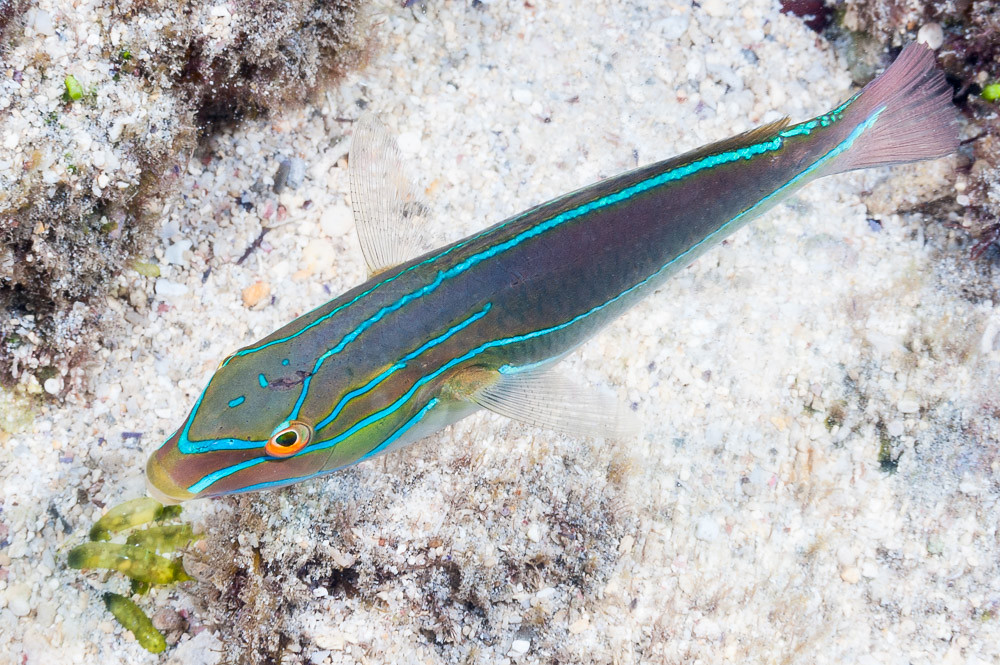
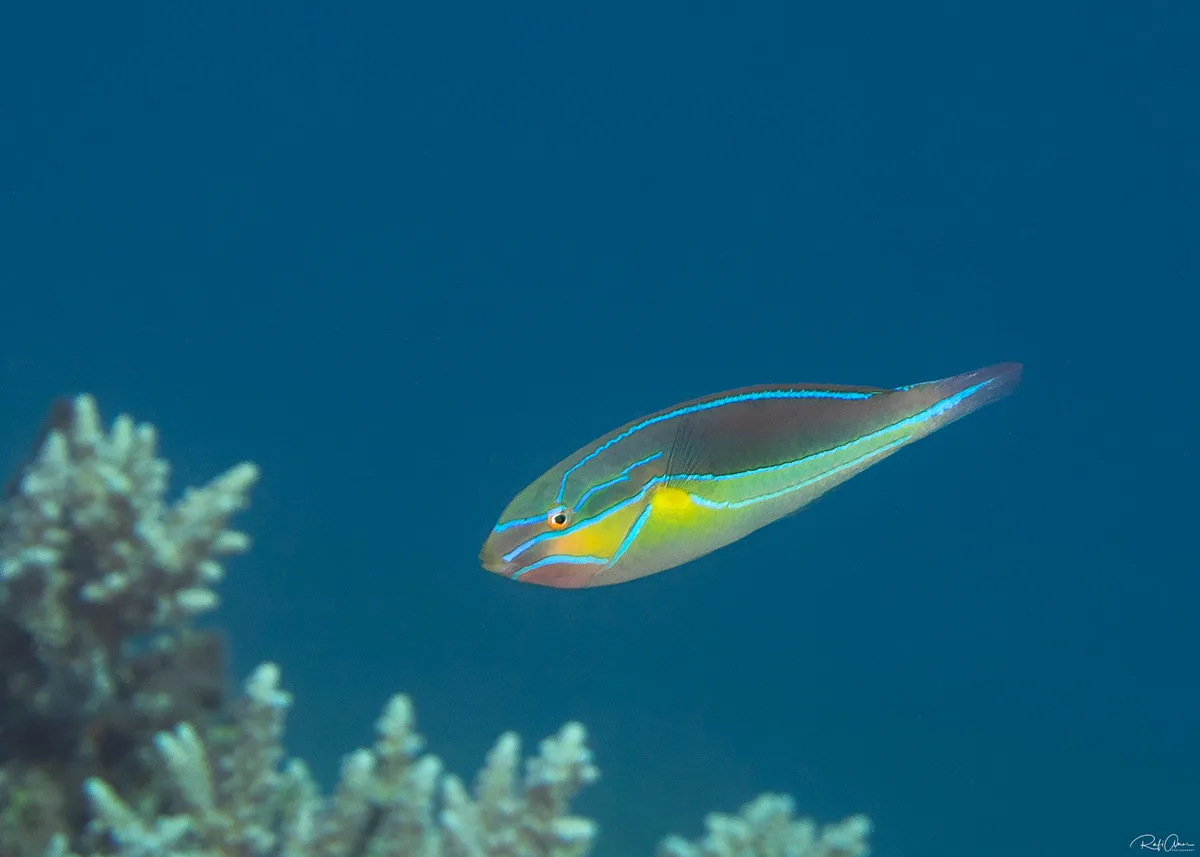
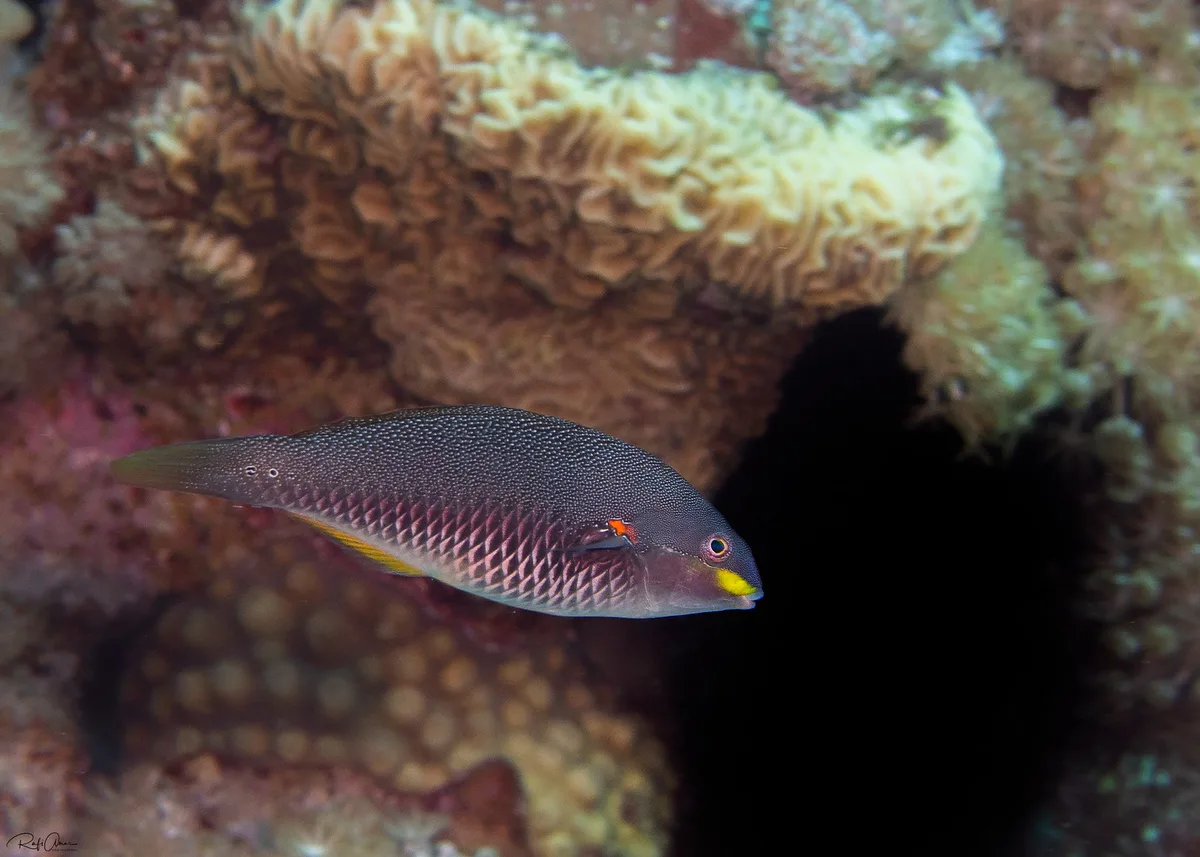
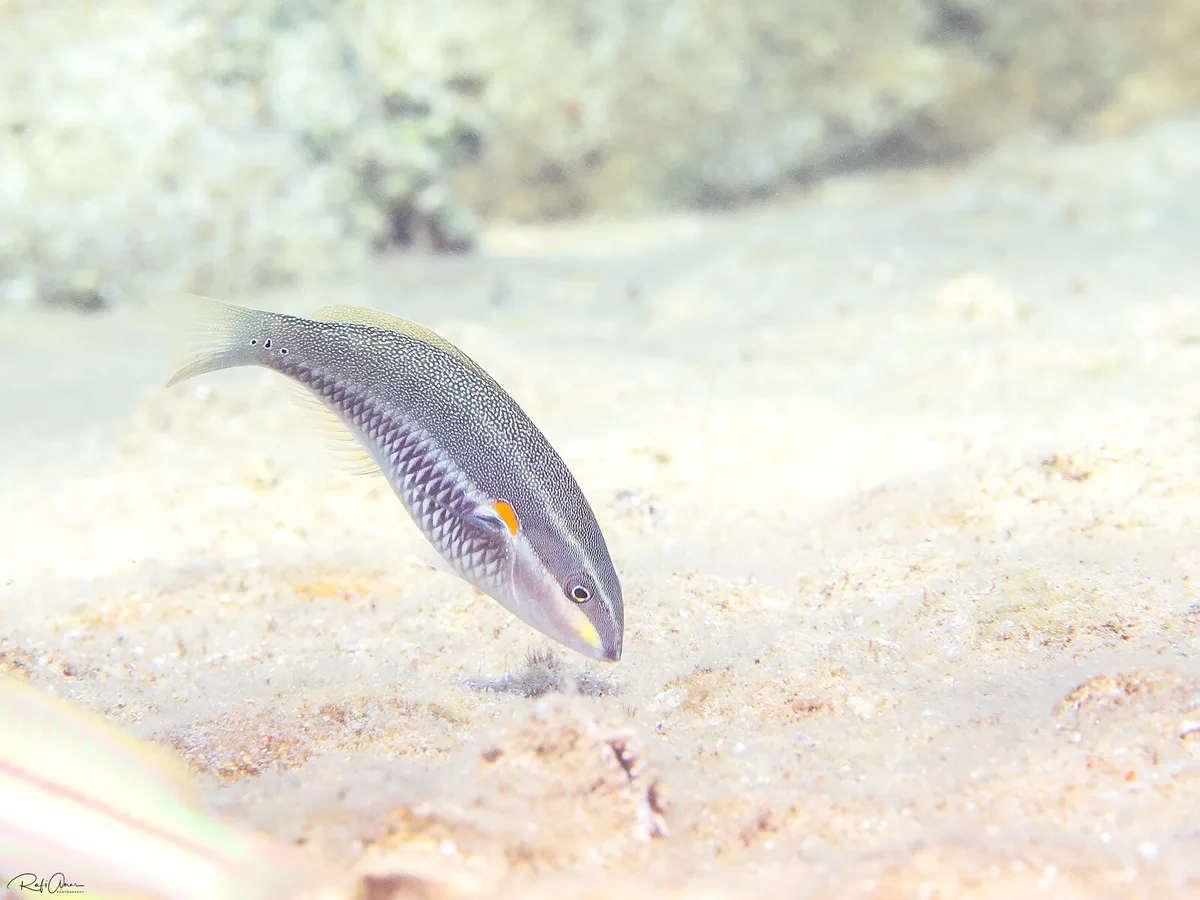
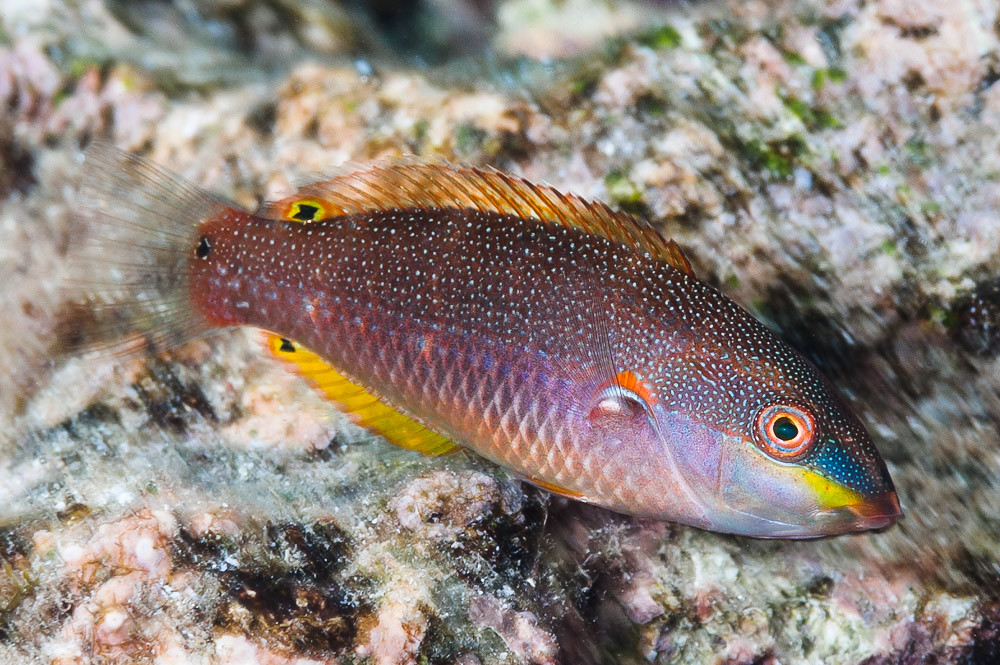
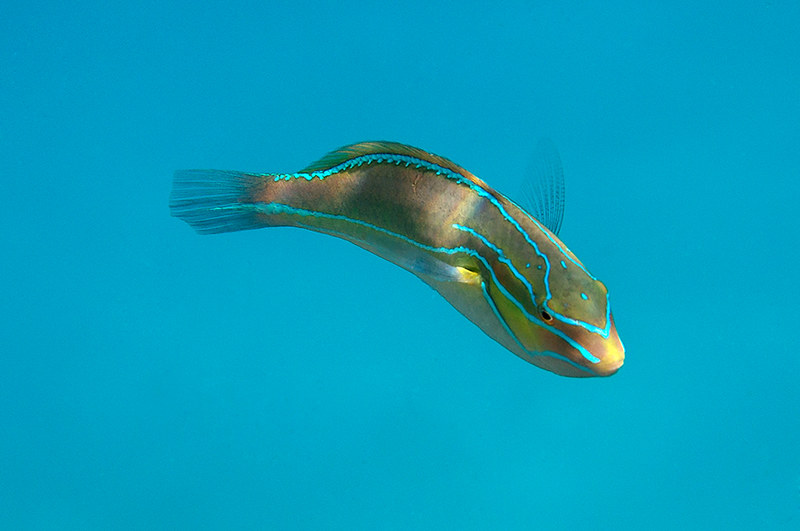
Males are green with bright blue lines and a red patch behind the eye; females are plain brown with white speckles. Same species, and a diver photographing both goes home thinking they found two.
Fourteen centimeters (5.5 in) of fish that never stops moving, working shallow rubble in quick loops for small crustaceans and worms. Getting a photograph is a matter of prefocusing and waiting rather than following.
The change from one form to the other is a sex change with a complete rebuild of the color scheme, and it happens when the dominant male of a group disappears - the largest female takes over and starts growing the blue lines within days.
They are shallow-water fish, mostly above fifteen meters, and they are one of the small species that make a reef flat worth a slow swim rather than a crossing.
The genus. Stethojulis Günther 1861 - stethos (breast or chest). ETYFish
The species. Stethojulis albovittata (Bonnaterre 1788) - albus (white) + vittata (banded). ETYFish
- males with three or four bright blue lines along a green body and a red patch behind the eye
- females plain brown with fine white speckling and a white belly
- small, fast, and never still
- length up to 14 cm
Why it's threatened
Threat classification from the IUCN Red List.