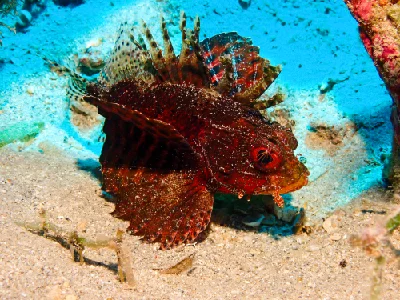
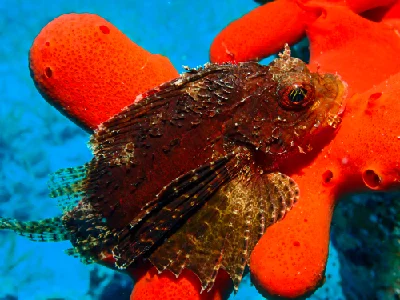
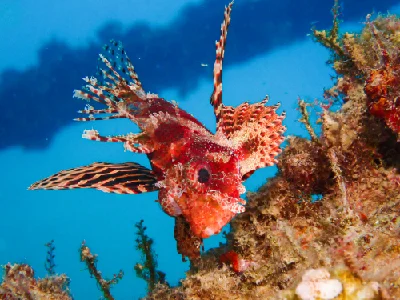
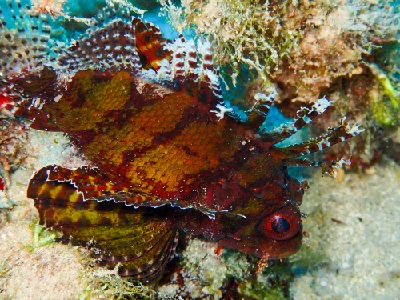
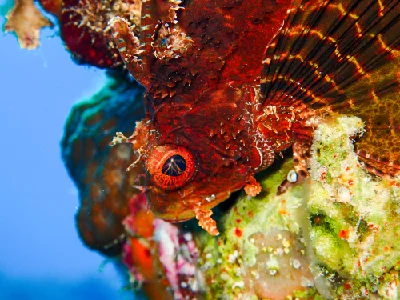
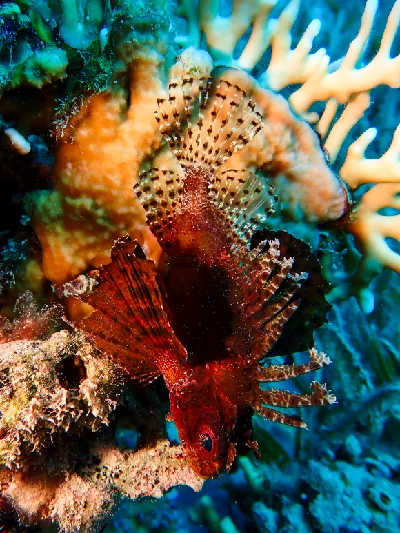
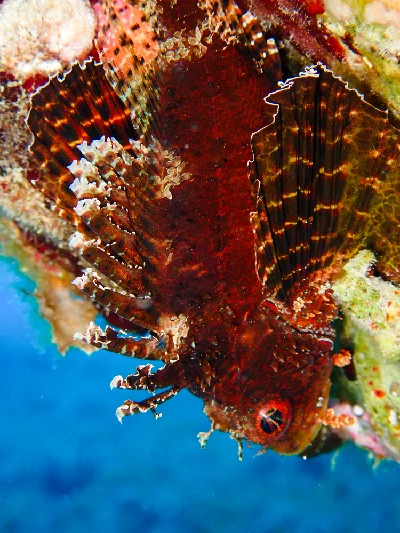
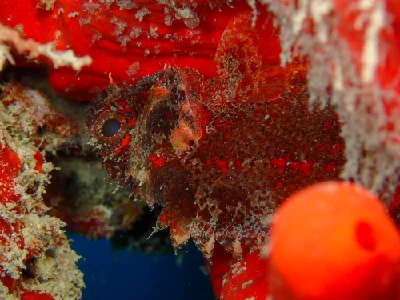
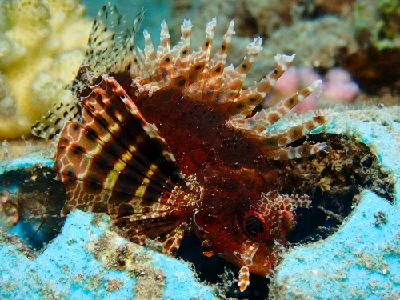
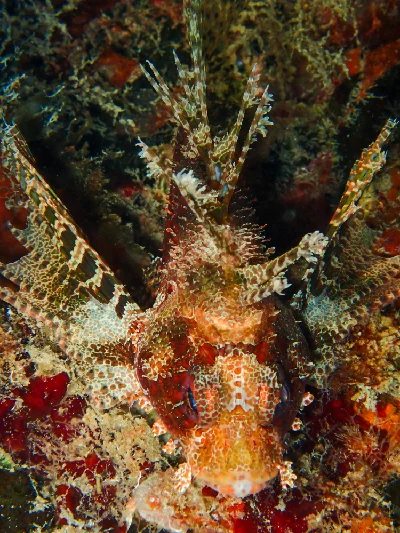
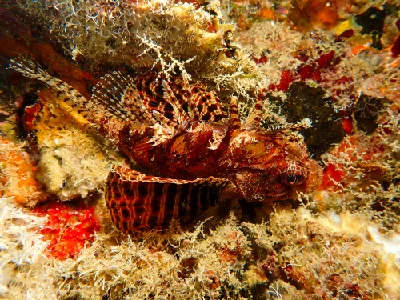
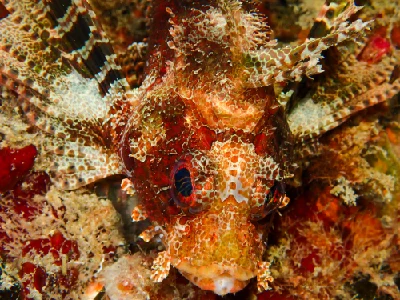
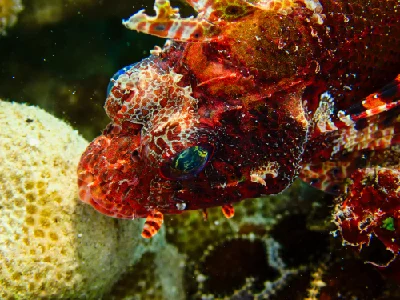
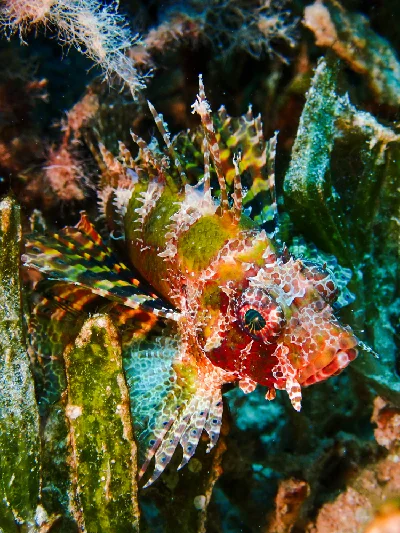
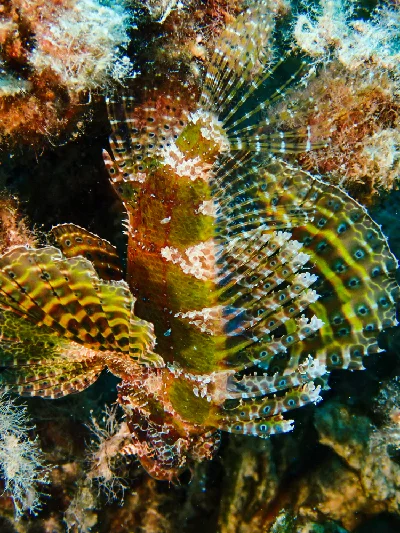
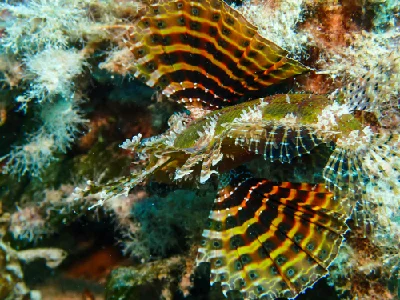
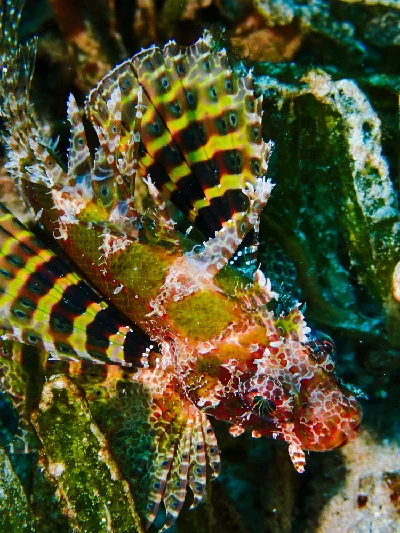
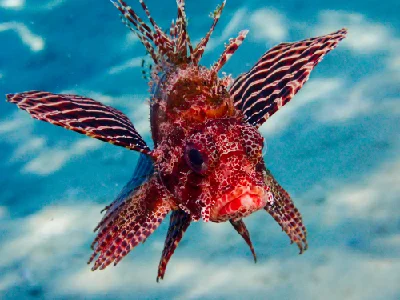
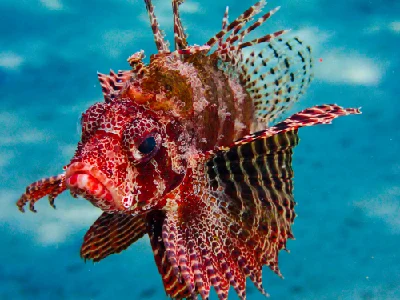
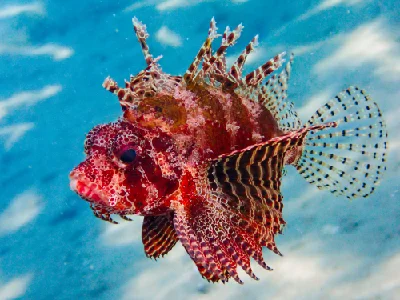
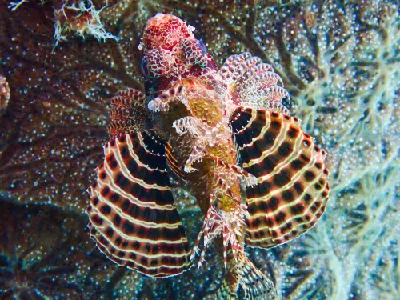
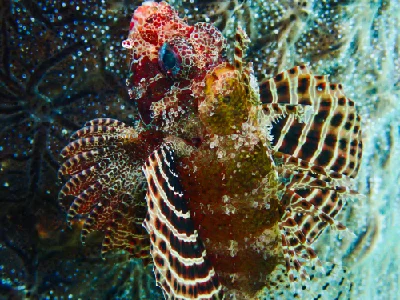
Dendrochirus brachypterus, commonly known as the dwarf lionfish, belongs to the family Scorpaenidae, which includes scorpionfishes and lionfishes. This marine ray-finned fish species can be found in the Indo-Pacific region and is occasionally found in the aquarium trade.
Scientifically described as Pterois brachyptera by Georges Cuvier in 1829, no specific location was assigned as its type locality. This species is considered the type species of the brachypterus species complex within the Dendrochirus genus. The name "brachypterus" refers to its relatively short pectoral fins compared to Dendrochirus zebra, another species described by Cuvier in the same publication.
Dendrochirus brachypterus has 13 dorsal fin spines and 9 or 10 soft rays, with the middle spines being shorter than the body's depth. The anal fin has 3 spines and 5 soft rays. The body has a dusky mottled brown to reddish-brown color, with darker bars, and distinct banding on the pectoral fins. It also has a short tentacle over the eye and leaf-like appendages on the head and lateral line. There are no filaments on the pelvic fins. Black spots edged with red can be found on the filaments extending from the dorsal spines, and the pectoral fins have 8-10 dark bars. This species reaches a maximum published total length of 17 cm (6.7 in).
Like other lionfish species, it possesses venomous spines along its dorsal fin that can cause painful stings if touched. The venom can cause symptoms such as intense pain, swelling, nausea, and in rare cases, more severe reactions requiring medical attention.
Dendrochirus brachypterus has a wide distribution in the Indo-Pacific, ranging from the eastern coast of Africa (including the 🌊 Red Sea) south to 🇿🇦 South Africa and eastwards to 🇼🇸 Samoa. It can also be found north to the 🇵🇭 Philippines and south to 🇦🇺 Australia, including Lord Howe Island in the Tasman Sea. In 🇦🇺 Australia, it occurs from the Houtman Abrolhos in Western Australia to Sydney in New South Wales. This species inhabits depths between 1 and 80 m (3 ft 3 in and 262 ft 6 in) in reef flats and shallow lagoons where weed-covered rocks are present on sandy substrates.
As a nocturnal predator, Dendrochirus brachypterus feeds on small crustaceans. Adult individuals are often found on sponges, while small groups of up to 10 juveniles prefer reef outcrops. During the day, they seek shelter in caves, crevices, and among sponges. The species forms pairs for mating, with females possessing specialized structures on their ovaries, including stalk-like egg creating lamellae and secretory cells in the epithelium. The dorsal fin spines of this fish are venomous.
Dendrochirus brachypterus is occasionally utilized as a food fish in subsistence fisheries. It is also found in the aquarium trade, although successfully raising the young in captivity has proven to be challenging.
Why it's threatened
Threat classification from the IUCN Red List.


