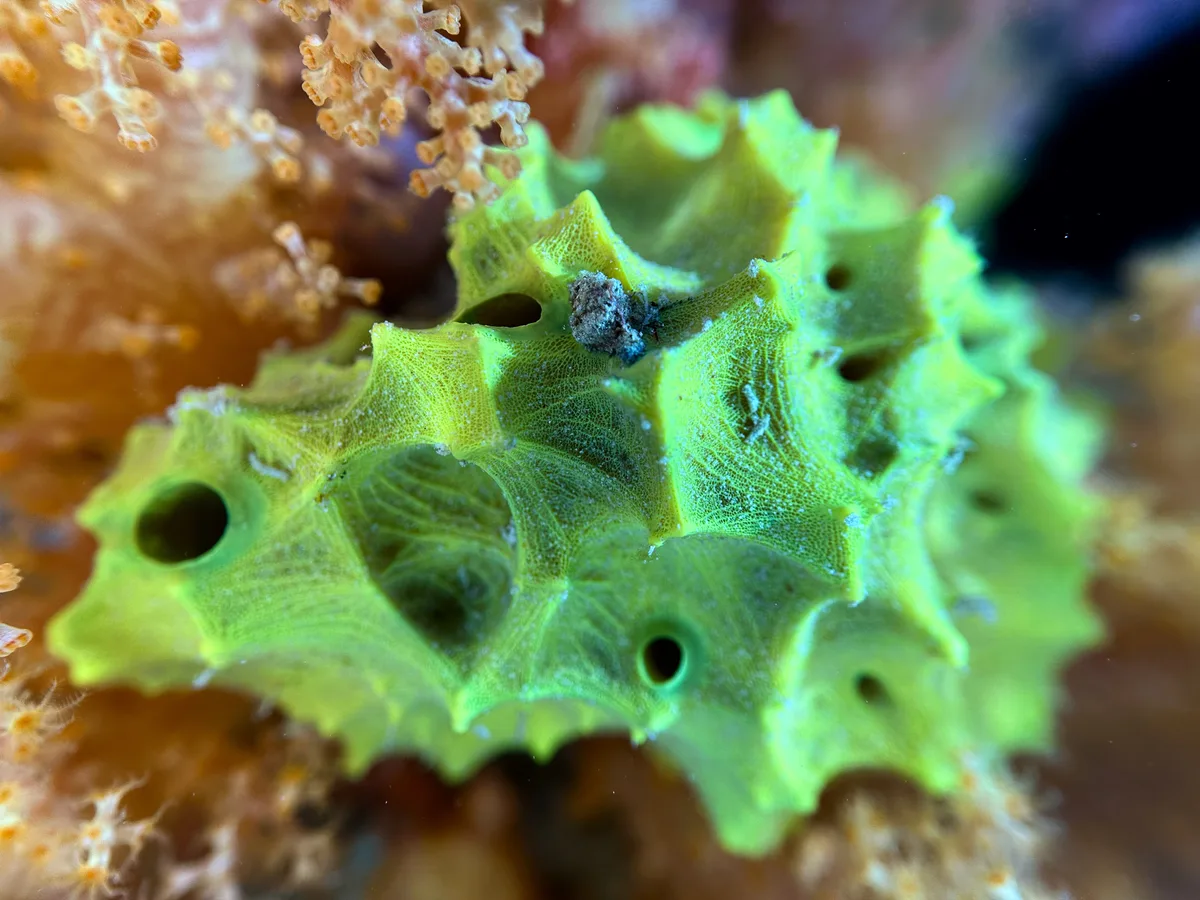
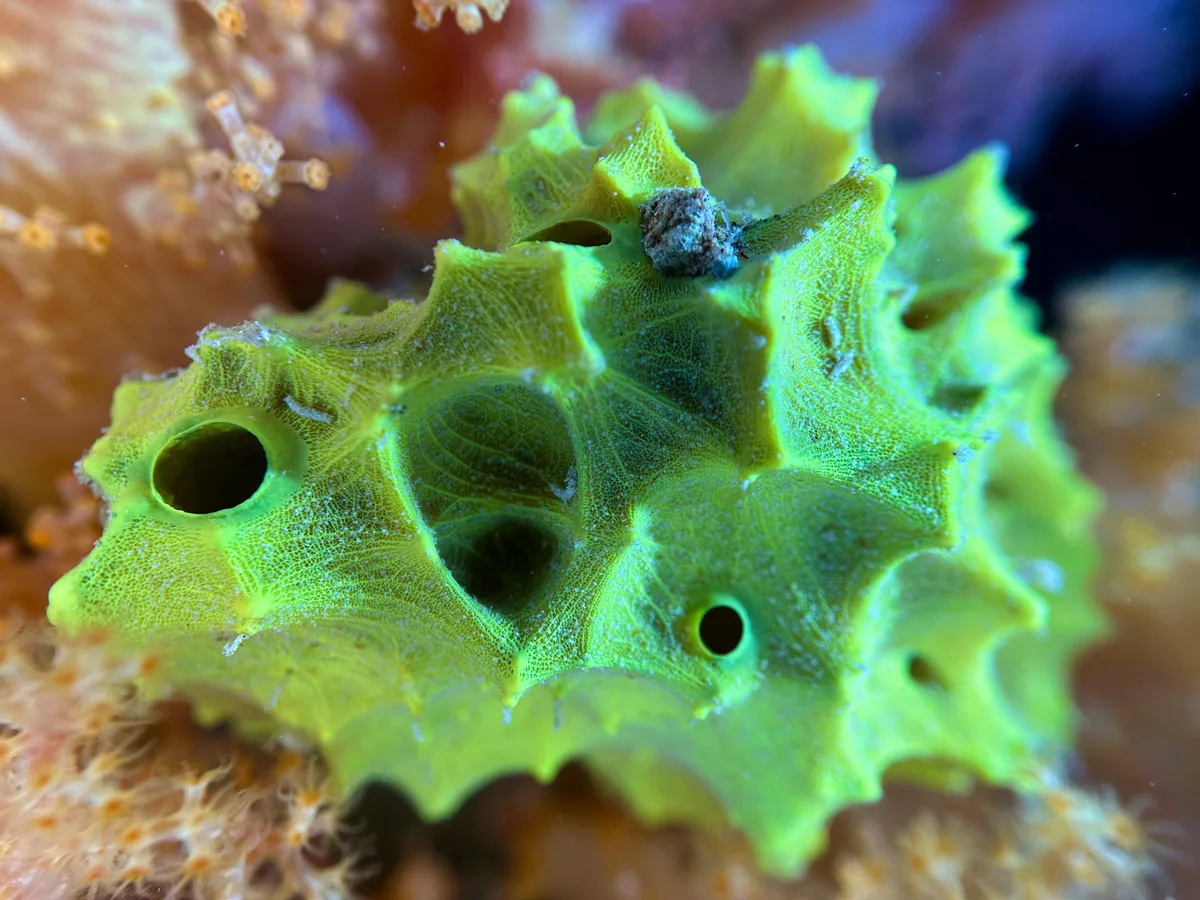
The striking Ircinia atrovirens is a common and distinctive sponge found across the vibrant reefs of the 🌊 Red Sea and throughout the tropical Indo-Pacific. Typically growing to a substantial size of 15 to 20 cm (about 6-8 inches) in diameter, it often presents an angular form with a fascinating reticulated, or net-like, olive-green surface. Look closely, and you'll notice its characteristic "spiky" texture, which comes from numerous small, cone-like projections called conules. These are meticulously supported by a complex internal network of flexible spongin fibers, forming the sponge's resilient skeletal framework.
Its vibrant, often bright green or olive-green coloration isn't just for show; it's a bustling hub of life! Like many other brilliantly colored organisms we encounter on the reef, Ircinia atrovirens gets its vivid hue from symbiotic cyanobacteria that reside just beneath its surface. These tiny photosynthetic partners generate food, contributing significantly to the sponge's nutrition and allowing it to thrive in well-lit, shallow reef environments. As a diligent filter feeder, this sponge plays a crucial role in maintaining water clarity. You'll easily spot its large, distinct holes, known as oscula. These are the sponge's primary excurrent openings, diligently expelling vast quantities of water that have been filtered for microscopic food particles and detritus. This continuous pumping mechanism is essential for its survival and helps keep the reef ecosystem healthy.