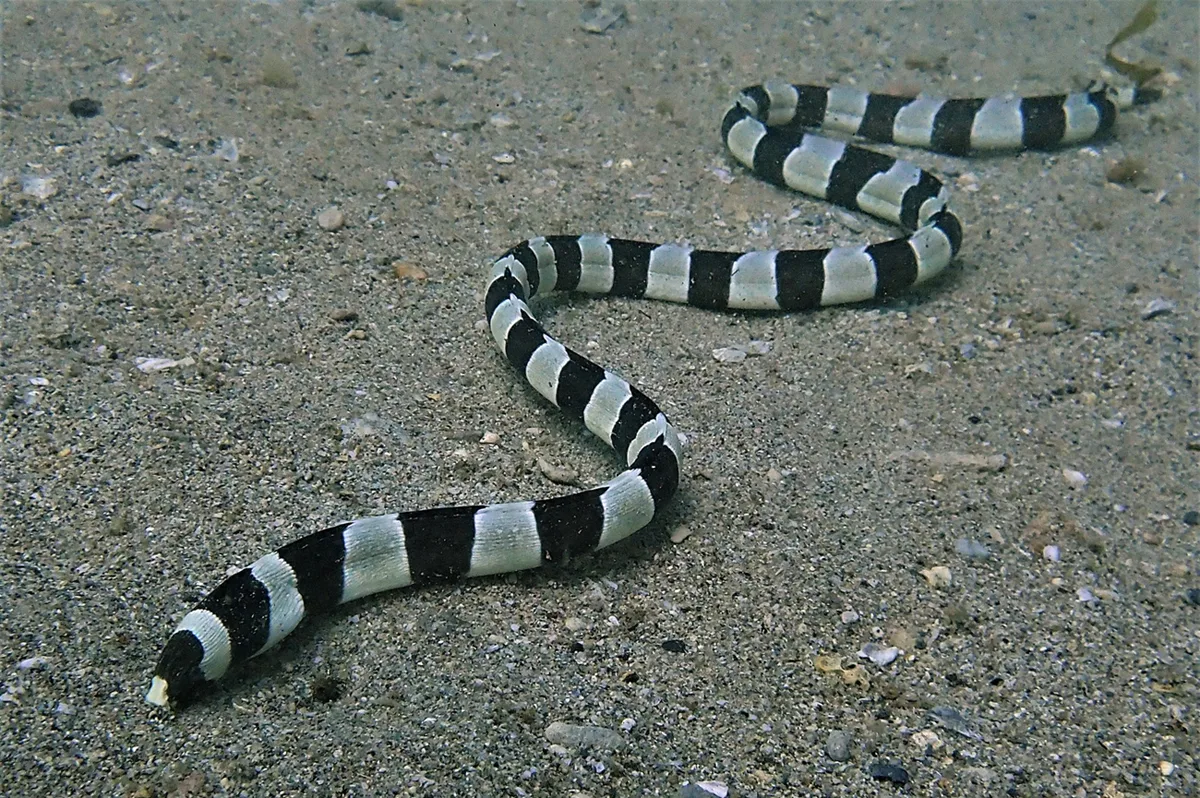
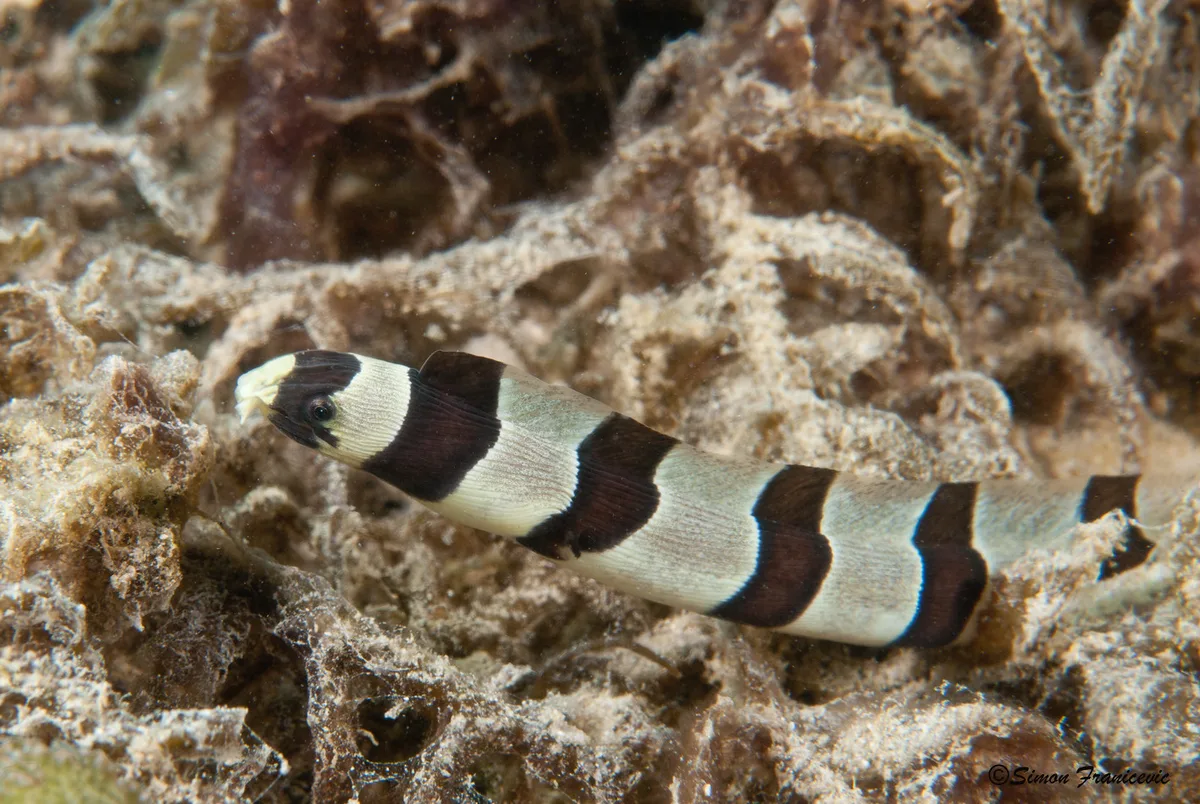
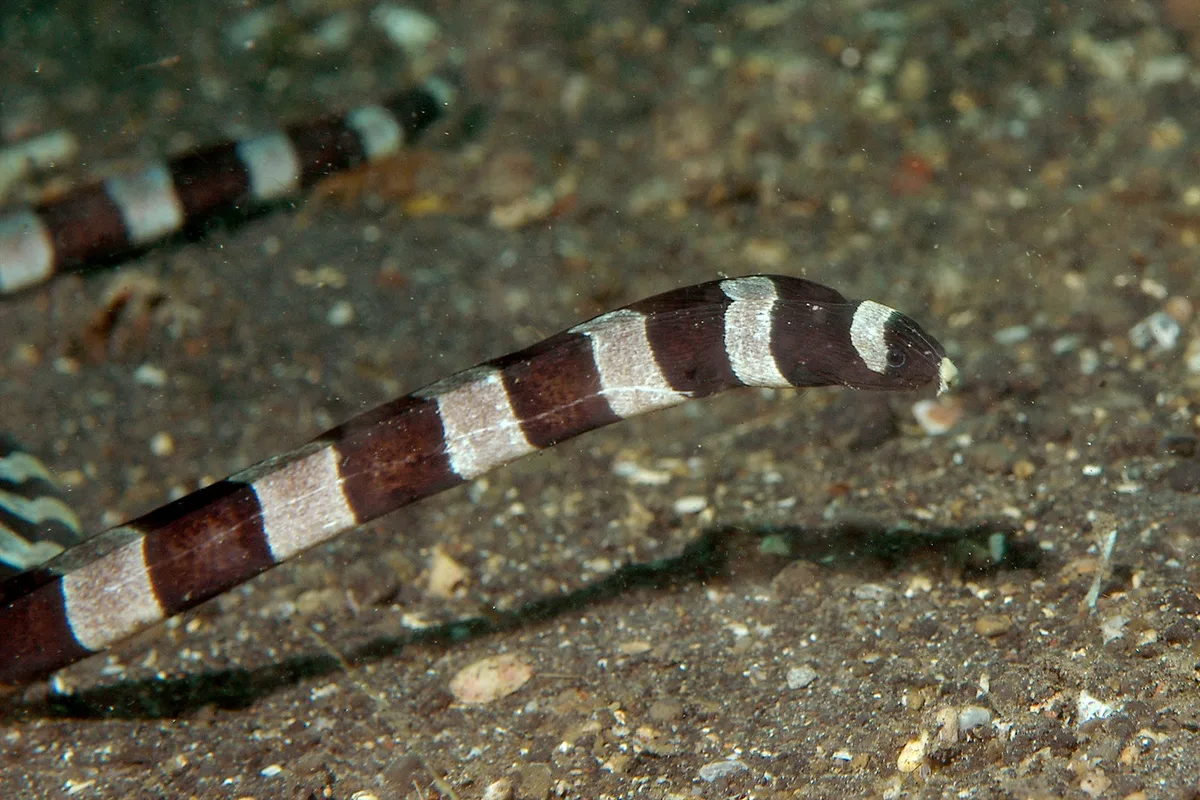
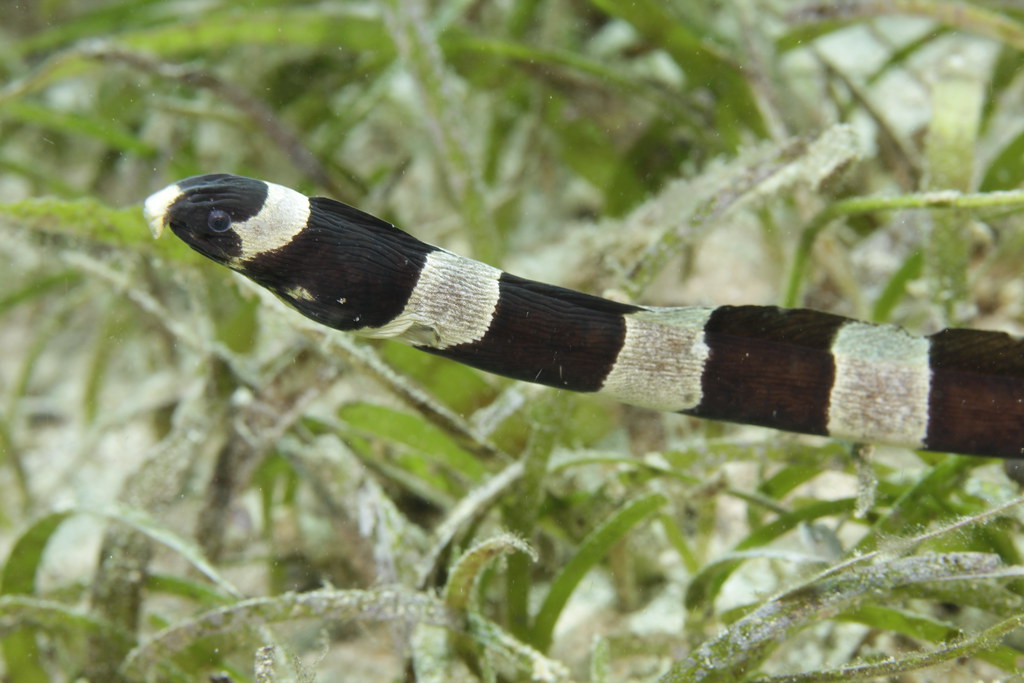
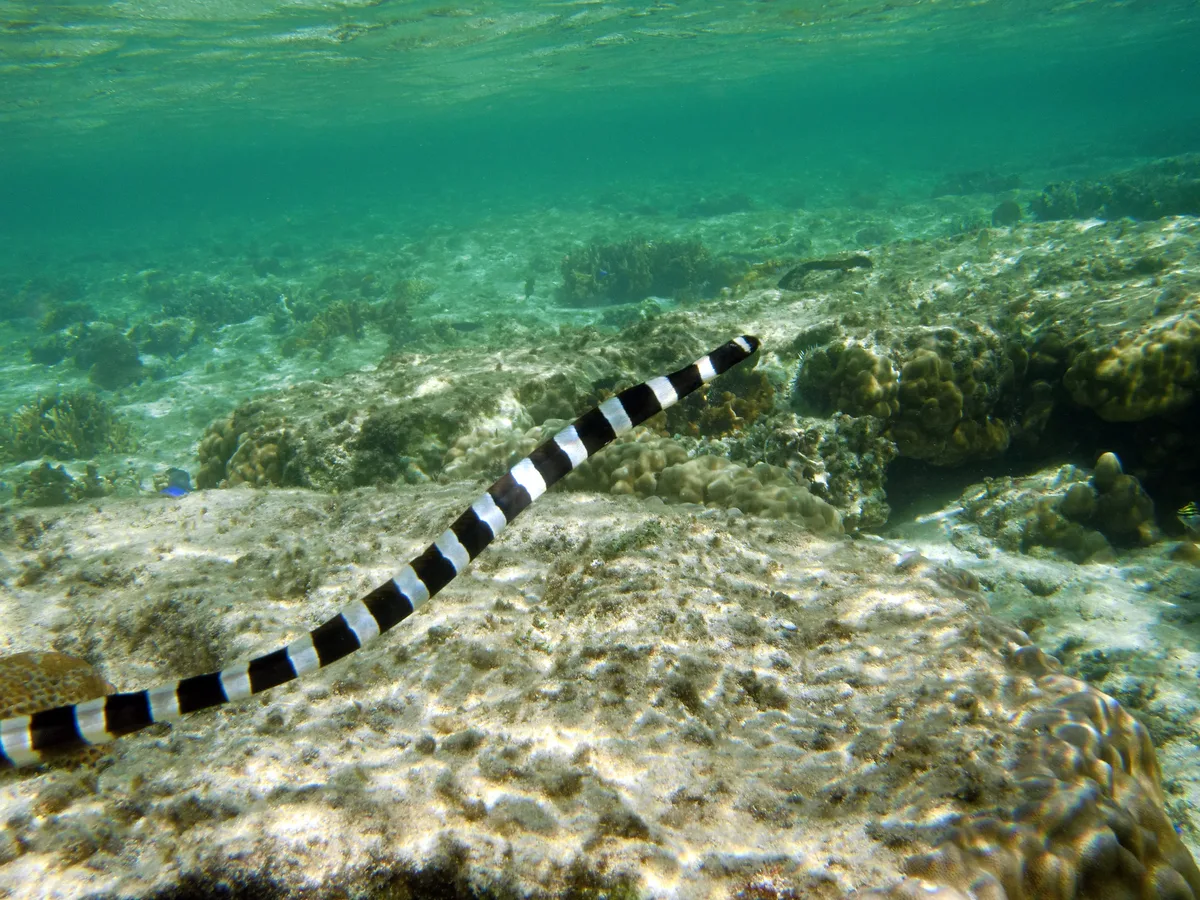
A cream eel ringed with wide black bands from head to tail, up to 97 cm (38 in), moving over open sand in broad daylight with its head raised. Everything about that sentence is odd for an eel, and all of it is deliberate.
It is dressed as a sea krait. Banded sea snakes are venomous enough that reef predators leave them alone, and this eel copies the pattern closely enough to borrow the protection - a textbook case of a harmless animal wearing a dangerous animal's uniform. The disguise is what pays for the daylight foraging, since nothing else this defenseless crosses open sand at noon.
The twist is local. Sea kraits do not live in this sea, and neither does any other sea snake: the group is absent from the 🌊 Red Sea, apparently blocked by cold water at the entrance. So the eel here is impersonating an animal that its predators have never met. Either the resemblance still works on general principles - a banded thing may simply be worth avoiding - or the pattern is a leftover from the wider Indo-Pacific, where the model is common.
It hunts small fish and crustaceans by pushing its head into sand, and buries itself tail-first with a hardened tail tip when it wants to disappear.
The genus. Myrichthys Girard 1859 - ichthýs (fish). ETYFish
- cream body ringed with 25 to 30 wide black bands, all the way round
- no fins visible, blunt snout, tubular nostrils
- swims openly over sand in daylight rather than hiding
- length up to 97 cm
Why it's threatened
There are no known major threats.
Threat classification from the IUCN Red List.


