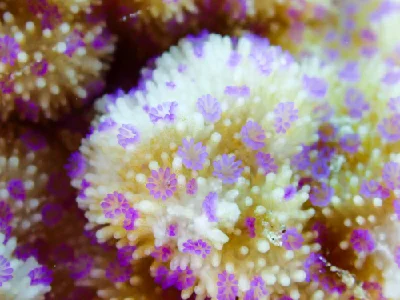
Spreading Rice Coral
Hard corals

Spreading Rice Coral

Montipora patula Verrill, 1869
CITES IICritically Endangered
920

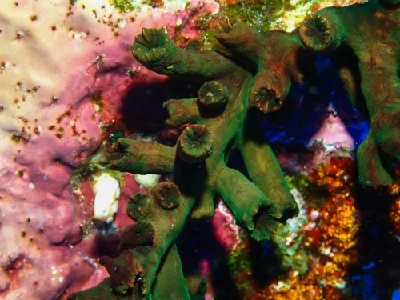
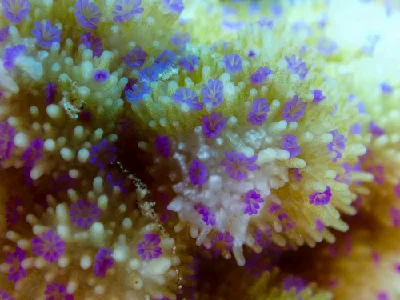
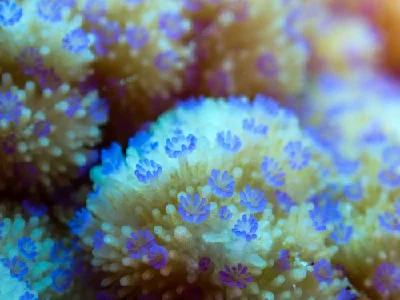
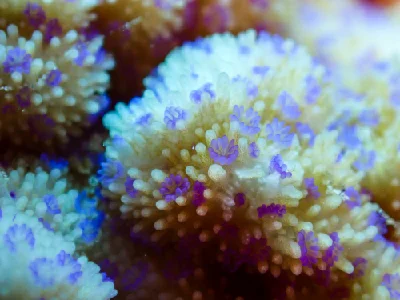
Montipora patula is a species of small polyp stony coral commonly known as Spreading Rice Coral. It belongs to the Montiporidae family and is found in various reef environments. Montipora patula is primarily found in the Central and Western 🌊 Pacific Ocean, including Hawaii (🇺🇸 United States), where it is relatively well-studied, rather than in the 🌊 Red Sea.

General characteristics of Spreading Rice Coral (Montipora patula):

  1. Growth Form: Montipora patula typically exhibits a plating growth form, spreading laterally and often overlapping. Its structure can vary from flat plates to undulating and folded shapes that can resemble the grains of rice, hence the common name Spreading Rice Coral.

  2. Coloration: The coral can display various colorations ranging from brown, green to more vibrant oranges and reds, depending on the environmental conditions, particularly light exposure and water quality.

  3. Habitat: This coral species prefers shallow reef environments, usually occupying the back reef and reef flats, where it receives plenty of sunlight. It can be found at depths ranging from a few meters (subtidal zones) to approximately 30 meters.

  4. Reproduction: Like many corals, Montipora patula can reproduce both sexually and asexually. It releases gametes into the water column during synchronized spawning events, leading to external fertilization. Asexual reproduction occurs through fragmentation, where broken pieces of the coral settle and grow into new colonies.

  5. Conservation: As a coral species, Montipora patula is subject to the same pressures that threaten coral reefs worldwide. These include climate change, ocean acidification, coral bleaching, overfishing, destructive fishing practices, and coastal development. Individual conservation status might vary, but overall coral reefs and their inhabitants face significant environmental threats.

  6. Symbiotic Relationships: This coral, like other stony corals, harbors symbiotic algae known as zooxanthellae within its tissues. These algae perform photosynthesis, providing nutrients to the coral in exchange for shelter and compounds required for photosynthesis.

  7. Role in the Ecosystem: Montipora patula serves as a crucial component of the reef ecosystem, providing habitat, food, and shelter for various marine organisms. It also contributes to reef building and maintenance, playing a significant role in the biodiversity and productivity of its environment.

Why it's threatened

Residential & commercial development
Housing & urban areas · Commercial & industrial areas · Tourism & recreation areas
Transportation & service corridors
Shipping lanes
Biological resource use
Unintentional effects: (subsistence/small scale) [harvest] · Motivation Unknown/Unrecorded
Human intrusions & disturbance
Recreational activities
Invasive species, genes & disease
Unspecified species · Named species
Pollution
Type Unknown/Unrecorded · Soil erosion, sedimentation · Ozone
Climate change & severe weather
Temperature extremes · Storms & flooding

Species in the genus Montipora are susceptible to bleaching. Species in the genus tend to be quite fast growing and reproduce asexually by fragmentation, so if they can re-establish after mortality, they can recover fast.

In general, the major threat to corals is global climate change, in particular, temperature extremes leading to bleaching and increased susceptibility to disease, increased severity of ENSO events and storms, and ocean acidification.

Crown-of-thorns starfish (COTS) (Acanthaster planci) are found throughout the Pacific and Indian Oceans, and the Red Sea. These starfish are voracious predators of reef-building corals, with a preference for branching and tabular corals such as Acropora species. Populations of the crown-of-thorns starfish have greatly increased since the 1970s and have been known to wipe out large areas of coral reef habitat. Increased breakouts of COTS has become a major threat to some species, and have contributed to the overall decline and reef destruction in the Indo-Pacific region. The effects of such an outbreak include the reduction of abundance and surface cover of living coral, reduction of species diversity and composition, and overall reduction in habitat area.

Coral disease has emerged as a serious threat to coral reefs worldwide with increases in numbers of diseases, coral species affected, and geographic extent (Ward et al. 2004, Sutherland et al. 2004, Sokolow et al. 2009). Outbreaks of coral diseases have damaged coral reefs worldwide with the most widespread, virulent, and longest running coral disease outbreak currently occurring on the Florida Reef Tract and throughout the Caribbean. The disease, stony coral tissue loss disease, has been ongoing since 2014 (Precht et al. 2016) and has devastated affected reefs along Florida (Walton et al. 2018, Williams et al. 2021) and throughout the Caribbean (Alvarez-Filip et al. 2019, Kramer et al. 2019). Numerous disease outbreaks have also occurred in the Indo-Pacific (Willis et al. 2004, Aeby et al. 2011; 2016), Indian Ocean (Raj et al. 2016) and Persian Gulf (Howells et al. 2020). Escalating anthropogenic stressors combined with the threats associated with global climate change of increases in coral disease, frequency and duration of coral bleaching and ocean acidification place coral reefs in the Indo-Pacific at high risk of collapse.

Localized threats to corals include fisheries, human development (industry, settlement, tourism, and transportation), changes in native species dynamics (competitors, predators, pathogens and parasites), invasive species (competitors, predators, pathogens and parasites), dynamite fishing, chemical fishing, pollution from agriculture and industry, domestic pollution, sedimentation, and human recreation and tourism activities. The severity of these combined threats to the global population of each individual species is not known.

Threat classification from the IUCN Red List.

Comments

Please, sign in to leave a comment

Continue with a social account — yours will be created automatically.

No comments yet — be the first.

Last Update: June 28, 2026