
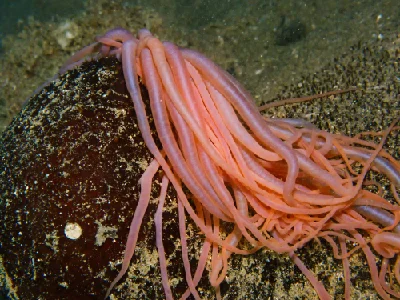
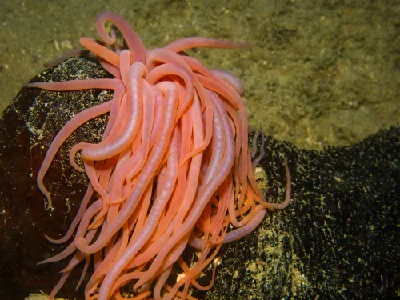
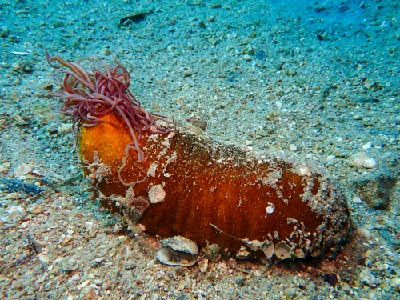
The Black Sea Cucumber, scientifically known as Holothuria atra, is a marine invertebrate that belongs to the family Holothuriidae. This species is commonly found in the Black Sea, as well as in the Mediterranean Sea and the eastern Atlantic Ocean. It is a benthic creature, meaning it primarily lives on the ocean floor.
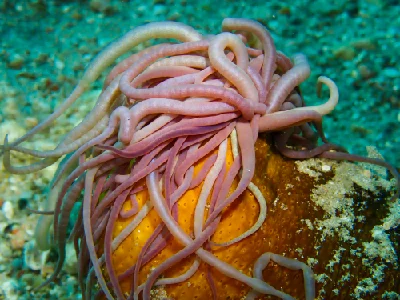
The Black Sea Cucumber has a distinctive cylindrical body with a length that can range from 20 to 30 centimeters. Its body is covered in a thick, leathery skin, which is usually black in color, hence its common name. However, it can also have shades of brown or dark purple. This species has numerous tube-like feet or tentacles called podia, which it uses for locomotion and feeding.
This sea cucumber is a detritivore, meaning it feeds on the organic matter present in the sediment and the decaying plant and animal material that settles on the seabed. It has a specialized structure called a feeding tentacle or oral tube, which it extends to collect food particles. The Black Sea Cucumber is an important component of its ecosystem as it helps in recycling nutrients and maintaining a clean seabed by consuming organic debris.
The reproductive process of the Black Sea Cucumber is interesting. It is a broadcast spawner, meaning it releases eggs and sperm into the water column, where fertilization occurs externally. After fertilization, the fertilized eggs develop into larvae, which then settle on the ocean floor and undergo metamorphosis into small juvenile sea cucumbers.
Black Sea Cucumbers are known for their ability to regenerate body parts. If attacked or threatened, they can expel some of their internal organs as a defense mechanism. These expelled organs, called cuvierian tubules, can be sticky and toxic, deterring predators from attacking them. The sea cucumber can regenerate these organs within a few weeks.
Although the Black Sea Cucumber is not considered a commercially important species, it plays a vital role in the marine ecosystem by contributing to nutrient recycling and sediment stability. It also serves as a food source for certain marine organisms, including sea stars and fish. However, like many other sea cucumber species, the Black Sea Cucumber faces threats from habitat destruction and overexploitation. Conservation efforts are necessary to ensure the survival of this unique marine creature and the preservation of its important ecological role.
Why it's threatened
Threat classification from the IUCN Red List.


